SoCS: writing

I miss writing.

Because of the brain fog and fatigue I’ve had over the last couple of years as a result of my extra-stetchy connective tissue from my hEDS, I can’t spend as much time writing as I would like.

Some kinds of writing, like poetry, have become almost non-existent in my life. I feel like the creative side of my brain isn’t operational the vast majority of the time – and the more analytic side is only at half-capacity, at best. Heck, I have difficulty reading literature of any kind these days. I can sometimes manage to grasp poems, if it’s in the morning and they aren’t too long. I can’t read novels because I can’t get plots and characters to stick in my head over days. I can’t even manage non-fiction books because the brain fog is too thick to remember topics over the course of days and the fatigue level is such that I can’t read very long at a sitting. I’ve been trying to keep up by reading news and commentary articles and newsletters but have been so tired lately that my inbox is overflowing with unread material.

There has been so much happening here in the US that I’ve wanted to write posts about but haven’t been able to manage, which makes me sad. I keep thinking that the next specialist visit will give us something actionable to improve my condition but, instead, it usually means more tests are needed, which means waiting for the tests to be scheduled, doing them, waiting for them to be interpreted, waiting for the specialist to see the results and interpret them – which often yields a different result than the radiology reports that land in my health portal – and get back to me with what they think is going on. Then, maybe, we get to trying a treatment that may or may not work and then onto the next option or the next specialist.

I’m grateful, though, that this year I have a specialist who was finally able to diagnose my hEDS and cerebellar ectopia and that I finally have specialists who know what to try with patients like me. Unfortunately, I might need some pretty scary treatments, like brain surgery.

So, I’m grateful and scared and exhausted and anxious and tired of all the waiting and struggling and symptoms and uncertainty.

And I miss writing and being able to make it through a day without having to spend a good chunk of it lying down and being able to take walks without having someone with me in case I lose my ability to keep my balance and going to visit family and friends and being able to concentrate and speaking without having to search for the right word in some kind of frantic brain race.

I miss the life of the mind that I took for granted as part of my identity.

And here you have an illustration of why stream of consciousness writing is so dangerous to put out there, because this is a way darker post than I thought I was going to be writing when I started out with Linda’s prompt of the word miss and decided to write about missing writing.

It is, though, on brand with Top to JC’s Mind where I usually write honestly about whatever is top of mind for me, even when that mind is more scattered and glitchy and exhausted than it used to be.

There are two big imaging studies coming up for me this week and a hugely important appointment with a specialized neurosurgeon at the end of July. Meanwhile, I’m hoping against hope to get a few significant posts written here, as opposed to the last month which has not been very substantive.

Sigh.

I miss writing.
*****
Join us for Linda’s Stream of Consciousness Saturday! Find out more here: https://lindaghill.com/2026/06/19/the-friday-reminder-and-prompt-for-socs-june-20-2026/

SoCS: houseguests

It’s fairly unusual for use to have houseguests but we did this week.

B’s brother and spouse stayed with us overnight as they headed to a family vacation in Maine.

Now, it looks like we may have guests again in a couple of weeks when B’s college roommate heads through on the way to a vacation spot with his spouse.

Sometimes, it’s handy to be located near the intersection of three major interstate routes!
*****
Linda’s prompt for Stream of Consciousness Saturday this week is “guest.” Join us! Find out more here: https://lindaghill.com/2026/06/12/the-friday-reminder-and-prompt-for-socs-june-13-2026/

One-Liner Wednesday: more fatigue

I’ve had a major uptick in my fatigue level so I haven’t been able to manage writing the couple dozen of posts that I wish I had over the last few weeks, but my health care team is working on a new batch of tests, a med change, and probably an additional diagnosis that may eventually lead to improvement, so stay tuned…

Join us for Linda’s One-Liner Wednesdays! Find out more here: https://lindaghill.com/2026/06/10/one-liner-wednesday-you-know-youre-tired/

One-Liner Wednesday: ditto

My reaction to Linda’s One-Liner Wednesday post today is “ditto.”

on being a zebra (unicorn)

May is EDS & HSD Awareness Month. EDS stands for Ehlers-Danlos Syndrome and HSD for Hypermobility Spectrum Disorder. They are a group of inherited connective tissue disorders that remain under-diagnosed and under-treated. Case in point: I was diagnosed with hypermobile Ehlers-Danlos Syndrome (hEDS) in January at the age of 65, making sense of decades-worth of unexplained symptoms.

The Ehlers-Danlos Society uses the zebra as a symbol of the EDS/HSD community because there is a saying among the medical community that “when you hear hoofbeats, think horses, not zebras” but, sometimes, there really are zebras. Zebras also each have their unique stripe pattern, in the same way that people with EDS/HSD have their own unique presentation, depending on how their collagen and connective tissue is impacted across different body systems at that particular time in their life. The medical system in the United States and in many other countries tends to divvy medical care to specialists who only look at one body system but connective tissue disorders are easier to recognize if one takes a more integrative approach.

And a fun zebra fact: A group of zebras is called a dazzle, which leads to the Ehlers-Danlos Society saying, “Together, we dazzle!”

As I’ve continued to research hEDS, I’ve been engaging in personal forensic diagnostics. So many things I have experienced in my life make sense now that I know of my genetic inheritence of hEDS. For example, I developed tendon problems in my elbow as a young teen which impacted my abilities as a pianist and organist. When I eventually had to resort to surgery in my thirties, the outcome wasn’t as expected and I had to give up playing. I now understand that this was due to my hEDS inherited collagen defects.

My IBS, IC, endometriosis, vulvodynia, pre-term labor, allergies, mast cell activation disorder, cervical instability, near-sightedness, depression/anxiety, cerebellar ectopia, sleep apnea, early gall bladder disease, hiatal hernia, acid reflux, chronic fatigue, diverticulosis, chronic kidney disease, sensitive skin, joints that bend more than expected, and more all have a connective tissue component and are more likely in people with EDS/HSD.

Daughter T gave me the zebra unicorn pin as a gift. While the zebra is the symbol of EDS/HSD, adding the unicorn element helps to play up the uniqueness of each individual.

And it’s super cute!

The point is that another person with hEDS could exhibit a totally different set of symptoms from mine or we could share some symptoms and not others. It just depends on which connective tissues are compromised and how much at that particular time. Other factors are involved, too, like age, activity level, hormone and endocrine function, etc. It adds to the zebra-unicorn element and takes a thoughtful and informed practitioner to pick up on the possibility of an underlying connective disorder behind all the symptoms of different body parts.

In December, there will be an update to the EDS/HSD diagnostic guidelines. My hope is that the medical community will use these and the best practices guidelines that will follow in spring 2027 to finally look more comprehensively at their patients and diagnose and help them at much younger ages than currently.

Some people are also under the mistaken impression that it doesn’t do any good to give a diagnosis when you can’t cure the disorder. While it’s true that we can’t current treat the genetic cause, there are treatments to help alleviate many of the symptoms. It’s also imperative for practitioners to know the EDS/HSD status for anyone who is contemplating surgery. Surgeons need to know about connective tissue differences so that they can compensate for that during the procedure and the recovery protocols or, perhaps, decide that surgery is not appropriate. Many EDS/HSD patients also need long-term physical therapy to help them function; it makes a huge difference if physical therapists are knowledgeable about connective tissue disorders so that they help rather than hurt.

As I continue my journey with hEDS, I will keep you posted here at Top of JC’s Mind. If we are super-lucky and we find effective treatment for my brain fog and fatigue, I may even post more regularly.

I will, though, always remain my unique, zebra-unicorn self.

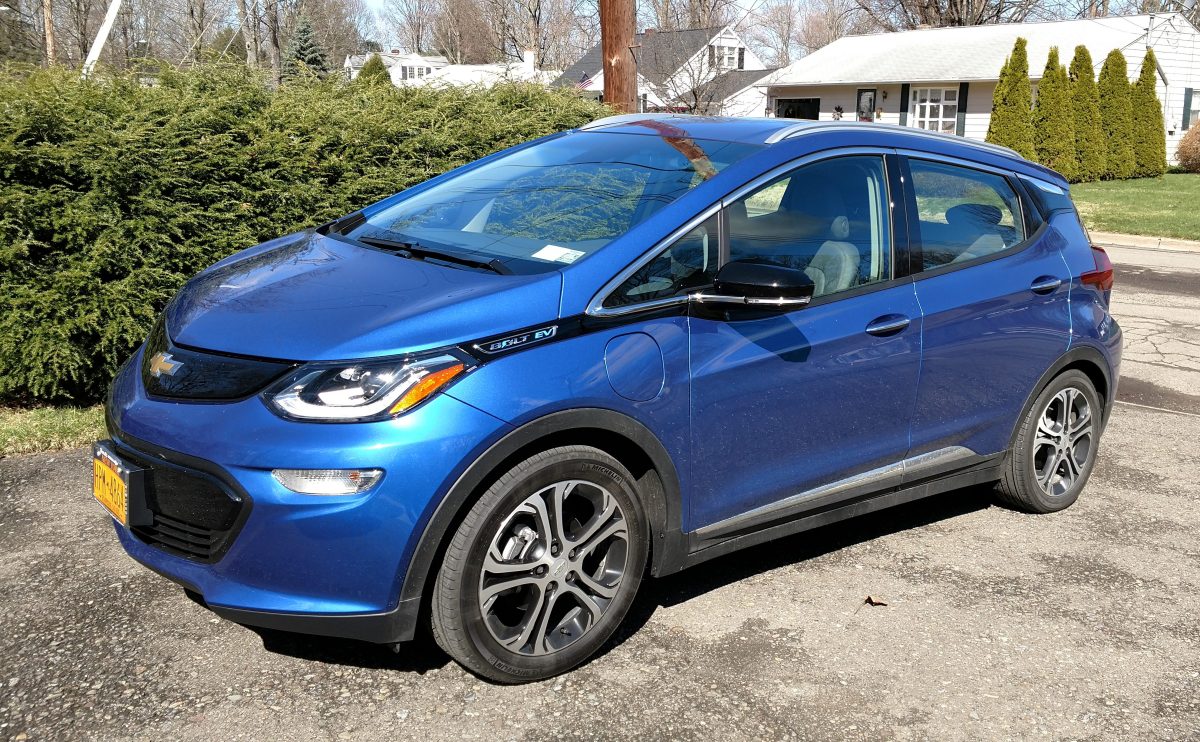
Bolt 70,000

Our 2017 Chevy Bolt just passed 70,000 miles (about 113,000 kilometers). We still love driving it and hope to keep it for years to come.

With gas prices as expensive as they are these days, it’s especially nice to be driving an electric vehicle. Bonus: we own solar panels in a community solar farm, so charging at home is very inexpensive.

I’m just hoping that, when we do decide to replace our Bolt, we will have lots of EVs from which to choose. EVs are winning increasing market share in most of the rest of the world, so the United States will be playing catch-up after the damage the Trump administration has done to the EV industry.

Smith blackout poetry ’26

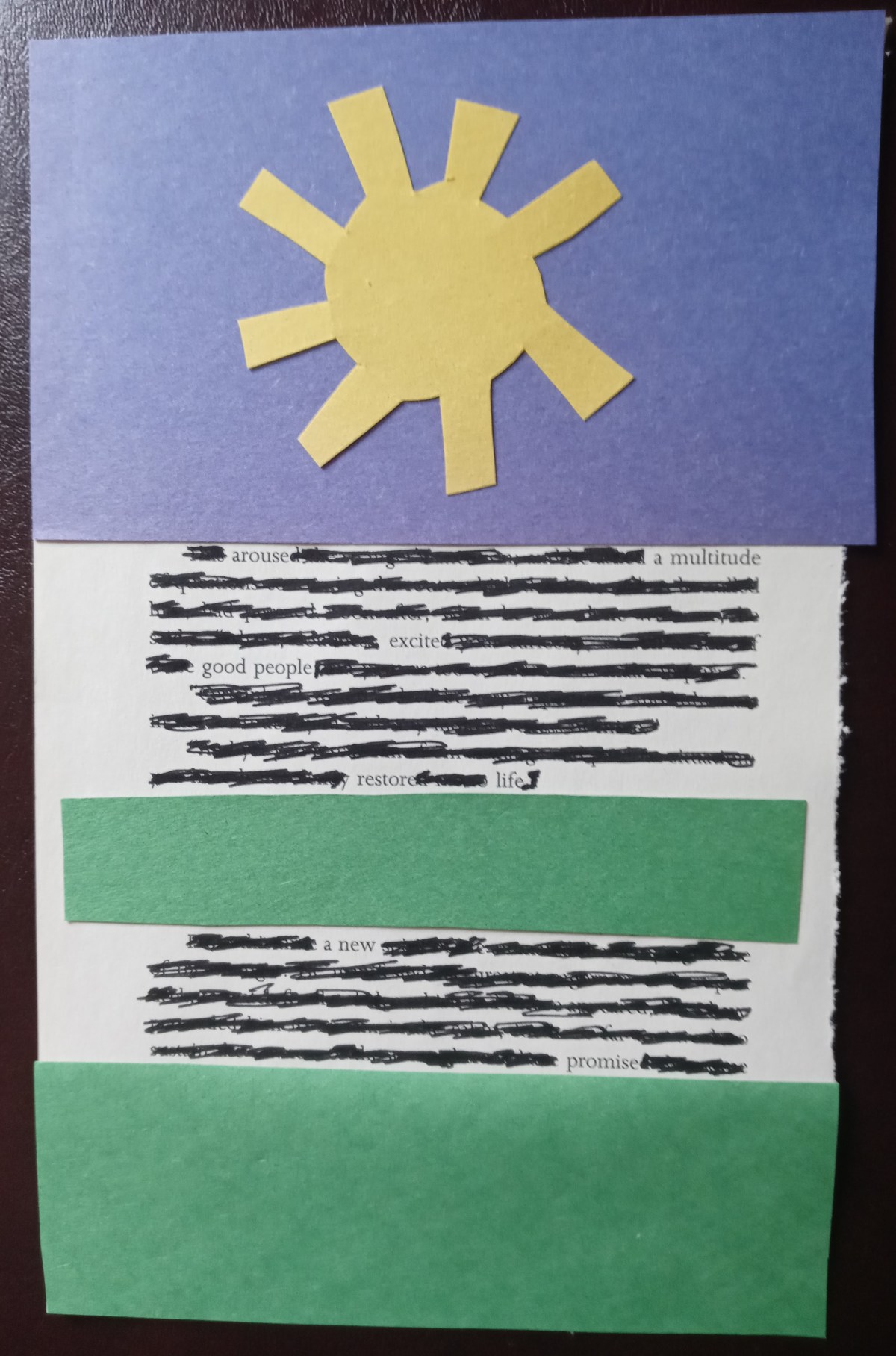
For the past several years, the Boutelle-Day Poetry Center at my alma mater, Smith College, has offered a Blackout Poetry Project to the Smith community, including alums. In the blackout poetry style, one takes a page of pre-existing text and crosses out words or letters to create a poem. The pages are then sometimes embellished with color or other visual art elements. I have participated in prior years, such as the year when the theme was Emily Dashes, using the poems of Emily Dickinson.

This year’s theme is Monster Mash, creating blackout poetry using pages from Mary Wollstonecraft Shelley’s Frankenstein. As you can imagine, the work is quite dark in tone, so I decided to take page 22, which was sent to me from the Center, and transform it into a brighter message.

As it may be difficult to read from the photo, the words I chose to highlight are:
arouse a multitude
excite good people
restore life
a new promise

My visual artist friends will, I’m sure, forgive my rudimentary collage but I felt that we are all in need of a bit of sunshine today.

Write Out Loud ’26 recording!

As I wrote here, I was unable to attend the Write Out Loud ’26 event at the Fenimore Art Museum near Cooperstown, NY, last month, but I’m happy to share the newly released recording.


My poem “Nor’easter Numbers” is first on the program, read wonderfully by the fabulous Sharon Rankins-Burd. If you watch the video on YouTube and click on “more,” you can see the program and timings laid out so you can easily navigate to particular pieces. Enjoy! As always, feel free to comment.

Globe Trotter!

WordPress has informed me that I’ve unlocked a new achievement, Globe Trotter. It means that I have received views from 50+ countries.

Okay, it’s taken 12 years but still cool!

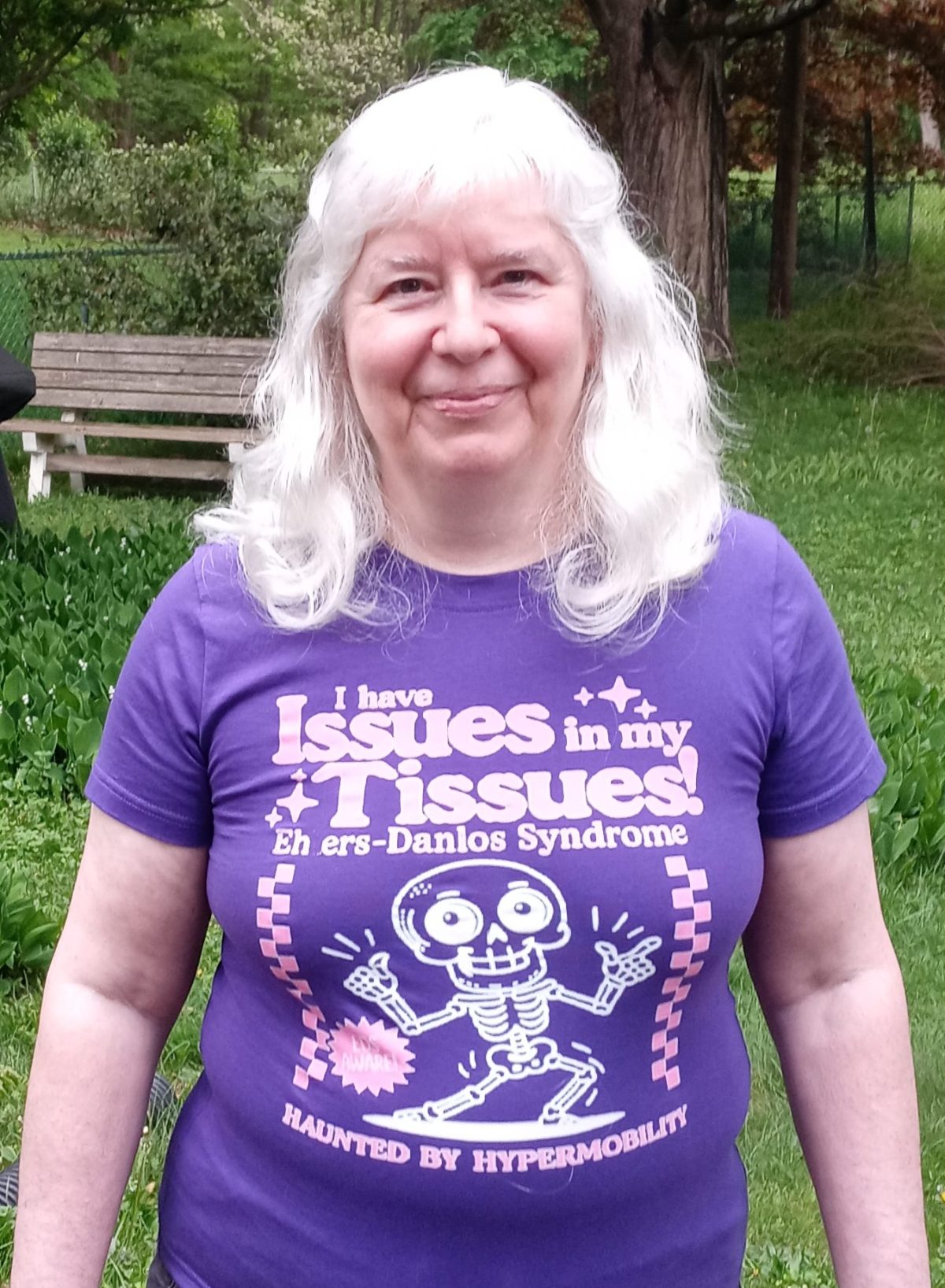
One-Liner Wednesday: EDS shirt

May is Awareness Month for Ehlers-Danlos Syndrome and Hypermobility Spectrum Disorder so I got a shirt!

Join us for Linda’s One-Liner Wednesdays! Find out more here: https://lindaghill.com/2026/05/20/one-liner-wednesday-summer/