SoCS: writing

I miss writing.

Because of the brain fog and fatigue I’ve had over the last couple of years as a result of my extra-stetchy connective tissue from my hEDS, I can’t spend as much time writing as I would like.

Some kinds of writing, like poetry, have become almost non-existent in my life. I feel like the creative side of my brain isn’t operational the vast majority of the time – and the more analytic side is only at half-capacity, at best. Heck, I have difficulty reading literature of any kind these days. I can sometimes manage to grasp poems, if it’s in the morning and they aren’t too long. I can’t read novels because I can’t get plots and characters to stick in my head over days. I can’t even manage non-fiction books because the brain fog is too thick to remember topics over the course of days and the fatigue level is such that I can’t read very long at a sitting. I’ve been trying to keep up by reading news and commentary articles and newsletters but have been so tired lately that my inbox is overflowing with unread material.

There has been so much happening here in the US that I’ve wanted to write posts about but haven’t been able to manage, which makes me sad. I keep thinking that the next specialist visit will give us something actionable to improve my condition but, instead, it usually means more tests are needed, which means waiting for the tests to be scheduled, doing them, waiting for them to be interpreted, waiting for the specialist to see the results and interpret them – which often yields a different result than the radiology reports that land in my health portal – and get back to me with what they think is going on. Then, maybe, we get to trying a treatment that may or may not work and then onto the next option or the next specialist.

I’m grateful, though, that this year I have a specialist who was finally able to diagnose my hEDS and cerebellar ectopia and that I finally have specialists who know what to try with patients like me. Unfortunately, I might need some pretty scary treatments, like brain surgery.

So, I’m grateful and scared and exhausted and anxious and tired of all the waiting and struggling and symptoms and uncertainty.

And I miss writing and being able to make it through a day without having to spend a good chunk of it lying down and being able to take walks without having someone with me in case I lose my ability to keep my balance and going to visit family and friends and being able to concentrate and speaking without having to search for the right word in some kind of frantic brain race.

I miss the life of the mind that I took for granted as part of my identity.

And here you have an illustration of why stream of consciousness writing is so dangerous to put out there, because this is a way darker post than I thought I was going to be writing when I started out with Linda’s prompt of the word miss and decided to write about missing writing.

It is, though, on brand with Top to JC’s Mind where I usually write honestly about whatever is top of mind for me, even when that mind is more scattered and glitchy and exhausted than it used to be.

There are two big imaging studies coming up for me this week and a hugely important appointment with a specialized neurosurgeon at the end of July. Meanwhile, I’m hoping against hope to get a few significant posts written here, as opposed to the last month which has not been very substantive.

Sigh.

I miss writing.
*****
Join us for Linda’s Stream of Consciousness Saturday! Find out more here: https://lindaghill.com/2026/06/19/the-friday-reminder-and-prompt-for-socs-june-20-2026/

EDS/HSD Awareness Month

May is Ehler-Danlos Syndrome/Hypermobility Spectrum Disorder Awareness Month, begun by the Ehlers-Danlos Society to bring attention to this family of connective tissue disorders which affect millions of people around the world, many of whom will take decades to be diagnosed while others will never know for sure what causes their bodies to exhibit an unusual constellation of symptoms. I apologize for being late to the effort, although I did do one awareness post here for One-Liner Wednesday and shared some informative posts via Facebook. It’s been a bit of a rough month for me.

I am one of those people who is yet to be officially diagnosed, despite decades of symptoms, though I will spare you the details of my specific case.

The Ehlers-Danlos Society is a great resource for information about both Ehlers-Danlos Syndrome (EDS) and Hypermobility Spectrum Disorder (HSD), both for individuals and for clinicians and researchers. It also plays a role in funding research around the world for these connective tissue disorders. There is a lot to know but I will just give a broad outline here.

EDS is a group of inherited connective tissue disorders, currently classified into 13 types. Twelve of the types have a known genetic cause, where a chromosome affects a particular protein, and can be identified with testing. Some of these affect less than one in a million people.

The largest group of people with EDS, though, have hypermobile EDS (hEDS), estimated to affect 3,100-5,000 people per million. While it is known to have a dominant genetic inheritance pattern, the genes or groups of genes responsible have not yet been identified. There is some question among researchers and clinicians if hEDS should remain classified as a form of EDS or if it should be considered as part of Hypermobility Spectrum Disorder in which the hypermobility is more widespread and severe than in most people with HSD.

In HSD, people exhibit joint hypermobility/instability in at least one joint, which may suffer frequent sprains, pain, subluxation/dislocation, joint or soft tissue damage, and/or early arthritis. They may also have poor proprioception, which means they can have difficulty with awareness of their bodies’ position or movement, for example, being clumsy.

They may also have symptoms over many parts/systems of their body. Fatigue, headaches, gastrointestinal problems, autonomic dysfunction, and anxiety are some of the kinds of symptoms that can be part of HSD, with each person exhibiting a different constellation of symptoms which may shift over time. This makes sense in that we have connective tissue throughout our bodies, so symptoms as diverse as unusually stretchy or delicate skin, a frequently sprained ankle, irritable bowel syndrome, and blood vessel problems can all be related through differences in the way connective tissues behave in the body. We don’t know how prevalent HSD is, because the current classification system dates from only 2017, our current medical system tends to silo various body systems into separate specialties – without there being any specialists in connective tissues – and most primary care providers haven’t been taught to recognize it. This often leaves patients in the uncomfortable position of having pieced together their own diagnosis but not being able to find a doctor willing to consider it.

I feel that it is important to be properly diagnosed, even though, as inherited conditions, EDS/HSD cannot be “cured.” It helps to know about the underlying cause in order to treat symptoms more effectively. For example, physical therapy may need to be prescribed for a longer period of time with more gentle techniques to avoid further tissue damage. Surgeries may need to be modified to better support lax connective tissue. Knowing what other symptoms may arise that are connected to EDS/HSD is also helpful, along with awareness that connective tissue disorders can help explain some disorders, such as irritable bowel syndrome, that have often been written off as idiopathic.

As EDS/HSD Awareness Month draws to a close, I’d like to thank the Ehlers-Danlos Society for their valuable work in raising awareness of these conditions, advocating for patients, disseminating information, and spearheading research into these connective tissue disorders. Maybe, as more people and, critically, more health care providers learn more about these disorders, patients will be diagnosed and treated more quickly and effectively.

I hope.

(About the photo: Doctors are taught in med school that “when you hear hoofbeats, think horses, not zebras.” However, sometimes, it is actually zebras! Zebras have come to signify EDS/HSD. My daughter T gave me this zebra unicorn pin in that spirit.)

SoCS: calendar

My calendar used to be filled with meetings, volunteer gigs, poetry workshops and readings, family events, and music rehearsals and concerts.

Now, it’s mostly medical appointments.

I am still holding on to singing with the Madrigal Choir of Binghamton. We are coming up on performance week, which will be a challenge with my diminished energy.

Maybe this next round of tests and specialists will get to a full diagnosis and some kind of treatment to improve my situation. I know that it is unlikely to be fully reversed but I’m trying to retain hope that I can bring back the most important abilities and activities I can’t manage now.

If that happens, maybe my calendar will have somewhat fewer medical appointments and more poetry – with some more travel to see family and outings with friends.

Maybe that can even happen later in 2025.

It depends on what happens with the tests and doctor visits that are in those calendar boxes this spring…
*****
Linda’s prompt for Stream of Consciousness Saturday is “calendar.” Join us! Find out more here: https://lindaghill.com/2025/03/21/the-friday-reminder-and-prompt-for-socs-march-22-2025/

end of #JusJoJan

Just Jot It January is ending with a whimper for me.

I had to visit the urgent clinic yesterday evening and barely managed not having to report to the emergency department at the hospital. I need to follow up with my primary care first thing this morning, though, so I’m getting this post out just in case I do wind up needing further treatment in the light of day.

Thanks for all the well wishes, thoughts, and prayers you have been sending my way.

Joanne

To join in on this last day of Linda’s Just Jot It January, visit here: https://lindaghill.com/2025/01/31/daily-prompt-jusjojan-the-31st-2025/

getting there…

I’m slow to recover from my angiogram on Monday. I will, though, be heading to physical therapy early this morning, which will be the first time I’ve left the house. Later in the day, I have a phone appointment with my insurer, who may finally have account numbers for me. Fingers crossed!
*****
There’s still time left to join in Linda’s Just Jot It January! Find out more here: https://lindaghill.com/2025/01/30/daily-prompt-jusjojan-the-30th-2025/

long COVID research summary

I realize I’ve done A LOT of COVID posts this month, but I had to share this post from Dr. Katelyn Jetelina, writing as “Your Local Epidemiologist.” She gathers together the major research advances in understanding long COVID from 2023, with lots of links to the original research.

One of the main takeaways, which I included in this post earlier in the week, is that vaccines help cut down on long COVID cases, with more doses contributing to lower risks.

Dr. Jetelina also suggests subscribing to The Sick Times newsletter, which is dedicated to sharing the latest information about long COVID weekly.

I’m grateful that the rate of long COVID has declined from early in the pandemic, but it is still affecting millions, some new cases and some months or years old. It’s important to learn more about it so treatments can be developed for long COVID and other post-infection syndromes.
*****
Join us for Linda’s Just Jot It January! You can use provided prompts or post whatever you like, even multiple posts about COVID. (Okay, that’s just me,) Find out more here: https://lindaghill.com/2024/01/19/daily-prompt-jusjojan-the-19th-2024/

YAG x 2

In April, I had cataract surgery on both eyes with fancy, extended depth of focus implanted lenses.

Things went well and I’m not wearing glasses full-time, which hadn’t happened since I was six. However, I have run into a couple of common aftereffects that I’ve been dealing with over these past months.

One is an aggravation of my existing problems with dry eye, which I whined about a bit here. We are treating it in several ways and it is improving.

The other was that I developed some filminess or cloudiness in my vision due to posterior capsule opacification, also known as secondary cataracts. The treatment is to use a YAG laser to make an opening in the capsule to allow light through and rectify the cloudiness. (YAG stands for yttrium aluminum garnet.)

I had YAG treatment in both eyes earlier this month and I’m happy to report that it worked well for me. The filminess is gone, which is great because we weren’t sure if part of that was due to the dry eye. I do have increased floaters in my eyes which will probably calm down over the next few months.

I’m able to read my computer without enlarging the text for the most part now and, for the first time ever, made it through a choral rehearsal on Sunday without glasses. I do have a pair of glasses that I can use for fine print and low light situations, as those will continue to be challenging even when all the healing is complete.

It’s been a joy to be able to see without devoting extra brain power to assist. Over these past months, I’ve been having to concentrate consciously on visual processing. It’s been tiring. I’m grateful to be able to look around and just be able to see what’s in front of me without extra effort.

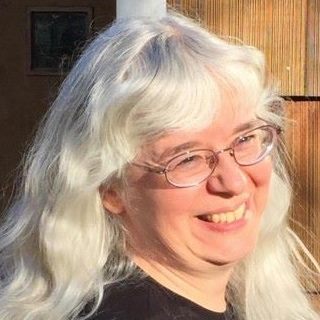
One of these days, I might even get a new headshot taken without glasses, even if it takes a bit for me to recognize myself after 57 years of wearing glasses all the time…

dry eyes

I try not to whine here at Top of JC’s Mind, at least not about personal things.

But, today, I’m so frustrated that, in the name of honesty, I’m going to.

In April, I had cataract surgery with fancy implanted lenses, which was really amazing and means that I no longer need to wear glasses all the time as I had for decades.

The problem is that my previous issues with dry eye are back with a vengeance, clouding my vision.

This was not unexpected, as the surgery and all the drops you have to use after it do disrupt the status quo and increase the risk of dry eye, but my symptoms now are worse than they have ever been.

I’ve been back to my optometrist and am doing all the things I am supposed to be doing – preservative-free artificial tears, special hotpacks, taking flaxseed oil – but improvement has been slow. This is also not unexpected, but it is frustrating.

I can still see well enough to drive but close tasks are a chore. I have some over-the-counter reading glasses that help with some close tasks but, because my current state of cloudiness is caused by the dry eye rather than my focusing ability, the glasses magnify but don’t clarify.

This is making it hard to read things that are not printed in a large font. I can usually adjust when I read on screens but it’s hard to read things on paper. Kitchen work is annoying, too. It’s not that I can’t do these things but it is so taxing that I don’t especially want to.

I have another visit with the optometrist scheduled for next week to make sure there isn’t something else going on, like development of a secondary cataract or some kind of inflammation or infection.

Meanwhile, I’ll try to have this be my only whining post…

supporting those with lymphoma

I admire Rep. Jamie Raskin of Maryland. He is a lawyer and Constitutional scholar just beginning his fourth term in Congress. He served as an impeachment manager in the second trial of Donald Trump and just completed his work on the 1/6 Select Committee.

It’s heartbreaking that he lost his son just days before the 1/6/21 attack on the Capitol. I admire Rep. Raskin’s ability to continue in public service in the aftermath of both personal and national challenges.

He has recently announced a new challenge, a battle with lymphoma. He is about to embark on chemotherapy and plans to continue working while he is being treated. I wish him every success in beating his cancer.

I have a college friend who is also currently in treatment for lymphoma and continue to pray for her full recovery.

I have a lot of hope for their long-term remission because treatment protocols for many types of lymphoma have a good record of success.

My father, known here at TJCM as Paco, was diagnosed with lymphoma about twenty years ago. He received chemotherapy and lived to be 96 without a recurrence. I know my father’s experience is anecdotal, but, for me, it helps to have a personal story to add to the data and statistics.

I invite readers who are so inclined to send out healing thoughts/prayers for Jamie Raskin, for my friend J, and for all those dealing with lymphoma. People who are in a position to make a charitable donation may wish to support the Leukemia & Lymphoma Society , which is highly rated by Charity Navigator.
*****
In one of those bizarre coincidences, I had drafted this post earlier, planning to use it for Linda’s Just Jot It January at some point. When I looked up today’s post to do the pingback, I found out the prompt word is “cancer.” Obviously, this post was meant to be shared today.

long COVID and ME/CFS

One of the fears that I have about COVID is the risk of experiencing long COVID, where any number of a vast constellation of symptoms occurs for months/years after the acute infection phase.

The symptoms are very similar to those that characterize ME/CFS (myalgic encephalomyelitis/chronic fatigue syndrome). I have a family member with ME/CFS, so I am achingly familiar with the level of disability that can result. ME used to be referred to as fibromyalgia in the US, but now the ME designation is more common.

The October 5, 2022 edition of the (US) National Public Radio show On Point features an extensive discussion of long COVID and ME/CFS and how long COVID researchers and clinicians are learning from their peers who have been working for years on ME/CFS. All of these conditions are underdiagnosed and undertreated, so I wanted to share this with all of you. I believe this link will permanently take you to a recording of the episode. If the link breaks, you can try searching from the On Point link above or searching on your favorite podcast platform.

Anyone who has experienced these conditions or seen a loved one contend with them knows how difficult they can be. I want to raise awareness so that everyone affected can get the help they need. I also want everyone to realize that these conditions exist and are serious. Too often, affected people are dismissed and told their symptoms are “all in their heads.” While there is still much to learn, help is available, although it may be difficult to find, depending on the medical resources nearby. I hope we will all support research and treatment expansion so that the millions of people affected get the help they need.