One-Liner Wednesday: Congressional accountability

To any member of the US Congress voting to cut health and food assistance to their constituents in order to give huge, permanent tax cuts and subsidies to the very wealthy, including fossil fuel companies: You can expect that your voters will choose a candidate in the next election who will represent their interests, not those of millionaires and billionaires who only care about their own riches and not the common good or the planet.

Join us for Linda’s One-Liner Wednesdays! Find out more here: https://lindaghill.com/2025/07/02/one-liner-wednesday-take-me-out/

EDS/HSD Awareness Month

May is Ehler-Danlos Syndrome/Hypermobility Spectrum Disorder Awareness Month, begun by the Ehlers-Danlos Society to bring attention to this family of connective tissue disorders which affect millions of people around the world, many of whom will take decades to be diagnosed while others will never know for sure what causes their bodies to exhibit an unusual constellation of symptoms. I apologize for being late to the effort, although I did do one awareness post here for One-Liner Wednesday and shared some informative posts via Facebook. It’s been a bit of a rough month for me.

I am one of those people who is yet to be officially diagnosed, despite decades of symptoms, though I will spare you the details of my specific case.

The Ehlers-Danlos Society is a great resource for information about both Ehlers-Danlos Syndrome (EDS) and Hypermobility Spectrum Disorder (HSD), both for individuals and for clinicians and researchers. It also plays a role in funding research around the world for these connective tissue disorders. There is a lot to know but I will just give a broad outline here.

EDS is a group of inherited connective tissue disorders, currently classified into 13 types. Twelve of the types have a known genetic cause, where a chromosome affects a particular protein, and can be identified with testing. Some of these affect less than one in a million people.

The largest group of people with EDS, though, have hypermobile EDS (hEDS), estimated to affect 3,100-5,000 people per million. While it is known to have a dominant genetic inheritance pattern, the genes or groups of genes responsible have not yet been identified. There is some question among researchers and clinicians if hEDS should remain classified as a form of EDS or if it should be considered as part of Hypermobility Spectrum Disorder in which the hypermobility is more widespread and severe than in most people with HSD.

In HSD, people exhibit joint hypermobility/instability in at least one joint, which may suffer frequent sprains, pain, subluxation/dislocation, joint or soft tissue damage, and/or early arthritis. They may also have poor proprioception, which means they can have difficulty with awareness of their bodies’ position or movement, for example, being clumsy.

They may also have symptoms over many parts/systems of their body. Fatigue, headaches, gastrointestinal problems, autonomic dysfunction, and anxiety are some of the kinds of symptoms that can be part of HSD, with each person exhibiting a different constellation of symptoms which may shift over time. This makes sense in that we have connective tissue throughout our bodies, so symptoms as diverse as unusually stretchy or delicate skin, a frequently sprained ankle, irritable bowel syndrome, and blood vessel problems can all be related through differences in the way connective tissues behave in the body. We don’t know how prevalent HSD is, because the current classification system dates from only 2017, our current medical system tends to silo various body systems into separate specialties – without there being any specialists in connective tissues – and most primary care providers haven’t been taught to recognize it. This often leaves patients in the uncomfortable position of having pieced together their own diagnosis but not being able to find a doctor willing to consider it.

I feel that it is important to be properly diagnosed, even though, as inherited conditions, EDS/HSD cannot be “cured.” It helps to know about the underlying cause in order to treat symptoms more effectively. For example, physical therapy may need to be prescribed for a longer period of time with more gentle techniques to avoid further tissue damage. Surgeries may need to be modified to better support lax connective tissue. Knowing what other symptoms may arise that are connected to EDS/HSD is also helpful, along with awareness that connective tissue disorders can help explain some disorders, such as irritable bowel syndrome, that have often been written off as idiopathic.

As EDS/HSD Awareness Month draws to a close, I’d like to thank the Ehlers-Danlos Society for their valuable work in raising awareness of these conditions, advocating for patients, disseminating information, and spearheading research into these connective tissue disorders. Maybe, as more people and, critically, more health care providers learn more about these disorders, patients will be diagnosed and treated more quickly and effectively.

I hope.

(About the photo: Doctors are taught in med school that “when you hear hoofbeats, think horses, not zebras.” However, sometimes, it is actually zebras! Zebras have come to signify EDS/HSD. My daughter T gave me this zebra unicorn pin in that spirit.)

memorials

Today is the sixth anniversary of my mother’s death. I know many people who, even decades later, tell me they think of their deceased mother every day. I confess that I can’t make that claim. While I spoke to my mother nearly every day of my life, this became increasingly difficult in the last months of her life as her heart failure robbed her brain of oxygen. After her death, I had many months of flashbacks to those last difficult years, while also dealing with my father’s grief. He used to talk to and about my mother often, but, over time, his own heart failure erased the memory of her death. Toward the end, he would ask when she was coming to visit him in the skilled nursing unit and all I could say is that he would see her soon.

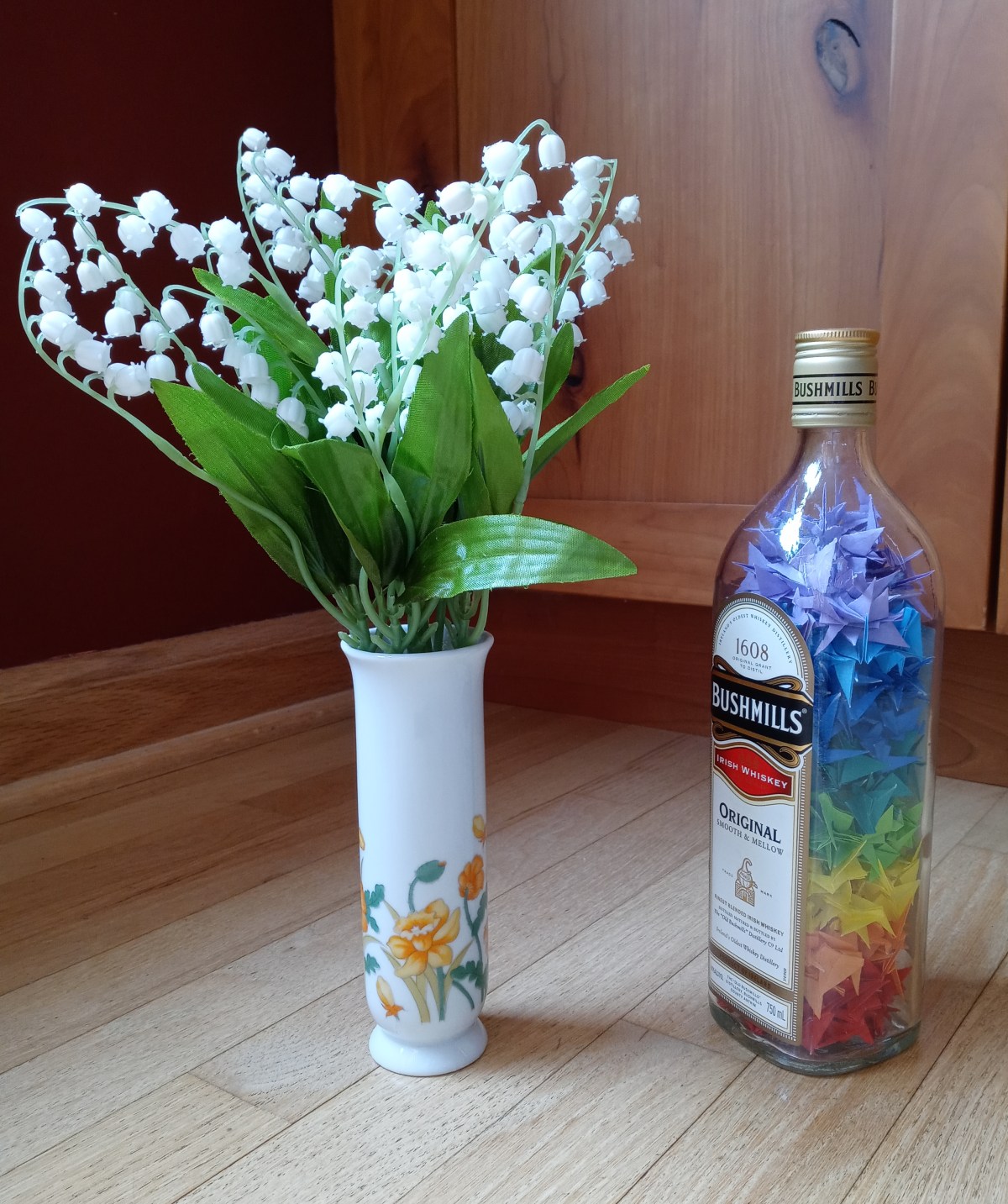
The photo above is of the memorials we placed at the memorial park where their cremains are inurned. I wrote this post explaining their significance when we placed them in 2022.

On Mother’s Day, I went to visit their resting place and was shocked to find that our memorials had been removed. I contacted the office, hoping that they had been placed in storage but they were just gone.

Alone in the room near my parents’ grave, I cried and told them I was sorry that these special memorials had been lost.

I think that is the only time that I have spoken aloud to my parents there.

My family has been supportive of me as I’ve dealt with the loss of these special and meaningful memorials to my parents. I’ve decided to print a photo of them and put it in a plastic frame to place on the table near their grave. That way, if it disappears, I would be able to replace it easily.

In the post linked above, I wrote about feeling more at peace when we placed the memorial. I think I had come to a place in living with loss where I could set aside the trauma of my parents’ final years and deaths and have better memories surface. I’m not sure if that is the point where I stopped thinking about my parents every day or not.

What I do know every day is that my parents gifted me not only with life but also with the foundation of who I am.

Their legacy is always with me, whether or not I bring it to consciousness.

One-Liner Wednesday: connections?

Why are there no medical specialists in connective tissue when it is what holds us together?

This burning question for EDS/HSD Awareness Month brought to you as part of Linda’s One-Liner Wednesday. Join us! Find out more here: https://lindaghill.com/2025/05/21/one-liner-wednesday-600/

One-Liner Wednesday: my new yard sign

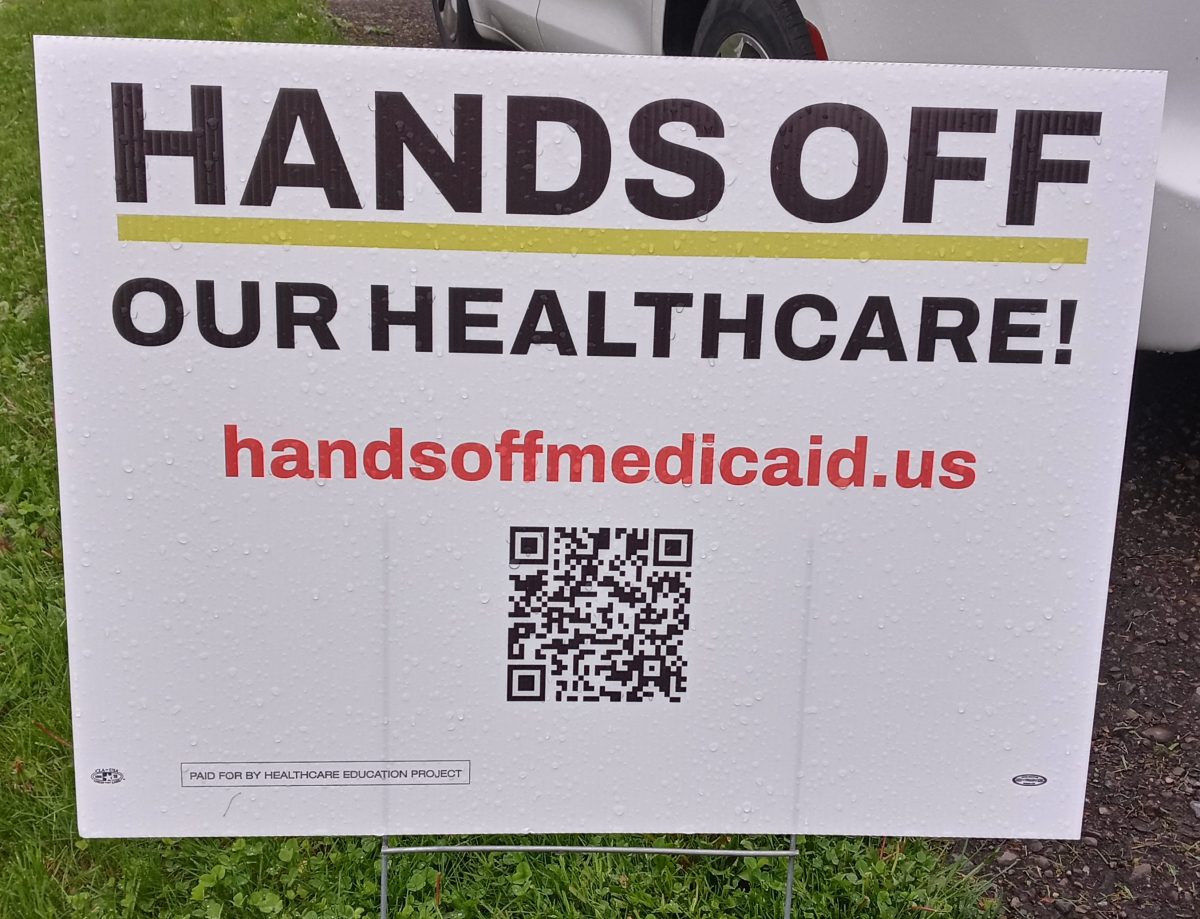
Our new yard sign to send the message to preserve our health programs in the United States.

Join us for Linda’s One-Liner Wednesdays! Find out more here: https://lindaghill.com/2025/05/07/one-liner-wednesday-this-wont-do/

JC’s Confessions #31

In the first few seasons of The Late Show, Stephen Colbert did a recurring skit, then a best-selling book, called Midnight Confessions, in which he “confesses” to his audience with the disclaimer that he isn’t sure these things are really sins but that he does “feel bad about them.” While Stephen and his writers are famously funny, I am not, so my JC’s Confessions will be somewhat more serious reflections, but they will be things that I feel bad about. Stephen’s audience always forgives him at the end of the segment; I’m not expecting that – and these aren’t really sins – but comments are always welcome.

On April 6, 2025, Pope Francis appeared in public for the first time after returning home from his long hospitalization. It was at the end of a special Jubilee liturgy for the sick and health care workers and others who care for them. He had written the homily and a special blessing for the mass, although they were read by others. Francis wrote:

In this moment of my life I share a lot: the experience of infirmity, feeling weak, depending on the others for many things, needing support. It is not easy, but it is a school in which we learn every day to love and to let ourselves be loved, without demanding and without rejecting, without regretting, without despairing, grateful to God and to our brothers for the good that we receieve, trusting for what is still to come.

I am currently entering the second year of dealing with a complex medical situation that has not yet been fully diagnosed. I don’t know if I will be able to be adequately treated or if I will continue to see progression in my symptoms.

It’s hard.

I confess that I am not always gracious in this situation. I manage to let others do things for me and to ask for accommodations if I need them, but I find it difficult to set aside regret and to trust in the future.

This is especially hard for me in regard to my future as a poet. I don’t know if I will regain the creativity I’ve lost to brain fog and fatigue. I’m even losing the concentration and attention to detail needed to do submissions for my already existing poems and manuscripts.

I’m trying not to get to the point of despair.

These next few weeks are important in that I have a new batch of tests and specialist visits coming up.

Maybe having some more information about what is happening will help me to be better with being sick.

Maybe not.

I’ll try.

(I realized when I went back in my blog to find the number confession this was that this confession is, in a way, a continuation of #30.)

Hands Off!

Vote for Democracy #35

(Photo by Lucas Sankey on Unsplash)

Tomorrow, April 5, 2025, there will be hundreds of gatherings across the United States for a Hands Off! day of action. There are even some events in other countries.

These nonviolent marches, rallies, and discussions are in protest of the way that Donald Trump and Elon Musk are gutting legitimate government programs that support the well-being of people and the environment, both in the US and around the world.

Many organizations are helping to organize these gatherings, all with the message of Hands Off! So, Hands Off Climate! Hands Off Health Care! Hands Off Hunger Programs! Hands Off USAID! Hands Off Education! Hands Off National Parks! and more. People will be making signs and creating chants across a wide range of issues that matter to them and to all of us.

While it’s unknown if these large numbers of people coming out across the country will have any impact on the cuts that Trump/Musk/DOGE are making, even when the courts say those cuts are illegal and Congress fails to act, it’s possible. Some cuts have been reversed or service restored after public outcry.

Part of this is to show the Republicans and the Trump administration just how appalling their actions are and how many millions of Americans object to them and want them reversed.

Ordinarily, I would be signed up and ready to participate in the local rally, but my health is preventing me from being there. It feels wrong not to be participating, but I have to trust that many others will be giving voice to my concerns in person, while I am confined to writing about it and calling my representatives. I’m also supporting some of the participating organizations.

I had intended to write more posts about what the administration was doing and the impacts of the insane cuts and policy changes; I just haven’t had the energy to do it. More tests and specialists coming up, so maybe things will get better – eventually.

With the country, I’m not so sure…

Twenty years ago

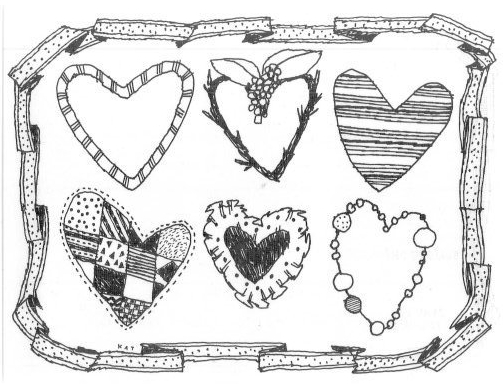
(Hearts by Angie Traverse)

Twenty years ago today, my friend Angie died.

We had met when we were volunteering at the middle school our children attended. Angie was kind and caring and funny and talented and we became friends, although she had a plethora of friends already. Because we were both doing volunteering and taking care of family, we had the flexibility to meet for lunch and chat or work on committee projects. Because Angie’s good will also embraced family, she got to know my parents.

We thought that, one day, we would become grandparents and have multi-generational hangouts.

Unfortunately, a nagging cough when Angie was 50 turned out to be stage 3 lung cancer. It was a shock because she had never been a smoker. Despite all the best efforts of her medical team, the cancer eventually progressed and took her life at 54.

March 25th was Good Friday that year.

There was a charitable fund set up in her name and, for years, I gave to it every year on March 25th and on her October birthday. The last few years, though, the website has disappeared. I think the fund probably had enough contribution for it to be endowed so its work can continue.

I’ve written about Angie before here at Top of JC’s Mind and even had a poem published about our friendship and her loss.

I didn’t know it at the time, but Angie’s death was followed by the loss of my long-time parish community and the death of B’s dad, the first loss of a grandparent for our daughters.

2005 became one of the worst years of my life.

I fear that 2025 may be even worse, especially when I look at what is happening in the United States as our democracy disintegrates and damages lives here and abroad.

Personally, this will be the year where we figure out what is going on with my health and address it or the year where I have to deal with giving up what I thought my life as an elder would be.

A small problem when people are dying or being threatened or losing family members because Trump/Musk/Vance et al think they can break laws, norms, and ethical obligations and concentrate all power in the executive branch.

I am sorry that I am too weak to be out on the streets for protests and have to confine my activities to online posts and messages and phone calls.

I’m hoping we can turn 2025 around after these horrible last couple of months.

Trying – while mourning for those who have been hurt.

And still, twenty years later, missing Angie.

SoCS: calendar

My calendar used to be filled with meetings, volunteer gigs, poetry workshops and readings, family events, and music rehearsals and concerts.

Now, it’s mostly medical appointments.

I am still holding on to singing with the Madrigal Choir of Binghamton. We are coming up on performance week, which will be a challenge with my diminished energy.

Maybe this next round of tests and specialists will get to a full diagnosis and some kind of treatment to improve my situation. I know that it is unlikely to be fully reversed but I’m trying to retain hope that I can bring back the most important abilities and activities I can’t manage now.

If that happens, maybe my calendar will have somewhat fewer medical appointments and more poetry – with some more travel to see family and outings with friends.

Maybe that can even happen later in 2025.

It depends on what happens with the tests and doctor visits that are in those calendar boxes this spring…
*****
Linda’s prompt for Stream of Consciousness Saturday is “calendar.” Join us! Find out more here: https://lindaghill.com/2025/03/21/the-friday-reminder-and-prompt-for-socs-march-22-2025/

5 years of COVID-19

(COVID Photo by Martin Sanchez on Unsplash)

The COVID-19 pandemic shutdowns began in the United States five years ago this month. I’ve written a lot of posts about it over those years and I’m proud to say that they have been added to the archives of the Newark Valley (NY) Historical Society to be preserved for future research.

To date, there has only been one case in our household, when B contracted it at a work event in November, 2023. Fortunately, T and I did not get sick.

All three of us participated in Phase III clinical trials for the Pfizer/BioNTech vaccine and have kept up to date on recommended doses as the virus has mutated into new variants over these past five years. We’ve also taken other precautions, such as masking and avoiding crowds when virus levels are high. Admittedly, it’s been harder and harder to get information about virus levels in our area as the public health emergency lapsed and reporting became optional.

I do still get some public health and long COVID newsletters that give some information. I found out today, for example, that there is a new variant, BA.3.2, in South Africa that has 50 new spike mutations. It could stay localized and fizzle out; if it out-competes other strains and spreads, it could create a wave similar to Omicron.

As far as the United States goes, I’m concerned that the vaccination rates are likely to fall even further with a vaccine skeptic now in charge of the Department of Health and Human Services. The United States has already suffered over 1.2 million deaths from COVID with millions more dealing with long-lasting health repercussions. Vaccines can help people avert more severe symptoms and decrease the chances of being infected but work best if a large proportion of the population are vaccinated. This also helps protect people who have more fragile immune systems, such as the very young, elders, and people with compromised immune systems.

I believe that information is power, but it needs to be factual information, not wishful thinking or political posturing. We can’t pretend that the virus doesn’t still kill or sicken people and that the United States is not continuing to lose hundreds of people each week due to COVID-19.

To deny the existence of COVID and/or its impact on our lives dishonors those we have lost, those who have been sickened by the virus, their loved ones, and their communities.

Take care of each other and do what you can to keep us all as healthy as possible.