New essay by Ellen Morris Prewitt

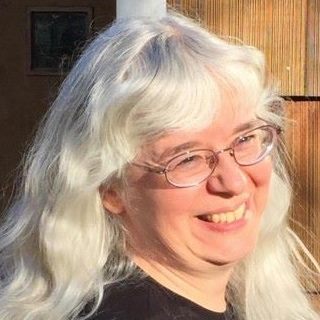
Photo Credit: Ellen Morris Prewitt

On December 7, 2024, I shared Ellen Morris Prewitt’s essay about the 150th anniversary of the Vicksburg Massacres.

Ellen is the granddaughter of the main instigator of the Massacres and has been sharing her experiences as she has researched her family’s involvement and grappled with the continuing legacy of racism.

Now, Ellen has a powerful essay entitled “Granddaughter of The Instigator” in the Juneteenth special edition of Salvation South, which delves further into her witness to the legacy of the Vicksburg Massacres on a community and personal level. This essay is an excerpt from her memoir-in-progress, Loving My Hateful Ancestors. You can read a post about the publication of the essay in Ellen’s Very Southern Voice blog and, while you’re there, subscribe to her newsletter and/or follow her blog.

I just realized that I keep referring to Ellen Morris Prewitt by her first name, as though we were acquainted in real life, but we only met each other through blogging. Her writing is so vivid and heartfelt, though, that I feel as if we know each other through our posts and our comments on each other’s blogs with a side of occasional personal emails.

I’m a fan of Ellen’s and invite you to join me!

Welcome, Pope Leo XIV!

(By Edgar Beltrán / The Pillar – https://x.com/edgarjbb_/status/1920590815472108021, CC BY-SA 4.0, https://commons.wikimedia.org/w/index.php?curid=164970023)

When I wrote about Pope Francis right before the conclave, I didn’t expect that the conclave would end on the second day. As a reader of NCR (National Catholic Reporter), though, I was delighted but not shocked by the selection of Cardinal Robert Prevost as the next Pontiff. Although he was born in Chicago and educated in the United States (with an additional degree from the Pontifical University of St. Thomas Aquinas in Rome), most of his ministry has been outside the US. Fluent in several languages, including Spanish and Italian, he spent over twenty years in Peru as a pastor and, later, Francis-appointed bishop. He is well-known in church circles internationally because he visited close to fifty countries as prior general of the Augustinian order and, for the last two years, had been in Rome serving as head of the Dicastery for Bishops, which advises the Pope on the appointment of bishops world-wide. He was chosen as a cardinal on assuming this prominent role in the Curia, which is the Catholic Church’s bureaucracy.

While many had felt that it was impossible for anyone from the US to be chosen as Pope because the United States is such a powerful country, Cardinal Prevost was seen as more of an international figure. He is a citizen of Peru as well as the United States and has lived in Rome for over a dozen years. He understands the workings of the Vatican but retains the skills of a pastor. He supports Francis’s efforts to make the church more synodal in its approach, which broadens those with input into church matters instead of everything being concentrated in the power of the bishops, led by the Pope, who is given primacy as the bishop of Rome. I think that his skills and resume, as well as his familiarity in so many countries, made him a natural choice for the cardinal-electors.

I was struck that the name he chose was Leo XIV. This immediately brought to mind Leo XIII, whose 1891 encyclical Rerum Novarum (Of New Things) is the bedrock of Catholic social justice doctrine. That encyclical is subtitled Rights and Duties of Capital and Labor; it brought moral teaching to bear in response to the challenges of the industrial revolution. This choice of name signals that the new pope hopes to bring social justice doctrine to bear on the current challenges of the digital age. He also will continue the work of Francis’s 2015 encyclical Laudato Si’: On Care for Our Common Home, which emphasizes working to address “the cry of the earth and the cry of the poor.”

I was struck by his age. Born in 1955, Leo XIV is the first pope who was raised in the post-Vatican II church from childhood. My hope is that his papacy will continue the reforms of Vatican II which place the Catholic Church in the modern context rather than trying to isolate itself. This is the first time that a pope feels like a brother to me because he is actually close in age to my older sister. Being from the United States, I also understand better the environment in which he grew up. It lends a feeling of closeness that was not possible with the prior popes in my lifetime.

Leo XIV’s age also opens the possibility of a long pontificate. Leo XIII had one of the longest pontificates in history at 25 years; Leo XIV may not match that length but could remain pope for over two decades if his health holds.

I also have a personal attachment to the name Leo, which was my father’s name. He was named after his own father, although not a Junior as they had different middle names. Family lore is that my great-grandparents, after suffering the loss of several children, started to name them after popes, so my grandfather was literally named after Pope Leo XIII, who was serving at the time of his birth. All their sons who were named for popes survived into adulthood.

Welcome, Leo XIV! May God bless your pontificate and all the work you do for peace, justice, the world, and all peoples.

SoCS: walks – or not

I used to enjoy going for walks with my spouse but haven’t been able to for most of the last 15 months due to my current health struggles.

You can read more about that here, in the context of today being the last day of EDS/HSD Awareness Month.

I used most of my energy getting that post together, here in this early morning timeframe, so this is a short Stream of Consciousness Saturday post. Linda’s prompt this week is “walk.” Please consider joining us or just stop by Linda’s site to wish her and her family well as they are recovering from illness at this point.

EDS/HSD Awareness Month

May is Ehler-Danlos Syndrome/Hypermobility Spectrum Disorder Awareness Month, begun by the Ehlers-Danlos Society to bring attention to this family of connective tissue disorders which affect millions of people around the world, many of whom will take decades to be diagnosed while others will never know for sure what causes their bodies to exhibit an unusual constellation of symptoms. I apologize for being late to the effort, although I did do one awareness post here for One-Liner Wednesday and shared some informative posts via Facebook. It’s been a bit of a rough month for me.

I am one of those people who is yet to be officially diagnosed, despite decades of symptoms, though I will spare you the details of my specific case.

The Ehlers-Danlos Society is a great resource for information about both Ehlers-Danlos Syndrome (EDS) and Hypermobility Spectrum Disorder (HSD), both for individuals and for clinicians and researchers. It also plays a role in funding research around the world for these connective tissue disorders. There is a lot to know but I will just give a broad outline here.

EDS is a group of inherited connective tissue disorders, currently classified into 13 types. Twelve of the types have a known genetic cause, where a chromosome affects a particular protein, and can be identified with testing. Some of these affect less than one in a million people.

The largest group of people with EDS, though, have hypermobile EDS (hEDS), estimated to affect 3,100-5,000 people per million. While it is known to have a dominant genetic inheritance pattern, the genes or groups of genes responsible have not yet been identified. There is some question among researchers and clinicians if hEDS should remain classified as a form of EDS or if it should be considered as part of Hypermobility Spectrum Disorder in which the hypermobility is more widespread and severe than in most people with HSD.

In HSD, people exhibit joint hypermobility/instability in at least one joint, which may suffer frequent sprains, pain, subluxation/dislocation, joint or soft tissue damage, and/or early arthritis. They may also have poor proprioception, which means they can have difficulty with awareness of their bodies’ position or movement, for example, being clumsy.

They may also have symptoms over many parts/systems of their body. Fatigue, headaches, gastrointestinal problems, autonomic dysfunction, and anxiety are some of the kinds of symptoms that can be part of HSD, with each person exhibiting a different constellation of symptoms which may shift over time. This makes sense in that we have connective tissue throughout our bodies, so symptoms as diverse as unusually stretchy or delicate skin, a frequently sprained ankle, irritable bowel syndrome, and blood vessel problems can all be related through differences in the way connective tissues behave in the body. We don’t know how prevalent HSD is, because the current classification system dates from only 2017, our current medical system tends to silo various body systems into separate specialties – without there being any specialists in connective tissues – and most primary care providers haven’t been taught to recognize it. This often leaves patients in the uncomfortable position of having pieced together their own diagnosis but not being able to find a doctor willing to consider it.

I feel that it is important to be properly diagnosed, even though, as inherited conditions, EDS/HSD cannot be “cured.” It helps to know about the underlying cause in order to treat symptoms more effectively. For example, physical therapy may need to be prescribed for a longer period of time with more gentle techniques to avoid further tissue damage. Surgeries may need to be modified to better support lax connective tissue. Knowing what other symptoms may arise that are connected to EDS/HSD is also helpful, along with awareness that connective tissue disorders can help explain some disorders, such as irritable bowel syndrome, that have often been written off as idiopathic.

As EDS/HSD Awareness Month draws to a close, I’d like to thank the Ehlers-Danlos Society for their valuable work in raising awareness of these conditions, advocating for patients, disseminating information, and spearheading research into these connective tissue disorders. Maybe, as more people and, critically, more health care providers learn more about these disorders, patients will be diagnosed and treated more quickly and effectively.

I hope.

(About the photo: Doctors are taught in med school that “when you hear hoofbeats, think horses, not zebras.” However, sometimes, it is actually zebras! Zebras have come to signify EDS/HSD. My daughter T gave me this zebra unicorn pin in that spirit.)

memorials

Today is the sixth anniversary of my mother’s death. I know many people who, even decades later, tell me they think of their deceased mother every day. I confess that I can’t make that claim. While I spoke to my mother nearly every day of my life, this became increasingly difficult in the last months of her life as her heart failure robbed her brain of oxygen. After her death, I had many months of flashbacks to those last difficult years, while also dealing with my father’s grief. He used to talk to and about my mother often, but, over time, his own heart failure erased the memory of her death. Toward the end, he would ask when she was coming to visit him in the skilled nursing unit and all I could say is that he would see her soon.

The photo above is of the memorials we placed at the memorial park where their cremains are inurned. I wrote this post explaining their significance when we placed them in 2022.

On Mother’s Day, I went to visit their resting place and was shocked to find that our memorials had been removed. I contacted the office, hoping that they had been placed in storage but they were just gone.

Alone in the room near my parents’ grave, I cried and told them I was sorry that these special memorials had been lost.

I think that is the only time that I have spoken aloud to my parents there.

My family has been supportive of me as I’ve dealt with the loss of these special and meaningful memorials to my parents. I’ve decided to print a photo of them and put it in a plastic frame to place on the table near their grave. That way, if it disappears, I would be able to replace it easily.

In the post linked above, I wrote about feeling more at peace when we placed the memorial. I think I had come to a place in living with loss where I could set aside the trauma of my parents’ final years and deaths and have better memories surface. I’m not sure if that is the point where I stopped thinking about my parents every day or not.

What I do know every day is that my parents gifted me not only with life but also with the foundation of who I am.

Their legacy is always with me, whether or not I bring it to consciousness.

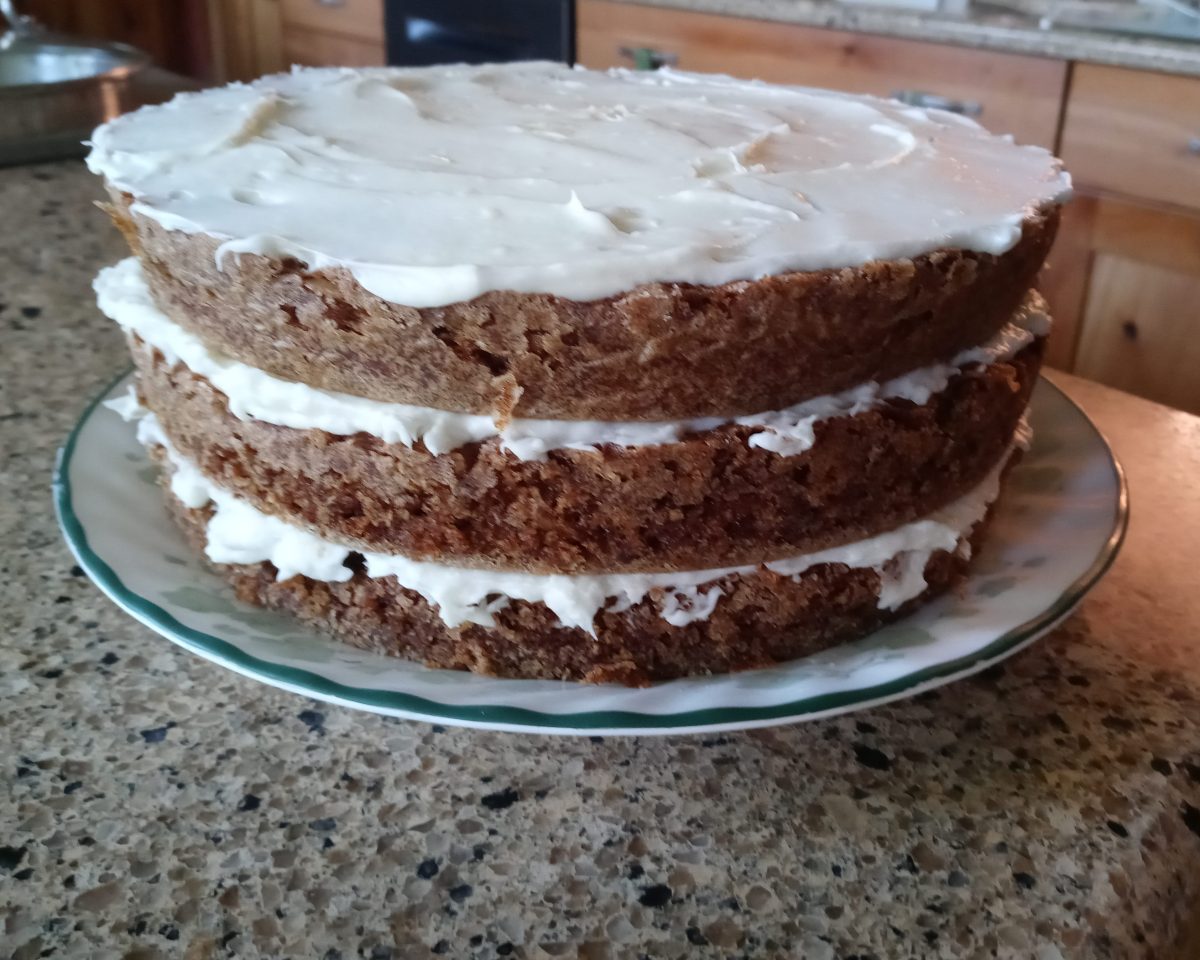
One-Liner Wednesday: carrot cake

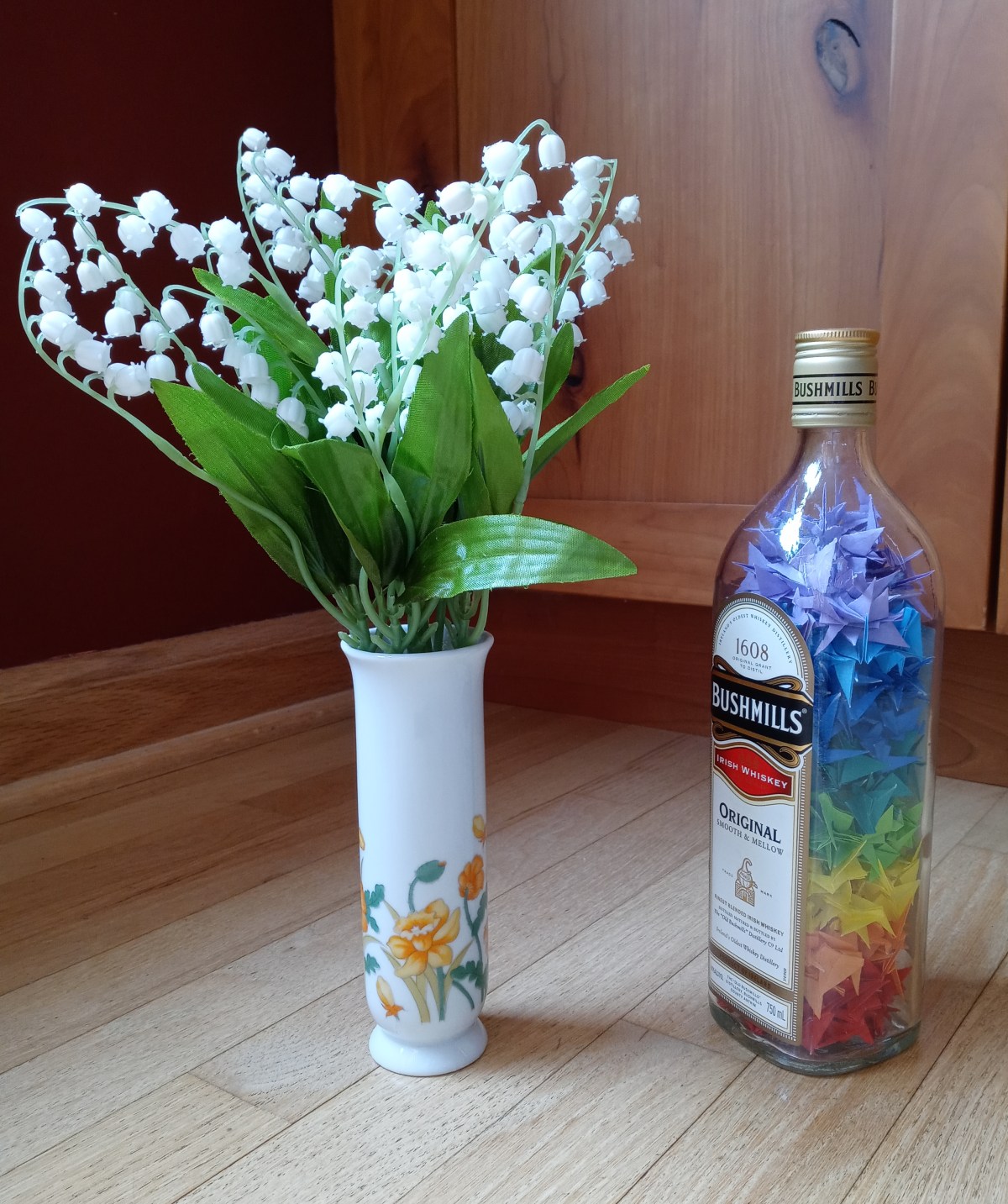
The yet-to-be-revealed dessert choice that B made for Mother’s Day was carrot cake with cream cheese icing.

Join us for Linda’s One-Liner Wednesdays! Find out more here: https://lindaghill.com/2025/05/14/one-liner-wednesday-one-of-two/

Mother’s Day 2025

This photo from almost eight years ago is three generations of mothers in my family, Nana and me with daughter E holding baby ABC, my first grandchild and Nana’s first great-gandchild.

This Mother’s Day is without Nana, who passed away in May 2019, and with E and ABC living in London, where Mother’s Day was celebrated a couple of months ago.

Here, B baked squash maple muffins for breakfast and is planning a special dinner, chicken and artichokes over artichoke ravioli with a yet-to-be-revealed-to me dessert. Daughter T is here with us, which is a blessing.

Still, if feels strange to not be with any of the other mothers in my family, except in spirit.

I am wearing a shirt that was my mother’s, a gift from our friend Angie, who passed away twenty years ago.

Mother’s Day began as a call for peace. (That post contains Julia Ward Howe’s original proclamation, still well worth reading in our current war-torn world.) Today, I wish peace to all, especially to all who have mothered others, whether still living or deceased.

Love and compassion bring peace.

Disintegration

Vote for Democracy #37

(Photo by Lucas Sankey on Unsplash)

I am watching the United States, the only country where I have lived for over sixty years, disintegrate around me.

My heart is broken and I don’t know how well I can convey the gravity of the situation, but I have to try.

I will say that there is massive and growing resistance among the public and within the government at various levels but it’s unclear whether or not we can keep our democracy and its Constitution and laws in effect.

The Trump/Vance administration has defied court orders trying to contain their illegal behavior. There have been orders to reinstate employees and officials wrongfully terminated, to restore funding cuts and agency closures that the administration has enacted when only Congress has the authority to do so, and to give due process rights to immigrants and visitors who have been imprisoned in different parts of the country or even sent to a notorious foreign prison in El Salvador.

Trump has written executive orders that don’t reflect reality, declaring states of emergency where there is no emergency so that he can attempt these illegal actions that are terrorizing millions of people, in the United States and around the world.

At the moment, he is trashing our national economy and disrupting the global economy with his tariff policy. He has threatened the sovereignty of other nations who are our allies. The world order that rose from the ashes of World War II over the past 80 years, led by the United States, is damaged and, I’m afraid, irreparable because our allies will not be able to trust us again.

What should be happening is that Congress should impeach and convict the president of high crimes and misdemeanors and remove him from office. Other executive branch officials, including the vice-president, should resign or themselves be impeached for their unconstitutional actions. This would include the current House speaker, who would become president under the Constitution, if he would not restore the rule of law and stop the takeover of the government by oligarchs and corrupt politicians.

Given the way the Republican majorities of both houses of Congress have been behaving, the above scenario will only happen if dozens of Republicans either decide to fulfill their oaths to uphold the Constitution and laws or resign their seats, either to protect their families from threats or to accede to the demands of their constituents who are being harmed by the Republican regime.

I have no illusions that this scenario, which is in accordance with the way our Constitution is designed, is going to happen.

I know that things can get worse. There is the possibility that Trump will try to declare a state of emergency to allows him to use the military within the US to go after peaceful protesters. He could try to jail members of the media or elected officials who oppose him. He could start a war with Canada because he wants to annex them or with Denmark over Greenland, either of which would turn into a major conflict as the other NATO nations would come to the aid of Canada and Denmark under Article 5 of the treaty that formed NATO in 1949.

Or any number of other horrible things that would harm millions of people.

That’s why so many of us are speaking out to resist Trump/Musk/Vance/DOGE.

While my fears are national and global, they are also personal. Among my friends and family are people who are immigrants, naturalized citizens, people of color, part of the LGBTQIA+ community, living in poverty, dependent on government programs for health care or food assistance or income, retired, dealing with illness and/or disabilities, children, elders, students, writers, teachers, government workers, people of various faiths and non-religious philosophies, rural, suburban, and urban dwellers.

In all of that, I think I am typical of most people in the United States.

When I hear about funding cuts for medical research and vaccines, I know that my own health and that of my family and friends has been vastly improved by these in the past and will suffer in the future if these cuts remain in place.

When I hear about visitors from other countries being harassed, turned away, or even imprisoned without cause, I worry about what might happen the next time the UK branch of my family comes to visit because it includes a foreign national.

Watching the wild gyrations in the stock, bond, and currency markets, I worry about our financial stability as we begin our retirement.

I don’t know what will happen next, but I know that millions upon millions of us are trying to keep our democracy intact so there is some chance to repair some of the harms of the last few months.

I wonder if this is how people felt at other times of national peril, especially during the Civil War.

We are not currently forming “a more perfect Union” as the Preamble to our Constitution calls us to do. We aren’t fulfilling any of the purposes of government found there either.

Deep breath.

Keep trying.

Twenty years ago

(Hearts by Angie Traverse)

Twenty years ago today, my friend Angie died.

We had met when we were volunteering at the middle school our children attended. Angie was kind and caring and funny and talented and we became friends, although she had a plethora of friends already. Because we were both doing volunteering and taking care of family, we had the flexibility to meet for lunch and chat or work on committee projects. Because Angie’s good will also embraced family, she got to know my parents.

We thought that, one day, we would become grandparents and have multi-generational hangouts.

Unfortunately, a nagging cough when Angie was 50 turned out to be stage 3 lung cancer. It was a shock because she had never been a smoker. Despite all the best efforts of her medical team, the cancer eventually progressed and took her life at 54.

March 25th was Good Friday that year.

There was a charitable fund set up in her name and, for years, I gave to it every year on March 25th and on her October birthday. The last few years, though, the website has disappeared. I think the fund probably had enough contribution for it to be endowed so its work can continue.

I’ve written about Angie before here at Top of JC’s Mind and even had a poem published about our friendship and her loss.

I didn’t know it at the time, but Angie’s death was followed by the loss of my long-time parish community and the death of B’s dad, the first loss of a grandparent for our daughters.

2005 became one of the worst years of my life.

I fear that 2025 may be even worse, especially when I look at what is happening in the United States as our democracy disintegrates and damages lives here and abroad.

Personally, this will be the year where we figure out what is going on with my health and address it or the year where I have to deal with giving up what I thought my life as an elder would be.

A small problem when people are dying or being threatened or losing family members because Trump/Musk/Vance et al think they can break laws, norms, and ethical obligations and concentrate all power in the executive branch.

I am sorry that I am too weak to be out on the streets for protests and have to confine my activities to online posts and messages and phone calls.

I’m hoping we can turn 2025 around after these horrible last couple of months.

Trying – while mourning for those who have been hurt.

And still, twenty years later, missing Angie.

SoCS: calendar

My calendar used to be filled with meetings, volunteer gigs, poetry workshops and readings, family events, and music rehearsals and concerts.

Now, it’s mostly medical appointments.

I am still holding on to singing with the Madrigal Choir of Binghamton. We are coming up on performance week, which will be a challenge with my diminished energy.

Maybe this next round of tests and specialists will get to a full diagnosis and some kind of treatment to improve my situation. I know that it is unlikely to be fully reversed but I’m trying to retain hope that I can bring back the most important abilities and activities I can’t manage now.

If that happens, maybe my calendar will have somewhat fewer medical appointments and more poetry – with some more travel to see family and outings with friends.

Maybe that can even happen later in 2025.

It depends on what happens with the tests and doctor visits that are in those calendar boxes this spring…
*****
Linda’s prompt for Stream of Consciousness Saturday is “calendar.” Join us! Find out more here: https://lindaghill.com/2025/03/21/the-friday-reminder-and-prompt-for-socs-march-22-2025/