on being a zebra (unicorn)

May is EDS & HSD Awareness Month. EDS stands for Ehlers-Danlos Syndrome and HSD for Hypermobility Spectrum Disorder. They are a group of inherited connective tissue disorders that remain under-diagnosed and under-treated. Case in point: I was diagnosed with hypermobile Ehlers-Danlos Syndrome (hEDS) in January at the age of 65, making sense of decades-worth of unexplained symptoms.

The Ehlers-Danlos Society uses the zebra as a symbol of the EDS/HSD community because there is a saying among the medical community that “when you hear hoofbeats, think horses, not zebras” but, sometimes, there really are zebras. Zebras also each have their unique stripe pattern, in the same way that people with EDS/HSD have their own unique presentation, depending on how their collagen and connective tissue is impacted across different body systems at that particular time in their life. The medical system in the United States and in many other countries tends to divvy medical care to specialists who only look at one body system but connective tissue disorders are easier to recognize if one takes a more integrative approach.

And a fun zebra fact: A group of zebras is called a dazzle, which leads to the Ehlers-Danlos Society saying, “Together, we dazzle!”

As I’ve continued to research hEDS, I’ve been engaging in personal forensic diagnostics. So many things I have experienced in my life make sense now that I know of my genetic inheritence of hEDS. For example, I developed tendon problems in my elbow as a young teen which impacted my abilities as a pianist and organist. When I eventually had to resort to surgery in my thirties, the outcome wasn’t as expected and I had to give up playing. I now understand that this was due to my hEDS inherited collagen defects.

My IBS, IC, endometriosis, vulvodynia, pre-term labor, allergies, mast cell activation disorder, cervical instability, near-sightedness, depression/anxiety, cerebellar ectopia, sleep apnea, early gall bladder disease, hiatal hernia, acid reflux, chronic fatigue, diverticulosis, chronic kidney disease, sensitive skin, joints that bend more than expected, and more all have a connective tissue component and are more likely in people with EDS/HSD.

Daughter T gave me the zebra unicorn pin as a gift. While the zebra is the symbol of EDS/HSD, adding the unicorn element helps to play up the uniqueness of each individual.

And it’s super cute!

The point is that another person with hEDS could exhibit a totally different set of symptoms from mine or we could share some symptoms and not others. It just depends on which connective tissues are compromised and how much at that particular time. Other factors are involved, too, like age, activity level, hormone and endocrine function, etc. It adds to the zebra-unicorn element and takes a thoughtful and informed practitioner to pick up on the possibility of an underlying connective disorder behind all the symptoms of different body parts.

In December, there will be an update to the EDS/HSD diagnostic guidelines. My hope is that the medical community will use these and the best practices guidelines that will follow in spring 2027 to finally look more comprehensively at their patients and diagnose and help them at much younger ages than currently.

Some people are also under the mistaken impression that it doesn’t do any good to give a diagnosis when you can’t cure the disorder. While it’s true that we can’t current treat the genetic cause, there are treatments to help alleviate many of the symptoms. It’s also imperative for practitioners to know the EDS/HSD status for anyone who is contemplating surgery. Surgeons need to know about connective tissue differences so that they can compensate for that during the procedure and the recovery protocols or, perhaps, decide that surgery is not appropriate. Many EDS/HSD patients also need long-term physical therapy to help them function; it makes a huge difference if physical therapists are knowledgeable about connective tissue disorders so that they help rather than hurt.

As I continue my journey with hEDS, I will keep you posted here at Top of JC’s Mind. If we are super-lucky and we find effective treatment for my brain fog and fatigue, I may even post more regularly.

I will, though, always remain my unique, zebra-unicorn self.

Bolt 70,000

Our 2017 Chevy Bolt just passed 70,000 miles (about 113,000 kilometers). We still love driving it and hope to keep it for years to come.

With gas prices as expensive as they are these days, it’s especially nice to be driving an electric vehicle. Bonus: we own solar panels in a community solar farm, so charging at home is very inexpensive.

I’m just hoping that, when we do decide to replace our Bolt, we will have lots of EVs from which to choose. EVs are winning increasing market share in most of the rest of the world, so the United States will be playing catch-up after the damage the Trump administration has done to the EV industry.

Smith blackout poetry ’26

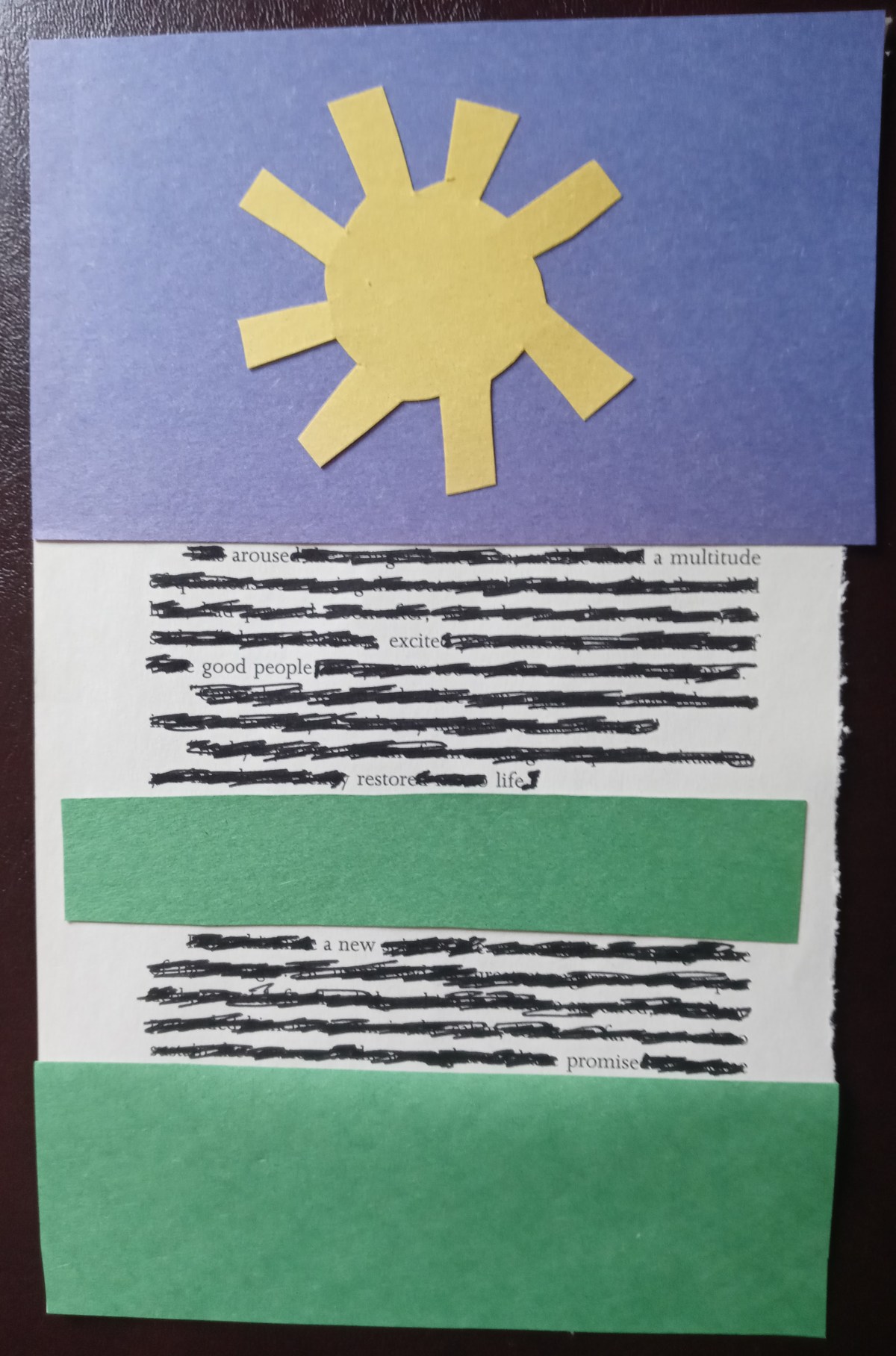
For the past several years, the Boutelle-Day Poetry Center at my alma mater, Smith College, has offered a Blackout Poetry Project to the Smith community, including alums. In the blackout poetry style, one takes a page of pre-existing text and crosses out words or letters to create a poem. The pages are then sometimes embellished with color or other visual art elements. I have participated in prior years, such as the year when the theme was Emily Dashes, using the poems of Emily Dickinson.

This year’s theme is Monster Mash, creating blackout poetry using pages from Mary Wollstonecraft Shelley’s Frankenstein. As you can imagine, the work is quite dark in tone, so I decided to take page 22, which was sent to me from the Center, and transform it into a brighter message.

As it may be difficult to read from the photo, the words I chose to highlight are:
arouse a multitude
excite good people
restore life
a new promise

My visual artist friends will, I’m sure, forgive my rudimentary collage but I felt that we are all in need of a bit of sunshine today.

Write Out Loud ’26 recording!

As I wrote here, I was unable to attend the Write Out Loud ’26 event at the Fenimore Art Museum near Cooperstown, NY, last month, but I’m happy to share the newly released recording.


My poem “Nor’easter Numbers” is first on the program, read wonderfully by the fabulous Sharon Rankins-Burd. If you watch the video on YouTube and click on “more,” you can see the program and timings laid out so you can easily navigate to particular pieces. Enjoy! As always, feel free to comment.

Globe Trotter!

WordPress has informed me that I’ve unlocked a new achievement, Globe Trotter. It means that I have received views from 50+ countries.

Okay, it’s taken 12 years but still cool!

One-Liner Wednesday: EDS shirt

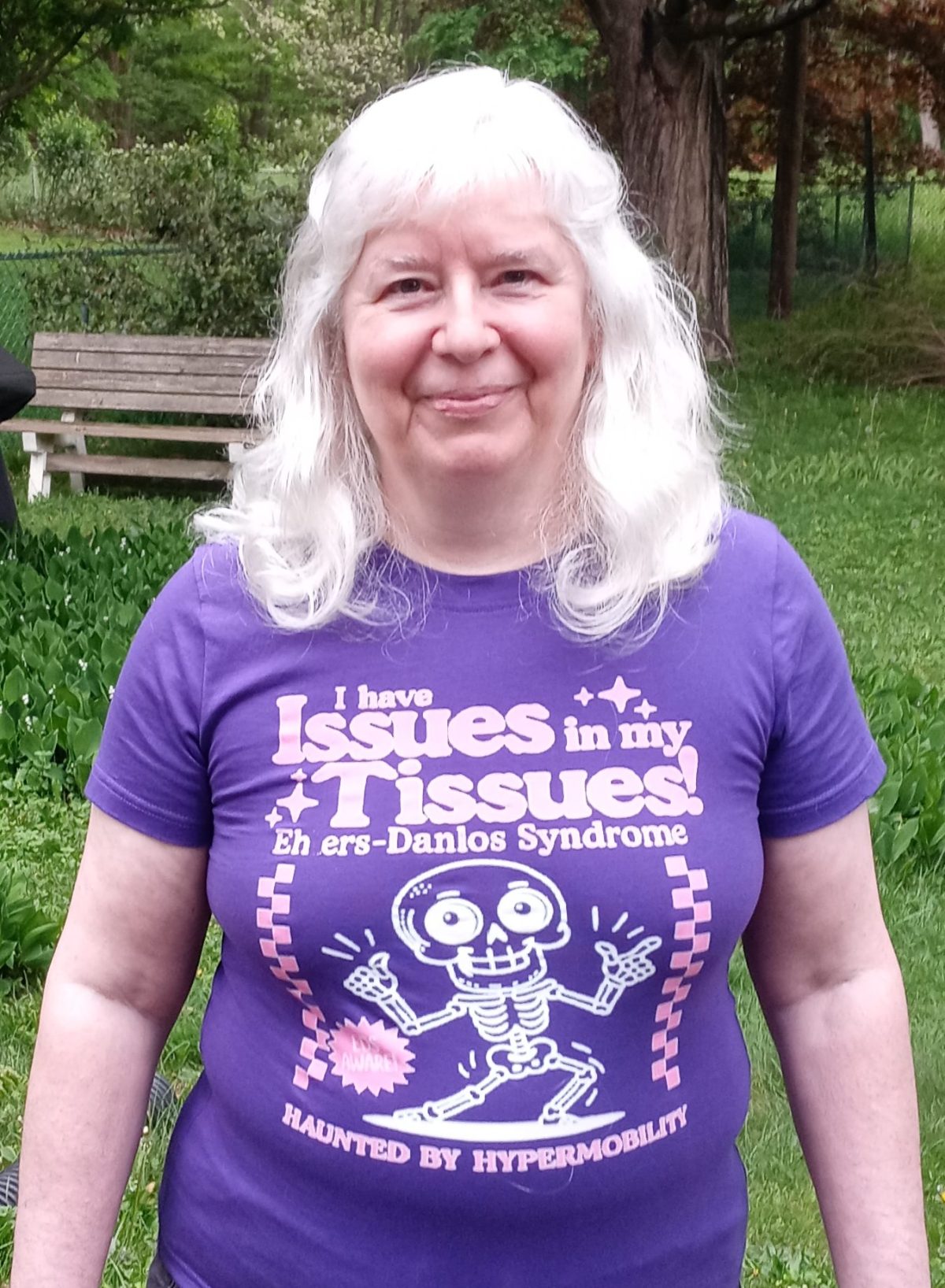
May is Awareness Month for Ehlers-Danlos Syndrome and Hypermobility Spectrum Disorder so I got a shirt!

Join us for Linda’s One-Liner Wednesdays! Find out more here: https://lindaghill.com/2026/05/20/one-liner-wednesday-summer/

The Colbert Questionert

My family and I have been recording and watching Stephen Colbert for years, beginning with his years as a correspondent on The Daily Show, followed by his entire run on The Colbert Report and his current gig as host of The Late Show, which is having its final shows this week. While CBS said that it was for financial reasons, the perception is that it was really the result of Stephen’s jokes about Trump, especially as CBS’s parent company was negotiating a sale that needed administration approval.

My occasional blog series, JC’s Confessions, was inspired by Stephen’s Midnight Confessions from his early years at The Late Show, which was followed by a book.

Another long-running feature was Stephen asking his famous guests to answer the Colbert Questionert, which was supposed to reveal their inner selves and be “fully known.” In homage to Stephen and his talented writing team, I, a distinctly non-famous person, will share and answer the Colbert Questionert.

1. What’s the best sandwich?
Grilled cheese, made with Cabot cheddar cheese (which is white, not the bizarre orange that some cheddars are) on homemade white bread
2. What’s one thing you own that you really should throw out?
Deteriorating sheet music that I inherited from a friend of my family when I was a child
3. What is the scariest animal?
A violent person with a gun
4. Apples or oranges?
Apples, because, as Stephen often notes, you can’t put peanut butter on an orange. Also, for me and my delicate constitution, oranges are too acidic.
5. Have you ever asked someone for their autograph?
Lots of someones, as I often ask poets to sign their books for me
6. What do you think happens when we die?
I think that our soul, which can also be understood as our consciousness, continues to exist as energy. This allows us to reunite with loved ones who have passed away and to live eternally within Divine Love, which is my interpretation of heaven.
7. Favorite action movie? The Incredibles, because it gives action without blood and gore.
8. Favorite smell?
fresh-baked bread
9. Least favorite smell?
ammonia
10. Window or aisle?
I like to sit in a window seat because I loved studying geology in college. I like to see the landforms and the clouds.
11. What is your earliest memory? I remember playing outdoors with my older sister and neighbors at the house we lived in when I was three.
12. Cats or dogs?
Dogs, although we only have people in our household due to allergies (and the fact that there is enough to do just taking care of each other)
13. You get one song to listen to for the rest of your life: what is it?
“Ich bin der Welt abhanden gekommen” from Mahler’s Rückert Lieder with mezzo-soprano Janet Baker.
14. What number am I thinking of?
Of course, I can’t answer this in Stephen’s absence, but my choice would, of course, be wrong.
15. Describe the rest of your life in 5 words.
Family – Love – Creativity – Service – Thinking

I don’t know if anyone will think that my answers make me “fully known” or not, but I do love that phrase because it appears in one of my favorite Bible passages, 1 Corinithians 13. Like Stephen, I am a Catholic and I wonder if that passage was in his mind when they decided to use that term in the Colbert Questionert. I find it a comforting concept because so many problems in life seem to stem from misunderstanding among individuals and groups.

I know that Stephen is not retiring so we will hear more from him in whatever creative vehicles he chooses. I will miss, though, hearing from him on a regular basis.

Thank you, Stephen, for all the years of laughter and insight. I hope you get a chance to rest and rejuvenate and spend more time with family after all your hard work.

And, maybe, you should answer your own questionnaire, so you, too, are “fully known.”

Postscript: On the next-to-last episode, Stephen did take the Colbert Questionert himself, asked by a parade of celebrities. I came back to edit this post to reflect the questions asked that night, but I wanted to still include these questions from earlier iterations.
A. Exercise: worth it?
Personally, no, except for physical therapy. One of the things that I’ve learned about my brain and body is that I don’t really get endorphin rush from exercise. I just get even more tired and, if I push too hard, will wind up needing a day or more of minimal activity or even bedrest to recover. My version of dealing with the chronic fatigue that can come with hEDS.
B. Flat or sparkling?
Flat, because my system doesn’t do well with bubbles.
C. Most used app on your phone?
Text. I use my phone as little as possible.

SoCS: sweet taste

My favorite foods are sweet.

I know that humans’ first taste preference is for sweetness. It’s why breast milk is so sweet.

Most people, though, go on to develop preferences for additional flavors. I, though, am not very tolerant of foods that are sour or bitter. Strong flavors are often physically painful for me and I’ve learned that something that most people perceive as mild are often overwhelming for me. This is especially true for hot/spicy foods, like peppers. I also don’t drink coffee or tea, which are just too bitter for me.

I wonder if this taste preference for sweet and intolerance for sour and bitter is a natural defense. One of the conditions that I have is interstitial cystitis, also known as painful bladder syndrome. (It’s probably also related to my hEDS and mast cell activation disorder, but I digress.) One of the ways to help reduce IC flares is to reduce acidic foods as much as possible. Most sour or bitter foods are also high in acid, so maybe my intolerance of those flavors is a self-defense mechanism.

By the way, salty foods are also bad for people with IC so I eat low-salt, as well. I don’t find salty foods physically painful, though, unless it is really, really, really salty, which feels like burning in my mouth.

I’m such a delicate flower!

And sweet! 😉
*****
Linda’s prompt for Stream of Consciousness Saturday this week is “sweet.” Join us! Find out more here: https://lindaghill.com/2026/05/15/the-friday-reminder-and-prompt-for-socs-may-16-2026/

One-Liner Wednesday: relative threats

New favorite analogy from The Daily Show moment of Zen earlier this week: COVID is to wildfire as hantavirus is to a wet log in a cold fireplace.

Join us for Linda’s One-Liner Wednesdays! Find out more here: https://lindaghill.com/2026/05/13/one-liner-wednesday-an-oldie/ (Sorry that I couldn’t find the proper citation.)

Mother’s or Mothers’ Day

Today is celebrated as Mother’s Day in the United States. In other years, I’ve shared about the older, Mothers’ Day begun by Julia Ward Howe in the years following the American Civil War.

This year, I’m sharing historian Heather Cox Richardson’s Substack on Howe’s views and actions.

Today, I’m wishing peace and equal rights to all mothers and all people everywhere.