
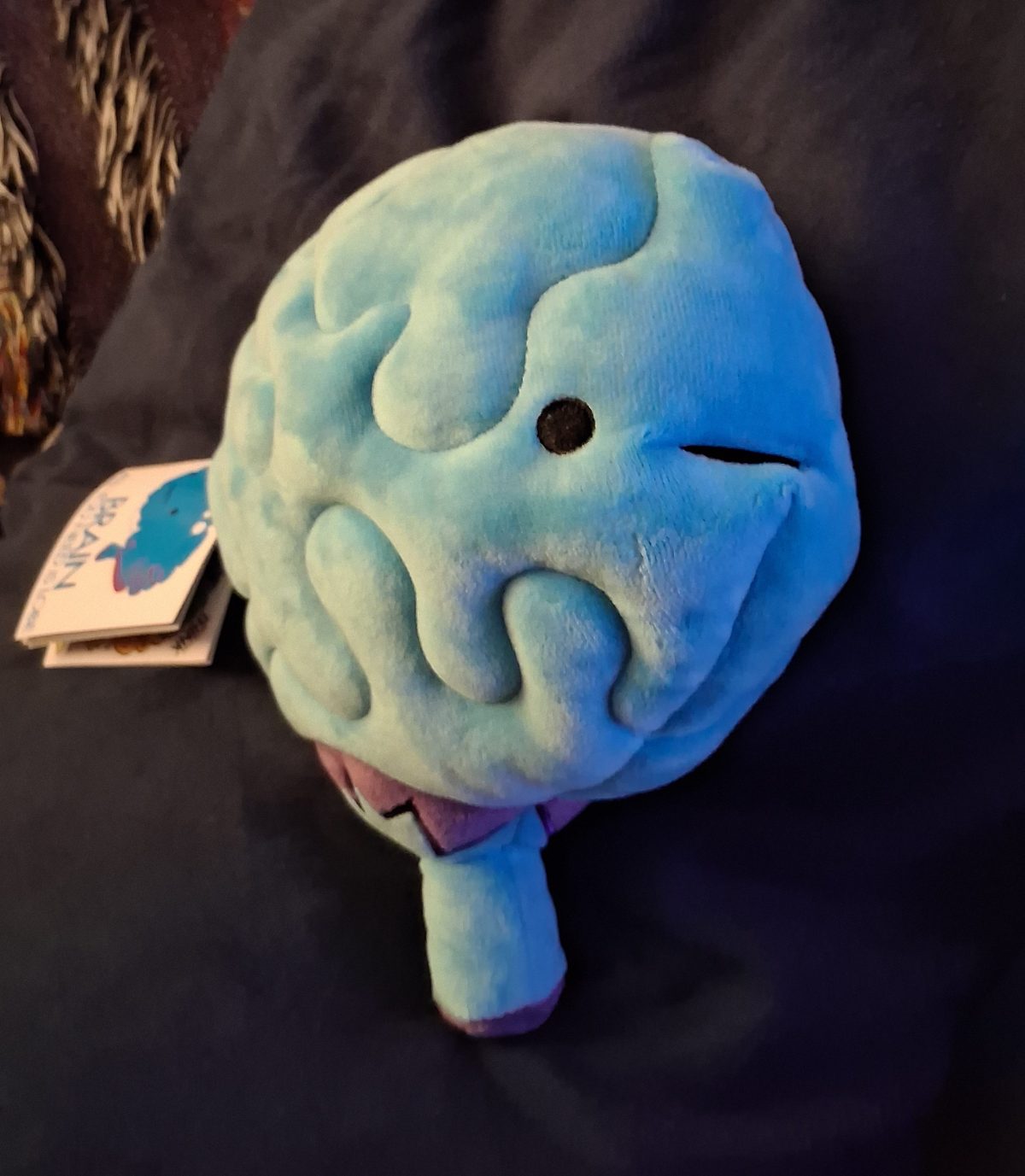
For the first time since my surgery for Chiari malformation on Monday, I actually slept through the night last night, which felt amazing. Here in the US, we also ended Daily Saving Time last night, so, even though it looked like I was up early, I had to add an hour to account for the clock change.
I do still owe you a surgery post but, right now, I wanted to share what has already improved since my surgery.
By the time I left the hospital on Wednesday, my balance was much improved, so that I could reliably walk without having someone nearby to help steady me if I got light-headed. I could also walk in a straight line, if that was what I intended. Balance problems have been a constant for over two years now, so having it already improve so much feels like a miracle.
The other thing that I noticed while still in the hospital is that the blurring in my left eye is much better. I can see for long stretches without any blurring but can still have trouble when I’m most tired.
The exciting thing this morning was that it seems that my breath control is improving, too. I was participating in All Saints’ Day mass via a recording and was happy that I could sustain the phrases in the opening hymn, “For All the Saints.” It’s been frustrating to have to breathe way more often than a singer should need to – and there is certainly much room for further improvement – but to have a noticeable improvement already feels great.
All these things are most likely due to the restored cerebrospinal fluid flow. I had a lot of testing to rule out physical problems with my eye, inner ear, lungs, etc., so we knew there was not a problem with the organs themselves. Rather, there was a problem with them getting proper signals from my brain.
Improved breathing is particularly important for me. I had been getting out of breath easily, for example, from walking up a flight of stairs or from lying on my stomach. It seemed that it was likely due to dysautonomia, which is common in people with hEDS and/or Chiari malformation. One of the fun features of my surgery had been difficulty keeping me breathing because I needed to be prone so Dr. Klinge could access the back of my head and neck, but they had modify the body position they usually use because I would unceremoniously stop breathing, even though I was intubated.
Obviously, we are still in early days of a recovery that is expected to last 3-6+ months, but I’m stunned at how much has improved already. I have to remind myself that symptoms that haven’t changed at all yet may well improve over these coming months, just more gradually as my brain heals after 2 1/2 years of not enough cerbrospinal fluid circulation.
I am so grateful to Dr. Klinge and her whole team; to Lauren Eadline, my wonderful NP who specializes in patients with hard-to-diagnose-and-treat disorders; and to all my family, friends, and readers who have been so supportive throughout all of this and continue to uphold me.
Onward (but with still a lot of rest breaks)!


