As I promised in this post announcing the creation of joannecorey.com, here are some reflections on ten years of blogging here as Top of JC’s Mind – a little later than planned, but what else is new?
Ten-ish years ago, I was just starting to write poetry as a serious pursuit and writing a lot of commentary on fracking and related topics, which I sometimes cross-posted to Facebook. I also posted on Facebook articles and comments on a wide range of current issues. Several friends suggested that I start a blog and, as preserved for posterity in my first post, I fell into it on September 13, 2013.
Of course, as in so many other things I’ve chosen or been compelled to do, I didn’t really know what I was doing. [Embarking on projects for which I do not have sufficient training/background is somewhat of a life theme with me. I’m forever grateful to Smith College for grounding me in the liberal arts and schooling me in how to think critically and creatively, so that I’ve been able to branch out into different activities without making a total hash of it.] I had planned for Top of JC’s Mind to be an eclectic blog, hence the tagline “eclectic like me.”
While I have found a number of other blogs that deal with anything/everything, it’s usually recommended for blogs to have a theme, like food or music or travel. It’s also recommended to have a set publication schedule, every Monday and Thursday, for example. It’s strongly encouraged to incorporate images into all your posts.
So, I flew in the face of all that advice, not because it isn’t good advice, but because it didn’t work for me. Sticking to one topic is much too confining. My personal schedule, if you can even apply that term, has always been unpredictable and became more so as I dealt with multi-generational caregiving. My nod to regular posting has been to often, though not always, participate in the series from Linda G. Hill’s Life in progress blog, One-Liner Wednesdays and Stream of Consciousness Saturday. I’ve also participated in her initiative, Just Jot it January, in which we are challenged to post every day for the month. My One-Liner Wednesday and Stream of Consciousness Saturday posts are accessible through entries in the main menu.
I did initiate a series of my own, JC’s Confessions, loosely modeled after a recurring segment in the early years of The Late Show with Stephen Colbert in which Stephen “confessed” to things that, while not really sins, he felt badly about. Of course, Stephen is humorous and I am not. A link to JC’s Confessions is also in my main menu.
I also started a series How Does JC’s Mind Work? but it only has two entries so far. It’s inspired by the slow-dawning realization that my mind works in some atypical ways, as an INFJ who is also an HSP. I’ve only recently started to learn more about these categorizations and it’s helped to explain a lot of things that were puzzling to me. For example, studies have shown that brains like mine are wired differently and process thoughts, emotions, stimuli, etc. differently than the majority of people. I think we all tend to default to the position that others’ brains and minds operate the same way ours does; I know that I tended to do so. I do find myself sometimes explaining to people what I’m thinking or feeling because I’m often misinterpreted and then get in trouble with people based on their perceptions rather than my reality. This series is also a place for me to talk about personal history and influences that shaped who I am today. And, yes, I really should get back to this series, at some point..
One of the things that I intended to do was to share poetry, which I do, although seldom with poems that aren’t already published elsewhere. What I didn’t realize when I started Top of JC’s Mind is that, for many journals and publishers, even a personal blog post with a handful of views is disqualifying. I usually only post original work that I don’t foresee being able to publish in a journal, such as current event poems that have been rejected by the couple of venues I know that publish such things or ekphrastic poems that I aren’t chosen in response to The Ekphrastic Review‘s Writing Challenge Series.
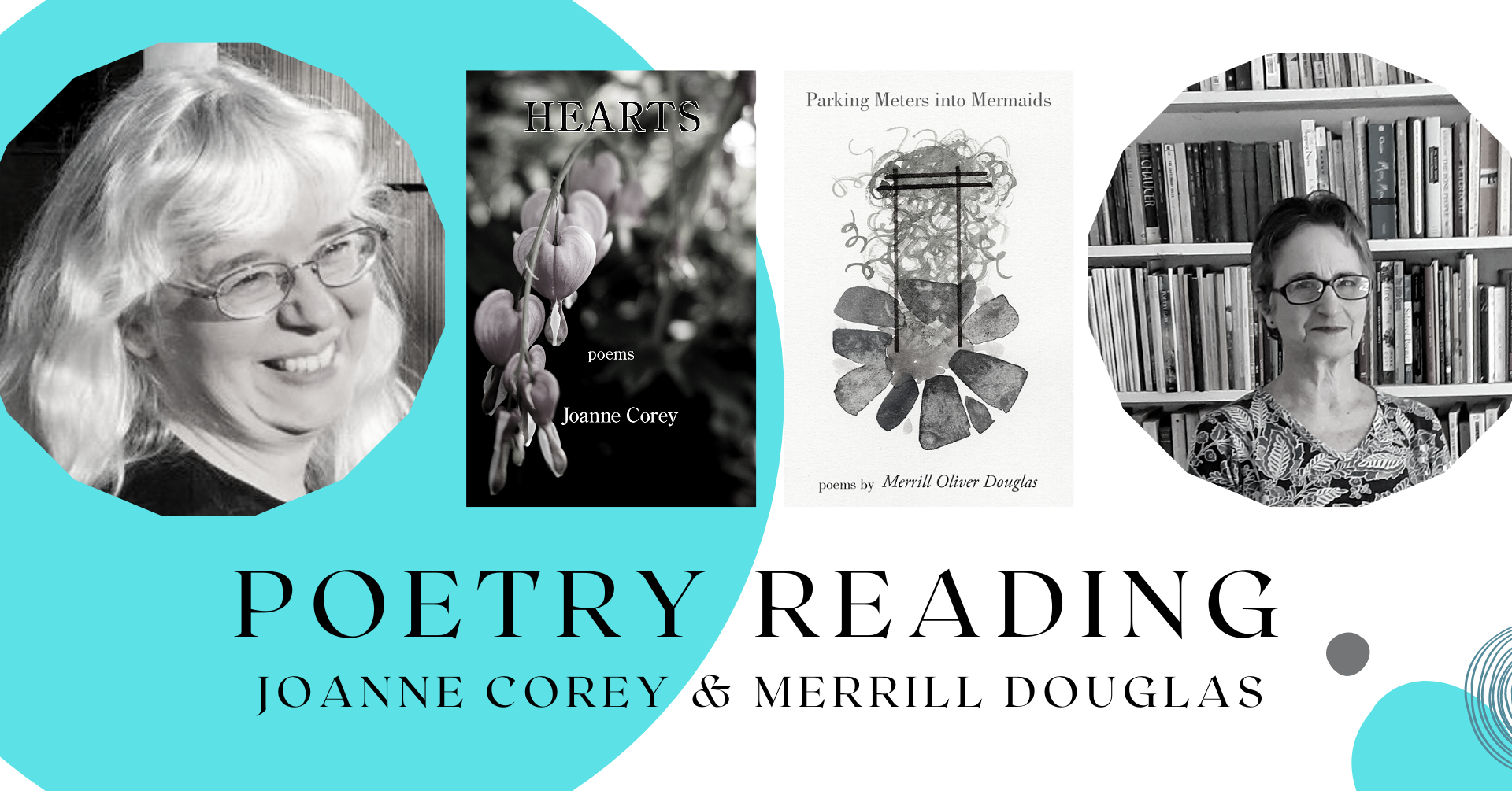
What I didn’t foresee was how much I would post about the process of writing poetry and learning about writing poetry. I didn’t know that I would be part of a workshop-in-residence at the Massachusetts Museum of Contemporary Art in North Adams with the Boiler House Poets Collective. Or that I would be publishing in anthologies with the Binghamton Poetry Project. I certainly had no clue that I would eventually publish my first chapbook, Hearts.
I also didn’t realize how much I would write about my family. For their privacy, I chose to refer to them by initials or nicknames, so only people who know us in real life can easily find them. Ten years ago, I didn’t know the paths that the final years of my parents and mother-in-law would take or that I would have two granddaughters who would be living across an ocean from me.
I certainly didn’t know that I would post extensively about a pandemic. I’m continuing to add an occasional COVID-19 post. (I’m getting my updated vaccine on Monday, so another post will be coming.) One of the local historical societies decided to keep an archive of how the pandemic affected daily life in our area and I’m proud that they chose to include print-outs of my COVID-19 posts in that collection. Maybe, a hundred years from now, someone will stumble across them while doing research…
I do weigh in on current events, which are often disconcerting. I’ve written about gun violence and hatefulness in US society because of their sad, overwhelming prevalence. I’ve written quite a lot about government and the bewildering lack of attention to the Constitutional call to “promote the general welfare.” I mourn over the continuation of racism, sexism, bigotry, intolerance, and hatefulness that are so much in evidence and seem to be worsening rather than lessening. I try to show my values of love, respect, inclusion, and care for others and the world. I strive to express my authentic self here at Top of JC’s Mind and take care to be factually correct.
I welcome comments to my posts and do my best to respond. I will engage in respectful debate with those who disagree with me. It doesn’t happen often but I have had instances where I’ve had to delete or edit a comment. This is my platform and I will not have it used to spread misinformation or hatefulness. (I also don’t allow coarse language. My inability to swear or engage in vulgarity is a bit of a running joke among my poetry circles. Somewhere in the back of my head is a voice from my childhood saying, “What! Were you raised in a barn?”)
One of the things that bloggers are supposed to do is amass readers and followers. It’s suggested that a blogger spends a third of their time reading others’ blogs, a third writing posts, and a third writing comments on others’ blogs and responding on their own. That way, you connect with others in the blogging community and get noticed by more bloggers and readers. I really did try to do that early on but, as demands on my personal time grew, I found I only had time to write posts and tend to their comments, with occasional frenzied bouts of reading. Consequently, I don’t have tons of views and followers.
Of course, bloggers are also supposed to track stats. WordPress has a handy page to do this – and I don’t usually – but I will put my all-time stats in this post for the sake of posterity. Ten years of Top of JC’s Mind has ammased:
1,839 posts
7,107 comments
62,805 visits
34, 983 unique visitors
1,950 subscribers/followers
The subscriber/follower number is somewhat inflated. It includes people who have followed me through WordPress, liked my Top of JC’s Mind Facebook page, signed up to receive posts by email, and followed me through Twitter (now X and no longer available for automatic sharing through WordPress.) This means that some individuals are counted more than once. A few that I know of are now deceased. Many of the followers through WordPress are folks who found their way to one of my posts, hit follow, and never visited again. I do have a small core of readers who visit frequently and comment often, which I appreciate so much. You know who you are! I can’t really tell you how many readers I have for a typical post because I can only track site visits; I have no way of knowing how many people read posts sent via email.
I do, though, want to thank everyone who has ever visited Top of JC’s Mind, liked a post, commented, followed, or subscribed. While the process of writing helps to clarify my thoughts, writing for others challenges me to express those thoughts in a cogent way. I appreciate the opportunity to discuss different topics and share thoughts, experiences, and feelings with whoever happens to drop into my tiny sliver of the blogosphere.
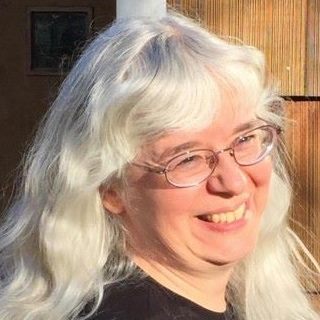
I try to keep growing as a blogger. I’m being forced to trying to improve my use of images in order to crosspost to Instagram, which requires an image. (But, seriously, Instagram! Why do you insist on .jpgs only? Why not allow .png and .webp? And why do you have this thing with squares?) Instagram is the reason that so many of my posts lately, including this one, have my photo at the top. I’m trying to decide if I should get a new headshot taken of my post-cataract surgery, post-Invisalign self but I’ve used this photo that spouse B took of me to accompany this poem for so long that I’m loathe to replace it.
So, will I blog here for another ten years? I can’t guarantee, but I do have hope. I hope at least a few of you will stay tuned and journey with me.
Peace,
Joanne Corey of Top of JC’s Mind











 Joanne Corey