One-Liner Wednesday: booster

Today, I’m getting my sixth dose of Pfizer/BioNTech COVID-19 vaccine, this one targeting Omicron variant XBB.1.5 and shown to be effective against other currently circulating Omicron sub-variants. Please consider joining me if your health professional or public health agency recommends it for you.
*****
This public health message is brought to you as part of Linda’s One-Liner Wednesdays. Join us! Find out more here: https://lindaghill.com/2023/09/20/one-liner-wednesday-the-ultimate-404-error/

Two years without Paco

I work up in the very early morning darkness today thinking about my father, known here and in real life for the last 33-ish years of his life as Paco, the name bestowed on him by my firstborn and his first grandchild E as she was learning to talk.

I suppose this is not surprising because this is the second anniversary of his death. You can read a tribute that I wrote to him a few weeks after his passing here.

What is unfortunate is that in the early morning darkness in which I am now writing this post I am remembering so much of his final years, when I was struggling to get proper support and medical care for him, exacerbated by the pandemic. Even though I was living locally, there were long stretches in which I could not visit in person at all or only for short amounts of time. Phone and video calls were often frustrating, as you can tell from this poem, which was first published in Rat’s Ass Review.

Video Chat with our 95-year-old Father

You said it was scary
today
that we were there

in your bedroom
your three daughters
in pulsating squares

on a screen
You remembered where
home

is for each of us
but not where
it is for you

confused that you
could see us
hear us

but we were not
there
with you

We talked about the snowy
winter, so like our New England
childhoods, when you would

wrangle your orange
snowblower to clear
our way out

We asked if the cut
and bruise on your hand
had finally healed

if you had finished
all the Valentine
goodies we’d sent

Distracted
by a sound
from the living room

you set the tablet
aside
left us

staring at the ceiling

What was most difficult was that, no matter how hard I tried, I couldn’t secure correct diagnoses or treatments for Paco, illustrated by the fact that his death certificate states that he died from end-stage heart failure, but he was only diagnosed with heart failure about ten days before he died. I had been trying for months to tell the staff at his assisted living and then skilled nursing units of his continuing care community that he was having unexplained symptoms and had accompanied him to outside doctors and emergency room visits, when the pandemic protocols allowed me to stay with him, but it was never enough to get to the bottom of his health difficulties.

I thought I had worked my way out of most of the trauma of that but, in the early morning darkness of this anniversary day, apparently there is still some of that pain left. It’s not that I think I could have further prolonged his 96 years – something that would not have served any of us – but that his final months would have been so much easier for him if he could have received timely, proper diagnosis and medications.

One of the comforts of Paco’s death was the thought of his reuniting with my mom, known here as Nana, who died in May, 2019, also of heart failure and, gratefully, before the pandemic struck. I drafted this poem, which was first published by Wilderness House Literary Review, only a couple of weeks after Paco’s death.

We probably should have taken off					

his wedding ring before
he died		    before
his hands cooled	      started
to claw
but we couldn’t		       remove
that symbol
			of Elinor
	of two years
		   three months
			twenty-three days
						left
without		her
after
	sixty-five years
		      one month
			   three days
married to her
			the ring
				of her
even    in    days    of    delirium
	    haze			confusion

his ring		not
	sixty-seven years	  old
		but	   twenty
her gift 	         a remedy
	 for missing		some		thing
		of his
  to cling to 		during his three weeks
			       in the hospital
his chest cracked			 open
     		widow-maker averted
				somehow

She inscribed 		his ring	
      ALL MY LOVE  “ME”
     the way she signed 	cards to him
birthday	anniversary	  Christmas
	St. Patrick’s Day
		valentines
the words against his left
	ring finger		believed
to lead most directly to the heart
	which finally failed
		after ninety-six years
			five months
				nineteen days
as hers had
	after eighty-seven years
		     six days

While I go to the sink
to fetch soap 		to ease
the ring off 	his finger
my sister works
it over	 his reluctant 	knuckle

I carry it 	home 
to my daughter
Elinor’s and Leo’s rings
	   unite
on their granddaughter’s finger

[For those of you who might be new to Top of JC’s Mind, I will note that it is really unusual for me to fold poems into posts like this, but somehow, in the early morning darkness, it seemed appropriate.]

I’ll close this post by explaining the significance of the four-generations photo, taken a few weeks before Paco’s death, that begins this post. It shows Paco, me, eldest grandchild E who named Paco, and great-granddaughters, then 4-year-old ABC and just turned 1-year-old JG. This was the first and only meeting of Paco and JG, who had been born in London, UK, in the early months of the pandemic. ABC lived here in the States with us for her first two years and remembered Paco very well. The restrictions on international travel had kept E and her family from visiting but they were able to get special permission to travel together to come visit Paco one last time.

Paco’s health declined quickly after that visit and I’m so grateful that we all had that brief, sweet time together.

Remembering that final farewell through a few tears in the still-before-dawn darkness of this anniversary morning.

COVID update – late summer 2023

There are many people here in the United States who are no longer taking COVID-19 seriously and a disturbing number who never did.

I am not one of them.

I’ve written dozens of posts over the past three and a half years about it, including about my family’s participation in the Pfizer/BioNTech Phase III clinical trial. I’ve tried to encourage people to take precautions to reduce their chances of infection and serious illness. In that vein, I offer this update.

There was a summer wave in the US with the most prevalent strain being Omicron XBB.1.5. On September 12, the Centers for Disease Control and Prevention Advisory Committee on Immunization Practices will meet to develop a recommendation for a newly formulated booster based on the XBB.1.5 variant. It’s anticipated that the recommendation will be that most people get this new booster, which is expected to be available by the end of September. I will get the booster as soon as I am able. To my knowledge, I’ve still not contracted COVID and would love to keep it that way. Even if the vaccine does not keep me from getting infected, it, along with taking an anti-viral such as Paxlovid, will likely keep me from being hospitalized.

Of course, SARS-CoV-2 continues to mutate. Even now, the variant mix has shifted in the US. EG.5 has become the highest in prevalence with FL.1.5.1 next in an array of variants currently circulating. (You can find current data in the US at the CDC site here.) It is expected that the new booster, though based on XBB.1.5, will still be effective against these other Omicron strains.

The unfortunate wild card at this point is another Omicron variant BA.2.86. The link is to a 8/22 post from epidemiologist Dr. Katelyn Jetelina, explaining why this variant may be more problematic than others, perhaps even warranting the World Health Organization to name it a variant of concern with the name “Pi.” BA.2.86 has over 30 mutations of the spike protein, which is part of the virus that our bodies learn to recognize via vaccines, infection, or both. The fear is that we could see another world-wide wave develop because BA.2.86 might be able to evade our defenses. Researchers are studying it to see if our current tests, vaccines, and treatments will work against it and how it might affect individuals and populations exposed to it. The current number of cases world-wide are thought to be small, but that has been the beginning status of any variant that has become dominant.

Part of the problem is that we don’t have as much data to work with. Most COVID cases aren’t reported to public health authorities anymore. Surveillance and genomic sequencing are lower. This results in less public awareness and information. Theoretically, we should be able to ramp up our system more quickly if a new wave occurs but I wish we had kept up our system in the first place in a proactive stance.

I’m concerned about the attitude that equates COVID infection with other viruses. A study in the journal Nature Medicine shows increased risks for an array of medical conditions, including diabetes, pulmonary and cardiovascular problems, two years after COVID infection, even if the initial case was mild.

“A lot of people think, ‘I got covid, I got over it and I’m fine,’ and it’s a nothingburger for them. But that’s not everything,” said the study’s senior author, Ziyad Al-Aly, a clinical epidemiologist at Washington University School of Medicine in St. Louis. After a couple of years, “maybe you’ve forgotten about the SARS-CoV-2 infection … but covid did not forget about you. It’s still wreaking havoc in your body,” said Al-Aly, chief of research at the Veterans Affairs St. Louis Health Care System.

source: https://www.washingtonpost.com/health/2023/08/21/long-covid-lingering-effects-two-years-later/

The risk of long COVID is real. The article cited above, which is free to access, explains more about the attempts to do research and get care for people with long COVID. People need to realize that they might be someone who gets COVID and has a mild case without long-term repercussions or they might become seriously ill or they might have symptoms for months and years to come. They could also infect someone else who would face the same uncertainties.

I’m once again imploring people to take COVID seriously. Vaccinate, if it is recommended for you. (Being in the US, I’m most familiar with recommendations here but people should look to their own local health authorities and medical practitioners for guidance in their area.) Test and treat an infection. Stay home if you are sick and avoid infecting others. Avoid crowds indoors; wear a high-quality mask if you can’t. If infection rates are significant in your area, mask indoors when you are away from home. Increase ventilation and air filtration. Wash your hands. Get adequate rest and nutrition. Remember that everyone deserves respect, so never question someone else’s decision to mask; they could be immunocompromised, caring for a vulnerable person, etc. and need that protection.

Eventually, we may get to a place where COVID is endemic, like the flu, but we aren’t there yet. Be careful and be kind as we continue to face this still-formidable challenge.

dry eyes

I try not to whine here at Top of JC’s Mind, at least not about personal things.

But, today, I’m so frustrated that, in the name of honesty, I’m going to.

In April, I had cataract surgery with fancy implanted lenses, which was really amazing and means that I no longer need to wear glasses all the time as I had for decades.

The problem is that my previous issues with dry eye are back with a vengeance, clouding my vision.

This was not unexpected, as the surgery and all the drops you have to use after it do disrupt the status quo and increase the risk of dry eye, but my symptoms now are worse than they have ever been.

I’ve been back to my optometrist and am doing all the things I am supposed to be doing – preservative-free artificial tears, special hotpacks, taking flaxseed oil – but improvement has been slow. This is also not unexpected, but it is frustrating.

I can still see well enough to drive but close tasks are a chore. I have some over-the-counter reading glasses that help with some close tasks but, because my current state of cloudiness is caused by the dry eye rather than my focusing ability, the glasses magnify but don’t clarify.

This is making it hard to read things that are not printed in a large font. I can usually adjust when I read on screens but it’s hard to read things on paper. Kitchen work is annoying, too. It’s not that I can’t do these things but it is so taxing that I don’t especially want to.

I have another visit with the optometrist scheduled for next week to make sure there isn’t something else going on, like development of a secondary cataract or some kind of inflammation or infection.

Meanwhile, I’ll try to have this be my only whining post…

Catholicism and governance in the US

When I wrote this post on the immediate aftermath of the Dobbs decision in the US Supreme Court throwing all abortion rule-making back to the states, I alluded to the way the opinion followed Catholic teaching and my fears for what that would mean.

Of the nine justices on the current Supreme Court, seven were raised Catholic. (Justice Gorsuch was raised Catholic but is now an Episcopalian.) Of the seven, only Justice Sotomayor was nominated by a Democratic president; her views seem to be more mainstream among Catholics in the US.

The five Republican-appointed practicing Catholics (Justices Roberts, Thomas, Alito, Cavanaugh, and Barrett) and Justice Gorsuch are/were all either members of or closely affiliated with members of Opus Dei, a secretive, ultra-conservative group that rose to prominence in the fascist period in Spain. Leonard Leo, a board member of Opus Dei and, for many years, a powerful leader of the Federalist Society, was a supporter/promoter of all six Republican-nominated justices and is also known to have fostered relationships between conservative billionaires and various justices. Beyond the Dobbs ruling, there have been a number of Supreme Court decisions that seem to reflect the Opus Dei viewpoint more than Supreme Court precedent and mainstream Constitutional interpretation.

Sadly, many of the fears I had about the out-sized influence of conservative Catholic opinions about abortion have come to pass, in some states, aided and abetted by conservative, Catholic-raised governors, such as Greg Abbott of Texas and Ron DeSantis of Florida. In states where abortion is illegal or restricted to early weeks, women have hemorrhaged, developed sepsis, lost their ability to carry a child, or even died from lack of timely abortion care. There is currently a lawsuit in Texas by women who were denied abortion care in cases of pregnancy complication or fatal fetal conditions; these stories illustrate what happens when you force the conservative Catholic viewpoint that privileges the life of the unborn over the life of the mother on the public and medical providers. Indeed, in many of the states with restrictive abortion bans, medical providers trained in women’s/maternal health are leaving the state and medical schools and hospitals are having difficulty attracting students and providers to their programs because they can’t offer the full range of services to their patients. This is worsening already critical shortages of providers, especially in rural areas. When statistics become available, we may see a worsening of maternal morbidity/mortality and infant mortality rates, which are already much higher in the US than in most other countries with advanced medical systems.

The states with the most restrictive abortion laws are seeing some other impacts. Young people are sometimes refusing to consider going to school or taking jobs in states that restrict abortion, not only for fear of not being able to get care they need but also in recognition of inequality on the basis of sex. Lack of choice about where service members will be stationed is adding to recruiting problems for the armed services. Currently, Sen. Tuberville of Alabama is holding up all high-level military appointments in the Senate because the military policy is to pay for service members to travel out of state for reproductive care that is not provided in the state where service members and their families are stationed. (Note: Federal money is not used to fund elective abortion. This controversy is about funding travel/leave only.) I don’t think that it occurred to me that the Dobbs decision would impact our military readiness as a nation, but here we are.

We are also seeing proof that the overruling of Roe is not the end of the story. In some states, the legality of birth control is being challenged in the legislature. Many Republicans on the national level are proposing a national ban on abortion, even though the Dobbs decision said that the issue should be decided state by state. Voters in the midterm elections are weighing in on the side of abortion rights as articulated in Roe; it seems they may continue to do so in future elections.

I’m also afraid that this ultra-conservative Catholic viewpoint on the Supreme Court is feeding the larger problem of Christian nationalism. The United States is not a Christian nation; it is a pluralistic nation. The First Amendment of our Constitution tells us that our country shall not have an established religion.

The Federalist Society members are supposed to be originalists. You would think they would know that.

As an American, it is my right to make personal decisions based on my beliefs. The government does not have the right to impose a religious belief on me. It seems to me that this Opus Dei-influenced Supreme Court has crossed that line more than once. Whether a future Court overrules these decisions or Congress passes laws clarifying their intent remains to be seen.

What comes after emergency?

As someone who participated in a COVID vaccine clinical trial, who has other vulnerable people in my life, and who tries to be a diligent and responsible community member, I’ve been following the science, public health information, and news about the pandemic over these last, long 3.5 years. I’ve done so many blog posts about it, I’ve lost count.

As you may know, the World Health Organization and the United States are winding down their public health emergency declarations.

This does not mean, though, that the pandemic itself has ended. COVID-19 is still widespread across the world and hundreds die every day as a result. There is still the potential for new variants and COVID is not yet seasonal, like influenza. Eventually, COVID will become endemic, as the flu is, but we aren’t there yet.

While some US programs, such as tracking hospitalization rates and wastewater testing, will continue, others will end. I will miss the COVID maps and risk ratings that the CDC has been providing. Besides the overall community risk assessment, the transmission rate maps were important to me in deciding how much public masking I needed to do or whether large, indoor gatherings were advisable at all. It’s true that, with so many COVID cases discovered through home testing and never officially recorded, the statistics are not as comprehensive as they were during the months of testing centers, but, for example, it’s helpful for me to know that my county has a moderate transmission rate but the county to our east is currently at the highest transmission rate level, two notches higher than here. Having that information could inform a decision between using a drive-through or dining in on my way through the county, as well as alerting me that the higher infection levels could spread in my direction. After Thursday, that information will not be readily available to me.

I’ll still follow the science and public health advice as best I can and will get my next booster when recommended. I’ll test at home if I have symptoms and avoid being in public when I’m sick with anything, COVID or not. I’ll keep a supply of KF94 masks in my size nearby for high-risk situations that may arise. I’ll try to do all the things we should be doing all the time, like eating well, getting enough rest, and practicing good hygiene.

I still, though, don’t want to get COVID if I can help it. To the best of my knowledge, I’ve never been infected, although I could have had an asymptomatic case at some point. I know very few people who are in that category these days.

Will the end of the emergency declarations and the resulting decline in data be a factor in my eventually contracting COVID?

Impossible to predict, but fingers crossed.

SoCS: new eyes

“Yes, it is strange not to wear glasses.”

Since I had my cataract surgeries earlier this month, I’ve been asked many times if it is weird/strange not to be wearing glasses every waking moment – and it is.

I’ve worn glasses since I was six because I was near-sighted. As I got older, I also developed presbyopia, which meant I was also having trouble seeing close up. For the last couple of decades, my glasses have had progressive lenses, which means they have a zone for far, mid-range, and close vision. I also have astigmatism in one eye which was built into my prescription. As I developed cataracts in both eyes, I was also having a lot of difficulty with glare.

And, I also sometimes had trouble with dry eyes, so a lot going on.

I decided to have cataract surgery last year. It took several months to get an appointment with the doctor who had done spouse B’s cataract surgeries, and my parents and mother-in-law’s. He uses advanced laser techniques and gives options to use advanced lens that deal with multiple issues.

B had had good luck with his multifocal lens and only uses glasses for very fine print and low-lighting conditions. In the five years since his surgery, they have added astigmatism correction to multifocal lenses, so I chose those.

The timing of the surgeries was awkward, as they happened while the UK branch of our family was visiting for Easter, but I’m happy with the still-developing results. My distance visit was clear within a day of each surgery. (They were a week apart.) My mid- and near-vision are improving day by day. I’ve used supermarket/drugstore cheaters for a few tasks, although now even the weakest ones are too strong for my “new eyes.” I also have been adjusting the size of my text on screens, although I’m typing this at my prior screen settings, so improvement is definitely happening. It will probably continue for a few more weeks as my eyes heal and my brain adjusts to the new, clearer input.

As I am adjusting to life without glasses, people I know are adjusting, too. I’ve had people comment on it. A few have said I look younger without my glasses. I had thought I might look older – or, at least, more tired – because you can now see all the wrinkles around my eyes and I don’t use make-up so, if I have dark circles under my eyes, they are now easier to see. Of course, I don’t think anyone would tell me I look older without my glasses, even if that is what they thought.

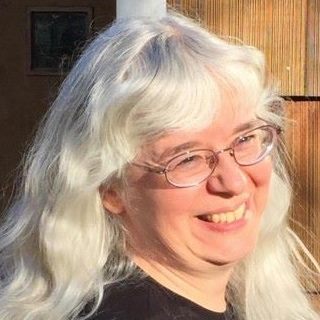
At some point, I suppose I will have to replace the much-beloved headshot I use for Top of JC’s Mind, which B originally took to go with this poem for Silver Birch Press.

Someday, when I’m more used to my new look.

Yes, someday.
*****
Linda’s prompt for Stream of Consciousness Saturday this week is yes-. Join us! Find out more here: https://lindaghill.com/2023/04/28/the-friday-reminder-and-prompt-for-socs-april-29-2023/

How low can you go?

This month, my county (Broome in New York) has finally made it into the low community risk level for COVID-19, using the current US Center for Disease Control tracking method. Our community transmission rate is still in the medium category, the second lowest of four categories. Both of these are the lowest levels that I recall seeing since this tracking model went into effect.

In recognition of this, I’ve begun to back off from masking in indoor public spaces. For example, I went to church on Easter and this weekend unmasked. On Friday night, I ate and sang unmasked with Madrigal Choir at a retirement dinner in honor of a Binghamton University professor who is a long-time choir member.

It feels a bit strange after masking for so many months.

I know there is still risk. A friend came down with COVID a few days ago. I had not seen her recently, so I wasn’t exposed, but it’s definitely a reminder that I may not be able to stay COVID-free forever. The number of people I know in the never-been-infected category is tiny at this point.

I don’t want to get sick and I especially don’t want to transmit COVID to someone else but I’m feeling that, with the community risk level at low and major personal events like my two cataract surgeries and visit from our UK branch of the family completed, I can let down my guard a bit. I’ll still be tracking our local statistics so I can put more precautions back in place as warranted.

Madrigal Choir is going into a busy week, getting ready for our final concert of the season next Sunday, so fingers crossed…

sneaking in a post

A quick update while JG is napping and ABC is enjoying her first ever trip to the cinema with her parents. Also, while I can almost see mid-range things like computer screens before my second cataract surgery tomorrow.

Things have been very busy here. Daughter E, son-in-law L, and grandchildren five-year-old ABC and two-year-old JG have been visiting from London since April 2. It’s great to have them here, enjoying typical things like playing outdoors in the yard or at the park or indoors at home. We went to Easter morning mass together and had an indoor egg hunt afterward, with leg of lamb for Easter dinner. Uncle C from West Virginia was able to make the trip up for E’s birthday last week.

Our biggest family event was Friday into Saturday when my younger sister came up along with her family. We got to meet the significant others of our niece and nephew, as well as their dogs, which led to lots of cuddles, laughter, frolicking, and shrieks from ABC and JG.

When we knew that our London contingent was going to visit, my sister had organized a memorial for our parents, known here as Nana and Paco. The last time E and her family had been here was shortly before Paco passed away. Distance and the pandemic made it impossible to gather again until now. We started our observance outside the building where Nana and Paco’s cremains are inurned. My sister had arranged for military honors for Paco, who served as a US Navy SeaBee during World War II and the Korean Conflict. There was an honor guard and a 21-gun salute using WWII era rifles, prayers, the playing of taps on a trumpet, and the folding and presentation of a large United States flag. We were grateful to all the veterans who came out to honor Paco’s service so long ago.

We went inside to visit the niche and see the memorials that we have placed there. Then, we went to the room that was reserved for us at the hotel where my sister’s family was staying. In the photo, you can see the folded flag in its special case.


My sister had organized our remembrance, which included music, pieces that our niece and nephew had written as children, poems from me and daughter T, a photo book that my sister had assembled, and lots of personal stories from everyone who knew Nana and Paco. It was wonderful to be able to share all of this with the more recent additions to the family. We were sad that our other sister wasn’t able to make the trip to join us. but we thought of her often over the course of the day. After our sharing time, we had lunch together, including one of Paco’s all-time favorites, lasagna. We also enjoyed one of Nana’s favorite desserts, tiramisu.

So, things have been very busy here, but they were complicated by the fact that I had cataract surgery on my left eye last Tuesday. Everything went well. My far vision was clear by the next day but my mid- and close-range, as expected, are taking longer to develop. My newly implanted lens is an advanced design that addresses vision at all distances plus astigmatism. There are healing issues to consider plus the visual part of my brain needs to adjust to the new conditions.

The other complicating factor is that my right eye has been functioning without glasses. It can really only see clearly at very close range, so things like reading and using a computer have been very difficult. I’m managing this post because my mid-range in my left eye has improved enough that I can see my laptop screen with an enlarged font.

Tomorrow morning, I will have the cataract surgery on my right eye. I anticipate that my far vision will be really good by Wednesday. I’m hoping that my mid-range will continue to improve with my left eye so that I can easily see my score to sing a gig with Madrigal Choir on Friday night. I think it will help to not have the distraction of a totally blurry right eye, as I have now. Fingers crossed.

I must say that my ophthalmologist, Dr. Daniel Sambursky, is amazing. He has developed advanced techniques using lasers that give superb results. Spouse B had cataract surgery with him five years ago and has enjoyed his new vision, only needing glasses for very fine print or low light conditions. I’m looking forward to that, too. I’ve worn glasses since I was six. I admit it is a bit strange to see myself in the mirror without them and it will take time for friends and family to get used to seeing me without them.

Eventually, I’ll get around to changing my headshot…

One-Liner Wednesday: cataract surgery

I had my first cataract surgery yesterday and it’s very weird to adjust to that while not being able to wear glasses to help the other eye see clearly.

This informative post/excuse is brought to you by Linda’s One-Liner Wednesday. Find out more here: https://lindaghill.com/2023/04/05/one-liner-wednesday-time-flies/