She loves them so much that she has a master’s degree in conservation biology of plants. One of her favorite things to do is remove invasive species so that native species can thrive. She can expound at length on the topic of relocating plant species to different elevations and latitudes to help them survive the effects of climate change.
At the moment, it’s winter here and she is recovering from shoulder surgery, so no eradicating of invasive species allowed in the near future.
She has to content herself with tending our indoor plants.
Under her care, the African violets and kalanchoe are in bloom. ***** I shockingly used the prompt “plants” from J-Dub of J-Dub’s Grin and Bear It as part of Linda’s Just Jot It January. (It’s only shocking because I seldom use the prompts and usually meander off in my own direction.) Whether you want to use prompts or not, please join us! Find out more here: https://lindaghill.com/2024/01/21/daily-prompt-jusjojan-the-21st-2024/
Yesterday, 90+ New York State organizations sent a letter to NYS officials, did a press release through Food & Water Watch, and held a press event, requesting that New York ban using carbon dioxide to fracture underground shale formations to extract methane and attempt to sequester carbon dioxide; this is important not only regionally in the Southern Tier of NY where it is being proposed (and where I live) but also nationally and internationally because fossil fuel companies are using this unproven, dangerous, and most likely ineffective scheme for extraction/carbon sequestration to justify their continued drilling for decades to come, despite the gravity and acceleration of climate change impacts.
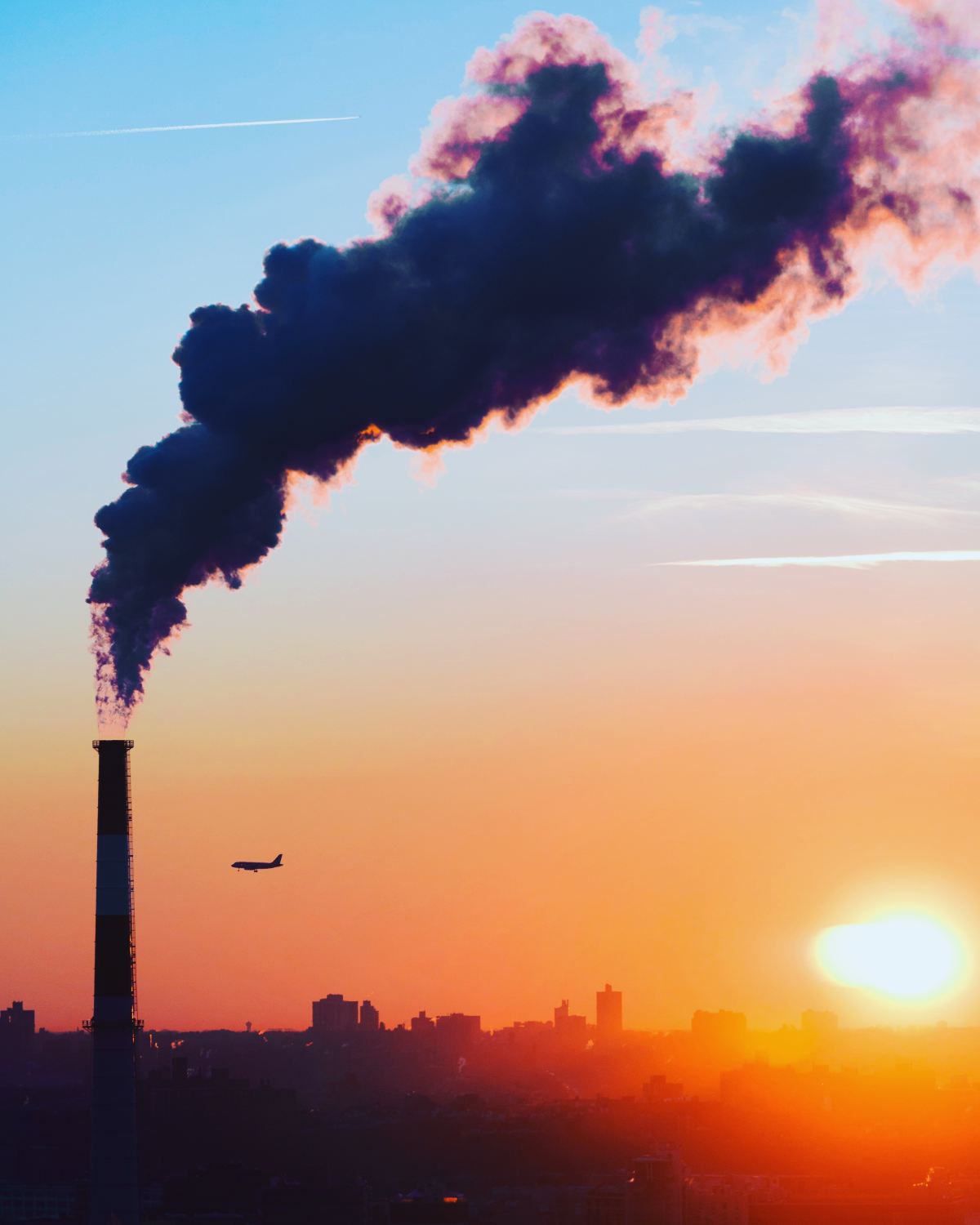
So, bottom line: when you burn fossil fuel you produce particulates which lodge in lungs and kill you (one death in five on the planet comes from breathing the byproducts of fossil fuel combustion), and when you burn fossil fuel you produce carbon, which lodges in the atmosphere, driving heatwaves and floods that kill you.
Calling all Upstate NY elders (age 60+ or so) to register now to join us on Zoom tomorrow to celebrate the official launch of Third ActUpstate NY where “ordinary people do extraordinary things…together” for the good of our climate and our democracy!
A comment I wrote about fossil fuel subsidies in response to this piece by Thomas Reese, SJ is now available on the NCR (National Catholic Reporter) website.
Some of Father Reese’s proposals to combat climate change strike me as not likely to be sufficient in the time frame available but I wanted to offer an additional suggestion rather than being critical.
This post is a bit of a throwback to the early days of Top of JC’s Mind when I was often posting comments in opposition to fracking.
Next month will mark the tenth anniversary of Top of JC’s Mind, which hardly seems possible.
Poet-friend and fellow Grapevine poet Carol Mikoda has a new book forthcoming from Finishing Line Press, Wind and Water, Leaf and Lake.
Carol’s nature poems have great depth. Of the book, James Crews writes, “The tender, attentive poems of Carol Mikoda show us how to look up and outside of ourselves to notice the intricate aliveness at play in clouds, leaves, and water—to feel the whole world.”
Through August 25th, you can pre-order your copy so you will be among the first to read it in October when it is released. Bonus: you will receive $2 off the list price!
Like many people in the United States and around the world, I have been watching the devastating news of the wildfires in Hawai’i, especially on Maui, with sorrow and horror. The confirmed death toll is currently 93 but hundreds of people are still missing, so that total is expected to rise. Eighty per cent of the buildings in Lahaina have been destroyed, along with the livelihoods of most of the residents.
If you are able to contribute to relief efforts, please consider contributing to the Maui Strong Fund, under the auspices of the Hawai’i Community Foundation, which is able to put donations to use immediately on the ground.
One of the difficult things about this tragedy is knowing that it was made worse by human intervention. Climate change is implicated both in the drought conditions in Hawai’i and the strong hurricane, that, while well south of landfall, combined with a high pressure area to send winds up to 80 mph (128 kph) onto the islands that quickly spread the wildfires, knocking out communication infrastructure and trapping many people.
The colonization of the Islands also played a role in the fires, as the landscape and plants have been altered from the species that evolved on Pacific islands. My daughter T, who holds a master’s degree in conservation biology of plants, told me that African grasses that were brought to Hawai’i evolved with fire as part of their lifecycle, burning quickly but than sprouting again soon after. These grasses were implicated in the dangerous speed with which the wildfires spread.
My family has several connections to Hawai’i. B and I visited Kauai for our tenth wedding anniversary and were drawn to the beauty of Hawai’i and the welcoming nature of the people. Our daughter E lived in Honolulu for several years, while studying at the University of Hawai’i – Manoa. She met her spouse L there and they married at their local parish.
Daughter T, while an undergrad at Cornell, spent a Sustainability semester in Hawai’i. They were in residence most of the time on the island of Hawai’i. (There were significant wildfires there as well, but the destruction was not as widespread because of the areas affected.) They also participated in conservation projects on other islands, including Maui. In 2014, B and I went to Hawai’i with T, three years after her semester there. You can read a series of posts about that visit starting here. That visit also led to this poem.
Hawai’i is one of the most remote places on earth, being far away from any of the large continents. Its isolation, though, does not exempt it from the increasing tide of disasters turbocharged by the climate crisis. These tragic wildfires are another reminder that we all need to do what we can to transition to lives that don’t pollute our atmosphere with even more carbon.
United Nations Secretary-General António Guterres is convening a Climate Ambition Summit next month to help speed these efforts. There will be a large March to End Fossil Fuels in New York City on September 17. We need world governments to act NOW. It’s too late for all those lost on Maui and other climate-change influenced disasters around the world. We need to save as many people and other beings as we can in the future.
B took this photo in front of our house yesterday morning (June 7, 2023) as the early morning sun tried to break through the wildfire smoke coming down from Quebec, several hundred miles away.
Things got worse as the day went on.
The air at ground level smelled like a campfire and an orange-tinged haze reduced visibility so that you couldn’t see the hills or tell where the horizon was. You could see smoke in the air just looking across the street. You needed indoor lighting even with the drapes pulled back on the windows.
We were keeping a watch on the air quality index numbers from airnow.gov. By mid-afternoon, they reached 460, well into the hazardous category. At that level, people should stay indoors with filtered air. If people have to be outdoors briefly, they should wear masks that are good at filtering out particulates, such as N95 or Kf94. Fortunately, many people still have some on hand from our pandemic experience.
B came home from work early because the smoky air began penetrating the stairwells in his building. It became quite windy. I was hoping that there were some rain clouds up above the smoke but no precipitation fell.
We aren’t alone in this phenomenon. Much of the Northeast and Mid-Atlantic regions of the US are having significant smoke impacts, sometimes even worse than areas in Canada that are much closer to the fires, due to a stationary low pressure system that is circulating in such a way that it draws smoke in our direction. It’s been a dry spring, so there are hundreds of wildfires in Canada right now, with over two hundreds that are considered out of control.
That’s a lot of smoke.
We need rain to help quell the flames and to prevent even more fires from erupting. Also, the plants and animals need more water. We are getting to what should be peak strawberry season here but the crop is expected to be low due to lack of rain, although a late freeze in May didn’t help matters.
As frequent readers may recall, I’ve been active around environmental issues for a number of years, particularly around climate change. I know that the extra carbon people have put into the air through fossil fuel extraction and use, deforestation, unwise agricultural practices, etc. has increased the risk of all kinds of extreme weather events. It makes the likelihood of heat waves, droughts, and wildfires higher and the changes in the air, land, and ocean temperatures make severe storms and stalled weather systems more likely.
We can see it with our own eyes.
I’m frustrated that corporations, politicians, and world governments did not make this a priority years ago. We might have averted some of the impacts we are experiencing now and reduced our future risk. I’m grateful that some action is coming on line now, but we need to make changes more quickly and more universally to reduce the severity of hurricanes/typhoons, wildfires, droughts, floods, sea level rise, biodiversity loss, heat waves, coral bleaching, etc.
In my little corner of the word along the New York/Pennsylvania border, we have a bit of improvement today. For the last few hours, our air quality is rated as “unhealthy for sensitive groups” rather than hazardous for everyone, although I know that, in the New York City area, airports have had to suspend service due to lack of visibility from the smoke. Washington, DC is having a purple alert for air quality, which is one level higher than red alert. The upper level winds have shifted enough that we aren’t in the worst sector today, but others are suffering higher levels than yesterday.
My fear is that a report that I heard today will come true – that this pattern will repeat itself throughout the summer.
It’s hard to predict.
A moment ago, I saw a bit of sunlight break through. I looked out the window and can see the sky with some clouds.
I haven’t seen the sky for a couple of days because of the smoke.
The clouds don’t look like rain is imminent, but I will try to have hope.
I’m pleased to share that my poem Kaʻūpūlehuhas been included as part of the ONE GOOD MEMORY series from Silver Birch Press. Many thanks to Melanie and the team at Silver Birch Press for including my poem in this series.
I especially appreciate that Silver Birch Press includes an author’s note with each piece. It gave me the opportunity to spread the word about the Kaʻūpūlehu dryland forest of Hawai’i.
This poem began as a response to a Binghamton Poetry Project prompt in spring of this year. You can read a bit about the writing of this poem in my blog post here.
As Silver Birch’s call for submissions states, “The past few years have been the most difficult that most of us have lived through. It’s a challenge on many days to stay positive. At times like this, it’s heartening to remember good experiences. Sharing each other’s good memories can help us remain hopeful during these challenging times.”
I’m honored to have this poem featured among dozens upon dozens of other good memories as part of this series. I invite you to explore these uplifting poems and to reflect on your own good memories. We can all use an extra measure of hope in our day.
As always, comments are welcome – here on Top of JC’s Mind, at Silver Birch Press, on Facebook, twitter, ello, and Post. Your choice!
I’ve spent decades now advocating for change on a whole raft of social justice and environmental issues.
There has been some progress in some areas, but I admit that there are times when I get tired, times when I realize that a change we’ve been working on for decades still hasn’t happened or where there’s been backsliding on a right that we thought had been secured.
Some days, I want to just throw in the towel.
But then I think about it and realize that a lot has been accomplished by so many people working together. The progress is often slow and incremental. When a change seems sudden, it’s usually the result of years of groundwork laying the foundation.
When I get discouraged, it’s often a comment from a friend that helps me realize the importance of the work, even when it seems we aren’t getting anywhere and even when the hoped-for change is unlikely in my lifetime. (This especially applies to my work on gender equality in the Catholic Church. The Catholic Church tends to think in centuries.)
So, at least so far, though I do change the issues I concentrate on from time to time, I keep at it.











 Joanne Corey