What comes after emergency?

As someone who participated in a COVID vaccine clinical trial, who has other vulnerable people in my life, and who tries to be a diligent and responsible community member, I’ve been following the science, public health information, and news about the pandemic over these last, long 3.5 years. I’ve done so many blog posts about it, I’ve lost count.

As you may know, the World Health Organization and the United States are winding down their public health emergency declarations.

This does not mean, though, that the pandemic itself has ended. COVID-19 is still widespread across the world and hundreds die every day as a result. There is still the potential for new variants and COVID is not yet seasonal, like influenza. Eventually, COVID will become endemic, as the flu is, but we aren’t there yet.

While some US programs, such as tracking hospitalization rates and wastewater testing, will continue, others will end. I will miss the COVID maps and risk ratings that the CDC has been providing. Besides the overall community risk assessment, the transmission rate maps were important to me in deciding how much public masking I needed to do or whether large, indoor gatherings were advisable at all. It’s true that, with so many COVID cases discovered through home testing and never officially recorded, the statistics are not as comprehensive as they were during the months of testing centers, but, for example, it’s helpful for me to know that my county has a moderate transmission rate but the county to our east is currently at the highest transmission rate level, two notches higher than here. Having that information could inform a decision between using a drive-through or dining in on my way through the county, as well as alerting me that the higher infection levels could spread in my direction. After Thursday, that information will not be readily available to me.

I’ll still follow the science and public health advice as best I can and will get my next booster when recommended. I’ll test at home if I have symptoms and avoid being in public when I’m sick with anything, COVID or not. I’ll keep a supply of KF94 masks in my size nearby for high-risk situations that may arise. I’ll try to do all the things we should be doing all the time, like eating well, getting enough rest, and practicing good hygiene.

I still, though, don’t want to get COVID if I can help it. To the best of my knowledge, I’ve never been infected, although I could have had an asymptomatic case at some point. I know very few people who are in that category these days.

Will the end of the emergency declarations and the resulting decline in data be a factor in my eventually contracting COVID?

Impossible to predict, but fingers crossed.

SoCS: I Like It Here

When I read Linda’s prompt yesterday, I immediately thought of the song “I Like It Here.” I did search for the lyrics and to find the writer; I did find some similar versions to what I remember but it seems that no one knows who wrote it. I’m going to use the version from my childhood as I remember it in this post.

My sisters and I used to put on little performances in our basement for a very small audience, my parents and perhaps my grandparents or Harriet and Pres, family friends who were like an honorary aunt and uncle. We would sing and act out songs we learned in school.

One I especially remember is “I Like It Here,” a patriotic number that we used to close the show, at least once that I recall.

“I like the United States of America.
I like the way we all live without fear.”

In my childhood, living without fear was pretty much a thing I could do, in my tiny, rural New England town. Today, though, there are many fears that are with us all the time – environmental destruction and climate change, gun violence, the troubling rise of authoritarianism, public displays of hate against any number of different groups of people.

“I like to vote for my choice,
speak my mind, raise my voice.
Yes, I like it here.”

Unfortunately, there are lots of laws in some states that are trying to suppress votes and to silence free speech. It’s discouraging. I appreciate the lawyers and organizations that are challenging these laws.

“I am so lucky to be in America
and I am thankful each day of the year,
for I can do as I please
’cause I’m free as the breeze.
Yes, I like it here.”

While I am happy to be here in the place that is home, the threats to our freedoms are real. We are fighting to keep them but the recent trials of insurrectionists are a stark reminder of how much danger we were in and how much of that animus still remains, even within some in government service.

“I’d like to climb to the top of a mountain so high,
raise my head to the sky,
and say how grateful am I,
for the way that I’m living
and working and giving
and helping the land I hold dear.
Yes, I like it,
I like it,
I like it here!”

I have felt that, in my small way, I’ve added to life in the United States. For most of my life, I never thought that I would leave it to live in another, but the presidency of DT made me wonder if things would be so changed that I could no longer live here.

I feel horrible for even thinking of abandoning my country and the Biden presidency gives me hope but the bizarre spectacle the once-proud Republican party has become and the staggering level of corruption that has been uncovered are a constant source of worry.

I’m trying to do my part as a citizen to get us back toward the freedom and equality to which we are called by our Constitution and laws. Millions of others are as well, including many who have more power and ability to be effective than I do.

Will it be enough?

I don’t know.
*****
Linda’s prompt for Stream of Consciousness Saturday is to think of a song from your childhood and write. Join us! Find out more here: https://lindaghill.com/2023/05/05/the-friday-reminder-and-prompt-for-socs-may-6-2023/

the continuing gun nightmare

Because things have been so busy and because my continuing healing from cataract surgery is still making computer time a bit more difficult, I’ve put off posting on some topics that have been top of mind.

One of those is the continuing – and seemingly accelerating – plague of gun violence in the United States.

Over these past couple of months, there have been some personal reminders of gun violence. The April 3rd anniversary of the American Civic Association shooting in Binghamton and driving by the memorial to it, only a few hundred feet from the site, knowing that, fourteen years on, if the victims are remembered at all, they are just numbers in a long tally of mass shooting victims. A Lenten program on gun violence that was part of a series on social sin, which led to my contacting my Congressional representative to request federal action on gun violence, only to get a discouraging reply that he won’t support such practical actions as keeping military-style weapons and ammunition out of civilian hands.

All of this while hearing every day of more mass shootings and their aftermath. The fact that we are averaging more than one mass shooting per day in 2023, 192 recorded by day 125, according to the Gun Violence Archive. The fact that firearms are now the leading cause of death among children and adolescents (ages 1-19) in the United States, far surpassing the rate in other industrialized nations. Laws being passed in some states to make it easier to carry weapons, despite the dangers to the public. The bizarre ousting of two state legislators in Tennessee for “lack of decorum” in speaking out against gun violence in the chamber, only to have those members re-appointed by their districts.

The feature of news coverage that makes these recent weeks even more disturbing is the increased attention to shootings that happened after harmless incidents. Being shot through a closed door for ringing a doorbell at the wrong address. After chasing an errant ball into a neighbor’s yard. While pulling out of a driveway in a rural area while trying to navigate to a friend’s home. Mistakenly going to the wrong car in a dark parking lot. All instances where you would expect a neighborly person to ask how they can help, not shoot and wound or kill.

I don’t understand.

Is it uncontrolled fear? Paranoia? Rage? Hate? Sense of entitlement? Illness? Racism? Misogyny? Addiction to power? Some combination of these, varying from incident to incident?

One thing that doesn’t vary? There’s always a gun.

We need legislation to address gun violence on the federal level. I live in a state with quite a few statutes regulating firearms but it is too easy for people to cross state lines or use the internet to circumvent them. I believe that military-style weapons don’t belong in civilian hands and that large ammunition clips should be banned, along with modifications that make a semi-automatic weapon behave like it is fully automatic. I think that there should be background checks, training, and licensing required for firearm ownership and robust laws against illegal possession and gun trafficking. People who have a history of violence or those who have restraining orders against them should not have guns. There should be universal red flag laws to make sure that those who are a danger to themselves or others do not have access to guns. Sadly, over half the gun deaths in the United States are self-inflicted; while people can and do die by suicide from other methods, guns kill a much higher proportion than other means. [If you are experiencing thoughts of suicide or are in a mental health crisis, dial 988 in the US or visit https://988lifeline.org/ to live chat or find resources. In other countries, use a search engine to find similar programs. Or ask a trusted friend, family member, doctor, etc. for help.]

Public polling in the US shows a large majority want more regulation of guns but Republican lawmakers are almost universally opposed. That needs to change. Either they need to change their minds or the people need to replace them with representatives who care about their safety.

Meanwhile, the losses, pain, and trauma accelerate…

One-Liner Wednesday: poetry reading invitation

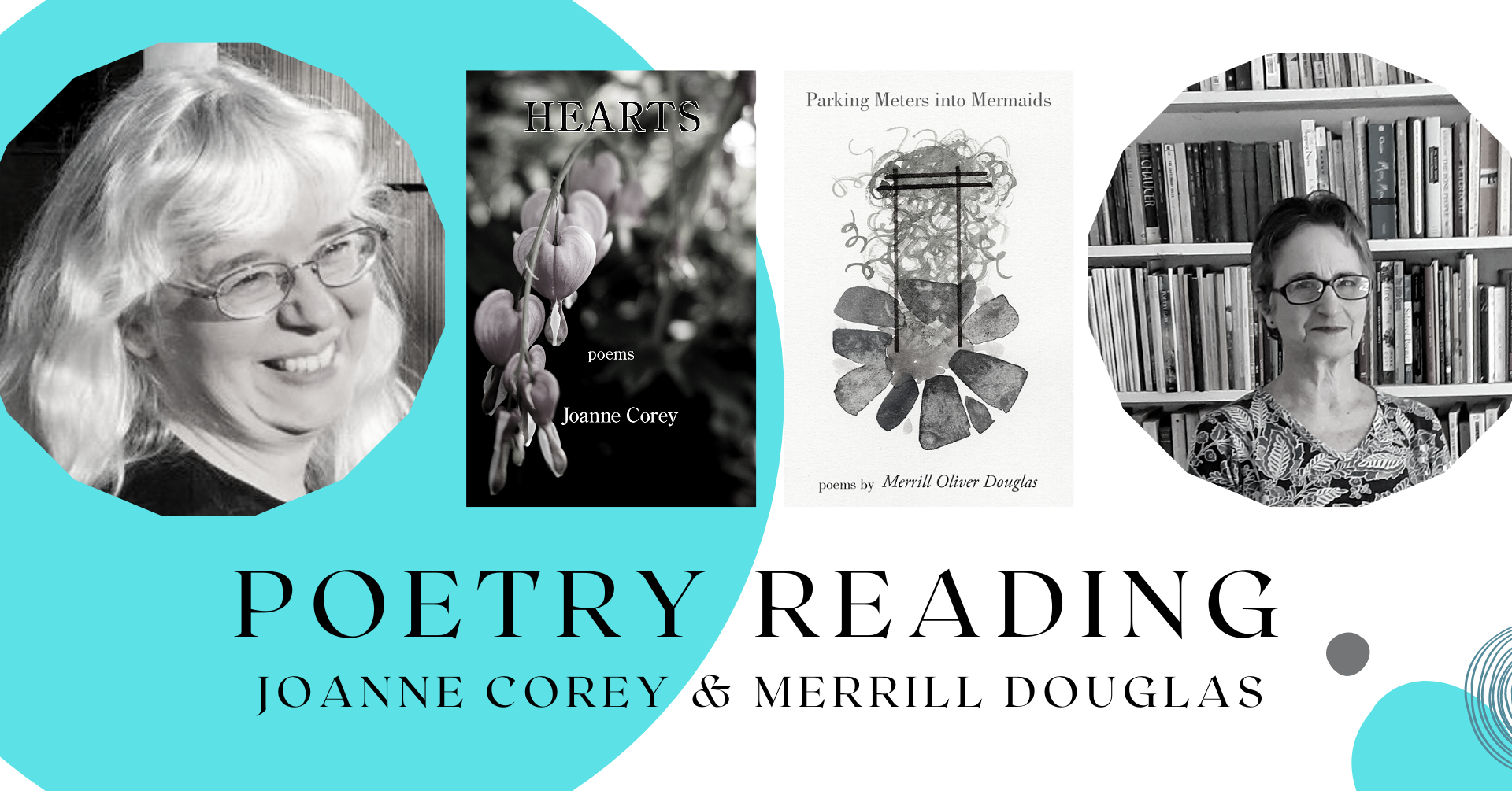
For folks in shouting distance of Owego, NY, please join me and Merrill Douglas for a poetry reading (in-person only) at the Tioga Arts Council, 179 Front St, on Saturday, May 13th, at 1:30 PM.
*****
This shameless self-promotion is brought to you by Linda’s One-Liner Wednesdays. Join us! Find out more here: https://lindaghill.com/2023/05/03/one-liner-wednesday-washi-person/

SoCS: new eyes

“Yes, it is strange not to wear glasses.”

Since I had my cataract surgeries earlier this month, I’ve been asked many times if it is weird/strange not to be wearing glasses every waking moment – and it is.

I’ve worn glasses since I was six because I was near-sighted. As I got older, I also developed presbyopia, which meant I was also having trouble seeing close up. For the last couple of decades, my glasses have had progressive lenses, which means they have a zone for far, mid-range, and close vision. I also have astigmatism in one eye which was built into my prescription. As I developed cataracts in both eyes, I was also having a lot of difficulty with glare.

And, I also sometimes had trouble with dry eyes, so a lot going on.

I decided to have cataract surgery last year. It took several months to get an appointment with the doctor who had done spouse B’s cataract surgeries, and my parents and mother-in-law’s. He uses advanced laser techniques and gives options to use advanced lens that deal with multiple issues.

B had had good luck with his multifocal lens and only uses glasses for very fine print and low-lighting conditions. In the five years since his surgery, they have added astigmatism correction to multifocal lenses, so I chose those.

The timing of the surgeries was awkward, as they happened while the UK branch of our family was visiting for Easter, but I’m happy with the still-developing results. My distance visit was clear within a day of each surgery. (They were a week apart.) My mid- and near-vision are improving day by day. I’ve used supermarket/drugstore cheaters for a few tasks, although now even the weakest ones are too strong for my “new eyes.” I also have been adjusting the size of my text on screens, although I’m typing this at my prior screen settings, so improvement is definitely happening. It will probably continue for a few more weeks as my eyes heal and my brain adjusts to the new, clearer input.

As I am adjusting to life without glasses, people I know are adjusting, too. I’ve had people comment on it. A few have said I look younger without my glasses. I had thought I might look older – or, at least, more tired – because you can now see all the wrinkles around my eyes and I don’t use make-up so, if I have dark circles under my eyes, they are now easier to see. Of course, I don’t think anyone would tell me I look older without my glasses, even if that is what they thought.

At some point, I suppose I will have to replace the much-beloved headshot I use for Top of JC’s Mind, which B originally took to go with this poem for Silver Birch Press.

Someday, when I’m more used to my new look.

Yes, someday.
*****
Linda’s prompt for Stream of Consciousness Saturday this week is yes-. Join us! Find out more here: https://lindaghill.com/2023/04/28/the-friday-reminder-and-prompt-for-socs-april-29-2023/

JC’s Confessions #27

In the first few seasons of The Late Show, Stephen Colbert did a recurring skit, then a best-selling book, called Midnight Confessions, in which he “confesses” to his audience with the disclaimer that he isn’t sure these things are really sins but that he does “feel bad about them.” While Stephen and his writers are famously funny, I am not, so my JC’s Confessions will be somewhat more serious reflections, but they will be things that I feel bad about. Stephen’s audience always forgives him at the end of the segment; I’m not expecting that – and these aren’t really sins – but comments are always welcome.

JC

For decades, I’ve dreaded having to answer the question “What do you do?” or to fill in the blank for “occupation” or “profession” on forms.

Usually, those questions are about earning money and the truth is that I have earned very little money over my lifetime.

What I’ve been used to be called housewife, a term I never liked because it sounds like you are married to a house, not a person. I do sometimes choose the homemaker option from lists that don’t allow me to insert a customized response, although that term also seems too centered on the inanimate. I prefer the term caregiver as more reflective of my role as a daughter, spouse, mother, and grandmother. I think it is unfortunate that the current usage of caregiver has focused on the paid or unpaid work of caring for someone with medical needs, although I’ve dealt with more than the usual share of diagnoses among the generations of family involved.

I will often add volunteer, if I’m given the option. I’ve done many things as a volunteer that others are paid to do, such as church music ministry or facilitating a spirituality book study group. I did major committee stints when my daughters were in school, including a site-based decision making team, curriculum planning committees for music and gifted education, and high school honors program planning, for which the teacher participants were paid, a fact they tried to hide from me as they felt badly that I was spending a lot of time working on these things for free. I also spent a lot of time fighting fracking and advocating for action on climate change, although the vast majority of people doing that are volunteers, with just a few people who are paid to be community organizers. (We laughed when the fracking proponents accused us of being paid by George Soros or whomever, which we certainly were not, all the while knowing that some of them were actually being paid by fossil-fuel-company-financed front groups.)

In more recent years, as writing has become an important part of my life, I’ve wondered what to do with that. Should I list myself as a writer on forms? Is it disrespectful to the people who actually make a living as writers to call myself that? To date, I have never been paid to write, although when my chapbook Hearts is published in the coming months, I will make (a tiny bit of) money. On social media, I tend to list myself as poet/blogger. Most poets and most bloggers earn little-to-no income from those activities, so maybe that is a better descriptor than writer?

Or, now that I’m 62, maybe I should just give up and list myself as retired.

But retired from what? The caregiving, volunteering, and writing still go on…

The Grapevine Poets Read

April is National Poetry Month in the US and there are often poetry readings scheduled in celebration.

This year, the Broome County (NY) Arts Council invited the Grapevine Poets to present a reading, which happened Tuesday evening.

The Grapevine Poets is a group of local poets who meet regularly to workshop each other’s poems, meaning we bring in our drafts for feedback from the poets in attendance in order to assist us in revisions. We also have done manuscript reviews for each other, several of which have been chosen for publication. I am the current record-holder for most manuscripts reviewed with three, my chapbook Hearts (forthcoming soon from Kelsay Books), my full-length collection Small Constellation and my newest chapbook Half a Duet, both of which I am submitting to presses in hope that they will be published someday, too.

While we have been meeting for years and frequently mention the group in our acknowledgements or bios and although we have sometimes read at the same open mics, this was the first time that we formally presented ourselves as the Grapevine Poets. It was very much a collaborative effort with everyone pitching in and divvying up the tasks of scheduling, organizing, publicity, programming, etc. in conjunction with Connie Barnes at the Broome County Arts Council, which is still settling into its new home in the section of State St. in Binghamton often called Artists’ Row.

We decided on a format that each poet would read a poem from another poet we admire and one of our own. We each chose whether or not we wanted the poems to be related to each other in some way. I chose to link my selections thematically, reading “Woman in Suite A, 1922” from Kyle Laws‘ book Uncorseted and my poem “Studio 7 – Building 13” which both relate to a woman’s experience writing in a new studio.

After Connie’s welcome, Wendy Stewart provided the story of the Grapevine Poets, the format of the reading, and her selections. We had decided to each introduce the next poet, so Wendy introduced me and, after my reading, I introduced Sharon Ball. We continued with Burt Myers, Andrée Myers, Merrill Douglas, Jessica Dubey, and J. Barrett Wolf, who also led the question and answer period.

One of our big concerns before the event was would people actually come! I’m pleased to say that we had about thirty-five people there, which is sizable for a poetry reading in our area. There was a bit of a scramble to find and set up more chairs but it was a great problem to have.

I was happy that some people that I had invited were able to attend and that one person came because they recognized my picture from the flier that Burt had designed for the reading. Burt is the art director for the communications and marketing office at Binghamton University and we are grateful to have his professional expertise on hand, as well as his poetic voice.


I’m trying to wrap my head around knowing that some people might come to a reading specifically because it involves me. I’m more accustomed to thinking of myself within a group context, whether it’s the Grapevine Poets or the Boiler House Poets Collective or the Binghamton Poetry Project, and of invitations that come my way to read as being because of these affiliations and my more-established poet-friends.

But, with my first time as featured reader coming up on May 13 at 1:30 at the Tioga Arts Council in Owego along with Merrill Douglas and my first chapbook Hearts forthcoming soon from Kelsay Books, I’m trying mightily to adjust my mindset so I can present myself as more professional, for want of a better term.

Not sure I have the chops to pull it off, but I’ll try.

One-Liner Wednesday: cover reveal!

Kelsay Books has sent me the finished cover for my poetry chapbook, Hearts, coming soon! (Cover photo by Brian Breeden on unsplash.com.)

Join us for Linda’s One-Liner Wednesday! Find out more here: https://lindaghill.com/2023/04/26/one-liner-wednesday-what-do-you-think/

A Tale of Two Concerts

My recovery from cataract surgery has been complicating my computer time but the delay gives me a chance to draw together two remarkable choral concerts that I was honored to be part of this month.

The first was a performance of Mahler’s Second Symphony at my alma mater, Smith College, on April first. As you might expect, the performance forces were large, 90-some members of the orchestra and almost 200 singers, student ensembles from Smith, Amherst, UMass-Amherst, and Penn State plus alumni from Smith and Penn State. The orchestra filled the stage at John M. Greene Hall, with the chorus in the gallery.

The concert began with a piece from each of the four college choirs, followed by a brief intermission for all of us to assemble for the Mahler. The Second Symphony is known as the “Resurrection Symphony” – you can read more about it at the link above. The chorus sings in the later part of the fifth and final movement, which afforded us the luxury of watching our conductor, Jonathan Hirsh, and the orchestra playing for an hour before we joined in. As always, I was struck by Mahler’s talent in using such large forces in ways both subtle and powerful. He also uses space in an interesting way, for example, by using percussion and brass off-stage. The fourth and fifth movements include soloists, in our performance, Katherine Saik DeLugan, soprano, and
Rehanna Thelwell, mezzo-soprano, who both sang with soaring beauty.

Of course, the disadvantage of singing at the end of a symphony is that you have to have your brain and voice ready when it’s been a couple of hours since you have warmed up. Fortunately, we were able to rise to the occasion and do our part to create a remarkable and moving performance.

It is always risky to assemble a chorus from singers in disparate locations, who literally don’t rehearse together until 24 hours before the performance. Yet, thanks to Jonathan Hirsh’s skill as a conductor, the preparation given by the other choral directors, and the solitary practice of the alums in our homes, we were able to deliver a moving performance. As soon as Jonathan’s baton came down after the final cadence, the audience was on their feet. It was the longest ovation I have ever seen after a performance in which I have participated. It was a fitting tribute to Iva Dee Hiatt, in whose memory the concert was held.

The weekend was also meaningful for me because I was able to connect with several people who I knew in my student days from 1978-82. I had a lovely lunch with RP, my theory and composition professor and major advisor, whom I also saw at the concert along with his wife. I had dinner with my friend LT, who is an alum from ’81 and who lives in town. She joined several other members of ’81 at the concert, including MC who I hadn’t seen in person in about forty years. There were several alum members of the chorus from my era, including my senior year suite-mate PT. I was able to visit some special places on campus – Helen Hills Hills chapel where I played often for services and spent countless hours practicing, the Lyman Plant House and gardens, Sage Hall, Josten Library, John M. Greene Hall where we performed and where I played my senior recital, and the Poetry Center which didn’t exist in my day but has become an important entity for me.

The second concert was on Sunday, April 23rd. The Madrigal Choir of Binghamton sang our way through a hundred years of Broadway tunes. While we are more accustomed to singing art music, it was fun to sing a popular concert. We were thrilled to draw an audience of over 250 people, who smiled, swayed with the beat, and applauded familiar tunes from Gershwin, Rodgers & Hammerstein, Sondheim, and Bernstein, while also enthusiastically receiving some newer tunes that might have been unfamiliar, such as “Who Lives, Who Dies” from Hamilton.

It was also great to have the opportunity to feature our accompanist, Jean Herman Henssler, at the beautiful grand piano at St. Thomas Aquinas Church and soloists from Madrigal Choir. We were honored to have a special guest, Bex Odorisio, who recently completed a national tour of Hadestown, sing a couple of tunes from her extensive repertoire. I especially enjoyed “Times Like This” from Lucky Stiff.

This was our final concert of the season and I’m looking forward to seeing what our director, Bruce Borton, has planned for our next season, which will be the 45th anniversary of the Madrigal Choir of Binghamton. While I’ve only been a member for a little over a year, I’m so grateful to have a choral home again after the demise of the Binghamton University Chorus, with whom I sang from 1982-2019.

Stay tuned for more music gigs, perhaps this summer, but definitely in the fall!

One-Liner Wednesday: 69

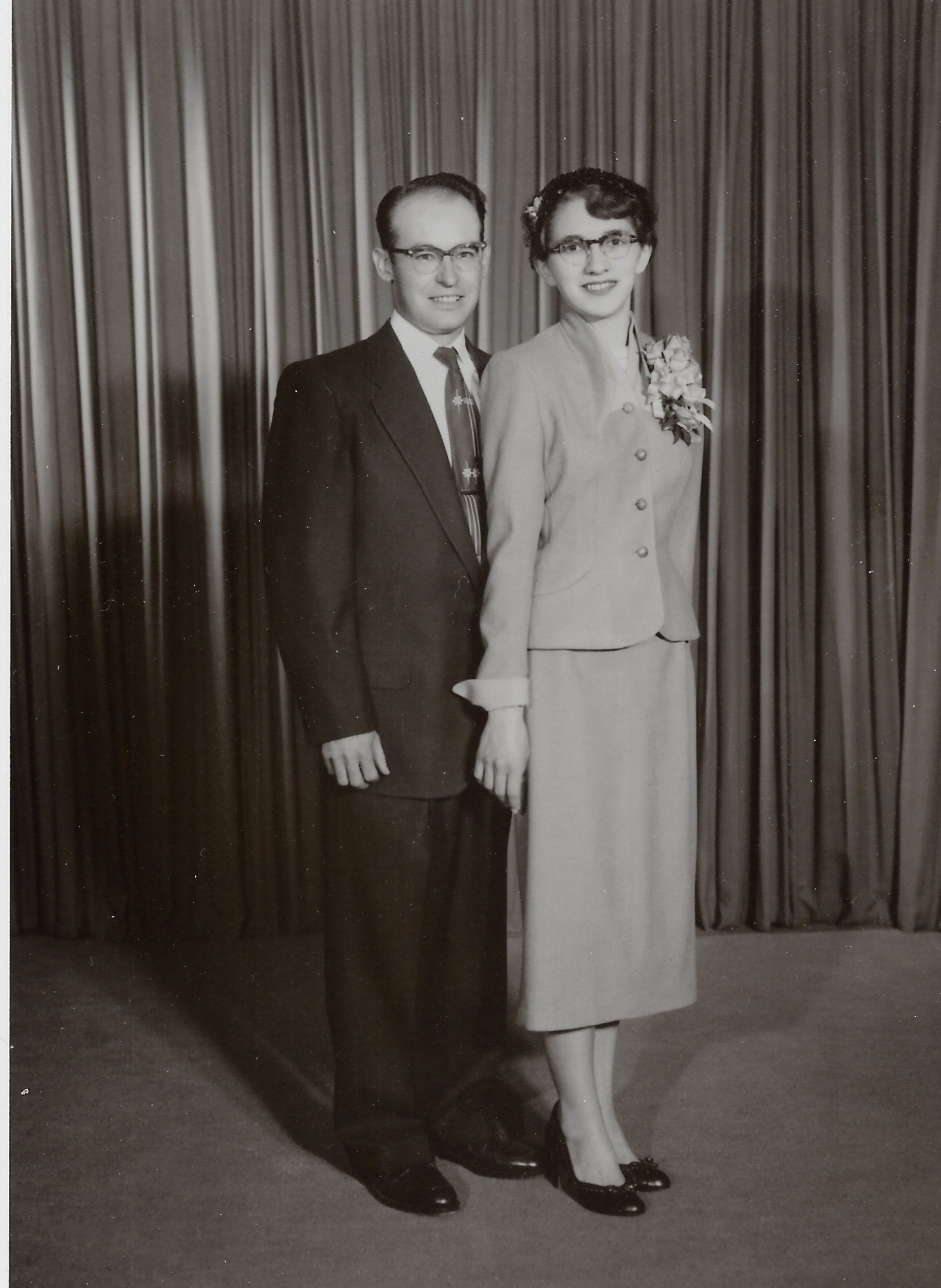
Today would have been my parents’ 69th wedding anniversary.

This (bonus) One-Liner Wednesday comes to you as part of Linda’s One-Liner Wednesday series. Join us! Find out more here: https://lindaghill.com/2023/04/19/one-liner-wednesday-a-battle-to-the-finish/