SoCS: singing

I like to sing.

I have been singing for as long as I can remember. When I started school, we had a music teacher who came once a week to lead music class. Our classroom teacher also played the piano and would sometimes have us sing in the classroom which was combined first through fourth grade. She had been trained at a normal school before there were education colleges in our area and I think that grammar school teachers for young children had to learn piano as part of their program.

When I was in sixth grade, I was old enough to sing in the choir at church. Because it was a small church, the choir only sang at Christmas and for Holy Week. I sang with them until my sophomore year in high school when I became the organist. Then, I was always singing as I played the hymns. It helps your playing because you are more observant of reflecting when breaths should be taken.

In high school in a city about twenty miles from our little town, I got to sing every day! I sang with the mixed chorus and later also with a small girls’ ensemble. I learned to smile, sing, and do a bit of choreography at the same time, a skill that doesn’t seem all that useful but actually is. It makes it easier to convey the emotion of what you are singing to your audience.

When I was at Smith College, singing was a big part of my life. I worked my way through the extensive choral program at the time, starting with Choir Alpha as a first year, College Choir the next year, and my final two years in Glee Club. I also accompanied for two years for Choir Alpha. As an organist who was Catholic, I also frequently played for mass at Helen Hills Hills Chapel. I got married there the month after I graduated.

When we moved to Broome County, NY, I began to sing with the (Binghamton) University Chorus. (Actually, B had already moved and was working out here when we married, so I guess I should have said when I moved.) I sang with them until they unceremoniously disappeared, just prior to the pandemic. I still miss that group, which was a town/gown group, meaning that we had singers both from the university (students/faculty/staff) and from the broader community.

Until 2005, I also did some singing at my church with our Resurrection Choir, which ministered at funerals. It was sometimes difficult but was so important for the family to have us there to represent the parish in their time of grief.

I had thought when University Chorus ended that I would never have another choir gig but, after the pandemic shutdown, I attended a concert with the Madrigal Choir of Binghamton and found out they had openings for sopranos. This was a bit of a shock as choirs usually have more sopranos than they know what to do with but some people had moved away during the pandemic so they had lost some singers. I knew the director because I had sung with him when he directed University Chorus for 25 or so years before he retired and was very happy when he accepted me into Madrigal Choir.

Despite my current health issues, I’ve been continuing to sing with them and hope to as long as I’m able and my voice holds out. I’m lucky that I don’t have a big natural vibrato, which helps my voice to not get as much shake or wobble as some older singers get.

I hope.
*****
Linda’s prompt for Stream of Consciousness Saturday this week is “sing.” Join us! Find out more here: https://lindaghill.com/2025/05/02/the-friday-reminder-and-prompt-for-socs-may-3-2025/

Vote for Democracy #14

your vote and gun safety

(Photo by Lucas Sankey on Unsplash)

It’s another sad “day after” here in the United States.

Yesterday, a 14-year-old student, just a few weeks into his high school years, opened fire at Apalachee High School in Georgia with an AR-style assault weapon, killing two students and two teachers and wounding nine others. The school resource officer (police officer assigned to the school) confronted him and he surrendered and was arrested. It’s already been announced that he will be tried as an adult.

Only in America.

It’s telling that I have already written about guns and violence three times in the prior 13 posts, after the mass shooting at Donald Trump’s rally, on Surgeon General Vivek Murthy declaring firearm violence a public health crisis, and on political violence.

It was good that during the Biden presidency there was a bipartisan gun safety bill passed and signed into law, but there is much more to be done that has widespread public support. Stronger universal background checks. Age restrictions for gun ownership. Safe storage rules. Red flag laws, which remove firearms from places where there is a risk of violence or mental health difficulties. Stronger laws against gun trafficking. Banning ghost guns which do not have serial numbers. Restrictions on carrying guns in public, both openly and under concealment. Banning military-style assault weapons, such as the AR-15, which are designed to kill people as quickly and brutally as possible. Banning bump stocks and large-capacity magazines. These laws need to be national to avoid what we have now, where guns, gun accesories, and ammunition get into a state with stricter gun laws from neighboring states with more lax laws. For example, my state, New York, has much stricter gun laws than our neighbor, Pennsylvania. The teen-aged perpetrator in the Buffalo supermarket mass murder, who lived in my county, purchsed large clips of ammunition from Pennsylvania becuase New York only allows clips up to ten rounds.

The shooting in Georgia is even more tragic in that it could have been prevented. As an eigthth-grader, the student had allegedly threatened a school shooting online and there was an investigation but no action. More immediately, that morning, there was a telephone threat received of a series of five school shootings, beginning with Apalachee. This child was suffering from mental illness and did not receive treatment that would have helped him and prevented him from gaining access to his father’s gun and killing and injuring people.

I do not agree with the decision to try a 14-year-old as an adult. Adolescents, especially young adolescents, do not have the brain development and judgement of adults. They also aren’t as able to recognize changes that may be symptoms of mental health problems. Yes, this is a horrible crime, but it was carried out by a mentally ill child. Charging and trying him as an adult does not make him one.

After these tragedies, there are always calls for “thoughts and prayers” for the victims and affected communities. There are often calls for action in terms of legislation, but these seldom make it through legislatures.

This post is part of my Vote for Democrary ’24 series to remind all eligible US voters to look at local, state, and national candidates’ position on firearms and public safety and only vote for those who will stand up for protecting public health and safety. While we certainly want to prevent murder, we also want to protect people from taking their own lives, which is the most prevalent kind of gun death. The vast majority of Americans, including gun owners, want these protections in place.

Vote as if your life and the lives of your loved ones depend on it.

It may literally be true.

(grand)childcare

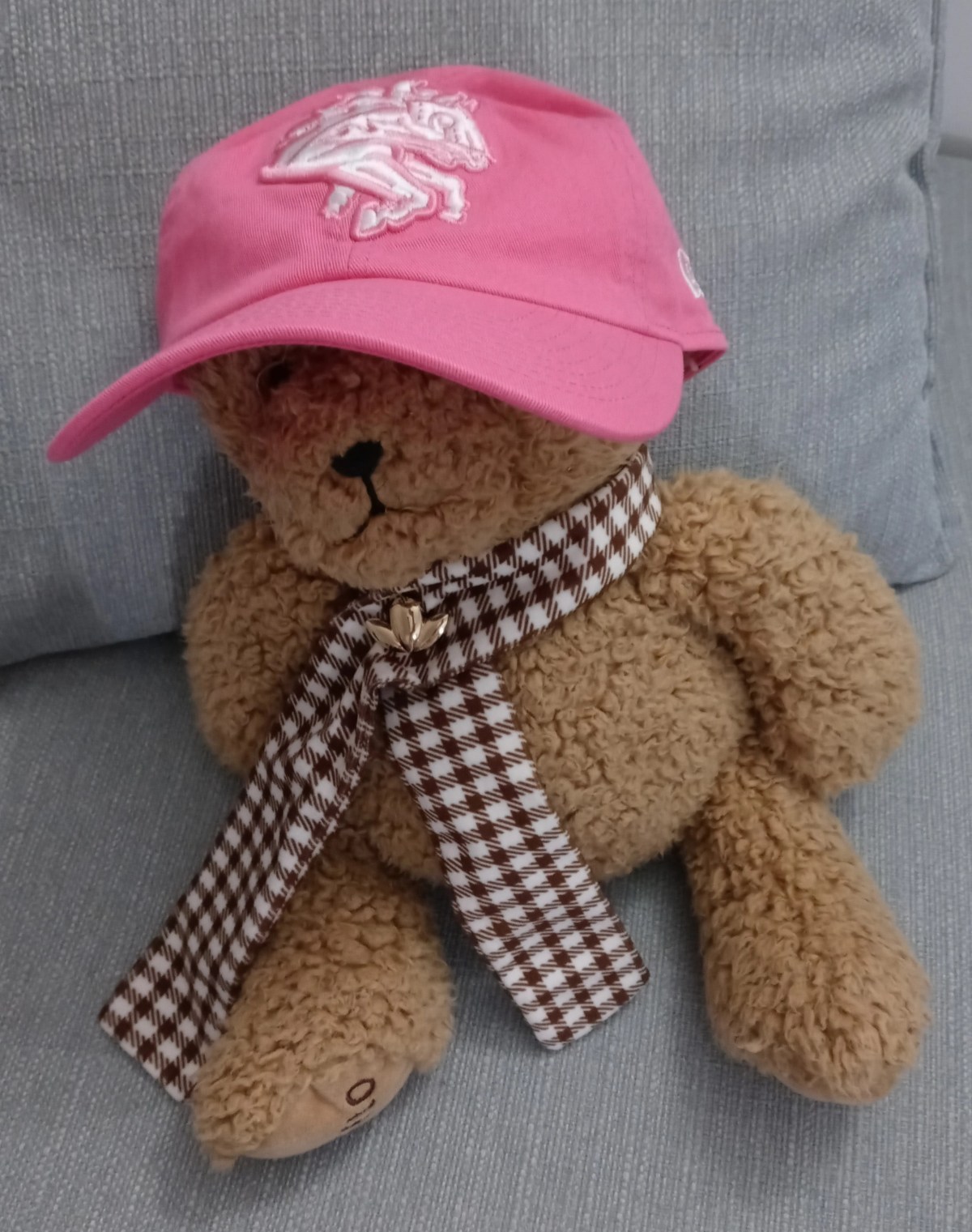
(Photo: ABC’s bear wearing a Binghamton Rumble Ponies cap)

Spouse B, daughter T, and I are in London this week visiting daughter E, son-in-law L, and granddaughters ABC and JG for half-term break. This first half of the week, both E and L are working, so our main goal is taking care of ABC and JG so they can do that.

The last time we were together in person was April when they came to our home in the US. Although we do video calls, they can’t really capture the changes that happen. JG, now 3 and attending full-day nursery school is chatting up a storm! She loves making puzzles, zooming around our rental house near their home, and following the lead of 6-year-old ABC, who likes or tolerates it most of the time. ABC, now in year 2 at school, is reading well and a master of make-believe. She can make up songs and lyrics on the spot, taking after her musically-and-literary-accomplished parents. ABC also enjoys dance and art.

I love watching B being Grandpa, playing games, reading stories, preparing meals and snacks, and dozing off during naptime. T is an involved auntie, playing endless games of hide-and-seek and whatever make-believe ABC has invented and giving gentle hugs, in deference to her still-healing shoulder.

My favorite thing is just being here as family. With the ocean between us, it’s a rare gift to snuggle on the couch, especially with JG who was born during the early part of the pandemic and whom we didn’t get to meet in person until she was a year old. Such a different grandparenting experience than with ABC who lived with us in the US until she was two.

For JG, I’m just Nana. ABC, though, remembers her Great-Nana, who passed away in 2019.

I miss my parents and wish I could be as good a grandparent as they were with E and T.

Writing

I’m a bit of – okay, more than a bit – an outlier in Linda’s Just Jot It January event in that I seldom use the provided prompts other than for One-Liner Wednesdays and Stream of Consciousness Saturdays. My blog is called Top of JC’s Mind because I write about whatever is at the top of my mind, which could be family, poetry, health, politics, spirituality, environmental issues, movies, or anything else. Today, though, I provided the #JusJoJan24 prompt, writing, hoping it would be an easy one for all of us, including me (especially me?), to use.

When I was in grammar school, we did a lot of both creative and academic/utilitarian writing in our two-room school which went up through grade 8. Besides learning to write theme papers and business and friendly letters and such, we also wrote stories and poems. I remember writing outside of school for fun, too. My sisters and I would often make our own greeting cards with poems we wrote ourselves.

At the high school I attended about twenty miles from home, there was still a lot of writing but very little of it was creative. Busy with academic writing, I stopped writing poetry and fiction. This trend continued when I was a student at Smith College – lots of writing, but none of it in fiction or poetry. I’ve wondered if the Boutelle-Day Poetry Center had existed back in my student days whether I would have written and studied poetry as an undergrad. As it happened, I made the happy discovery that I could write music; composition became an important part of my major. As a singer, organist, and composer, words were often entwined with my musical experiences, which kept me in conversation with poetry and literary writing, even when I wasn’t practicing it myself.

There has been a lot of writing in my life after Smith. There has always been correspondence, first on paper and later mostly electronic. Many of my volunteer activities had major writing components. In my years on the liturgy committee at my church, I wrote prayers and what we jokingly termed “homilettes” on seasonal themes. I worked on documents on curriculum development as a volunteer on curriculum and honors diploma committees when my daughters were in school. I researched and wrote commentary on the dangers of fracking for years as part of the rapid response team in New York State. Every once in a while, I would be inspired to write a poem, but nearly all my writing was utilitarian prose.

That changed when I turned fifty. My friend Yvonne was leading a year-long book study of Dr. Clarissa Pinkola Estés’s Women Who Run with the Wolves: Myths and Stories of the Wild Woman Archetype. A circle of women met monthly to discuss a section of the book and then create art in response. I spontaneously started to write poems to accompany my art pieces, a practice known as ekphrasis, though I didn’t know the word at the time. I had lost the church that had sometimes performed my music and I think that creative energy found a home in writing poetry.

After a poem I had written was chosen as part of a National Poetry Month initiative at our local public broadcasting radio station, I learned about the Binghamton Poetry Project and started attending their community poetry workshops, which are led by graduate students at Binghamton University. I quickly became serious about poetry and wanted to submit work for publication. One of the BPP directors found a local circle of poets meeting regularly to workshop poems that I could join. We are now known as the Grapevine Poets and I will be forever grateful to them for all their help and support with my poems and manuscripts. Last year was a milestone for me when Kelsay Books published my first chapbook of poetry, Hearts.

Running roughly concurrently with the resurgence of poetry in my life has been my blogging life. When I was writing so much fracking and political commentary, friends suggested I give blogging a try. I wasn’t sure if I could make it work but Top of JC’s Mind turned ten last September. I just passed 1,900 posts total, so there’s a lot there if anyone cares to rummage around! As part of my tenth anniversary celebration, I also finally got my own domain name, so you can also visit the blog through my author site at joannecorey.com.

Words are powerful and nearly all of us are writers, whether we are doing it for personal use or public audience. I hope that, whatever writing you do, it brings you some sense of peace, joy, clarity, outreach, and stability.

Write on!

SoCS: rocks

When I was a child, I collected rocks in a shoe box. Maybe “collected” is too strong a word as it usually denotes some kind of organization or classification that was not the case. I just picked up rocks that I thought were interesting or pretty for their color or shape.

Rocks were part of every day life – the stepping stones in the brook that we used to get across, the huge boulders under the high lines across from the house, the stones in the yard, the pea-stones along the side of the macadam road.

We had stone samples with garnets in them from the excavation of the underground powerhouse carved out of the mountain for Bear Swamp, a pumped storage power plant that was part of the hydro system that my father oversaw as superintendent of what was then called New England Power. (The plant is still operating over fifty years later, although under another name and company.)

I loved earth science when I took it in high school, so much so that I took a few geology courses when I was in college.

I do still have a few special rocks, including some that have been carved or inscribed with special words. I love their ability to help me feel grounded.

We all come from the earth, after all…
*****
Linda’s prompt for Stream of Consciousness Saturday this week is “rock.” Join us! Find out more here: https://lindaghill.com/2023/06/30/the-friday-reminder-and-prompt-for-socs-july-1-2023/

taking down the tree

Yesterday, we took down our Christmas tree.

It’s a necessary task, but always a bit sad.

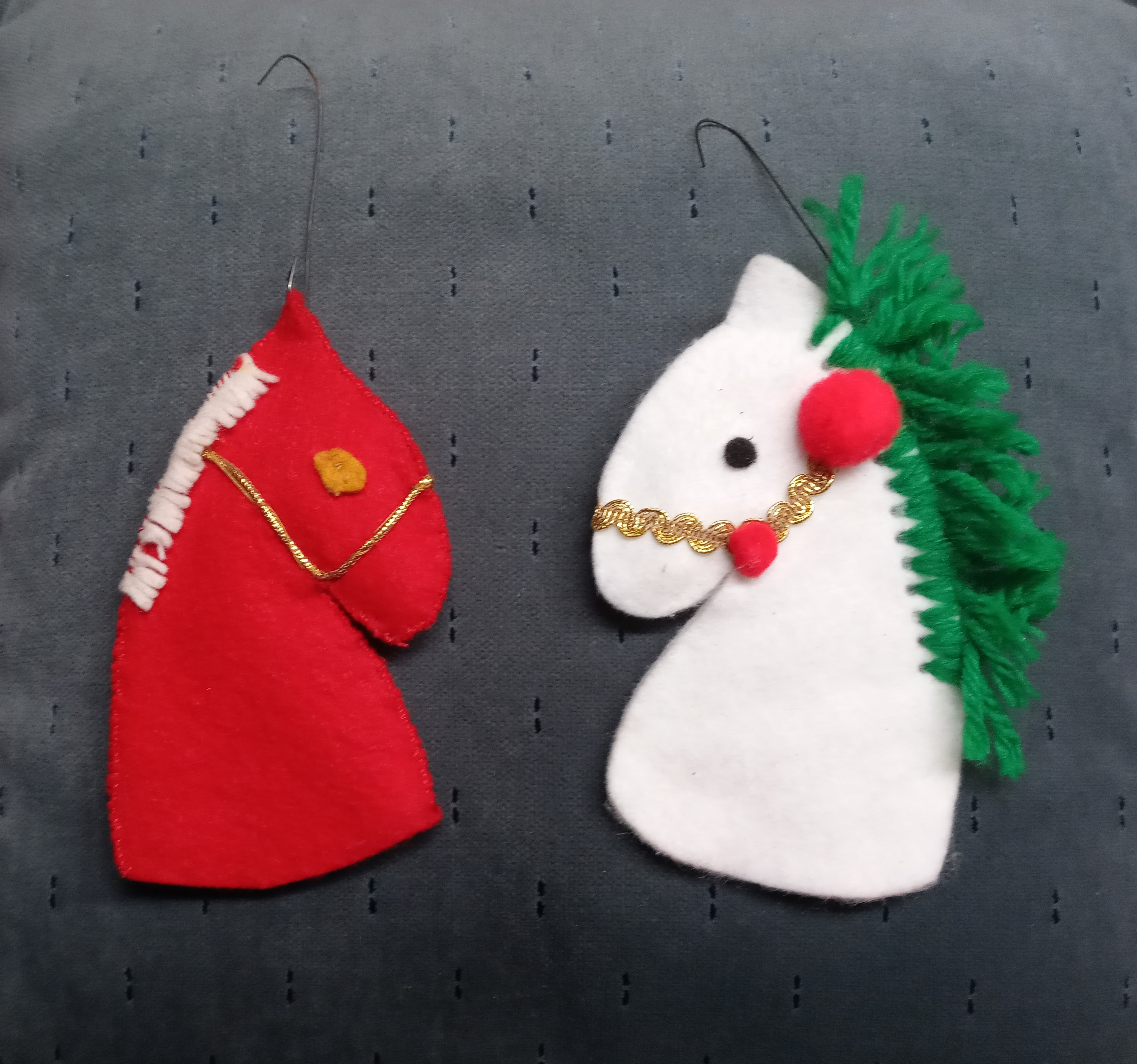
It’s also very nostalgic. This time, I was struck by these ornaments in particular.

These ornaments double as candy cane holders, so that they look like hobby horses when they hang on the tree. The red one was made over fifty years ago by my spouse B when he was in elementary school. The white one was made about thirty years ago by B’s mom, when she was teaching in elementary school and would lead her students in creating a holiday gift for their parents. She would always make extras to give to family members. I’m sure hers were prettier than her students, although all are equally treasured.

These and all the other ornaments are safely stowed now, waiting for next Christmas – or maybe the one after that, if we decide to spend the holidays in London this year.

Fortunately, the memories are easily accessible at any time.
*****
Join us for Linda’s Just Jot It January! Find out more here: https://lindaghill.com/2023/01/16/daily-prompt-jusjojan-the-16th-2023/

SoCS: a hometown tale

Once upon a time, I lived in a town of about 200 people in western Massachusetts. Well, 200 if you counted the people in the prison camp up on the hill, who lived in what had been built as lodgings for CCC workers back in ’30s. When I was in Girl Scouts, we used to go to the camp for lessons in ceramics and jewelry making and such. My daughter has a tooled leather belt that my sister made there. The crafts kept the prisoners occupied and they sold some beautiful pieces in their gift shop.

We had a grammar school in town. Four grades in one room downstairs and the four older grades in a classroom upstairs. The school was also built in the ’30s by the WPA. Jobs that helped workers during the Depression and that helped the town for decades after. My father lived in town then and was in school when they moved to the new building.

The largest employer in town was a paper mill along the river which made specialty papers, like the glassine that used to cover envelope windows before there were plastics. They used to make the wrappers for Necco wafers; I remember seeing them made on a school field trip to the mill.

Life was good. Everyone knew everyone. We were probably a bit behind the times but no one much cared about that.

Greater forces did impact us over time, though.

Jobs were moving South. The owners of the mill closed it. Some jobs and the people that filled them moved to Georgia. Some other folks found jobs locally, although other towns were also losing their mills, so jobs weren’t easy to come by. Even the prison camp closed.

The town got smaller. When there were only seven kids left in town who were in K-8, the school closed and the students were bussed to a neighboring town. Eventually, even the post office closed.

The town is still there, though. The people are resilient. Everyone knows everyone. They recently celebrated the town’s bicentennial.

And they all lived happily ever after.
*****
Linda’s prompt for Stream of Consciousness Saturday this week was to begin with “Once upon a time.” I chose to end this (mostly) true tale with the classic fairy tale ending. Join us for SoCS and/or Just Jot It January! Details here: https://lindaghill.com/2023/01/13/the-friday-reminder-for-socs-jusjojan-2023-daily-prompt-jan-14th/

US education

In the United States, some school districts have already started the new school year and the rest will follow over the next couple of weeks.

In many places, the situation is fraught.

First, an organizational primer for those outside the US. The United States, unlike many countries, does not have a national education system. The various states exercise control over the curriculum and policies to greater or lesser degrees, depending on the state. The greatest degree of control usually rests with local school boards.

It’s a mixed blessing.

In some districts, the local school boards have bought into the notion that something as simple as having a book that includes a gay character in the library is akin to “grooming” students to be gay. Or that it isn’t permissible to discuss racism because it might make white students feel bad or guilty. This puts teachers in the uncomfortable position of being afraid to teach history, civics, literature, science, etc. in the way that they were trained to do as educators.

Some of these issues are even more pronounced when they become a state policy. The most prominent example of this at the moment is Florida. This school year marks the beginning of enforcement of the Parental Rights in Education Act, informally known as the “Don’t Say Gay” law. The most prominent provision of the law is that there must be no classroom instruction on sexual orientation or gender identity in kindergarten through third grade. The reasoning is that these topics should be totally controlled by (heterosexual) parents.

But, here’s the thing. We use gendered language ALL THE TIME. Some of the first sight words that children learn – mother, father, boy, girl, man, woman, he, she – are all gendered terms. Are teachers supposed to use gender-neutral words at all times, referring to students, parents, and siblings rather than using such common terms as boys and girls, moms and dads, and brothers and sisters? What if a student asks why the family picture a classmate drew has two moms or two dads? Will the teacher be sued if they say anything beyond “ask your parents”?

Florida is also facing what has been termed a “critical teacher shortage.” It’s hard to say how much is due to curriculum concerns versus low pay, lack of administrative support, large class sizes, contract provisions, etc. Teacher shortages are fairly common in the United States, especially in math and science. To fill gaps, some states allow people to teach subjects in which they are not certified or even allow people to teach who are not certified at all.

Meanwhile, teachers and schools are under COVID-related pressures. Although almost all students, teachers, and staff are eligible, many remain unvaccinated, raising the risk of illness. During the pandemic, some students fell far behind academically during the period of remote instruction and need highly qualified teachers and extra tutoring to help them catch up to grade level. Teachers are also struggling with the mental health and developmental needs of students who faced fear, uncertainty, and isolation for months and now struggle with inattention, misbehavior, and lack of age-appropriate social skills. Some teachers are opting to retire as soon as they are eligible rather than continue under these stresses.

In some areas, schools are dealing with church/state issues, as well. Because of the First Amendment to the United States Constitution, the government may not establish a religion. However, a couple of recent decisions by the conservative majority of the Supreme Court have poked holes in what had been termed the wall of separation between church and state. Both cases benefit the expression of Christianity; I wonder if the decisions would have been the same if they had been about public prayer by Muslims, for example. In some localities or states, there are even instances of (white) Christian nationalism creeping into school curricula, such as teaching that the United States was founded as a Christian nation, which it was not, and downplaying the role of enslavement and indigenous land theft/genocide in our national history.

A lot of this is supposedly done in the name of parental rights, that is, that parents are the ones who should determine what their children learn in public school. I don’t agree with that. I look upon public education as a public good. I want free, high-quality education for every student so they can grow into responsible, mature members of our communities. They need to learn wide-ranging skills in communication, quantitative and scientific skills, technology, social studies and civics, and the arts. Having a broad base helps to develop critical and creative thinking and to identify where a student’s interests lie. Learning in community teaches how to work together and solve problems in a civil way. That was my expectation when I chose to send my children to public school. If my priority had been to control what they were exposed to, I would have opted to home school them. If I wanted them to have learn through a faith-based approach, I would have sent them to a religious school.

I don’t believe that a subgroup of parents should be able to dictate the learning environment of all children in our public schools. If a parent thinks that a certain assignment is inappropriate for their child, the vast majority of schools have a mechanism to assign an alternative. However, that parent should not have the power to say that the other students can’t undertake the original assignment. If those parents don’t understand that in terms of community values, they should at least understand that the parents of the other students have the same right to direct their child’s education as they do. If a parent thinks that all/most of the assignments are inappropriate for their child, it’s time to either homeschool or send their child to a private or religious school that meets their needs.

With my daughters in their thirties and my grandchildren abroad, I admit that I am grateful to have been spared the personal pressures of education during the pandemic. There is a lot of ground to make up for students in the US. Let’s concentrate on that for the good of their future and our country.
sad news and shopping

We are nearing the end of our holiday visit to London. Today is our last full day with granddaughter ABC who will go back to school to begin the new term tomorrow. As a treat, ABC stayed over at our Airbnb with us last night. B made a yummy coffee cake for our breakfast. We had plans to meet up with our daughter E, her spouse L, and granddaughter JG for a morning shopping excursion and lunch.

I checked my email and found the sad news that one of the long-time members of the spirituality book study group at our neighborhood church that I facilitate had passed away. We had not seen each other since our group was suspended in March 2020 due to the pandemic, although we spoke by phone periodically. I had sent her a Christmas card not long before we left for the UK. I tried to bring up her obituary through our online subscription to our local newspaper, but, for some reason, it doesn’t work outside the US. I wish I could be there to attend the funeral but I’m afraid it will be held before I get back to the States. We had hoped to resume class in the spring, but it will be missing a certain spark without Christine.

We were able to meet up in Stratford for shopping, quite close to the site of the Olympic Park. I went by car with L so JG and ABC could be in their car seats, while B, T, and E took the bus. Had the weather been less chilly and rainy, they might have walked. We did a bit of shopping for ABC who needed some new skirts and black shoes as part of her school uniform. I was shocked to find a pair of boots for myself; I have short but narrow feet so tend to be hard to fit. We had lunch at a pasta shop in the mall, followed by gelato and sorbetto at another shop. We navigated our way back to the house and our nearby Airbnb and are now having naptime for the children (and some adults) before meeting up later for supper together.

We have been being careful about being out in public. This was our biggest encounter in public since our arrival days, but we wore our masks on the busses and in the shopping center, except while eating. The shops open onto a covered space that is open to the outdoors, so air circulation was good where we were walking and eating. We were also able to keep a good distance between groups of people. It helps to give peace of mind that B, T, E, and I are all boosted. L is just recently recovered from omicron but will be eligible to be boosted soon. We all need to protect ABC and JG, as well as keep ourselves negative so we can fly back to the US on Saturday.
*****
Join us for Linda’s Just Jot It January! Find out more here: https://lindaghill.com/2022/01/04/daily-prompt-jusjojan-the-4th-2022/

One-Liner Wednesday: first!

Happy first day of school, ABC!
*****
This personal one-liner for my granddaughter on her first day of nursery school is brought to you by Linda’s One-Liner Wednesdays. Join us! Find out more here: https://lindaghill.com/2020/09/23/one-liner-wednesday-a-backhanded-compliment/

Badge by Laura