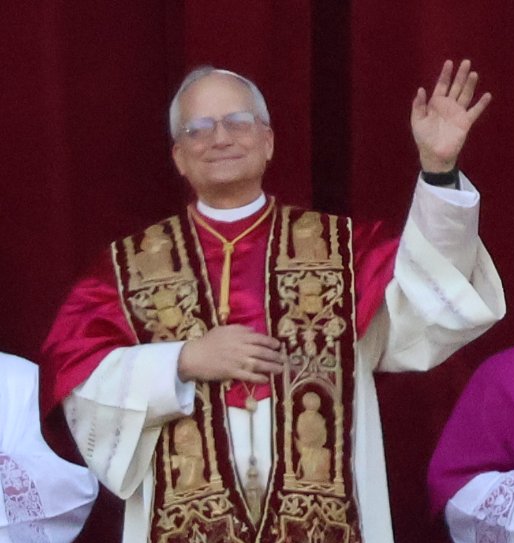
Welcome, Pope Leo XIV!

(By Edgar Beltrán / The Pillar – https://x.com/edgarjbb_/status/1920590815472108021, CC BY-SA 4.0, https://commons.wikimedia.org/w/index.php?curid=164970023)

When I wrote about Pope Francis right before the conclave, I didn’t expect that the conclave would end on the second day. As a reader of NCR (National Catholic Reporter), though, I was delighted but not shocked by the selection of Cardinal Robert Prevost as the next Pontiff. Although he was born in Chicago and educated in the United States (with an additional degree from the Pontifical University of St. Thomas Aquinas in Rome), most of his ministry has been outside the US. Fluent in several languages, including Spanish and Italian, he spent over twenty years in Peru as a pastor and, later, Francis-appointed bishop. He is well-known in church circles internationally because he visited close to fifty countries as prior general of the Augustinian order and, for the last two years, had been in Rome serving as head of the Dicastery for Bishops, which advises the Pope on the appointment of bishops world-wide. He was chosen as a cardinal on assuming this prominent role in the Curia, which is the Catholic Church’s bureaucracy.

While many had felt that it was impossible for anyone from the US to be chosen as Pope because the United States is such a powerful country, Cardinal Prevost was seen as more of an international figure. He is a citizen of Peru as well as the United States and has lived in Rome for over a dozen years. He understands the workings of the Vatican but retains the skills of a pastor. He supports Francis’s efforts to make the church more synodal in its approach, which broadens those with input into church matters instead of everything being concentrated in the power of the bishops, led by the Pope, who is given primacy as the bishop of Rome. I think that his skills and resume, as well as his familiarity in so many countries, made him a natural choice for the cardinal-electors.

I was struck that the name he chose was Leo XIV. This immediately brought to mind Leo XIII, whose 1891 encyclical Rerum Novarum (Of New Things) is the bedrock of Catholic social justice doctrine. That encyclical is subtitled Rights and Duties of Capital and Labor; it brought moral teaching to bear in response to the challenges of the industrial revolution. This choice of name signals that the new pope hopes to bring social justice doctrine to bear on the current challenges of the digital age. He also will continue the work of Francis’s 2015 encyclical Laudato Si’: On Care for Our Common Home, which emphasizes working to address “the cry of the earth and the cry of the poor.”

I was struck by his age. Born in 1955, Leo XIV is the first pope who was raised in the post-Vatican II church from childhood. My hope is that his papacy will continue the reforms of Vatican II which place the Catholic Church in the modern context rather than trying to isolate itself. This is the first time that a pope feels like a brother to me because he is actually close in age to my older sister. Being from the United States, I also understand better the environment in which he grew up. It lends a feeling of closeness that was not possible with the prior popes in my lifetime.

Leo XIV’s age also opens the possibility of a long pontificate. Leo XIII had one of the longest pontificates in history at 25 years; Leo XIV may not match that length but could remain pope for over two decades if his health holds.

I also have a personal attachment to the name Leo, which was my father’s name. He was named after his own father, although not a Junior as they had different middle names. Family lore is that my great-grandparents, after suffering the loss of several children, started to name them after popes, so my grandfather was literally named after Pope Leo XIII, who was serving at the time of his birth. All their sons who were named for popes survived into adulthood.

Welcome, Leo XIV! May God bless your pontificate and all the work you do for peace, justice, the world, and all peoples.

Pope Francis

(Image by manfred Kindlinger from Pixabay)

Before the conclave to choose his successor begins, I want to take a moment to write about Pope Francis, who died on Easter Monday after twelve years as pope.

From the moment that he was announced after his election with the name Francis, I knew he would be a different kind of pope than his immediate predecessors, especially when he asked the people to bless him before he blessed them. Like St. Francis of Assisi, Pope Francis dedicated himself to peace, to serving all people, especially the most vulnerable, and to caring for creation. I appreciate how he led the church in those directions while also offering his message to the whole world.

Within the church, he opened the door to greater listening and dialogue, especially through the synodal process that included the laity as well as clergy. This was especially meaningful to me as John Paul II and Benedict XVI tended to shut down discussion and silence voices that offered a different viewpoint. Francis also engaged with people of other faiths and philosophies around the world, travelling broadly and meeting with people in many different circumstances. He would even acknowledge that when he would ask people to bless him or pray for him by asking people who did not have a prayer tradition to offer their well wishes on his behalf.

I appreciated Francis’s humility in choosing to live simply in Casa Santa Marta rather than the opulent papal apartment. He dressed simply and liked to be out among the people. Even his funeral showed his humility. He simplified the papal rite so that it was recognizable to anyone that has planned a Catholic funeral. Only the final commendation and funeral procession through Rome stood out as being papal in scope. One of the most moving moments was when his body arrived for burial at the Basilica of Santa Maria Maggiore, where he was greeted by the poor of Rome and children carried baskets of flowers to place before the altar. The inscription for his grave reads simply Franciscus.

As an environmentalist, my favorite writing of Pope Francis’s is his first encyclical, Laudato Si’, which called for everyone in the world to care for our common home, the earth, and for other people, especially the most vulnerable. It was important in securing the Paris Accord and remains, along with its companion, Laudate Deum, a continuing challenge to how we address the climate crisis and social inequities.

As a feminist and progressive Catholic, I appreciate that Francis invited discussion of women’s role in the Church and appointed women to positions of authority they had never before occupied. However, it was disappointing that he could not see the full vocation of women in church and society. Still, we are further along the path toward the radical inclusion that Jesus modeled for us than we were and for that I am grateful.

Like many Catholics, I will be watching for the white smoke to rise from the Sistine Chapel where the cardinals will meet to select the next pope. The name he chooses may give us a window into the direction in which he will lead the church. For example, a John XXIV would continue in the direction of Vatican II and Francis’s synodality while a Benedict XVII would likely call for a “smaller, purer Church” that would exclude people like me.

The word catholic means universal. Pope Francis spoke to that sense of universality which I hope the next pope will continue.

In a small group a few days ago, we were invited to pray that the next pope be a woman who would take the name Clare and continue in the mode of St. Francis of Assisi and St. Clare. The Holy Spirit would have to blow through the conclave with hurricane force for that prayer to be fulfilled, but, maybe, some day?

Only God knows.

One-Liner Wednesday: a final message from Pope Francis

On this day, I would like all of us to hope anew and to revive our trust in others, including those who are different than ourselves, or who come from distant lands, bringing unfamiliar customs, ways of life and ideas!

From Pope Francis’s Easter message, April 20, 2025, which was proclaimed on his final full day of life

Join us for Linda’s One-Liner Wednesdays! Find out more here: https://lindaghill.com/2025/04/23/one-liner-wednesday-sorry-4/

JC’s Confessions #31

In the first few seasons of The Late Show, Stephen Colbert did a recurring skit, then a best-selling book, called Midnight Confessions, in which he “confesses” to his audience with the disclaimer that he isn’t sure these things are really sins but that he does “feel bad about them.” While Stephen and his writers are famously funny, I am not, so my JC’s Confessions will be somewhat more serious reflections, but they will be things that I feel bad about. Stephen’s audience always forgives him at the end of the segment; I’m not expecting that – and these aren’t really sins – but comments are always welcome.

On April 6, 2025, Pope Francis appeared in public for the first time after returning home from his long hospitalization. It was at the end of a special Jubilee liturgy for the sick and health care workers and others who care for them. He had written the homily and a special blessing for the mass, although they were read by others. Francis wrote:

In this moment of my life I share a lot: the experience of infirmity, feeling weak, depending on the others for many things, needing support. It is not easy, but it is a school in which we learn every day to love and to let ourselves be loved, without demanding and without rejecting, without regretting, without despairing, grateful to God and to our brothers for the good that we receieve, trusting for what is still to come.

I am currently entering the second year of dealing with a complex medical situation that has not yet been fully diagnosed. I don’t know if I will be able to be adequately treated or if I will continue to see progression in my symptoms.

It’s hard.

I confess that I am not always gracious in this situation. I manage to let others do things for me and to ask for accommodations if I need them, but I find it difficult to set aside regret and to trust in the future.

This is especially hard for me in regard to my future as a poet. I don’t know if I will regain the creativity I’ve lost to brain fog and fatigue. I’m even losing the concentration and attention to detail needed to do submissions for my already existing poems and manuscripts.

I’m trying not to get to the point of despair.

These next few weeks are important in that I have a new batch of tests and specialist visits coming up.

Maybe having some more information about what is happening will help me to be better with being sick.

Maybe not.

I’ll try.

(I realized when I went back in my blog to find the number confession this was that this confession is, in a way, a continuation of #30.)

Jubilee

Linda’s Just Jot It January offers daily prompts, which I usually ignore to do my own thing, but today I decided to use the provided prompt, jubilee.

Because I’m not feeling well, I attended mass via television this morning and the homily talked about the Jubilee Year of Hope that Pope Francis proclaimed for 2025.

Jubilees in the Catholic Church have their basis in the Hebrew Scriptures, which call for a jubilee every fifty years. Popes have followed that tradition for years ending in 00 and 50, but also sometimes add other special jubilees, as Francis did here.

Jubilees are calls for liberation, freedom, and the forgiveness of debts and Francis explains how these pertain to our present time, especially for those who are marginalized or, too often, overlooked.

Given that hope tends to be a difficult virtue for me, perhaps this year dedicated to hope will help me to be a better “pilgrim of hope,” as Francis terms it.

May all those in need be given hope, freedom, and resources in this Jubilee Year.

Catholic women and the diaconate

This week, I’ve attended celebrations at my parish in honor of St. Phoebe, who carried St. Paul’s letter from the area of Corinth to Rome. In the opening of the letter, Paul refers to her as a deacon, diakonos in Greek.

For the first few centuries of the Christian church, women served as deacons (and priests) but this ministry was suppressed as the church took on the power structure of the Roman Empire. The diaconate for men became a temporary step on the way to the ordination as a priest. The permanent diaconate was restored for men in the Catholic Church by the Second Vatican Council in the 1960s and there has been conversation since about restoring it to women. Under Pope Francis, there have been two study commissions and many bishops at the synod on the Amazon voted in favor of ordaining women, who are already doing this ministry as lay workers, as permanent deacons. However, their recommendation was not included in the final report.

On October 4th, Pope Francis will convene a new synod, called “For a Synodal Church: Communion, Participation, and Mission.” While the majority of voting members will still be bishops, there will also be vowed religious and lay men and women as voting members. It will be the first time that women have ever been voting members in a synod. The document that will be the center of their discussions, called the Instrumentum Laboris, available in several languages here, is made up largely of questions gleaned from listening sessions around the world. A major theme that arose in every region was the treatment of women in church and society and ways to recognize their ministry, service, and leadership in the Church.

The truth is that women constitute the majority of those who work in church ministry but, because they are not ordained, they seldom serve in official, high-level leadership roles. Meanwhile, in many parts of the world, particularly in the global South, where ordained priests are rare, women are ministering in their communities, teaching, preaching, leading prayer services, visiting the sick, and acting as the leader of their parishes without having the option of diaconal ordination. There is hope that this synod, which will conclude next year, will finally make women deacons a renewed reality in the Catholic Church.

So, sorry for the long wind-up, but back to celebrating St. Phoebe this week…

The impetus to celebrate St. Phoebe on or near her September third feast day comes from an organization named Discerning Deacons, whose “mission is to engage Catholics in the active discernment of our Church about women and the diaconate.” I admire their work and pray that the Synod will heed the voice of the Holy Spirit and restore the diaconate to Catholic women.

But, it’s complicated for me to have hope because of my and my sisters-in-faith’s history on the issue of women’s ordination.

I have long believed that God calls people to ordained ministry without regard to their age, gender, nationality, race, language, or any other personal characteristic. In his earthly ministry, Jesus called many disciples from among the marginalized, including women. Besides historical evidence of Catholic women deacons, there is evidence of women priests and bishops in the early centuries. Married men as priests persisted into the twelfth century; their prohibition had more to do with inheritance and property rights than with spiritual matters. For centuries, the power in the church has resided in the clergy. During Pope Francis’s papacy, he has worked to re-organize the structures of the church to allow more lay people, including women, to have leadership roles and to combat the clericalism that led to so many abuses of power and the ensuing cover-ups over the centuries.

While having women restored to ordination in the diaconate could increase leadership roles for women in the church, it doesn’t address the continued denial by the Church of the full personhood of each individual, regardless of their gender. The Church considers sexism a social sin but it cannot credibly call it out in other institutions while continuing to practice it itself.

As Catholics, we are taught to see the image of Christ in each person. Somehow, though, we are supposed to believe that only a celibate male can image Christ while standing at the Eucharistic table.

Treating women as second-class, sadly, also spills over into our social world with serious, even deadly, consequences. For example, the official Catholic viewpoint that prioritizes fetal life over the life and health of the pregnant person is leading to death or loss of fertility when care for a complication is delayed because a fetal heartbeat can still be detected, even when the gestational age or medical condition of the fetus makes survival impossible.

Even within the Church, women are not equally respected as employees. I have experienced this personally and seen it happen over and over with other women, including vowed religious. In the US, church employees don’t have recourse to employment discrimination law, so the Church can act without regard to state and federal law. Of course, it does violate Catholic social justice doctrine on respecting the dignity of work and of the worker. Sadly, restoring the diaconate to women will not address these larger inequities unless it is accompanied by intensive structural reforms of the institution, especially the clergy.

So, now comes the hard part of this post – the personal history.

Back in the mid 1980s- 1990s, I belonged to a local group called Sarah’s Circle. We began as a group of Catholic women, most of whom felt called to ordination – we did also include a couple of male members – who gathered once or twice a month for prayer, discussion, and support. While we did participate in an occasional public prayer service or event, we existed for our own spiritual fulfillment and to hold each other up when life in the Church became difficult.

Some things that our members did ruffled some feathers in the diocese. For example, the diocese ran a program to enlist parishioners to submit names for possible candidates to ordained ministry or vowed religious orders. A number of Sarah’s circle members, including me, submitted women’s names to become priests or deacons.

We wound up being discovered by the broader community when someone wrote a letter to the editor of the local newspaper accusing us of being witches, which was laughable as we were Catholics, not Wiccan. Somehow, this morphed into a brief moment of national notoriety, which included us being denounced by radio personality Rush Limbaugh. It was all very strange but served to make our local circle more powerful. We even were featured as part of a 60 Minutes piece about women’s ordination in 1996.

Over time, most of our members drifted away from the Church. Some joined other Christian denominations. One is now an ordained minister. I still grieve that the Catholic Church was so blinded by patriarchy that they turned away these compassionate, talented, holy women from ordained ministry.

Despite the pain, I stayed in the Church. I used to joke that it was “just me and the nuns” who were sticking it out. (Technically, they weren’t nuns, who are usually cloistered; they were vowed religious sisters.) As more and more of our members were drawn in different directions, we stopped meeting, staying in touch in little arcs, instead of a full circle. Sarah’s Circle’s records are now part of the archives of the Burke Library of the Union Theological Seminary, part of the Columbia University system, in New York City.

So, back to the present reality. My parish is looking into starting a Discerning Deacons group and I don’t know if I should join. Part of the reason I was able to stay within the Church was that, in a long-standing attitude of cowardice, I never did the spiritual work to discern if I was being called to ordained ministry as a deacon or priest.

Not that there weren’t signs that I should do so.

When I was a young mother, I had two vivid dreams in which I was a priest.

Back in the days before the diocese started to specify that only men and single women were invited to inquiry meetings about the call to ordination or religious life, I attended one. After the more general information sessions, we had to break into groups for prospective deacons, priests, or sisters. I originally wanted to join the priest group but didn’t want to disturb the teens and young-adult men there, so I joined the deacon’s group. I remember the deacon who was leading the group saying that, often, the wives of deacons would attend all the preparatory courses and training with their husbands and what a shame it was that, at the end, their husbands were ordained and they received no recognition of their own gifts.

Later, after my daughters were grown and before I joined my present parish, there was a powerful homily about God’s call to individuals that was entwined with the singing of the hymn “Here I Am, Lord” by Dan Schutte. At the time, the deacon serving the parish was ill and I remember looking at his empty seat near the altar and thinking, “I could be that.” I was crying while singing the refrain: “Here I am, Lord. Is it I, Lord? I have heard you calling in the night. I will go, Lord, if you lead me. I will hold your people in my heart.” I did make an appointment to speak to the pastor, who was sympathetic but, at the time, there wasn’t really anything to be done.

So, moving on to this summer. As the St. Phoebe observance was coming together at my current parish, the pastor invited me to read the gospel passage for the prayer service. I was honored to be asked because, during mass, reading the gospel is reserved to ordained clergy only. During a prayer service, lay people may read from the gospels so I wasn’t breaking any rules, but the symbolism of the invitation to publicly read from the gospels was significant for me.

I expected the evening to be emotional for me, which it was, and fraught, which it also was.

I have circled back to another opportunity to discern God’s call, but now about to turn 63 and unsure of how long I will live in this place – or live at all. I’ve amassed a lot of valuable experience but also am burdened by the pain the Church has inflicted on me and my loved ones. I’m tired. Of the struggles. Of the dismissals. Of the lack of charity. understanding, and compassion.

Do I dare to discern?

Do I, despite the history, dare to hope?

Review: The Letter

At the Vatican on October 4, 2022, the feast day of St. Francis of Assisi, a new film premiered, entitled The Letter.

The Letter in the title refers to Laudato Si’: On Care for our Common Home, Pope Francis’s 2015 papal encyclical which was addressed not only to Catholics around the world but also to all people of good will. Its release in May helped to build momentum for the Paris climate talks that fall that resulted in 196 countries signing onto the landmark agreement on climate change.

Laudato Si’ espouses integral ecology, which involves both care for the earth and care for all people, especially those most vulnerable. The encyclical cites science and various faith traditions to build a framework for fighting climate change and for lifting up those dealing with hunger, poverty, dislocation, water scarcity, and other challenges.

The film’s title has a second meaning, as the first part of the film shows five people around the world receiving a letter from Pope Francis, inviting them to the Vatican to discuss the issues of Laudato Si’ with him. Together, they represent both “the cry of the earth and the cry of the poor.” It is these five people and the communities they represent that form the bulk of the film.

They are:
~ Cacique Dadá, an indigenous leader of the Borarí people from the Maró Indigenous Territory of Brazil, representing indigenous communities
~ Arouna Kandé, a climate refugee from Senegal, representing the impoverished
~ Ridhima Pandey, a teen-aged climate justice activist from India, representing young people who are inheriting a world that has been damaged by prior generations
~ Greg Asner and Robin Martin, a married couple from Hawai’i in the United States, who are both marine biologists studying the impacts of climate change on ocean ecosystems, representing the voice of nature

The stories of their native places are stunningly conveyed by director Nicolas Brown and the team of Off The Fence Originals, in conjunction with The Laudato Si’ Movement. I especially appreciated the segments from the Amazonian rain forest and the Pacific marine environments.

I also appreciated the diversity of age, race, gender, country of origin, and faith portrayed in the film. While Pope Francis and the Vatican officials are, of course, Catholic, we see participants who follow other faiths, including Islam and indigenous traditions. It is a true reflection of the encyclical being addressed to “all people of good will.”

In keeping with that diversity, people in the film speak in their native languages with subtitles and narration available in English, French, Spanish, Italian, and Portuguese. There are also subtitles available for the entire film in many other languages. You may watch the film free of charge at the link in the first paragraph of this post or on the YouTube Originals channel. Details about offering a free screening for groups can be found here.

My hope is that many people around the world will view the film and take action on social and environmental justice issues. We are one human family and we must together care for each other and our common home.

One-Liner Wednesday: individualism

 Radical individualism is a virus that is extremely difficult to eliminate, for it is clever. It makes us believe that everything consists in giving free rein to our own ambitions, as if by pursuing ever greater ambitions and creating safety nets we would somehow be serving the common good.

Pope Francis, from the just released encyclical Fratelli Tutti, paragraph 105

Join us for Linda’s One-Liner Wednesdays! Find out how here: https://lindaghill.com/2020/10/07/one-liner-wednesday-maybe-not-happy-but/

Badge by Laura

SoCS: Just Mercy

(I reviewed Just Mercy earlier this week, in case you want to check it out.)

When I hear the phrase “just mercy”, I think of Pope Francis. Pope Francis called a Jubilee year dedicated to mercy a few years ago and the spirituality study group that I facilitate was learning about and discussing mercy. Many people think of “mercy” in relationship to forgiveness. For example, many Christian churches say, “Lord, have mercy.” as part of their penitential rite. Francis, though, includes a broader understanding – mercy in the sense of lovingkindness. (For Catholics, this is more the sense of the corporal and spiritual works of mercy, which includes actions like feeding the hungry and burying the dead and acts of compassion like offering consolation.) I appreciate the sense of mercy as lovingkindness, as a counterweight to forgiveness in that mercy is expanded to everyone, not just those who have done something wrong.

This, to me, ties into the way we use the word justice currently in the United States. Many people equate justice with vengeance. We use phrases like “criminal justice” in a context of punishment. I think of justice as the restoration of right relationship. This is the sense of justice in phrases like “social justice” and “environmental justice.” In this context, justice is tied to care and concern for people and for all created things. This is also evident in the term “economic justice”, recognizing that it is wrong for employers to enrich themselves at the expense of their employees who are not paid a living wage.

I will end this homilette before everyone’s eyes glaze over, although I may be too late…

It’s what can happen when I am writing off the top of my mind.
*****
Linda’s prompt for Stream of Consciousness Saturday this week is to base the post on the title of the last movie that we saw. If you would like to join in with Stream of Consciousness Saturday and/or Just Jot It January, you can get all the details here:  https://lindaghill.com/2020/01/17/the-friday-reminder-for-socs-jusjojan-2020-daily-prompt-jan-18th/

SoCS: social justice

During the struggle against fracking in New York, one of my roles was writing comments on related articles. I was part of the rapid response team, so I spent a lot of time doing it, so much so that if I was at an in-person event that drew people from around the state, people recognized my name if we were introduced. I had done a lot of research, so I was able to present my point of view on many different aspects of the effects.

What I seldom wrote of was the personal basis of my views, which was Catholic social justice doctrine, which was always in my heart, even as my mind was filled with science and statistics and personal stories from our neighbors in Pennsylvania.

As time has gone on and my public role has lessened, I have more often spoken of the role of social justice in my life. This became easier when Pope Francis published his encyclical Laudato’ Si. While people knew that it would be about climate change, they didn’t realize how much of it would center around human relationships with each other. Francis calls this approach “integral ecology” and it demonstrates one of the basic tenets of social justice doctrine, care for creation, and another, care for other people, especially those most vulnerable. These are viewpoints that many people of good will hold and there are many routes to them; I just want to acknowledge the impact of Catholic social doctrine for me, which combined with other influences to bring me to this point.

(The link above has the entire text of the encyclical with the option to read it in about a dozen languages. It was written prior to the Paris climate change meetings which led to the accord signed by over 190 nations. Francis addressed it to “all people of good will” because climate change affects everyone on earth.)
*****
Linda’s prompt for Stream of Consciousness Saturday this week is “social.” Join us! Find out how here:  https://lindaghill.com/2019/06/14/the-friday-reminder-and-prompt-for-socs-june-15-19/

SoCS badge by Pamela, at https://achronicalofhope.com/