One-Liner Wednesday: a sobering reminder

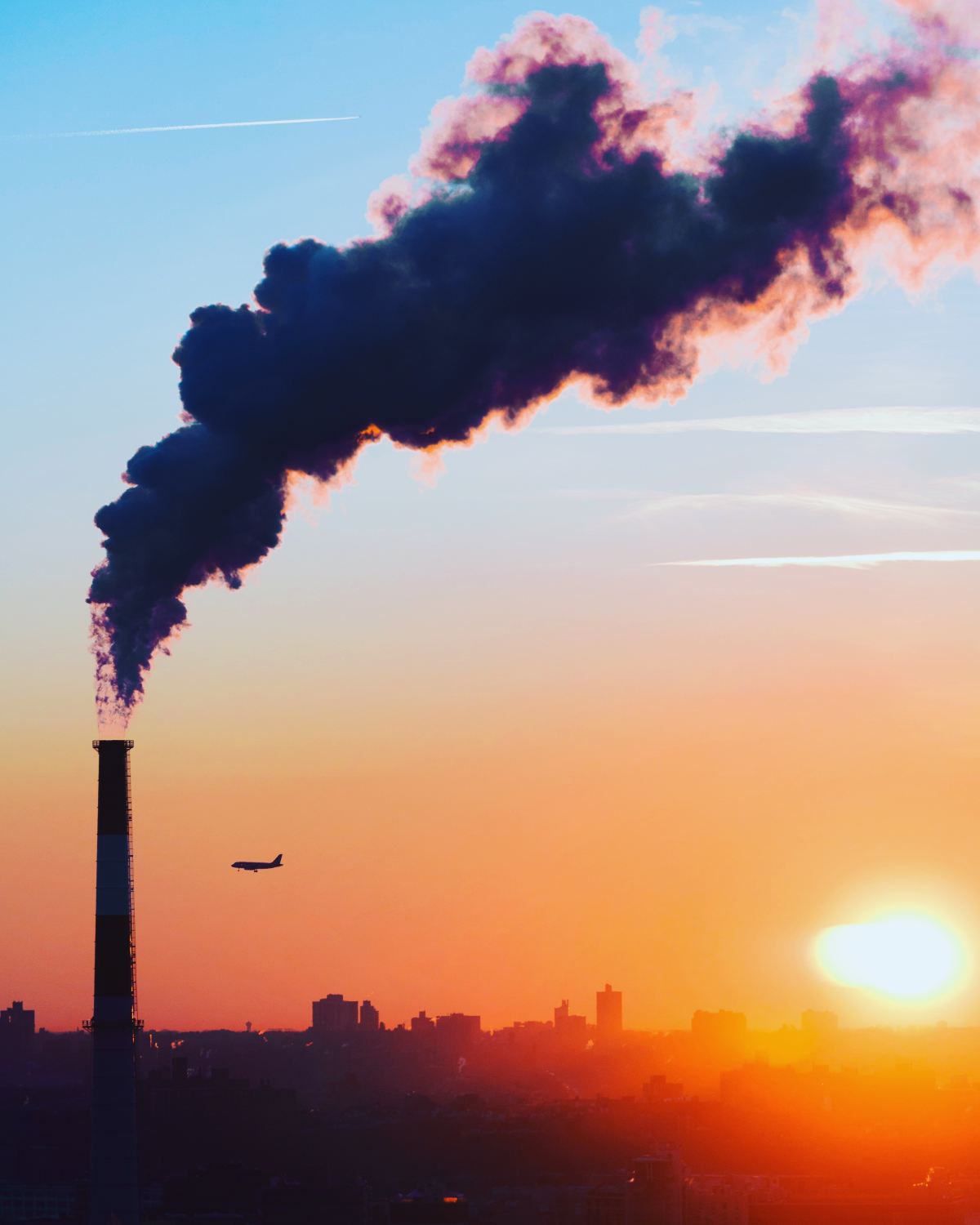
So, bottom line: when you burn fossil fuel you produce particulates which lodge in lungs and kill you (one death in five on the planet comes from breathing the byproducts of fossil fuel combustion), and when you burn fossil fuel you produce carbon, which lodges in the atmosphere, driving heatwaves and floods that kill you.

Bill McKibben

Feature photo by Thijs Stoop on Unsplash

Join us for Linda’s One-Liner Wednesdays! Find out more here: https://lindaghill.com/2023/10/25/one-liner-wednesday-pumpkinferno/

Two years without Paco

I work up in the very early morning darkness today thinking about my father, known here and in real life for the last 33-ish years of his life as Paco, the name bestowed on him by my firstborn and his first grandchild E as she was learning to talk.

I suppose this is not surprising because this is the second anniversary of his death. You can read a tribute that I wrote to him a few weeks after his passing here.

What is unfortunate is that in the early morning darkness in which I am now writing this post I am remembering so much of his final years, when I was struggling to get proper support and medical care for him, exacerbated by the pandemic. Even though I was living locally, there were long stretches in which I could not visit in person at all or only for short amounts of time. Phone and video calls were often frustrating, as you can tell from this poem, which was first published in Rat’s Ass Review.

Video Chat with our 95-year-old Father

You said it was scary
today
that we were there

in your bedroom
your three daughters
in pulsating squares

on a screen
You remembered where
home

is for each of us
but not where
it is for you

confused that you
could see us
hear us

but we were not
there
with you

We talked about the snowy
winter, so like our New England
childhoods, when you would

wrangle your orange
snowblower to clear
our way out

We asked if the cut
and bruise on your hand
had finally healed

if you had finished
all the Valentine
goodies we’d sent

Distracted
by a sound
from the living room

you set the tablet
aside
left us

staring at the ceiling

What was most difficult was that, no matter how hard I tried, I couldn’t secure correct diagnoses or treatments for Paco, illustrated by the fact that his death certificate states that he died from end-stage heart failure, but he was only diagnosed with heart failure about ten days before he died. I had been trying for months to tell the staff at his assisted living and then skilled nursing units of his continuing care community that he was having unexplained symptoms and had accompanied him to outside doctors and emergency room visits, when the pandemic protocols allowed me to stay with him, but it was never enough to get to the bottom of his health difficulties.

I thought I had worked my way out of most of the trauma of that but, in the early morning darkness of this anniversary day, apparently there is still some of that pain left. It’s not that I think I could have further prolonged his 96 years – something that would not have served any of us – but that his final months would have been so much easier for him if he could have received timely, proper diagnosis and medications.

One of the comforts of Paco’s death was the thought of his reuniting with my mom, known here as Nana, who died in May, 2019, also of heart failure and, gratefully, before the pandemic struck. I drafted this poem, which was first published by Wilderness House Literary Review, only a couple of weeks after Paco’s death.

We probably should have taken off					

his wedding ring before
he died		    before
his hands cooled	      started
to claw
but we couldn’t		       remove
that symbol
			of Elinor
	of two years
		   three months
			twenty-three days
						left
without		her
after
	sixty-five years
		      one month
			   three days
married to her
			the ring
				of her
even    in    days    of    delirium
	    haze			confusion

his ring		not
	sixty-seven years	  old
		but	   twenty
her gift 	         a remedy
	 for missing		some		thing
		of his
  to cling to 		during his three weeks
			       in the hospital
his chest cracked			 open
     		widow-maker averted
				somehow

She inscribed 		his ring	
      ALL MY LOVE  “ME”
     the way she signed 	cards to him
birthday	anniversary	  Christmas
	St. Patrick’s Day
		valentines
the words against his left
	ring finger		believed
to lead most directly to the heart
	which finally failed
		after ninety-six years
			five months
				nineteen days
as hers had
	after eighty-seven years
		     six days

While I go to the sink
to fetch soap 		to ease
the ring off 	his finger
my sister works
it over	 his reluctant 	knuckle

I carry it 	home 
to my daughter
Elinor’s and Leo’s rings
	   unite
on their granddaughter’s finger

[For those of you who might be new to Top of JC’s Mind, I will note that it is really unusual for me to fold poems into posts like this, but somehow, in the early morning darkness, it seemed appropriate.]

I’ll close this post by explaining the significance of the four-generations photo, taken a few weeks before Paco’s death, that begins this post. It shows Paco, me, eldest grandchild E who named Paco, and great-granddaughters, then 4-year-old ABC and just turned 1-year-old JG. This was the first and only meeting of Paco and JG, who had been born in London, UK, in the early months of the pandemic. ABC lived here in the States with us for her first two years and remembered Paco very well. The restrictions on international travel had kept E and her family from visiting but they were able to get special permission to travel together to come visit Paco one last time.

Paco’s health declined quickly after that visit and I’m so grateful that we all had that brief, sweet time together.

Remembering that final farewell through a few tears in the still-before-dawn darkness of this anniversary morning.

Remembering Ron Perera

Ronald C. Perera, composer and the Elsie Irwin Sweeney Professor of Music Emeritus at Smith College, passed away on August 4, 2023 at his home in Massachusetts.

Mr. Perera – I’m supposed to call him Ron but can’t quite bring myself to do so – was one of the most important people in my education at Smith (1978-1982). I was fortunate to be placed in his first-year music theory section. At the time, Smith’s sequence for teaching theory was unique. The first semester was based in 20th century music, with an emphasis on studying rhythm and melody. Having almost no background in 20th century music, I was in over my head, but Mr. Perera was always patient, good-humored, and available for extra help. The wisdom of studying the structure of melody early on in theory studies didn’t sink in until much later but it is still a help to me when learning to sing new pieces.

In the second semester, we studied common practice period four-part harmony, which meant a lot of exercises in realizing figured bass, setting hymn tunes, and analyzing Bach chorales. I was an organist at the time and Mr. Perera had been one earlier in his life; I remember us sitting together at the piano in his office geeking out over the intricacies of Bach’s harmonizations. I think some of the class thought we went a bit overboard, but I will always honor the way Mr. Perera deepened my appreciation of the genius of J.S. Bach.

(For the record, the second year of the theory sequence was a semester of counterpoint, followed by one of chromatic harmony.)

By my junior year, I had declared music as my major and Mr. Perera was my major advisor. Not wanting to finish my required theory sequence with an elective in analysis, I decided to take a semester of music composition. Once again, I was in Mr. Perera’s class. I had, of course, been doing some composition as part of my theory classes, but formally studying composition with Mr. Perera was a revelation. I was inspired to sign on to his music composition seminar for my senior year.

Composition seminar was basically private lessons in composition with occasional meetings with the other students, some of whom were graduate-level, for special presentations. That year deepened my appreciation for Mr. Perera as a teacher. He offered guidance in realizing my artistic vision for the work without interjecting his own style and aesthetic. He was always gentle, patient, and understanding, which became even more important when a family emergency occurred during my senior year. He also taught me that the work of composition is not just the creating and revising. The technical aspects, like score creation and extraction of parts, were also important; I did all of that by hand before there was software available as is common today. My seminar piece, “Psalms of Praise and Justice,” for string quintet, SSA chorus, and mezzosoprano soloist was performed at a concert for student composers and won the Settie Lehman Fatman Prize.

It was also a privilege to hear some of Mr. Perera’s compositions in concerts on campus. I particularly remember a concert featuring “Bright Angels” for organ, percussion, and tape performed in John M. Greene Hall. Mr. Perera wrote and taught electronic music as well as acoustic music and sometimes combined the two in live performance, as he did here. The score was intricate and beautiful. As a former organist, Mr. Perera understood well how to write for the instrument and fully use its capabilities while leaving the performer room to adapt for the particular instrument and room.

The other concert that immediately springs to mind was the world premiere performance of The White Whale, a monodrama for baritone and full orchestra, based on the character Ahab from Herman Melville’s Moby Dick. It is a riveting character study. All these years later, I can still recall the recurring motif, “Have you seen the white whale?”

Mr. Perera was especially well-known for his ability to wed words and music. He composed songs for solo voice, choral music, and several operas, with texts ranging from Sappho to St. Francis of Assisi to Shakespeare to Robert Frost to Mary Oliver. His love for both words and music is evident in his work.

After I graduated, I would try to reconnect with Mr. Perera when I was back at Smith for reunions or events. This became trickier after he retired in 2002. He was often at his home on Cape Cod during my visits to Northampton. I was lucky that he was in town when I returned to campus to sing in the chorus for Mahler’s Second Symphony this spring. Ron treated me to lunch at the Coolidge Park Cafe in the historic Hotel Northampton. We had a wonderful, wide-ranging conversation about family, music, poetry, current events, religion, and life in general. This quote from his obituary expresses it very well. “Ron was deeply and genuinely curious about many things, including each person he encountered. A long, thoughtful conversation was his signature, and his generous listening made everyone feel that they were the most important person in the room.” 

Mr. Perera and Jay, his wife of 56 years, attended the Mahler concert. I was pleased that I got to see them there and re-connect them with some of the other Smith singers from my era who were in attendance.

At that time, I knew that my poetry chapbook Hearts would be published soon and Mr. Perera asked me to send him notice when it became available. I did so and he ordered it. He sent me a lovely note, reflecting on his reading.

I didn’t know that would be my last contact with him.

I am so grateful to have had that wonderful conversation with him over lunch. I told him how much he meant to me when I was his student and how much I admired his ability to empower his students to realize their own artistic vision. He was an inspiration to generations of students and colleagues at Smith and beyond. They are part of his legacy along with his family – his eyes always lit up when he spoke of them – and, of course, his music which will outlive all of us.

Rest in peace, Ron.

He did tell me I should call him Ron.
SoCS: five

When I was growing up, five was my favorite number because there were five people in my family, my parents, known here as Nana and Paco, and my two sisters, one older and one younger, and me.

It’s bittersweet to think of that now, with both Nana and Paco having passed on.

I don’t have a favorite number anymore.
*****
Linda’s prompt for Stream of Consciousness Saturday this week is to think of a number and write about it. Join us! Find out more here: https://lindaghill.com/2023/08/04/the-friday-reminder-and-prompt-for-socs-aug-5-2023/

losing our first parent

Today is the eighteenth anniversary of my father-in-law’s death. He was the first of B’s and my parents to pass away. I wasn’t blogging or writing poetry then; it took years for me to process enough to write about his death. This poem was first published by Eunoia Review here in 2016. As it happened, he was the only one of our four parents that we were able to be with at the moment of death.

The Last Night
~ ~ ~ by Joanne Corey

Hospice told my husband what to expect
as his father’s death approached,
skin mottled,
eyes open but unseeing.

Crush the morphine,
mix with water,
spoon into his gaping mouth
every two hours.

The death rattle started,
unmistakable,
though we had never
heard it before.

We did what we could,
smoothing his hair,
holding his hand,
another dose of morphine.

I prayed the rosary silently,
lacking beads,
counting the decades
with my fingers.

When he quieted,
breath slow, gentle,
we woke his wife
of fifty-one years.

She lay beside him that last hour.

Breaths shallower,
with pauses between,
longer –
longer still –
until, near dawn,
no next breath comes.

We switch off
the oxygen concentrator.
Silence heralds
his absence.

SoCS: left alone

All I can think of is how hard it was for my father to be left alone when my mother passed away. It was the thing she had been most worried about. What she couldn’t have known was that a pandemic would arrive which severely curtailed our ability to visit.

I’m grateful that she never had to know.
*****
Linda’s prompt for Stream of Consciousness Saturday this week is “left alone.” Join us! Find out more here: https://lindaghill.com/2023/06/02/the-friday-reminder-and-prompt-for-socs-june-3-2023/

four years

Today is the fourth anniversary of my mother’s death.

As often happens with these dates, sometimes it seems that it couldn’t have been that long and other times it seems longer ago. This warping of time is even more prominent because of the pandemic. I remain grateful that my mother died before we were all faced with the impossible prospect of not being able to visit her in the nursing home where she spent her final months. That would have been a particularly heavy burden for my father, with whom she had celebrated their 65th wedding anniversary a few weeks before she died.

This year feels especially poignant for me as I await the publication of my first chapbook of poetry, Hearts, from Kelsay Books, most likely in June or July. The poems center on my mother with a particular emphasis on her last years dealing with heart failure. She appreciated my writing and I think she would be pleased to know she is the focus of my first book.

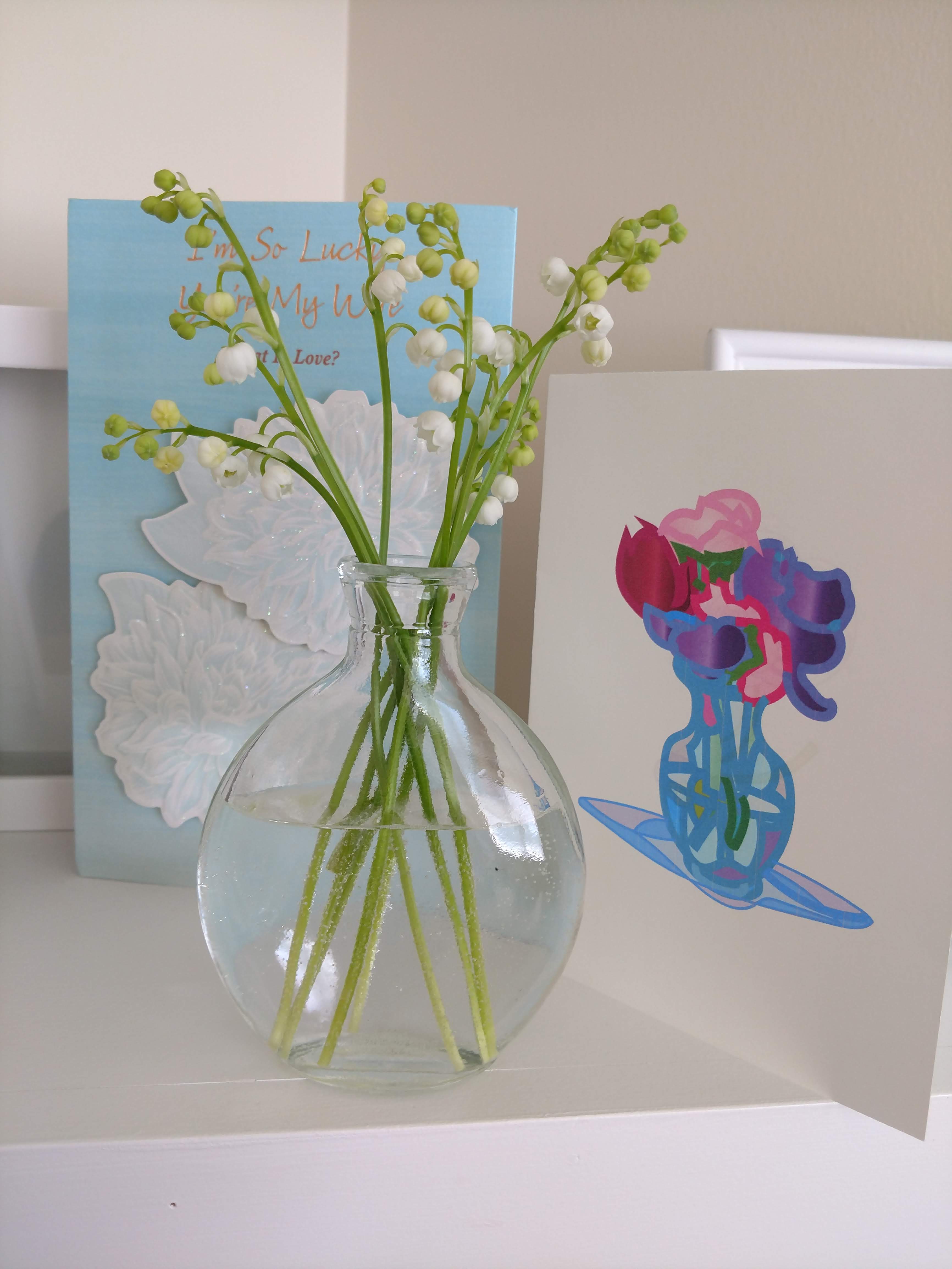
She didn’t enjoy having her picture taken, so I will share a photo, taken four years ago in her final days, of one of her favorite flowers, lily-of-the-valley, which was also her birth flower.

Lily of the valley, with Paco’s card to Nana and birthday card made by artist-friend Jim


Love you, Mom. Miss you. Still cry every once in a while…

In memory of Peg Johnston

With the recent death of Peg Johnston, Broome County (NY) has lost one of its anchors of the arts. She was well known for her involvement with the Cooperative Gallery in Binghamton and the Department of Public Art, which created many of the murals in our area.

In Peg’s memory, I’m posting the poem I wrote as a representative of the Binghamton Poetry Project for the Broome County Arts Council‘s Heart of the Arts Award dinner in 2016, when Peg was honored with that award along with Emily Jablon. (A video of my reading the poem is here.)

Thanks to the Department of Public Art
~~ by Joanne Corey

 for Emily Jablon, Peg Johnston, and all whose hearts are in the arts

Stencils and murals
on descending levels
of the Water Street parking ramp
time-travel through that historic corner –
Link Blue Box flight simulators
evolve from pipe organs –
punching in on Bundy
time recording machines
in the days before IBM
and the move to Endicott –
on street level
“Welcome to the birthplace
of virtual reality”

We walk back
walk through
move forward
cover
recover
remember
build
rebuild
renovate
together

Walking along the Chenango
more murals –
diverse faces
in shades of gray
with colorful songbird
overlay –
hot air balloons
float over green hills –
BINGHAMTON
in bold letters
filled with landmarks
proclaiming their location

We draw
paint
photograph
digitize
share
write
read
view
review
create
recreate
together

Across Court Street
a riot of mosaics
flowing around curves
moving through the spectrum
patterns
shapes
florals
the clear message
“BE  INSPIRED,
BE BINGHAMTON”

Broken shards of glass and lives
re-order
re-assemble
tessellate
shine in the sun
glisten in the rain
reflect
renew
touch
together

We sing
play
listen
dance
act
react
interact
applaud
together

We live
breathe
eat
drink
laugh
sigh
smile
artfully
thoughtfully
cooperatively
with heart


I was honored that, after the dinner, Peg had asked for a copy of my poem, which I gladly gave. I hope that, over these last few years, she looked at it occasionally and that it made her smile.

May she rest in peace and may her contributions to the arts be remembered for decades to come.

What comes after emergency?

As someone who participated in a COVID vaccine clinical trial, who has other vulnerable people in my life, and who tries to be a diligent and responsible community member, I’ve been following the science, public health information, and news about the pandemic over these last, long 3.5 years. I’ve done so many blog posts about it, I’ve lost count.

As you may know, the World Health Organization and the United States are winding down their public health emergency declarations.

This does not mean, though, that the pandemic itself has ended. COVID-19 is still widespread across the world and hundreds die every day as a result. There is still the potential for new variants and COVID is not yet seasonal, like influenza. Eventually, COVID will become endemic, as the flu is, but we aren’t there yet.

While some US programs, such as tracking hospitalization rates and wastewater testing, will continue, others will end. I will miss the COVID maps and risk ratings that the CDC has been providing. Besides the overall community risk assessment, the transmission rate maps were important to me in deciding how much public masking I needed to do or whether large, indoor gatherings were advisable at all. It’s true that, with so many COVID cases discovered through home testing and never officially recorded, the statistics are not as comprehensive as they were during the months of testing centers, but, for example, it’s helpful for me to know that my county has a moderate transmission rate but the county to our east is currently at the highest transmission rate level, two notches higher than here. Having that information could inform a decision between using a drive-through or dining in on my way through the county, as well as alerting me that the higher infection levels could spread in my direction. After Thursday, that information will not be readily available to me.

I’ll still follow the science and public health advice as best I can and will get my next booster when recommended. I’ll test at home if I have symptoms and avoid being in public when I’m sick with anything, COVID or not. I’ll keep a supply of KF94 masks in my size nearby for high-risk situations that may arise. I’ll try to do all the things we should be doing all the time, like eating well, getting enough rest, and practicing good hygiene.

I still, though, don’t want to get COVID if I can help it. To the best of my knowledge, I’ve never been infected, although I could have had an asymptomatic case at some point. I know very few people who are in that category these days.

Will the end of the emergency declarations and the resulting decline in data be a factor in my eventually contracting COVID?

Impossible to predict, but fingers crossed.

the continuing gun nightmare

Because things have been so busy and because my continuing healing from cataract surgery is still making computer time a bit more difficult, I’ve put off posting on some topics that have been top of mind.

One of those is the continuing – and seemingly accelerating – plague of gun violence in the United States.

Over these past couple of months, there have been some personal reminders of gun violence. The April 3rd anniversary of the American Civic Association shooting in Binghamton and driving by the memorial to it, only a few hundred feet from the site, knowing that, fourteen years on, if the victims are remembered at all, they are just numbers in a long tally of mass shooting victims. A Lenten program on gun violence that was part of a series on social sin, which led to my contacting my Congressional representative to request federal action on gun violence, only to get a discouraging reply that he won’t support such practical actions as keeping military-style weapons and ammunition out of civilian hands.

All of this while hearing every day of more mass shootings and their aftermath. The fact that we are averaging more than one mass shooting per day in 2023, 192 recorded by day 125, according to the Gun Violence Archive. The fact that firearms are now the leading cause of death among children and adolescents (ages 1-19) in the United States, far surpassing the rate in other industrialized nations. Laws being passed in some states to make it easier to carry weapons, despite the dangers to the public. The bizarre ousting of two state legislators in Tennessee for “lack of decorum” in speaking out against gun violence in the chamber, only to have those members re-appointed by their districts.

The feature of news coverage that makes these recent weeks even more disturbing is the increased attention to shootings that happened after harmless incidents. Being shot through a closed door for ringing a doorbell at the wrong address. After chasing an errant ball into a neighbor’s yard. While pulling out of a driveway in a rural area while trying to navigate to a friend’s home. Mistakenly going to the wrong car in a dark parking lot. All instances where you would expect a neighborly person to ask how they can help, not shoot and wound or kill.

I don’t understand.

Is it uncontrolled fear? Paranoia? Rage? Hate? Sense of entitlement? Illness? Racism? Misogyny? Addiction to power? Some combination of these, varying from incident to incident?

One thing that doesn’t vary? There’s always a gun.

We need legislation to address gun violence on the federal level. I live in a state with quite a few statutes regulating firearms but it is too easy for people to cross state lines or use the internet to circumvent them. I believe that military-style weapons don’t belong in civilian hands and that large ammunition clips should be banned, along with modifications that make a semi-automatic weapon behave like it is fully automatic. I think that there should be background checks, training, and licensing required for firearm ownership and robust laws against illegal possession and gun trafficking. People who have a history of violence or those who have restraining orders against them should not have guns. There should be universal red flag laws to make sure that those who are a danger to themselves or others do not have access to guns. Sadly, over half the gun deaths in the United States are self-inflicted; while people can and do die by suicide from other methods, guns kill a much higher proportion than other means. [If you are experiencing thoughts of suicide or are in a mental health crisis, dial 988 in the US or visit https://988lifeline.org/ to live chat or find resources. In other countries, use a search engine to find similar programs. Or ask a trusted friend, family member, doctor, etc. for help.]

Public polling in the US shows a large majority want more regulation of guns but Republican lawmakers are almost universally opposed. That needs to change. Either they need to change their minds or the people need to replace them with representatives who care about their safety.

Meanwhile, the losses, pain, and trauma accelerate…