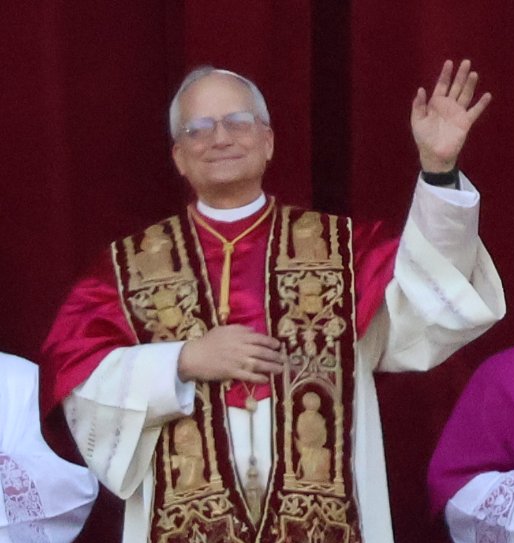
Welcome, Pope Leo XIV!

(By Edgar Beltrán / The Pillar – https://x.com/edgarjbb_/status/1920590815472108021, CC BY-SA 4.0, https://commons.wikimedia.org/w/index.php?curid=164970023)

When I wrote about Pope Francis right before the conclave, I didn’t expect that the conclave would end on the second day. As a reader of NCR (National Catholic Reporter), though, I was delighted but not shocked by the selection of Cardinal Robert Prevost as the next Pontiff. Although he was born in Chicago and educated in the United States (with an additional degree from the Pontifical University of St. Thomas Aquinas in Rome), most of his ministry has been outside the US. Fluent in several languages, including Spanish and Italian, he spent over twenty years in Peru as a pastor and, later, Francis-appointed bishop. He is well-known in church circles internationally because he visited close to fifty countries as prior general of the Augustinian order and, for the last two years, had been in Rome serving as head of the Dicastery for Bishops, which advises the Pope on the appointment of bishops world-wide. He was chosen as a cardinal on assuming this prominent role in the Curia, which is the Catholic Church’s bureaucracy.

While many had felt that it was impossible for anyone from the US to be chosen as Pope because the United States is such a powerful country, Cardinal Prevost was seen as more of an international figure. He is a citizen of Peru as well as the United States and has lived in Rome for over a dozen years. He understands the workings of the Vatican but retains the skills of a pastor. He supports Francis’s efforts to make the church more synodal in its approach, which broadens those with input into church matters instead of everything being concentrated in the power of the bishops, led by the Pope, who is given primacy as the bishop of Rome. I think that his skills and resume, as well as his familiarity in so many countries, made him a natural choice for the cardinal-electors.

I was struck that the name he chose was Leo XIV. This immediately brought to mind Leo XIII, whose 1891 encyclical Rerum Novarum (Of New Things) is the bedrock of Catholic social justice doctrine. That encyclical is subtitled Rights and Duties of Capital and Labor; it brought moral teaching to bear in response to the challenges of the industrial revolution. This choice of name signals that the new pope hopes to bring social justice doctrine to bear on the current challenges of the digital age. He also will continue the work of Francis’s 2015 encyclical Laudato Si’: On Care for Our Common Home, which emphasizes working to address “the cry of the earth and the cry of the poor.”

I was struck by his age. Born in 1955, Leo XIV is the first pope who was raised in the post-Vatican II church from childhood. My hope is that his papacy will continue the reforms of Vatican II which place the Catholic Church in the modern context rather than trying to isolate itself. This is the first time that a pope feels like a brother to me because he is actually close in age to my older sister. Being from the United States, I also understand better the environment in which he grew up. It lends a feeling of closeness that was not possible with the prior popes in my lifetime.

Leo XIV’s age also opens the possibility of a long pontificate. Leo XIII had one of the longest pontificates in history at 25 years; Leo XIV may not match that length but could remain pope for over two decades if his health holds.

I also have a personal attachment to the name Leo, which was my father’s name. He was named after his own father, although not a Junior as they had different middle names. Family lore is that my great-grandparents, after suffering the loss of several children, started to name them after popes, so my grandfather was literally named after Pope Leo XIII, who was serving at the time of his birth. All their sons who were named for popes survived into adulthood.

Welcome, Leo XIV! May God bless your pontificate and all the work you do for peace, justice, the world, and all peoples.

memorials

Today is the sixth anniversary of my mother’s death. I know many people who, even decades later, tell me they think of their deceased mother every day. I confess that I can’t make that claim. While I spoke to my mother nearly every day of my life, this became increasingly difficult in the last months of her life as her heart failure robbed her brain of oxygen. After her death, I had many months of flashbacks to those last difficult years, while also dealing with my father’s grief. He used to talk to and about my mother often, but, over time, his own heart failure erased the memory of her death. Toward the end, he would ask when she was coming to visit him in the skilled nursing unit and all I could say is that he would see her soon.

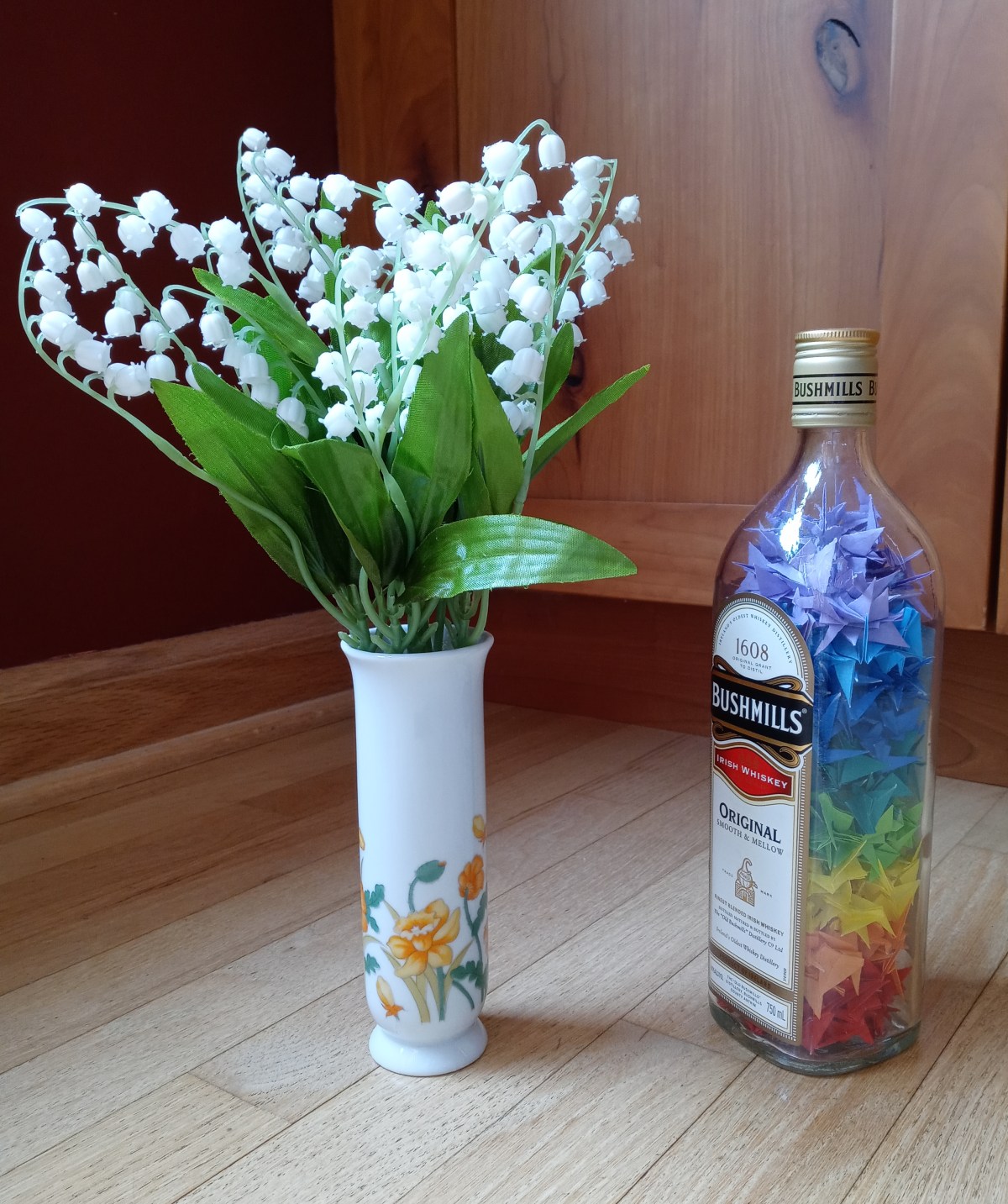
The photo above is of the memorials we placed at the memorial park where their cremains are inurned. I wrote this post explaining their significance when we placed them in 2022.

On Mother’s Day, I went to visit their resting place and was shocked to find that our memorials had been removed. I contacted the office, hoping that they had been placed in storage but they were just gone.

Alone in the room near my parents’ grave, I cried and told them I was sorry that these special memorials had been lost.

I think that is the only time that I have spoken aloud to my parents there.

My family has been supportive of me as I’ve dealt with the loss of these special and meaningful memorials to my parents. I’ve decided to print a photo of them and put it in a plastic frame to place on the table near their grave. That way, if it disappears, I would be able to replace it easily.

In the post linked above, I wrote about feeling more at peace when we placed the memorial. I think I had come to a place in living with loss where I could set aside the trauma of my parents’ final years and deaths and have better memories surface. I’m not sure if that is the point where I stopped thinking about my parents every day or not.

What I do know every day is that my parents gifted me not only with life but also with the foundation of who I am.

Their legacy is always with me, whether or not I bring it to consciousness.

Pope Francis

(Image by manfred Kindlinger from Pixabay)

Before the conclave to choose his successor begins, I want to take a moment to write about Pope Francis, who died on Easter Monday after twelve years as pope.

From the moment that he was announced after his election with the name Francis, I knew he would be a different kind of pope than his immediate predecessors, especially when he asked the people to bless him before he blessed them. Like St. Francis of Assisi, Pope Francis dedicated himself to peace, to serving all people, especially the most vulnerable, and to caring for creation. I appreciate how he led the church in those directions while also offering his message to the whole world.

Within the church, he opened the door to greater listening and dialogue, especially through the synodal process that included the laity as well as clergy. This was especially meaningful to me as John Paul II and Benedict XVI tended to shut down discussion and silence voices that offered a different viewpoint. Francis also engaged with people of other faiths and philosophies around the world, travelling broadly and meeting with people in many different circumstances. He would even acknowledge that when he would ask people to bless him or pray for him by asking people who did not have a prayer tradition to offer their well wishes on his behalf.

I appreciated Francis’s humility in choosing to live simply in Casa Santa Marta rather than the opulent papal apartment. He dressed simply and liked to be out among the people. Even his funeral showed his humility. He simplified the papal rite so that it was recognizable to anyone that has planned a Catholic funeral. Only the final commendation and funeral procession through Rome stood out as being papal in scope. One of the most moving moments was when his body arrived for burial at the Basilica of Santa Maria Maggiore, where he was greeted by the poor of Rome and children carried baskets of flowers to place before the altar. The inscription for his grave reads simply Franciscus.

As an environmentalist, my favorite writing of Pope Francis’s is his first encyclical, Laudato Si’, which called for everyone in the world to care for our common home, the earth, and for other people, especially the most vulnerable. It was important in securing the Paris Accord and remains, along with its companion, Laudate Deum, a continuing challenge to how we address the climate crisis and social inequities.

As a feminist and progressive Catholic, I appreciate that Francis invited discussion of women’s role in the Church and appointed women to positions of authority they had never before occupied. However, it was disappointing that he could not see the full vocation of women in church and society. Still, we are further along the path toward the radical inclusion that Jesus modeled for us than we were and for that I am grateful.

Like many Catholics, I will be watching for the white smoke to rise from the Sistine Chapel where the cardinals will meet to select the next pope. The name he chooses may give us a window into the direction in which he will lead the church. For example, a John XXIV would continue in the direction of Vatican II and Francis’s synodality while a Benedict XVII would likely call for a “smaller, purer Church” that would exclude people like me.

The word catholic means universal. Pope Francis spoke to that sense of universality which I hope the next pope will continue.

In a small group a few days ago, we were invited to pray that the next pope be a woman who would take the name Clare and continue in the mode of St. Francis of Assisi and St. Clare. The Holy Spirit would have to blow through the conclave with hurricane force for that prayer to be fulfilled, but, maybe, some day?

Only God knows.

SoCS: singing

I like to sing.

I have been singing for as long as I can remember. When I started school, we had a music teacher who came once a week to lead music class. Our classroom teacher also played the piano and would sometimes have us sing in the classroom which was combined first through fourth grade. She had been trained at a normal school before there were education colleges in our area and I think that grammar school teachers for young children had to learn piano as part of their program.

When I was in sixth grade, I was old enough to sing in the choir at church. Because it was a small church, the choir only sang at Christmas and for Holy Week. I sang with them until my sophomore year in high school when I became the organist. Then, I was always singing as I played the hymns. It helps your playing because you are more observant of reflecting when breaths should be taken.

In high school in a city about twenty miles from our little town, I got to sing every day! I sang with the mixed chorus and later also with a small girls’ ensemble. I learned to smile, sing, and do a bit of choreography at the same time, a skill that doesn’t seem all that useful but actually is. It makes it easier to convey the emotion of what you are singing to your audience.

When I was at Smith College, singing was a big part of my life. I worked my way through the extensive choral program at the time, starting with Choir Alpha as a first year, College Choir the next year, and my final two years in Glee Club. I also accompanied for two years for Choir Alpha. As an organist who was Catholic, I also frequently played for mass at Helen Hills Hills Chapel. I got married there the month after I graduated.

When we moved to Broome County, NY, I began to sing with the (Binghamton) University Chorus. (Actually, B had already moved and was working out here when we married, so I guess I should have said when I moved.) I sang with them until they unceremoniously disappeared, just prior to the pandemic. I still miss that group, which was a town/gown group, meaning that we had singers both from the university (students/faculty/staff) and from the broader community.

Until 2005, I also did some singing at my church with our Resurrection Choir, which ministered at funerals. It was sometimes difficult but was so important for the family to have us there to represent the parish in their time of grief.

I had thought when University Chorus ended that I would never have another choir gig but, after the pandemic shutdown, I attended a concert with the Madrigal Choir of Binghamton and found out they had openings for sopranos. This was a bit of a shock as choirs usually have more sopranos than they know what to do with but some people had moved away during the pandemic so they had lost some singers. I knew the director because I had sung with him when he directed University Chorus for 25 or so years before he retired and was very happy when he accepted me into Madrigal Choir.

Despite my current health issues, I’ve been continuing to sing with them and hope to as long as I’m able and my voice holds out. I’m lucky that I don’t have a big natural vibrato, which helps my voice to not get as much shake or wobble as some older singers get.

I hope.
*****
Linda’s prompt for Stream of Consciousness Saturday this week is “sing.” Join us! Find out more here: https://lindaghill.com/2025/05/02/the-friday-reminder-and-prompt-for-socs-may-3-2025/

One-Liner Wednesday: a final message from Pope Francis

On this day, I would like all of us to hope anew and to revive our trust in others, including those who are different than ourselves, or who come from distant lands, bringing unfamiliar customs, ways of life and ideas!

From Pope Francis’s Easter message, April 20, 2025, which was proclaimed on his final full day of life

Join us for Linda’s One-Liner Wednesdays! Find out more here: https://lindaghill.com/2025/04/23/one-liner-wednesday-sorry-4/

JC’s Confessions #31

In the first few seasons of The Late Show, Stephen Colbert did a recurring skit, then a best-selling book, called Midnight Confessions, in which he “confesses” to his audience with the disclaimer that he isn’t sure these things are really sins but that he does “feel bad about them.” While Stephen and his writers are famously funny, I am not, so my JC’s Confessions will be somewhat more serious reflections, but they will be things that I feel bad about. Stephen’s audience always forgives him at the end of the segment; I’m not expecting that – and these aren’t really sins – but comments are always welcome.

On April 6, 2025, Pope Francis appeared in public for the first time after returning home from his long hospitalization. It was at the end of a special Jubilee liturgy for the sick and health care workers and others who care for them. He had written the homily and a special blessing for the mass, although they were read by others. Francis wrote:

In this moment of my life I share a lot: the experience of infirmity, feeling weak, depending on the others for many things, needing support. It is not easy, but it is a school in which we learn every day to love and to let ourselves be loved, without demanding and without rejecting, without regretting, without despairing, grateful to God and to our brothers for the good that we receieve, trusting for what is still to come.

I am currently entering the second year of dealing with a complex medical situation that has not yet been fully diagnosed. I don’t know if I will be able to be adequately treated or if I will continue to see progression in my symptoms.

It’s hard.

I confess that I am not always gracious in this situation. I manage to let others do things for me and to ask for accommodations if I need them, but I find it difficult to set aside regret and to trust in the future.

This is especially hard for me in regard to my future as a poet. I don’t know if I will regain the creativity I’ve lost to brain fog and fatigue. I’m even losing the concentration and attention to detail needed to do submissions for my already existing poems and manuscripts.

I’m trying not to get to the point of despair.

These next few weeks are important in that I have a new batch of tests and specialist visits coming up.

Maybe having some more information about what is happening will help me to be better with being sick.

Maybe not.

I’ll try.

(I realized when I went back in my blog to find the number confession this was that this confession is, in a way, a continuation of #30.)

One-Liner Wednesday: Cory Booker sign

Sign that a friend made for the Hands Off! gatherings on Saturday, April 5, 2025 with a quote from Cory Booker‘s record-breaking speech in the United States Senate: “This is a moral moment.”

Join us for Linda’s One-Liner Wednesdays! Find out more here: https://lindaghill.com/2025/04/09/one-liner-wednesday-good-call/

DEI

The sign at my church, St. Francis of Assisi, this weekend:
D E I is what the kingdom of God is about.

Amen!

Sharing “A Ukrainian Prayer”

Image by Satheesh Sankaran from Pixabay

I wrote this post in April, 2022, in support of the Ukrainian people suffering the invasion of their country. It shares a recording of the Madrigal Choir of Binghamton singing John Rutter’s “A Ukrainian Prayer” which was written so that people around the world could offer a prayer for the Ukrainians.

I am appalled and sickened by the unconscionable abandoning of Ukraine by Donald Trump, JD Vance, and their administration. I know millions upon millions in the United States are also vehemently opposed to their abandonment of a sovereign, democratic ally in favor of a murderous, corrupt dictator who invaded a neighbor without cause.

I am grateful to the European community and our Canadian neighbors who are convening an emergency meeting to support Ukraine. I, along with the majority of Americans, will be supporting their efforts as we continue our resistance to the Trump administration here at home.

Jubilee

Linda’s Just Jot It January offers daily prompts, which I usually ignore to do my own thing, but today I decided to use the provided prompt, jubilee.

Because I’m not feeling well, I attended mass via television this morning and the homily talked about the Jubilee Year of Hope that Pope Francis proclaimed for 2025.

Jubilees in the Catholic Church have their basis in the Hebrew Scriptures, which call for a jubilee every fifty years. Popes have followed that tradition for years ending in 00 and 50, but also sometimes add other special jubilees, as Francis did here.

Jubilees are calls for liberation, freedom, and the forgiveness of debts and Francis explains how these pertain to our present time, especially for those who are marginalized or, too often, overlooked.

Given that hope tends to be a difficult virtue for me, perhaps this year dedicated to hope will help me to be a better “pilgrim of hope,” as Francis terms it.

May all those in need be given hope, freedom, and resources in this Jubilee Year.