

Catholicism and governance in the US

When I wrote this post on the immediate aftermath of the Dobbs decision in the US Supreme Court throwing all abortion rule-making back to the states, I alluded to the way the opinion followed Catholic teaching and my fears for what that would mean.

Of the nine justices on the current Supreme Court, seven were raised Catholic. (Justice Gorsuch was raised Catholic but is now an Episcopalian.) Of the seven, only Justice Sotomayor was nominated by a Democratic president; her views seem to be more mainstream among Catholics in the US.

The five Republican-appointed practicing Catholics (Justices Roberts, Thomas, Alito, Cavanaugh, and Barrett) and Justice Gorsuch are/were all either members of or closely affiliated with members of Opus Dei, a secretive, ultra-conservative group that rose to prominence in the fascist period in Spain. Leonard Leo, a board member of Opus Dei and, for many years, a powerful leader of the Federalist Society, was a supporter/promoter of all six Republican-nominated justices and is also known to have fostered relationships between conservative billionaires and various justices. Beyond the Dobbs ruling, there have been a number of Supreme Court decisions that seem to reflect the Opus Dei viewpoint more than Supreme Court precedent and mainstream Constitutional interpretation.

Sadly, many of the fears I had about the out-sized influence of conservative Catholic opinions about abortion have come to pass, in some states, aided and abetted by conservative, Catholic-raised governors, such as Greg Abbott of Texas and Ron DeSantis of Florida. In states where abortion is illegal or restricted to early weeks, women have hemorrhaged, developed sepsis, lost their ability to carry a child, or even died from lack of timely abortion care. There is currently a lawsuit in Texas by women who were denied abortion care in cases of pregnancy complication or fatal fetal conditions; these stories illustrate what happens when you force the conservative Catholic viewpoint that privileges the life of the unborn over the life of the mother on the public and medical providers. Indeed, in many of the states with restrictive abortion bans, medical providers trained in women’s/maternal health are leaving the state and medical schools and hospitals are having difficulty attracting students and providers to their programs because they can’t offer the full range of services to their patients. This is worsening already critical shortages of providers, especially in rural areas. When statistics become available, we may see a worsening of maternal morbidity/mortality and infant mortality rates, which are already much higher in the US than in most other countries with advanced medical systems.

The states with the most restrictive abortion laws are seeing some other impacts. Young people are sometimes refusing to consider going to school or taking jobs in states that restrict abortion, not only for fear of not being able to get care they need but also in recognition of inequality on the basis of sex. Lack of choice about where service members will be stationed is adding to recruiting problems for the armed services. Currently, Sen. Tuberville of Alabama is holding up all high-level military appointments in the Senate because the military policy is to pay for service members to travel out of state for reproductive care that is not provided in the state where service members and their families are stationed. (Note: Federal money is not used to fund elective abortion. This controversy is about funding travel/leave only.) I don’t think that it occurred to me that the Dobbs decision would impact our military readiness as a nation, but here we are.

We are also seeing proof that the overruling of Roe is not the end of the story. In some states, the legality of birth control is being challenged in the legislature. Many Republicans on the national level are proposing a national ban on abortion, even though the Dobbs decision said that the issue should be decided state by state. Voters in the midterm elections are weighing in on the side of abortion rights as articulated in Roe; it seems they may continue to do so in future elections.

I’m also afraid that this ultra-conservative Catholic viewpoint on the Supreme Court is feeding the larger problem of Christian nationalism. The United States is not a Christian nation; it is a pluralistic nation. The First Amendment of our Constitution tells us that our country shall not have an established religion.

The Federalist Society members are supposed to be originalists. You would think they would know that.

As an American, it is my right to make personal decisions based on my beliefs. The government does not have the right to impose a religious belief on me. It seems to me that this Opus Dei-influenced Supreme Court has crossed that line more than once. Whether a future Court overrules these decisions or Congress passes laws clarifying their intent remains to be seen.

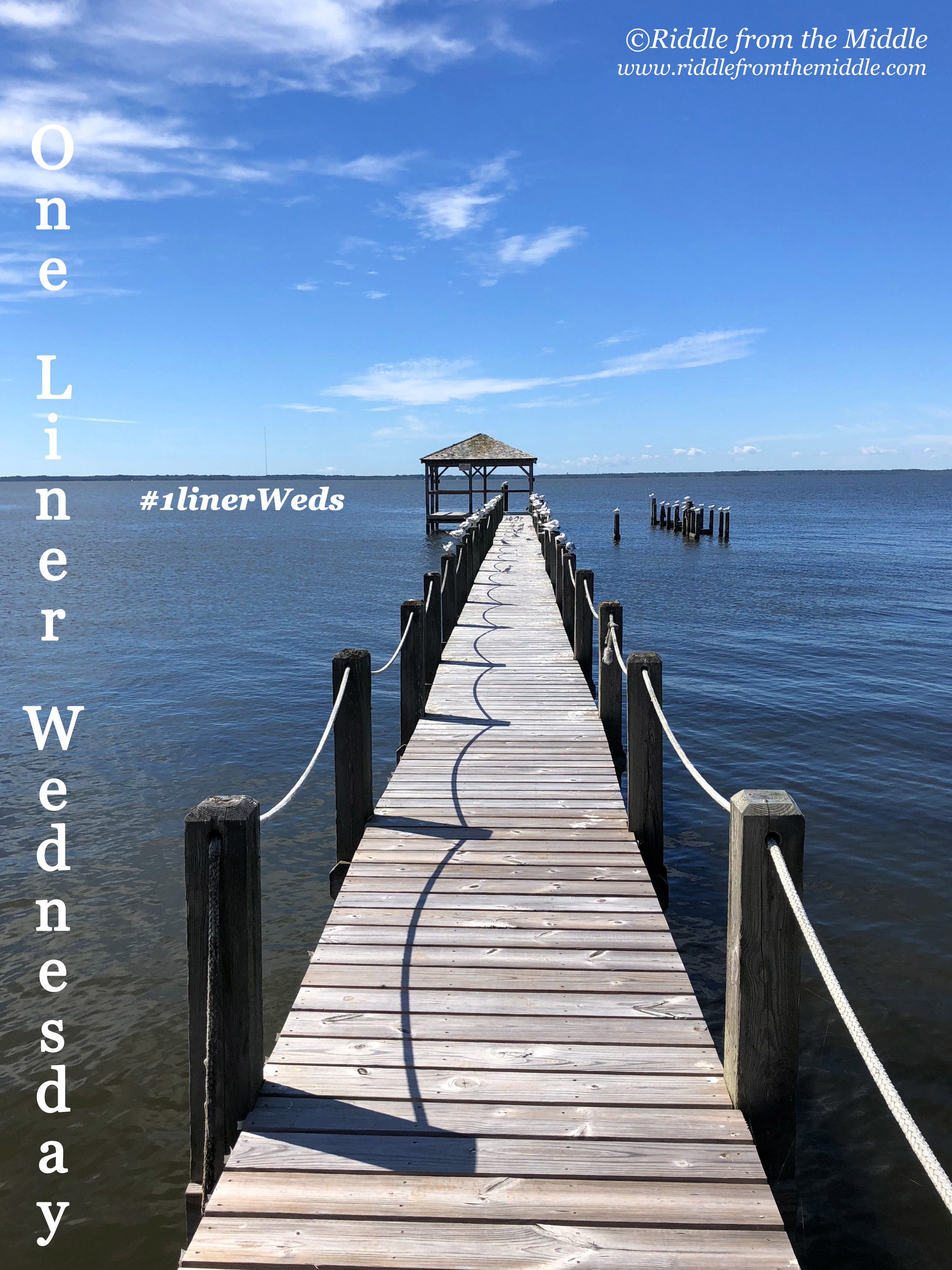
One-Liner Wednesday: healing

Do you believe me when I say
you are neither salvaged nor saved
but salved, anointed by gentle hands
where you are most tender?

~~~ Lynn Ungar

Join us for Linda’s One-Liner Wednesdays! Find out more here: https://lindaghill.com/2023/07/12/one-liner-wednesday-that-asparagus-again/

Supreme Court reform?

Back in October 2020, I posted some ideas about possible changes to procedures for the Supreme Court and other federal courts.

There has been much more public debate about this these past few years, particularly since the Supreme Court majority has been tossing precedents and inventing new doctrine on a regular basis of late.

One idea that makes sense to me is to raise the number of Supreme Court justices to thirteen to match the number of federal appellate courts. When the number of justices was changed to nine, there were nine appellate courts, so it makes sense to update the number to match because a Supreme Court justice is assigned for each appellate court. As it is now, some justices are responsible for more than one circuit. Doing this now would also help to redress some of the shenanigans that Mitch McConnell pulled in not allowing consideration of President Obama’s nominee while rushing through one of President Trump’s.

As I wrote in my October 2020 post, I think there should be rules for voting on judicial nominees in a timely manner, committee votes within sixty days and floor votes within ninety. The exception would be a Supreme Court vacancy that occurs after July first in a presidential election year which would be kept open for appointment by the winner of the election.

Because lifetime appointments are not stipulated in the Constitution, there has been a lot of discussion of making the term of Supreme Court justices eighteen years, after which they would serve on an appellate court if they were not ready to retire. I don’t know what that would mean for people who have already served longer than that or that were appointed expecting to serve for a lifetime. There is nothing in the Constitution that says Supreme Court nominations are for life, so no amendment is necessary to effect this change.

There have been a number of issues that have come to the fore more recently. One of them is the urgent need for ethics reform for the Supreme Court. Unlike other levels of the courts, there is no written code of conduct with guidance for recusals, conflicts of interest, etc. In other courts, judges are supposed to avoid even the appearance of conflict of interest. Given that both Justices Thomas and Alito are known to have accepted lavish gifts from prominent, rich Republicans, it would be helpful to have explicit rules to follow. It also upsets me that two members of the Court have been credibly accused of sexual harassment. There are serious questions about the spouses of two members of the Court earning money from work for/with people who might be seeking to influence the Court. I think there should be ethics reform and ways to enforce violations. As it is now, the Supreme Court justices are accountable to no one, which leaves them outside the usual system of checks and balances. (While it is true that provisions for impeachment and trial through Congress are in place, political forces are so prominent there that votes tend to be on partisan concerns rather than the evidence presented, so the threat of that doesn’t function as a deterrent to judicial misconduct.)

The Republican-appointed justices of the majority have undertaken what seems to be a concerted effort to overturn long-standing precedents. The most obvious is the Heller decision overturning national abortion rights but there are other instances, such as the recent decision against using race as a factor in college admissions which had been upheld numerous times since the 1978 Bakke decision, most recently in 2016. It’s not that precedents should never be overturned, for example, the Dred Scott decision, but those decisions usually advanced people’s rights; this Court seems to be taking away rights that had been previously recognized by the Court and the public. During their confirmation hearings in the Senate, these justices had all proclaimed their intent to respect precedent and “settled law” but they seem to have abandoned this principle.

The Republican-appointed majority are also inventing or embracing new legal constructs, such as the “major questions” doctrine, insisting that Congress must explicitly state the actions that they intend the executive branch department to implement. The Court used this to prevent rules regarding carbon pollution from the power industry. However, the justices overlooked explicit language from Congress giving authority to the Secretary of Education to waive student loans in time of national emergency in the recent case against the Biden administration’s targeted student loan forgiveness program. So, these justices appear to want Congress to be specific about things they don’t favor while ignoring the legislative language when they are specific. That’s not how our legal system is supposed to work.

There have also been major problems with the Court accepting cases without standing. In order to bring a case in federal court, a plaintiff has to show that they were harmed. The most obvious example of this is the 303 Creative case, in which a prospective web designer did not want to design sites for gay marriages but was afraid she would be violating a Colorado law barring discrimination on the grounds of sexual orientation. She said that a man had approached her to create such a site, giving the man’s name and contact information as part of her case. There are a number of problems, though. She had not started the business and so hadn’t had any legal challenges that caused harm. When a reporter contacted the man that had been named as the prospective gay client, they found out that he had no idea he was named in the suit, had never contacted the web designer for wedding services, is not gay, has been married for fifteen years, and is a web designer himself who wouldn’t need her services. The case should have been thrown out of court but the Republican-appointed justices still ruled in her favor on free speech grounds, saying that she shouldn’t be forced to use her words to support gay marriage, which she opposes on religious grounds. [As a creative who uses words as her medium, I have trouble thinking of a web designer for wedding sites as using “her words” when it’s usually the clients’ words/content/story that goes into a wedding website. It seems more like being a reporter. Whether or not you agree with what is being said, it is your job to report it accurately.]

All of this has led to a lack of public confidence in Supreme Court. Many of their recent decisions are opposed by a majority of citizens. What bothers me more, though, is that the courts are supposed to uphold our rights and freedoms, whether those are popular or not. If a person has the right to make their own medical decisions in conjunction with their health care provider, it should not matter what state the person is in, what their gender is, whether or not they follow a religious practice, or what their skin color is. A parent has a right to object to a book being taught in their child’s school and request an alternate assignment; that parent does not have the right to make that decision for anyone else’s child.

In the United States, every citizen is supposed to enjoy “equal protection of the laws” under the Fourteenth Amendment. It’s an ideal we should be working toward continually but sometimes it seems we are in the Orwellian situation of some being “more equal than others.” We need to get back on track and court reform can help to do that.

SoCS: LOL

Back when I was learning my first few acronyms and emoticons – a bit late because I was not an early adopter of cell phones – my older and much more tech savvy daughter was still living at home.

My favorite acronym to use was LOL, which amused my daughter because I would use it for things that literally made me laugh out loud.

Apparently, most people skipped the actual laughing out loud bit…
*****
Linda’s prompt for Stream of Consciousness Saturday this week is to base your post on an acronym. Join us! Find out more here: https://lindaghill.com/2023/07/07/the-friday-reminder-and-prompt-for-socs-july-8-2023/

help from Two Nerdy Girls

This past Sunday, I couldn’t make mass at my usual parish, so I attended another Catholic church in the area which shall remain nameless.

I was dismayed that the homily veered into anti-trans pseudo-science which I will not recount so as not to spread further misinformation. I was upset, though, that I had no viable way to counteract this hurtful message. I hoped that there were no members of the LGBTQIA+ community in attendance, although, statistically, it’s likely.

Later in the week, I ran across this Two Nerdy Girls post, entitled “What does the science say about gender identity?” I learned a lot from it and thought it was a good summary of the topic from two public health experts which included links to the underlying scientific findings.

I was able to find a contact form for the church I had attended and sent the link to the homilist. I don’t know if he will read it – or believe it, if he does – but, at least, I tried.

Even if it is too little, too late.

poetry scam

It wouldn’t have occurred to me as a possibility until it actually happened, but the publication of my first chapbook Hearts led to a very strange phone call last week.

One evening, the phone rang from a toll-free number that came up without a name attached, asking for me. They started out congratulating me on my recent publication and wanted to know what I was doing for publicity. Most of my efforts have been local, so they started pitching things like national interviews with millions of listeners. I was laughing because the concept seemed totally out of the realm of what one does with a poetry chapbook. They did eventually get around to the cost, $1,000 to $3,000, depending on chosen options, which, of course, was a discount off their regular pricing.

It all sounded very fishy and I would never have said yes, but, while I was explaining why it was unaffordable, given that it would take many hundreds of copies sold to even get back the money paid, they told me they were also a hybrid publisher and that they could publish my book, too, so that I would make more money. I told them in no uncertain terms that I had a five-year contract with Kelsay Books with automatic annual extensions beyond that and that I would never break my legal contract with them.

So, the call ended with me still shaking my head at the absurdity of the whole thing.

The next day, I searched the toll-free number and found that it belonged to a company called Author Reputation Press. Although their mailing address is in Canton, Massachusetts, another site listed their service area as Singapore and nearby areas, which explained the accents of the people who called me. Just a word to the wise, in case any of my writer-friends get publicity or publication calls from them.

Yesterday, though, I did run across a reputable hybrid press, Atmosphere Press. A poet-friend of mine has published with them. In their publishing model, if they accept your book, the author pays the up-front cost of the editorial/design team and publication but then keeps a high percentage of the royalties. It’s not something I want to try now, but I might consider it for my full-length manuscript if I don’t find a home for it over the next couple of years.

Meanwhile, there are more manuscript submissions in my future.

And publicity efforts for Hearts.

At least, I won’t be paying thousands of dollars in a scam, although all the submission fees and such do add up after a while.

More decisions coming soon.

Fingers crossed.

losing our first parent

Today is the eighteenth anniversary of my father-in-law’s death. He was the first of B’s and my parents to pass away. I wasn’t blogging or writing poetry then; it took years for me to process enough to write about his death. This poem was first published by Eunoia Review here in 2016. As it happened, he was the only one of our four parents that we were able to be with at the moment of death.

The Last Night
~ ~ ~ by Joanne Corey

Hospice told my husband what to expect
as his father’s death approached,
skin mottled,
eyes open but unseeing.

Crush the morphine,
mix with water,
spoon into his gaping mouth
every two hours.

The death rattle started,
unmistakable,
though we had never
heard it before.

We did what we could,
smoothing his hair,
holding his hand,
another dose of morphine.

I prayed the rosary silently,
lacking beads,
counting the decades
with my fingers.

When he quieted,
breath slow, gentle,
we woke his wife
of fifty-one years.

She lay beside him that last hour.

Breaths shallower,
with pauses between,
longer –
longer still –
until, near dawn,
no next breath comes.

We switch off
the oxygen concentrator.
Silence heralds
his absence.

SoCS: rocks

When I was a child, I collected rocks in a shoe box. Maybe “collected” is too strong a word as it usually denotes some kind of organization or classification that was not the case. I just picked up rocks that I thought were interesting or pretty for their color or shape.

Rocks were part of every day life – the stepping stones in the brook that we used to get across, the huge boulders under the high lines across from the house, the stones in the yard, the pea-stones along the side of the macadam road.

We had stone samples with garnets in them from the excavation of the underground powerhouse carved out of the mountain for Bear Swamp, a pumped storage power plant that was part of the hydro system that my father oversaw as superintendent of what was then called New England Power. (The plant is still operating over fifty years later, although under another name and company.)

I loved earth science when I took it in high school, so much so that I took a few geology courses when I was in college.

I do still have a few special rocks, including some that have been carved or inscribed with special words. I love their ability to help me feel grounded.

We all come from the earth, after all…
*****
Linda’s prompt for Stream of Consciousness Saturday this week is “rock.” Join us! Find out more here: https://lindaghill.com/2023/06/30/the-friday-reminder-and-prompt-for-socs-july-1-2023/

One-Liner Wednesday: anniversary jazz

When we stayed at the Art-Deco-era Latchis Hotel in Brattleboro, VT for our anniversary, we listened to this album on the record player in our sitting room.

Join us for Linda’s One-Liner Wednesday! Find out more here: https://lindaghill.com/2023/06/28/one-liner-wednesday-day-one-is-in-the-bag/

A month of Hearts

Just about a month ago, Kelsay Books published my first chapbook, Hearts, available from Kelsay, from Amazon, from me personally (if you are local), or by asking your local bookstore to order it through Ingram.

The experience has been exciting, gratifying, emotional, and exhausting by turns. There have been new things to learn, like keeping a spreadsheet to track sales tax and profit and signing contracts to place books on consignment. I’ve been trying to get the hang of doing publicity, which is a different universe from writing poetry. Sending notices to my poet-friends and non-poet-friends was relatively straightforward, although I admit it feels strange to ask people to spend money to read my work. I’d never been paid for my writing beyond gratitude and the occasional in-print copy of a publication but I am finding it easier to say writing is a profession for me now, even though the total amount of money I earn from it will be small.

Besides the discomfort of self-promotion, which works against my introverted nature, there is the sobering personal aspect of asking people to read poems about my mother’s final years. I’m grateful to know that the poems touch people’s hearts. I’ve had people tell me that our story reminds them of their own experiences with aging loved ones, that the poems made them cry. My heart goes out to them and it is humbling to think that my words might be a help to them as they continue to deal with their loss.

It’s also gratifying to know that I fulfilled one of my goals with this book. I am seldom overt about my own feelings in my work, preferring to “show rather than tell.” I try to leave space in my poems for people to bring their own reactions and emotions to the work and I seem to have succeeded, at least among those who have communicated with me. Three people have even written Amazon reviews, although it seems a bit surreal that I have an Amazon listing at all.

One thing that has happened since the book came out that I wasn’t expecting is the technical publishing questions that I’m asked. Most of these are a version of “how do you get a book published?” which I don’t feel well-equipped to answer. Generally, the person is asking because a family member writes as a hobby and they want to know how to get a book in print, but publishing poetry is different from fiction or memoir or non-fiction, which often involve having an agent, and self-publishing bypasses all the querying and rejection but means you need to know or hire expertise and have financial resources up front. People have also asked me how many copies I’ve sold but I have no idea. I could count up how many I’ve sold, but I have no idea how many have ordered from Kelsay and Amazon. I do occasionally look at the stat for the Poetry by Women category on my Amazon page; at the moment it’s #720, but I have no idea how that translates into number of copies. I probably won’t know until early next year when I get my first annual royalties payment from Kelsay.

I’m feeling as though I’m through most of my initial promotion list but I have more to do. A friend has offered to help me line up a couple of readings or signings locally. I need to find a printer to do business cards and bookmarks to have at events. There is a list of reviewers and awards to look through, although that seems a bit rarefied for me.

And more promotion.

No doubt, more blog posts here at Top of JC’s Mind.

I’m also trying to do more submissions for my new chapbook, full-length collection, and individual poems. Hearts proved that it can take a few dozen attempts to get an acceptance.

Having a book in print does, though, make it seem more possible that another acceptance will come my way.

And, if not, there will always be Hearts