One-Liner Wednesday: healing thoughts

In the face of so much suffering in the world, today I’m sending healing thoughts out to people I know, such as a friend’s spouse and three local poets who have been involved in recent motor vehicle accidents, and the millions upon millions around the world suffering from illness, hunger, violence, and danger of any kind, wishing I could do more to heal and protect them.

You are invited to also send out healing thoughts and to join us for Linda’s One-Liner Wednesdays. Find out more here: https://lindaghill.com/2025/11/19/one-liner-wednesday-my-theory/

One-Liner Wednesday: for justice and peace for Ukraine

Image by Satheesh Sankaran from Pixabay

As we continue to hope and work toward justice and peace for Ukraine, I’m sharing a recording of John Rutter’s “A Ukrainian Prayer” recorded in April ’22 by the Madrigal Choir of Binghamton.

Join us for Linda’s One-Liner Wednsdays! Find out more here: https://lindaghill.com/2025/08/20/one-liner-wednesday-you-know-youre-tired-when/

SoCS: peace

Praying for peace.

Working for peace and reconciliation.

Trying to be a peacemaker in a world with way too much violence and destruction and devaluing of life.

My part in building peace is small, but, if enough of us are dedicated to peace, we can move closer to it.

Please join in the effort.
*****
Linda’a prompt for Stream of Consciousness Saturday this week is “piece/peace.” Join us! Find out more here: https://lindaghill.com/2024/09/20/the-friday-reminder-and-prompt-for-socs-sept-21-2024/

Angelus

During Just Jot It January, I thought I’d share some of my previously published poems that have been out for a while, as I did on New Year’s Day. I usually don’t put poems within posts when a poem is first published so that people will visit the site that has been so gracious in publishing my work. I will, though, always include the link, even though I am putting the poem in the post.

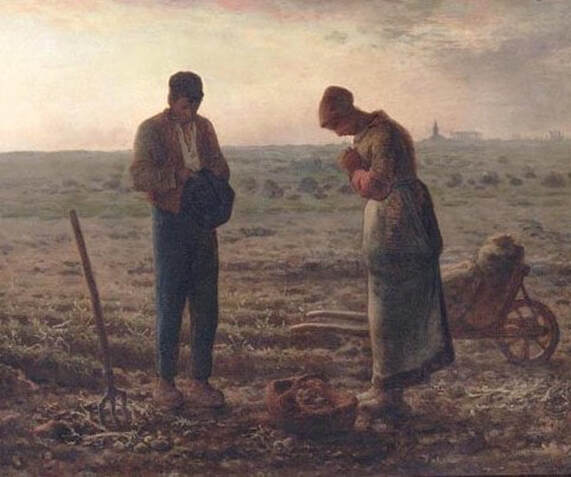
Today, I’m sharing the poem “Angelus” that I wrote in February, 2020 in response to an Ekphrastic Review Writing Challenge. I wrote a post about it at the time. I constructed a narrative inspired by The Angelus, the 1859 painting by the French artist, Jean-Francois Millet, shown below. I used part of the Angelus prayer in my poem. My home parish when I was growing up rang Angelus bells three times a day as a reminder to pray this prayer. Our pattern was to ring the bell in three groups of three followed by a group of nine. The Angelus rang at 6 AM, noon, and 6 PM, which I used in the poem. I have no idea what the tradition was in France at the time of painting but it worked for the poem, so poetic license?

Angelus by Joanne Corey

The Angel of the Lord declared unto Mary,
And she conceived of the Holy Spirit.

At the six o’clock bells, she pauses.
Her hands that had been preparing
breakfast, now clasped in front of her, drift
down to rest over her womb,
which, like Mary’s, conceals 
a miracle.

And the Word was made flesh,
And dwelt among us.

As everyone in the market stops
buying and selling to pray
at the noon bells, she reflects
that another’s flesh is forming
within her, dwelling
in mystery.

Pray for us, O holy Mother of God,
That we may be made worthy of the promises of Christ.

The evening Angelus rings
across the field. As she stands
bowed beside her husband,
she beseeches God that this time
the promised child
will be born.

*****
Join us for Linda’s Just Jot It January! Find out more here: https://lindaghill.com/2024/01/05/daily-prompt-jusjojan-the-5th-2024/

“A Ukrainian Prayer”

Celebrated British composer John Rutter, moved by the plight of the Ukrainian people, set a prayer in Ukrainian and made it available free of charge to choirs around the world, so that they can learn, record, and share it as widely as possible.

I was honored to join in this effort as a member of the Madrigal Choir of Binghamton. (You can find my post about my first concert with them here.) You can view our recording under the direction of Bruce Borton here: https://fb.watch/co_j5FwNUm/. Although the recording is hosted on the Facebook platform, it is available publicly; you do not need to have a Facebook account to access and share the recording.

At this point, there are a number of recordings of this moving piece available online. If you listen to several, you may notice that the rhythm differs. On March 28th, Rutter released a modified version of the score to better align with the Ukrainian language. The Madrigal Choir sang this modified version. Rutter also has provided a singing translation in English. I’ve yet to hear a recording using the English text, but you may run across one at some point. The Ukrainian text is brief and a translation appears at the beginning of our recording.

Whether or not one follows a personal spiritual tradition, this music is a powerful sign of support for the Ukrainian people. I also urge people to send financial support, if they are able. There are many organizations helping in relief efforts. One of my favorites is World Central Kitchen, which is on the ground in crisis situations around the world, including in Ukraine and surrounding countries that are welcoming refugees.

Rutter’s intent for this piece is that it will spread around the world to show solidarity with the Ukrainian people. If you are so moved, share this post, the link to the Madrigal Choir rendition, and/or another recording you may encounter. If you sing in a choir and would like to participate in this effort, you can find details and procedures for downloading the score here: https://johnrutter.com/news-features/prayer-for-ukraine.

Lord, protect Ukraine. Give us strength, faith, and hope, our Father. Amen.

SoCS: ups and (mostly) downs

When I saw that Linda’s prompt for Stream of Consciousness Saturday this week was “up/down”, I knew that I needed to write a follow-up to last week’s SoCS in which I talked about my father (Paco) and his recent fall, hospitalization, and move to a rehab facility.

When I wrote last Saturday, it seemed that, though there was a long way to go, things were trending up.

Everything changed on Sunday when new complications arose. For various reasons, I will not even attempt to elaborate.

Let’s just say it has been a very “down” week.

We are working hard at untangling a mass of symptoms and trying to keep him safe and comfortable, but it’s an uphill battle. I know he is 96 and so, very vulnerable and prone to complicating factors but it is still so hard to deal with.

And to watch.

I know intellectually that I am doing all that is possible for me to help him and his care team, but my heart aches because I can’t make it better.

We have no idea what the outcome will be. It’s not just one day at a time, which is Paco’s favorite saying. It’s one hour at a time. One moment. One more early morning phone call telling me that he fell again during the night.

There are up moments here and there. When Paco easily remembers my name. When he gets to enjoy a slice of blueberry pie for dessert at lunch. When he manages to make a little joke with his aides.

I had planned to go to vigil mass today at a friend’s church, but was too tired to make the drive, so I went to a nearby church instead. I was blessed to see Sister A. there. She had been one of the stalwart visitors during my mother’s final illness, a span that stretched over two years. Because of the pandemic and other circumstances, I had not seen her in months. I was able to fill her in on Paco’s condition and she assured me that she has been lifting him up in prayer.

After such a “down” week, that assurance was a much-needed balm.

*****
Join us for Linda’s Stream of Consciousness Saturday! Find out more here: https://lindaghill.com/2021/06/25/the-friday-reminder-and-prompt-for-socs-june-26-2021/

back to church

Yesterday, for the first time in over a year, I attended mass in person.

If you had told me prior to the pandemic that I would ever go a year without going to church, I would not have believed it. I grew up Catholic and going to mass for Sundays and holydays was an important part of our faith practice. I was in church as a teen more than most because I became our small country church’s only organist in my second year of high school. I spent many years in music and liturgical ministries and, although I hadn’t been active in them in recent years, I still considered taking part in mass and receiving the Eucharist a vital part of my faith life.

Last March, when the severity of COVID was first becoming apparent, I decided not to go to mass for fear of exposing my father, one week before New York State went into lockdown and the churches temporarily closed. I began participating via televised mass as my mother had done when she was ill. Over time, churches here resumed services, first outdoors or broadcast to congregants in their cars in the parking lot. Later, indoor services were permitted with distancing, masking, temperature checks, pre-registration, and other measures in place, although the bishops have kept the dispensation from in-person attendance in place.

Because being part of a large group of people who are speaking and singing is inherently more risky than being at home or in a grocery store, I had made a personal decision not to attend mass in person until I was fully vaccinated. Last week, two weeks after my second dose of the Pfizer vaccine, I called the church to make a reservation to attend the Saturday vigil mass yesterday.

I arrived early, knowing that there would be a check-in process and that we would need to maintain spacing. I was masked, of course, and gave my name to the volunteer at a table, who found my name and contact information on her list. They keep the information on file so they can call if a positive test is reported. There was a temperature check and the distribution of a leaflet with the day’s music. I was allowed to choose my own seat among the pews, although every other row was blocked off by purple cords draped around the end. I sat near the music ministers, so that I could watch my friend play the organ and see the cantor who would be leading the singing.

If I had to choose one word for the experience, it would be stark. This is partly a function of it being Lent, which is a penitential season. There are no flowers and the sanctuary is kept as simple as possible. What was striking to me, though, was the space between all the ministers. The priest, deacon, two lectors, and single altar server were in chairs scattered around the altar and ambo, which is necessary for viral reasons. It amplified my sense of separation from them and from the rest of the congregation. Only people from the same household can sit in a group, so many of us were sitting alone.

I felt most like I was part of the assembly when we were praying aloud together. Although we were masked and there were far fewer of us than our pre-pandemic numbers, our voices carried well and we could hear one another, ironically helped by the acoustics of the space without so many bodies to absorb the sound. This was, however, a double-edged sword. During the prelude, I was annoyed by a couple behind me discussing home improvement projects, no doubt unaware how well their masked voices carried in the space.

As often happens, there were emotional moments for me during the liturgy, although not when I had expected them. As part of the prelude, my friend improvised on the Irish hymn tune St. Columba, which is often used with the text “The King of Love My Shepherd Is”. It is one of my favorite tunes. Back in the days when I could play the organ and was practicing, it was one of the hymns I would sing as a personal prayer. I was very grateful to hear it yesterday.

When we prayed the Lord’s Prayer together, I was particularly drawn to the last phrase, “deliver us from evil.” I am still pondering the full implications of being drawn to that at this time. Like most Christians, I have prayed this prayer thousands of times. It is a testament to its strength that it reveals different aspects of faith as our circumstances change.

The third moment was that I choked up as we started to sing the Lamb of God. This simple text, which is placed in the liturgy shortly before communion, has long been my favorite prayer of the mass ordinary. Long ago, I set it in a choral anthem paired with a text from Isaiah. Again, a prayer that I have recited or sung thousands of times but that was somehow connecting with me in a new way.

Strangely, the thing that I expected to be very emotional was not and perhaps goes back to my feeling of starkness. In order to maintain distancing, communion was not distributed at the usual time. Instead, we prayed the concluding rite and then received communion. The priest and the deacon went to positions at the end of the far aisles and the congregants, keeping six feet of distance between them, filed up to receive the host, step away, briefly lower their mask to consume the host, then immediately process to the doors by a different route and exit, all while the communion hymn was being sung. Because I was near the front of the church, that meant exiting during the hymn without an opportunity to join in that prayer. Intellectually and from the public health viewpoint, this procedure for communion makes perfect sense. It keeps people from congregating in the building or around the exits and minimizes the chance of spreading the virus. From a liturgical perspective, though, it feels stark. The word Eucharist means thanksgiving and the word communion has the same roots as the word community; this more isolating experience feels counter to that. As someone who has study music and liturgy, it also was very difficult for me to leave while there was still sung prayer ongoing.

I was grateful to be able to attend in person but I don’t think that I will try to do it every week yet. Due to the cleaning protocols involved, there are only two masses per weekend; with fewer masses and reduced capacity, I don’t want to deprive other people from being there by taking up space myself on a regular basis. I do hope to go once during Holy Week, Easter Vigil if possible or Holy Thursday if the Vigil is in high demand.

Otherwise, I will continue to participate from home until our area progresses to the point where we can gather safely in large numbers again, when we can exchange a sign of peace, when things will not be so stark.

When we do get to that point, there will be another, more complex decision to make, which is how much of the politics and abuses of power in the church itself I can continue to tolerate. The clergy of the church continue to grapple with its own history and legacy of crimes, abuse, and sin, or worse, some grapple and some continue to deny. Meanwhile, lay people are not given the opportunity to fully use their gifts in service to the people and the church.

It’s exhausting.

The pandemic has blunted the effect of having this struggle before me every week. I haven’t decided yet if I can take it on so consistently again. I used to go to mass every week, even when I cried because of the pain. I did it because I couldn’t imagine being separated from the Eucharist. Because of the pandemic, I now know that spiritual communion is a reality, that I can feel close to Christ and to creation and all people, even when I’m not able to attend mass in person.

I don’t know what I will choose to do.

Another aspect of life in which I dwell in mystery.

Angelus poem published!

I am happy to announce that I have a new poem available online. I mentioned in this post that I had written and submitted a poem to The Ekphrastic Review in response to their biweekly challenge, a painting by Jean-Francois Millet titled “The Angelus”. For those who are unfamiliar with the term, ekphrastic poetry or prose is a piece based on another work of art, most often a piece of visual art. I have written a number of ekphrastic poems, due in large part to my experiences in residence at the Massachusetts Museum of Contemporary Art with the Boiler House Poets Collective.

The poems that Lorette C. Luzajic, the editor and founder of The Ekphrastic Review, selected are now available online here. It’s always amazing to see the creative and unique approach that each writer takes from the same prompt. There are certain elements that weave among the poems. I’m especially pleased that Kyle Laws, my poet-friend from Boiler House, also has a poem chosen for this challenge. Kyle writes ekphrastic poetry on a regular basis and was recently nominated for a Pushcart Prize by The Ekphrastic Review. It’s her eighth Pushcart nomination! It is an honor for me to be included with such distinguished poets and writers.

A note on my poem: The italicized lines are parts of the English translation of the Angelus prayer. The Catholic church I attended as a child observed the tradition of ringing the bells in a distinctive pattern three times a day to encourage people to pray the Angelus. The painting and the prayer inspired me to construct a narrative around the woman who appears in the painting.

If you are so moved, you may comment here or on the Top of JC’s Mind Facebook page.

What a week!

I started the year by posting for 33 days in a row, thanks largely to Linda’s Just Jot It January.

Then, I fell off the wagon.

Today, though, I am taking advantage of being kept inside by a snowstorm to try to process what has been a surreal week into a post.

On the personal side, my spouse B has been involved in a major workshop week with co-workers from the US and Germany, so he has been working loooong days, sometimes capped off by group dinners that run late into the evening. Between his schedule and working around the weather, things were already feeling unsettled here.

This just added to what has been a very unsettling week here in the United States. T and I had watched giant swaths of the impeachment trial of Donald Trump. The House managers who served as prosecutors were very methodical in laying out their case. The president’s defense team was much harder to follow and tended to be in conflict with both some of the evidence and some of what other members of the team had presented. Their arguments were often circular.

For example, one of the arguments that the president’s team was making against the second article of impeachment for obstruction of Congress was that the House should have gone to court to enforce their subpoenas. Meanwhile, a court case that the House had brought trying to enforce subpoenas in the ongoing investigation of Russian election interference saw the Justice Department lawyers arguing that the courts weren’t the proper remedy, that impeachment was! As Rep. Adam Schiff, who was leading the House managers, said, “You can’t make this stuff up.”

Because the Senate had voted not to call witnesses or request documents, the first part of the week was about senators being able to speak for ten minutes about their reasoning behind their upcoming trial vote on Wednesday. However, on Tuesday night, President Trump gave his State of the Union address before a joint session of Congress.

The State of the Union is usually a very formal and solemn opportunity for the president to lay out their agenda for the coming year, including what legislation they would like to see taken up by Congress and passed. It was obvious from the start that this address was not going to follow that norm, when the Congressional Republicans started chanting “four more years” before the president even began speaking.

Much of the president’s message mirrored his campaign speeches. As a reasonably well-informed citizen, I knew immediately that some of the things the president was claiming were not true. He tried to take credit for things that actually happened during the Obama administration. He said he would always protect health insurance for those with pre-existing conditions at the same time the Justice Department is in court trying to have those protections under the Affordable Care Act thrown out.

It was surreal.

The State of the Union often features special guests of the president who sit in the gallery near his family. Their stories are inspiring and heart-warming. President Trump added a twist, though, in that most of the people received a surprise reward.  This seemed to harken back to Donald Trump’s experience as a “reality show” celebrity. A couple of these surprises made me cringe. There was a girl, attending with her mom, who received a scholarship to attend a private school. Education is a wonderful thing and I am happy for this girl, but the president framed it as her leaving “a failing government school.” In the United States, we don’t call them “government schools”; we call them public schools. One of the responsibilities of our government is to provide free public education through primary and secondary school. If a public school is doing poorly, it is up to our government at all levels, working on behalf of the taxpayers, to ensure that the school is brought up to a high standard – for the good of those students and the general public. To see the president totally abrogate responsibility for our public schools, which serve the vast majority of US students, was disheartening.

The shocking part of the evening was the “surprise” awarding of the Presidential Medal of Freedom to talk radio personality Rush Limbaugh. This is the highest civilian honor in the United States and is usually given to individuals who have brought people together in a positive way. By contrast, Rush Limbaugh has been sowing division for decades. He regularly belittles people who don’t follow his particular brand of conservatism. [Fun fact: He once railed against a women’s prayer group of which I was a member. We were a small, local group getting lambasted on nationally syndicated radio. It was ironic, because his actions gave us more power and visibility and led to a 60 Minutes interview.] Limbaugh has recently revealed a stage 4 lung cancer diagnosis; it is appropriate to ask for prayers and well wishes on his behalf, but the Medal of Freedom is not an appropriate honor for so divisive a figure.

Speaking of prayer, yesterday was the National Prayer Breakfast, which is sort of an unusual occasion in and of itself, but I can’t give its history here as this post is already shaping up to be long. First, though, there needs to be a wrap-up of the impeachment trial.

As expected, Trump was not removed from office. All the Democratic and independent senators voted for removal on both counts. There had been hope that some of the more moderate Republicans would join them, especially on the abuse of power article. Several Republican senators, in opposition to the president’s assertion that his behavior was “perfect”, issued statements saying that what the president did was inappropriate but didn’t warrant removal from office so they were voting for acquittal.

In the end, one Republican, Utah senator and former presidential nominee Mitt Romney, did vote to remove the president on the abuse of power charge. In his ten-minute floor speech, he spoke about how difficult this decision was. He is a devout member of the Church of Jesus Christ of Latter Day Saints (Mormons) and because he had sworn an oath to God to deliver “fair and impartial justice” and because the House managers had put forward convincing evidence of the president’s abuse of power, he decided that he must follow his conscience and vote to convict. He did not let political expediency deter him from his obligation to follow the dictates of his faith and the Constitution. He has faced immediate backlash from the president and other members of the Trump family, as well as from some of the conservative media. I appreciate Romney’s integrity. It took a lot of courage to vote against a president of one’s own party in an impeachment trial. Indeed, this is the first time that that has happened in the United States.

Which brings me back to the prayer breakfast…

The keynote had been on the subject of love and, in particular, the Christian call to love one’s enemies. When President Trump, who is ostensibly Christian, spoke, he proceeded to attack the faith of those he considers his enemies. After speaking about the impeachment, he said, ” I don’t like people who use their faith as justification for doing what they know is wrong.  Nor do I like people who say, ‘I pray for you,’ when they know that that’s not so.” This was a thinly veiled attack on Sen. Romney for his impeachment vote and House Speaker Nancy Pelosi, who, in answering questions from reporters has revealed that she prays every day for the president. Speaker Pelosi was sitting at the head table, only a few feet away from the president as he spoke. As a fellow Catholic, I admire Nancy Pelosi’s prayer life and don’t doubt for a minute that she sincerely prays for the president and for our country every day. That the president dismisses people of faith, equating his own viewpoint as being right and theirs as being “wrong”, compounds the damage that he has done to our country.

After President Clinton’s impeachment and trial, he apologized again to the country and made a plea for reconciliation and moving forward as a nation. (He was impeached for lying under oath about an affair.) By contrast, when President Trump spoke later in the day after the prayer breakfast, he did not admit any wrongdoing and blamed everything on Democrats and anyone else he considers an opponent.

At this point, without a unifying leader, I don’t know how Americans can fully come together as a nation to meet our challenges. I do want to point out, however, that, under Speaker Pelosi’s leadership, the House of Representatives has passed over 300 bills, the vast majority of which are bipartisan, that Majority Leader McConnell has refused to take up in the Senate. I am a member of NETWORK lobby for Catholic Social Justice. Every Congressional session, NETWORK scores the votes on ten bills that deal with social justice issues, such as fair pay, access to medical care, and equal justice. For the first time ever, this year they were unable to score the Senate because they hadn’t held votes on the bills that were companions to the House-passed bills. I and millions of other Americans expect and deserve more.

I swear that I did not spend the whole week on nothing but politics. I wrote a new poem in response to a challenge on The Ekphrastic Review. If it gets accepted, you can be sure there will be a link here at Top of JC’s Mind – and a mini-celebration that I managed to get a poem published in 2020.

Now, I think there is a snow shovel that is calling my name…



Remembering Nana in Slovenia

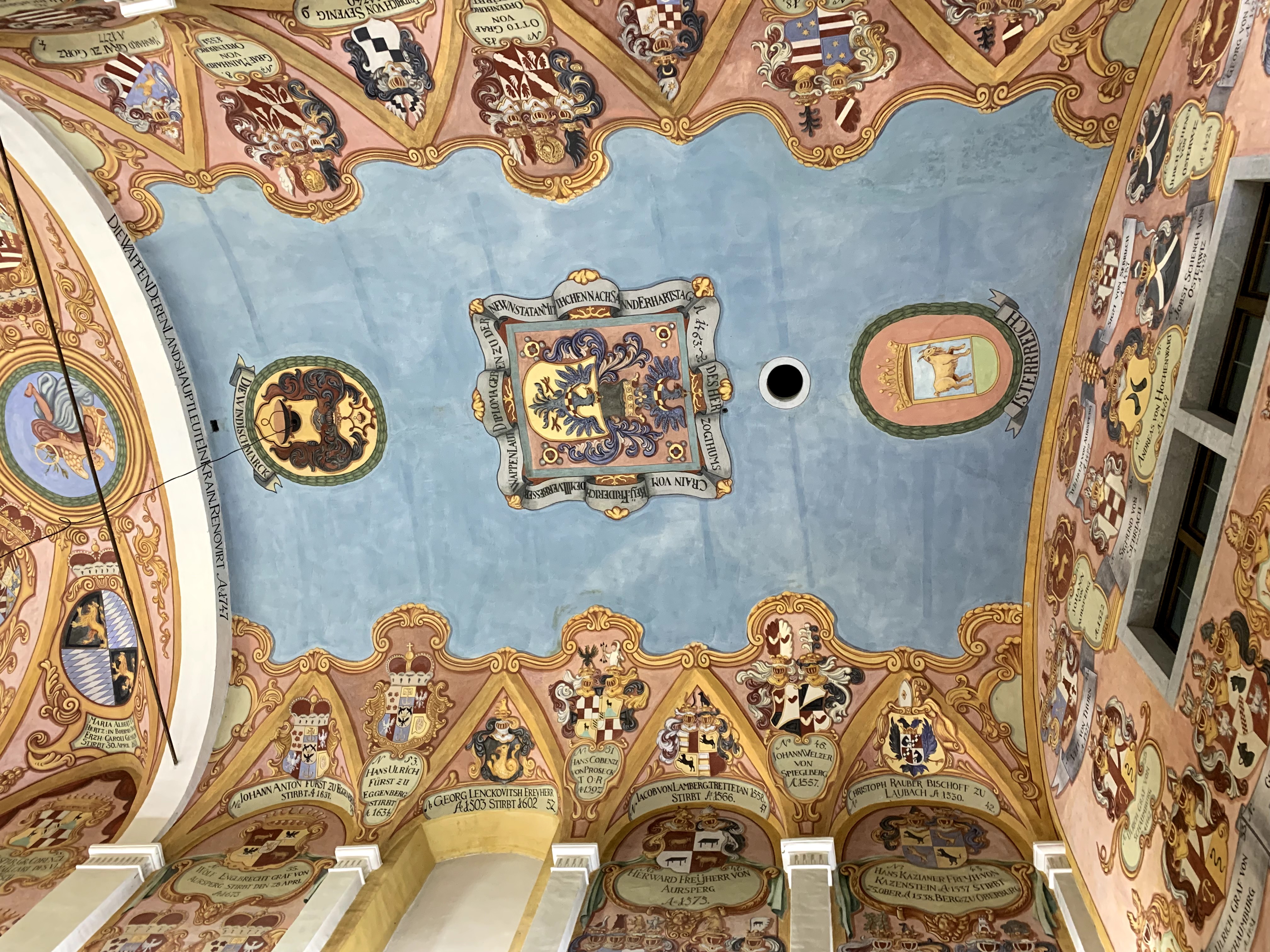
Our Smith College Alumnae Chorus tour of Slovenia was only a few weeks after the death of my mother, known here at Top of JC’s Mind as Nana. One of the things that was comforting to me was saying prayers for my mom at the various churches we visited. Sometimes, I was even able to light a candle in her memory.

In prior tour posts, I have shared some photos from some of the churches we visited, but I wanted to share a few more. The ceiling from the chapel of Ljubljana Castle:
img_0137

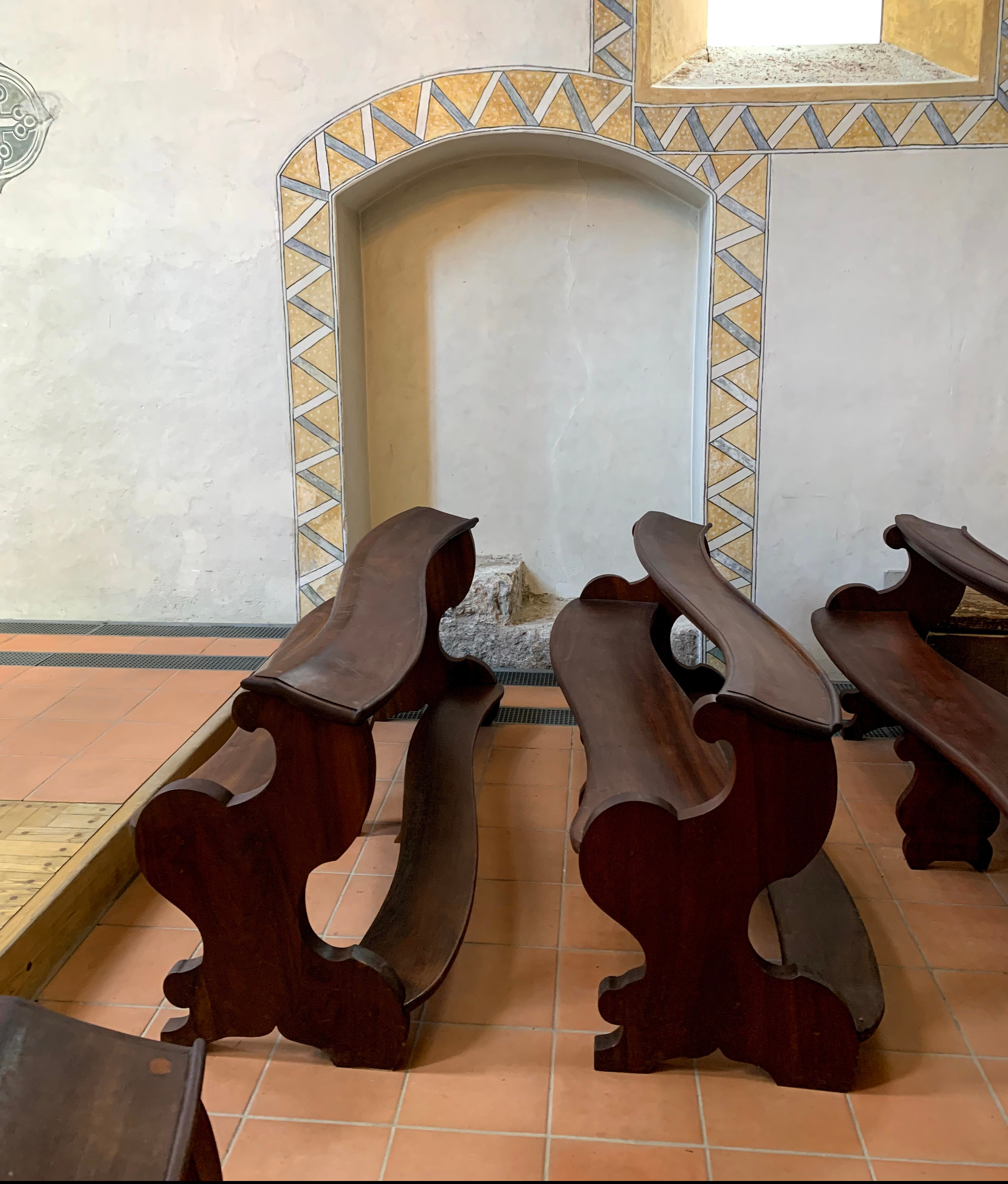
Most of the churches we saw on our trip had kneelers that were built into the wooden seats. I loved the curves of these pews from the Ljubljana castle chapel:
Ljubljana castle chapel pews

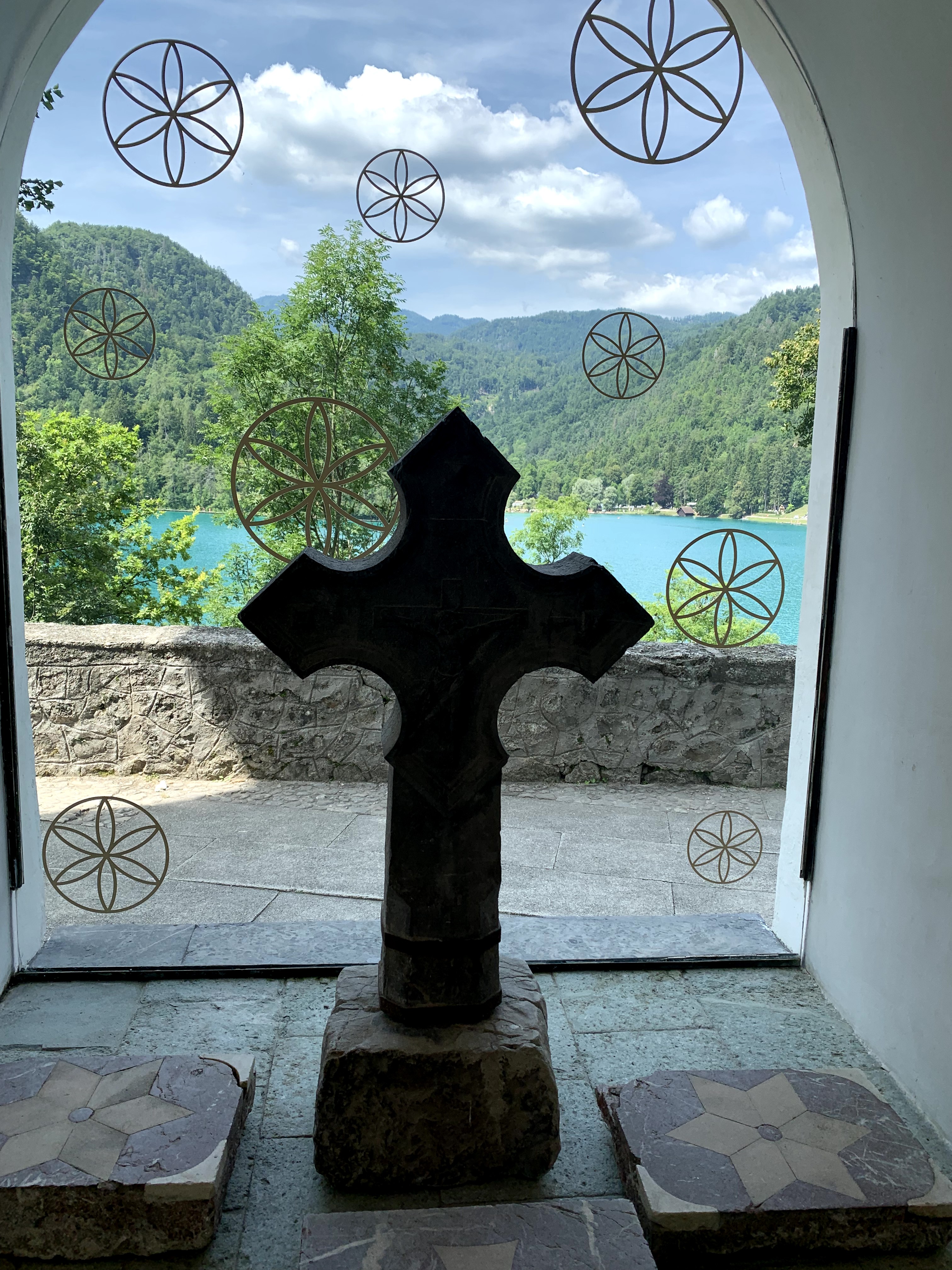
A cross silhouetted against Lake Bled in the entrance to the Mary of the Assumption:
img_0172

The beautifully painted Stations of the Cross there:
Stations of the Cross at Lake Bled

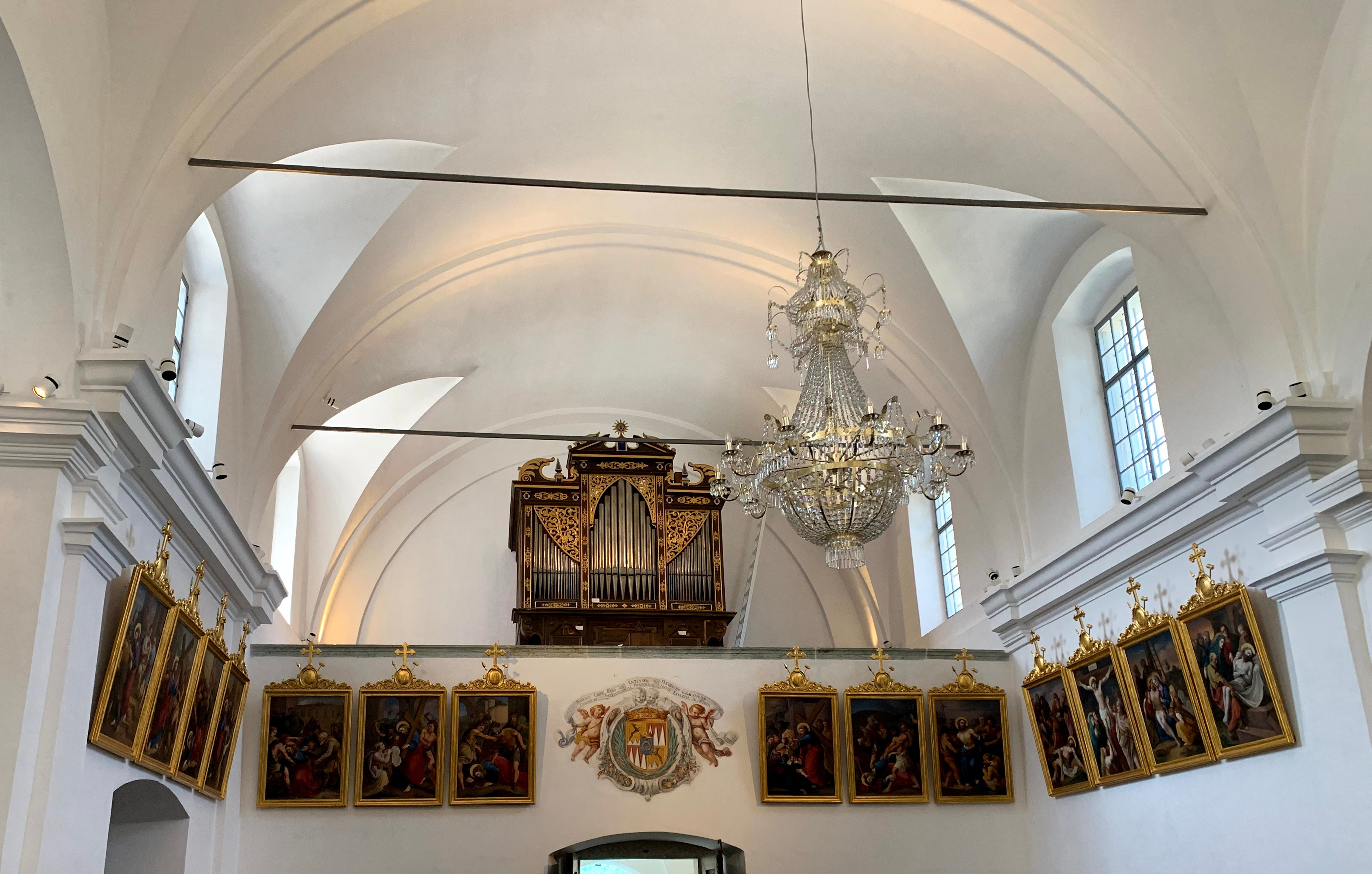
In Trieste, the organ and a bit of the rose window, which was a later addition to Saint Just, when technology had progressed enough to have that large an opening in the wall:

img_0236

Catholic altars contain relics, but one seldom sees them in such a conspicuous way:img_0233

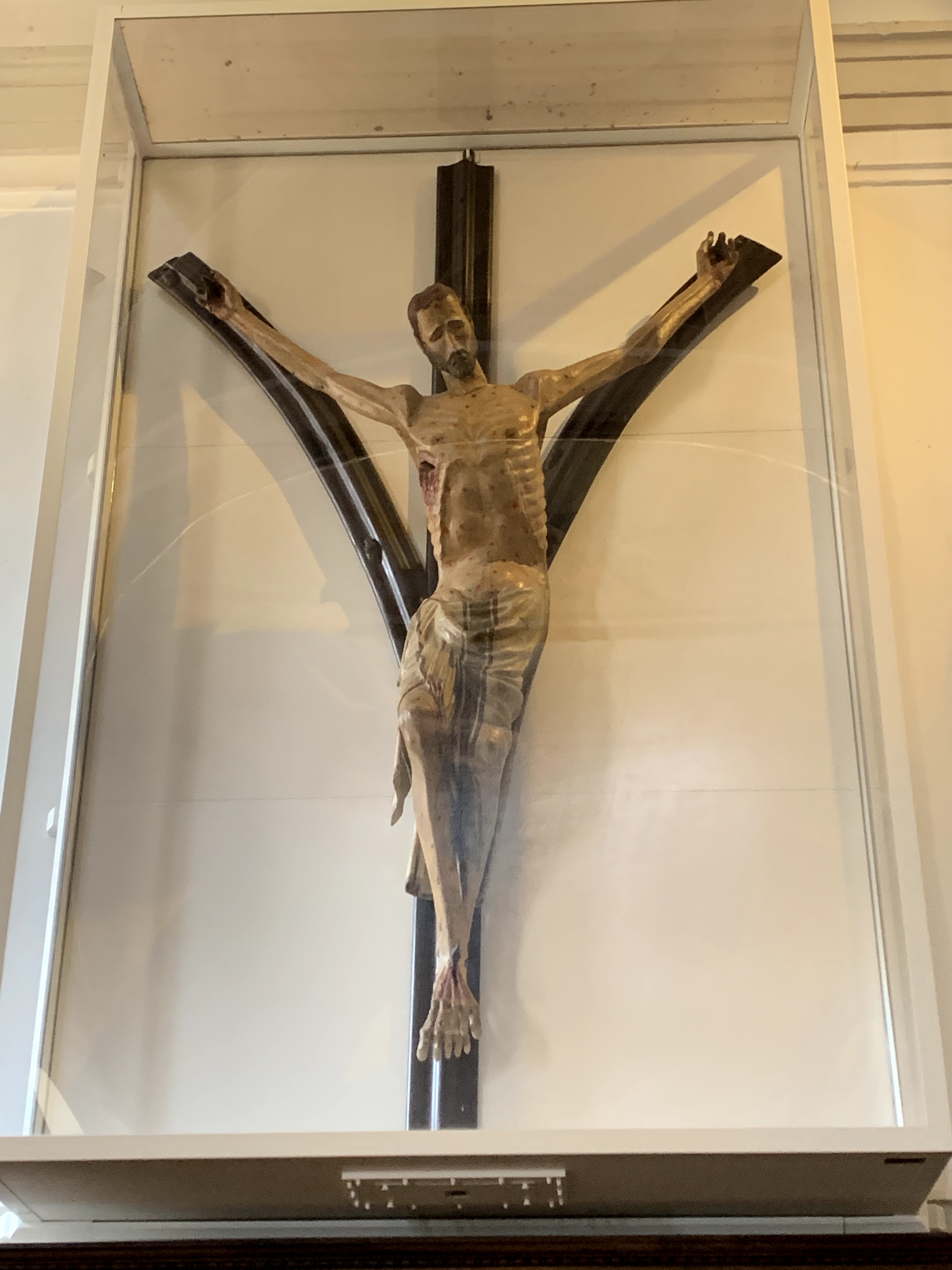
A crucifix at St. George in Piran that had been restored from one of the older iterations of the church. I was struck by how contemporary designers have recalled this centuries-old style in their own work:
img_0300

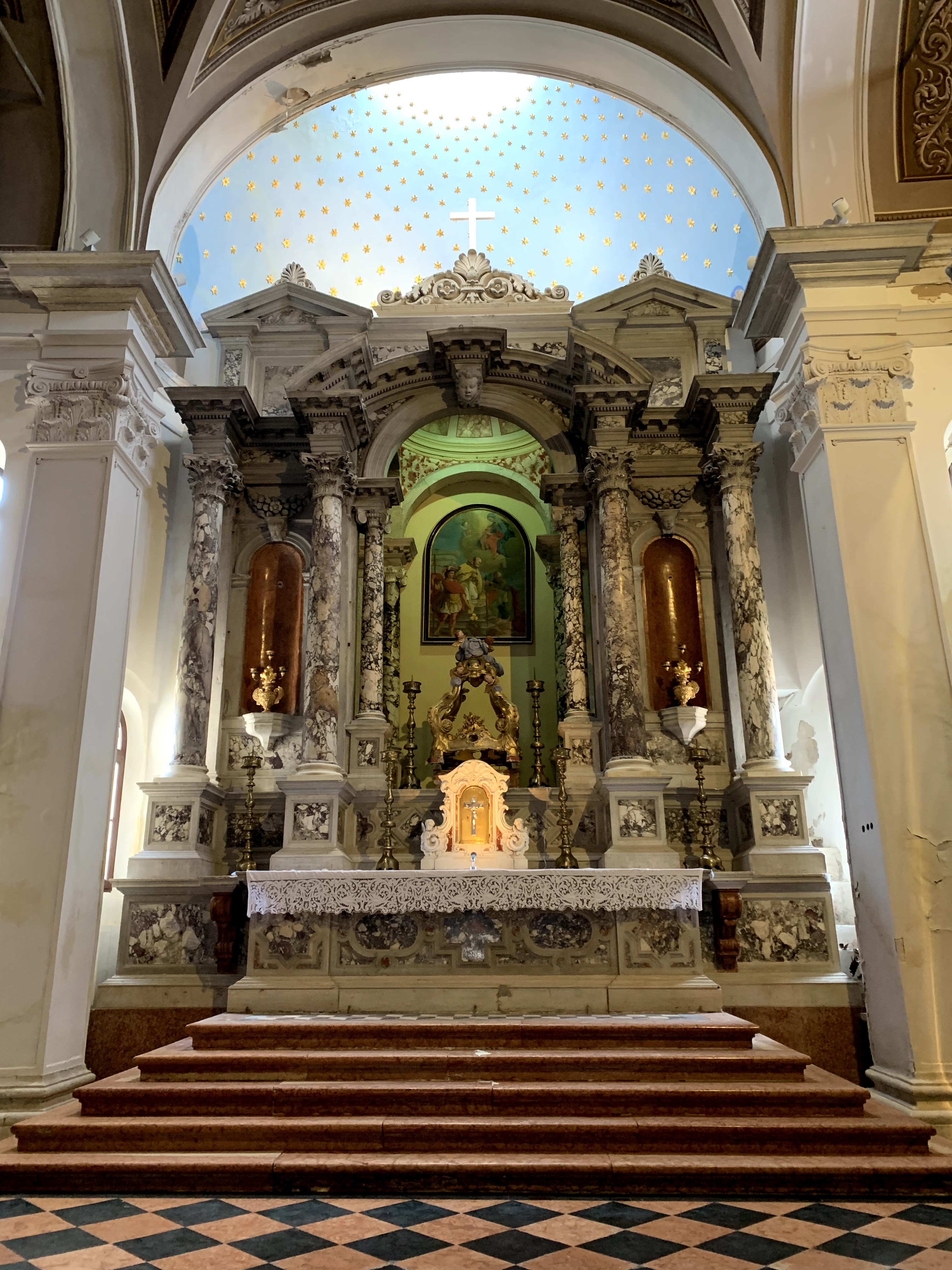
The main altar:
img_0296

And the ceiling above the chancel:
chancel ceiling - St.George, Piran

There were two churches that I visited that were not part of the official tour. Because I was there as a pray-er rather than a tourist, I don’t have photos inside the churches, but they remain close to my heart. One was in Trieste, near the amphitheater ruins. Nana’s ethnic heritage was northern Italian, so it was special to be able to spend some quiet time in the church there. The other was when I went to Mass on our last morning in Ljubljana. It was comforting to be there as part of the congregation, even though they were speaking a language I didn’t know. All the same, I felt that the prayers in my heart were understood.

Besides my private prayer pilgrimage, I also silently dedicated my performances of the Duruflé Requiem to my mother.  This requiem is based on chants from the early church and is sung in Latin, as it would have been before the Second Vatican Council. Much of it is spare and meditative, beautiful but difficult to perform because the individual vocal lines are often exposed.

The most moving of these text for me is the “In Paradisum”, which is the final commendation of the deceased to God at the end of the funeral rite. The text translates:

May the Angels lead you into paradise:
may the martyrs receive you at your coming,
and lead you into the holy city, Jerusalem.

May the choir of Angels receive you,
and with Lazarus, who once was poor,
may you have everlasting rest.

At my mother’s funeral, this was the point at which I was most emotional, so I worried that I might have difficulty singing through it, especially as Duruflé sets the first stanza for sopranos only. I found, though, that it was comforting for me to bring my mother to mind at that moment, making the traditional prayer even more meaningful. In the powerful silence after we very quietly finished the piece, I could find peace.