It’s Sun Day!

Today, September 21, 2025, is being celebrated as Sun Day in multiple locations in the United States, with a few locations in other countries joining in.

The brainchild of Bill McKibben, long-time climate evangelist, Sun Day is taking place around the time of the equinox and celebrates solar power, which is now the cheapest source of power on earth. And, yes, you can power your town with solar even at night, thanks to batteries and other energy storage mechanisms. Also, giving a shout-out to wind power, which is sun -related because it’s the sun’s differential warming of the earth’s surface that gives rise to wind. Wind energy is another way to provide power when the sun isn’t shining.

There are events organized by many partners in hundreds of locations, including concerts, e-bike and EV rallies, marches, speakers, technology tours and information booths, and art exhibits. I want to give a special shout-out to the event in my state capital, Albany, organized by my beloved Third Act Upstate New York working group. I wish that I could be joining them in person, but distance and my health situation are keeping me close to home.

My observance of Sun Day is confined to this post, but my celebration of solar power is ongoing! After a several years’ transition, our home and most of our transportation is powered by the sun. We weatherized our 70-ish-year-old house and adopted energy-efficient lighting and appliances. We installed a hybrid heat pump hot water heater and a geothermal heating and cooling system, enabling our disconnecting from the methane system, which had been delivering fracked gas that has caused so much pollution and sickness for our Pennsylvania neighbors. We drive a 2017 fully electric Chevy Bolt and a plug-in hybrid Chrysler Pacifica minivan, so we only use gasoline when we need to take the van on a long trip.

Because we have large shade trees on the south side of our home, we weren’t candidates for rooftop solar, so we own panels at a solar farm. Over the course of the year, we generate enough kilowatt-hours to cover our needs. Currently, we pay about $20/month to the power company for distribution and about $28/month to the company that rents the land for the solar farm and maintains our panels. It’s really great to have such low energy costs and it’s thanks to the sun!

I was happy to see solar power expanding, thanks, in part, to the energy provisions of the Inflation Reduction Act passed under President Joe Biden and New York’s Climate Leadership & Community Protection Act. The implementation of programs under these laws were helping to expand access to solar energy, especially for lower-income folks. Unfortunately, President Trump has curtailed many of those programs and Governor Hochul and her administration are way behind schedule in implementing the CLCPA.

Even without subsidies, solar energy is still cheaper to install than fossil fuel energy, even though fossil fuels are still heavily subsidized, so the hope is that economic factors will prevail and solar will continue to expand. In some countries, like Germany, it’s become common to have solar panels that can be hung from a balcony railing and plugged into the electrical system of the home. Utah recently became the first state in the US to allow this. If more states adopt this approach, solar will be able to spread more quickly because it would available to renters and homeowners who don’t have an appropriate rooftop. Granted, you can’t power your home with a small panel like these, but you can reduce your bills and help reduce strain on the grid.

The expansion of cheap solar power is also a boon in places that don’t have a reliable electric grid available. For example, Pakistan has seen a huge uptick in solar power. In the United States, solar is an opportunity to provide power to remote locations, such as some reservations, that currently don’t have any electricity available. As we saw during the pandemic, these locations also did not typically have a source of clean, safe drinking water. Solar power can be used to power pumps for water wells, leading to much better health and quality of life for residents.

So, hurrah for Sun Day and for the sun powering our lives! I’m grateful that every day is Sun Day at our home and want to thank all that are working to make solar power available to ever more people around the world.

in gratitude for Jimmy Carter

(Photo credit: The Carter Center, 2015)

Jimmy Carter died on Sunday, December 29, 2024 at the age of 100. He was United States president from 1977-1981. After his term ended, he was active as a peacemaker, author, and humanitarian well into his nineties. Much of his work was accomplished in partnership with his wife, Rosalynn, who predeceased him last year after 77 years of marriage.

Carter was president during a formative time in my life, late in high school going into my early years at Smith College, and there are things from that time that have had lasting impact on my life.

Carter’s actions on renewable energy, energy conservation, and environmental protection were formative for me. Because of the 1979 Iranian Revolution, oil and gasoline were high-priced and in short supply. We lived in a very rural area at the time. Reaching our high school, supermarkets, stores, doctor’s office, etc. involved at least a twenty-mile drive, so fuel efficiency became even more crucial for us. Being very aware of the efficiency of our vehicles is something that B and I have retained. The first car we bought after our marriage was a small, fuel-efficient compact; we assumed that our next car would be electric, given the emphasis that had been placed on them by Jimmy Carter. Unfortunately, that was all derailed by Reagan and the fossil fuel industry and we didn’t get our first electric car until 2017.

We also continued to take home energy efficiency seriously. B and I were talking recently about how we never got into large, lighted Christmas displays for our yard, choosing instead to just put our Christmas tree, now with super-efficient LED lights, near our front window. That all started back in the Carter administration with its emphasis on energy conservation. Carter, who was an engineer, installed solar panels on the White House roof to heat water; Reagan later removed them. I’m proud to say that our home and most of our transportation are powered by solar energy. We have very efficient heat pumps for hot water and heating and cooling our home. We are also well-insulated and choose appliances and lighting carefully with our eyes on efficiency. The appalling thing is that, while President Carter saw clearly what we needed to do as a country to address environmental/climate protection and energy security long-term and set us on that path, subsequent political and corporate leaders abandoned those efforts with grave planetary consequences. We would not be in such dire circumstances around the globe if we had tackled these issues around renewable energy and environmental/climate protection back then.

I appreciate Carter’s example of living out his faith. He set out to serve humanity, especially those who are most vulnerable. He was long active with Habitat for Humanity, which builds homes for people experiencing poverty. Through the Carter Center, he spearheaded a massive effort to eradicate Guinea worm disease in Africa and Asia. In 1986, there were an estimated 3.5 million cases; in 2023, under 20 human cases were reported.

Carter was also a champion for human rights. As president, he appointed people from different racial and ethnic backgrounds and many women to executive and judicial branch posts. He created the Department of Education, which had previously been part of the Department of Health, Education, and Welfare, to help promote excellence in education regardless of race or economic circumstances. He also created the Department of Energy to spearhead reforms.

I’m grateful that President Biden will still be in office for the state funeral for Jimmy Carter on January 9th. The then-young Senator Biden was an early endorser of Carter’s run for the Democratic nomination in 1976 and the two have been friends for decades. While Biden and Carter are both one-term Democratic presidents who were largely derailed by high inflation rates, what is more striking to me is that they are both dedicated public servants, motivated by love of country and their faith, Carter as a Baptist and Biden as a Catholic. Both celebrated the diversity and pluralism of the United States and tried to protect and preserve our environment.

I am worried that the incoming Trump administration will try to dismantle the gains made under President Biden in the same way that Reagan undid many of Carter’s initiatives.

A hallmark of Jimmy Carter’s life was always telling the truth, even when that truth was difficult to hear. Donald Trump is known for lying, thousands of times in his first term and thousands more since. It would have been distressing to have Trump overseeing the plans for Carter’s state funeral.

After the funeral and observances in Atlanta where the Carter Center is located, Jimmy Carter will be laid to rest beside Rosalynn under a willow tree near their long-time home in Plains, Georgia. There is a comfort in that for me – to think of them as reunited after such a long and fruitful partnership on earth. Both his longevity and the length of their marriage set records among US presidents, records that may well stand for as long as the United States endures.

Let’s all work to uphold the ideals that Jimmy Carter espoused so that the United States will become a “more perfect union” and grow as a democracy, not devolve into oligarchy or autocracy.

Energy, exercise, mitochondria, long COVID, ME/CFS, etc.

I almost started to cry when I heard this piece on National Public Radio’s Morning Edition. (The audio clip is at the link, as well as a written transcript which may offer a bit more information than the audio in addition to links to the studies cited and to people providing commentary.)

The piece discusses that people with long COVID have physical changes in their tissues that showed cause for their exhaustion or “post-exertional malaise.” The mitochondria in the muscle cells were not functioning properly, so the muscles could not get the oxygen and energy they needed. It appears that this mechanism is also at work in people diagnosed with ME/CFS and other similar, poorly understood syndromes that exhibit these symptoms.

A member of my family was diagnosed with ME/CFS, then called fibromyalgia/chronic fatigue syndrome in the United States, as a young adult, although she had been having symptoms since early adolescence. She was told that she needed to exercise to build her strength, which was common advice at the time but which proved to be detrimental to her. If she tried to push herself physically at all, she would wind up in so much pain and with so much fatigue that she could barely move for a week or more. As I was listening to the radio piece, I was thinking back to those days, when she was so debilitated that we would strategize when or if she could join the family from her upstairs bedroom because she could only manage the fourteen stairs between the levels once a day, at most.

What made a terrible situation worse was that the doctors would think she “wasn’t trying to get better,” essentially blaming her for her condition when the root of the problem was their lack of understanding of ME/CFS. Effort or mental attitude is not going to repair one’s mitochondria.

I appreciate that research money going to study long COVID is also increasing understanding of ME/CFS and other conditions with similar symptoms. (You can read some of my prior posts referencing long COVID and its commonalities with ME/CFS here and here.) I’m hoping that increased understanding will bring more effective treatments and, at least, an end to blaming patients for “not trying hard enough” to get better.

Compassion is needed in these situations, not judgmentalism.

Compassion is always needed. 
*****
Join us for Linda’s Just Jot It January! Find out more here: https://lindaghill.com/2024/01/12/daily-prompt-jusjojan-the-12th-2024/

One-Liner Wednesday: COP 28

As North America slept, delegates from around the world concluded the global climate conference in Dubai, when the chair—local oilman Sultan al-Jaber—quick-gavelled through an agreement that included a sentence calling for “transitioning away from fossil fuels in energy systems, in a just, orderly and equitable manner.”

That may not seem like much—it is, after all, the single most obvious thing one could possibly say about climate change…

And by itself it will accomplish nothing….

But it is—and this is important—a tool for activists to use henceforth. The world’s nations have now publicly agreed that they need to transition off fossil fuels, and that sentence will hang over every discussion from now on—especially the discussions about any further expansion of the fossil fuel energy.

Bill McKibben on the final COP 28 agreement by 190+ countries

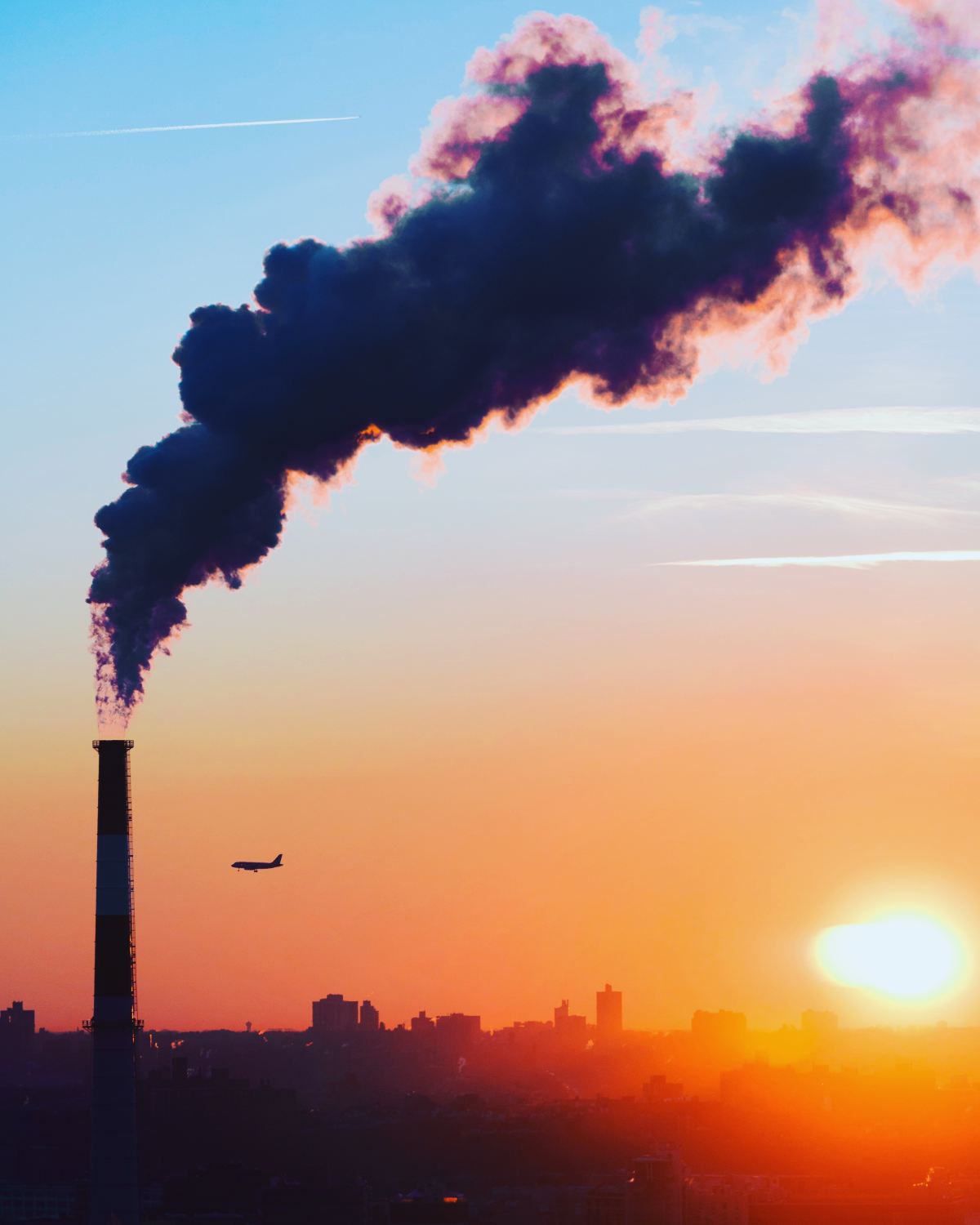
Feature photo by Thijs Stoop on Unsplash

This super-sized One-Liner Wednesday is part of Linda’s long-running series. Find out more here: https://lindaghill.com/2023/12/13/one-liner-wednesday-how-do-i-know/

Launch!

Third Act Upstate New York has launched! You can watch the video of our amazing launch program:

Third Act Upstate New York: Working Group Launch from Third Act on Vimeo.

US-based Third Act was founded by Bill McKibben and Vanessa Arcara, both of whom spoke movingly at our launch, to engage elders (those 60+) in response to the current crises around climate and democracy. It is a national organization that has undertaken large-scale initiatives, such as the 3.21.23 Day of Action to Stop Dirty Banks targeting the big banks that are funding dirty fossil fuel development. It partners with other organizations across the age spectrum in support of climate and democracy initiatives, such as the recent climate week march in New York City. Its three main areas of activism are currently Fossil Free Finance, Democratize Energy, and Uplift Democracy and Voting.

If you are an elder anywhere in the United States, you can become a Third Act volunteer. The first step is to join the mailing list. That will get you information to join national calls and campaign initiatives. It also gives you the opportunity to join a Working Group. Some are affinity groups, such as Educators, Faith, or Retired Union Members. Others are geographic groups. Working groups help on national initiatives and also mobilize efforts around more local and state concerns that align with Third Act’s mission.

On our Upstate New York launch call, we were privileged to hear from Dr. Curt Stager of Paul Smith’s College speaking about how climate change is in evidence in the Adirondacks, from Dr. Bob Howarth of Cornell University about the implementation of the landmark New York Climate Leadership and Community Protection Act, and Alÿcia Bacon of Mothers Out Front about energy equity.

Our launch also featured some arts breaks. Jane Hirshfield read her poem “Let Them Not Say” and Sarah Stockwell-Arthen sang Rabbi Shoshana Meira Friedman’s “The Tide Is Rising.”

Our theme for our Upstate New York launch was “Ordinary people doing extraordinary things…together.” We emphasized this by having several of our working group members, including me, offer brief comments on what brought them to Third Act and provide introductions to our speakers.

Part of the purpose of the launch was to encourage people who are lucky enough to be elders in Upstate New York to join us. Our invitation was delivered through a recorded message from Dr. Robin Wall Kimmerer, author of Braiding Sweetgrass and professor at SUNY-Environmental Science and Forestry, and a live appeal from Michael Richardson, current facilitator for the Third Act Upstate New York Working Group.

I will add my own invitation because it is never too late to join in the effort, even if you are happening upon this post months or years after our October 5, 2023 launch date. You can join Third Act National using the link earlier in this post and, if you are an Upstater, our Working Group here: https://thirdact.org/working-groups/upstate-new-york/. You can find us on Facebook and Instagram.

I was part of the Launch Committee that planned this event, guided by the incredible Lani Ritter Hall, Third Act advisor and volunteer. Even if being able to join Third Act is far in your future, I hope you will watch our launch and draw information and inspiration from it.

If you are an Upstate NY elder, I hope to see you at an upcoming online meeting or in-person action.

Remember – Ordinary people can do extraordinary things together!

SoCS: methane

Over the last ten or so years, I’ve spent a lot more time thinking about methane than most people.

This is due to the fighting against fracking here in my region with the Marcellus shale, in the shale plays in the US, and the export of the technology around the world.

I will spare you all the detailed things I learned about fracking and methane’s effects on climate from Bob Howarth, Tony Ingraffea, Sandra Steingraber, Walter Hang, and so many others back in the thick of the fight in New York State, which led to first an administrative ban and later a legislative one. One of my roles at the time was to comment on media articles as part of a rapid response team. I learned to argue from economic, health, environmental, social, and other perspectives, depending on the circumstances.

Fun times.

N0t really. It was super stressful. It was also important to get accurate information out into the public and I was very grateful that we were able to get some better policies in place.

Unfortunately, the damage done by fracking and by methane leakage is still with us, widespread and massive.

Atmospheric methane levels are at record highs and are part of the supercharging of global warming that we are seeing now. As a greenhouse gas, methane is more short-lived in the atmosphere than carbon dioxide but it is much more powerful in the near term. In a ten-year timeframe, methane is about a hundred times more powerful than carbon dioxide, so it is imperative to cut emissions of it now to avert various tipping points.

There was a major methane reduction initiative signed last year, which is good. The problem is that emissions have not been carefully measured or monitored by governments and the fossil fuel industry and estimates have been much lower than what some scientific studies have shown. I was just reading about a study earlier in the week and will try to insert the link after I’m done stream-of-conscious-ing.

It’s cold comfort that the problems the scientists and environmentalists have been pointing out for years are finally being more widely acknowledged when so much damage that could have been averted has already been done.

We need to stop adding fossil methane to our climate system in order to have any hope of meeting the 1.5 degree C level in the Paris accord.

I am very distressed about the breaks in the Nordstream pipelines. Every time I see video of the roiling, methane-saturated sea water, I feel sick, knowing how dangerous it is. It’s especially upsetting to see it in juxtaposition with the footage of the devastation caused by hurricane Ian. Most media coverage is finally acknowledging the role of climate change in supercharging storms but I wish they had been doing it years ago when it would have been easier to avert this level of greenhouse gases. We finally have some decent federal legislation in place but the scope of the problem outstrips that level of spending. The damage estimates from Ian will be higher than the climate spending in the law.

Our family over these last years has taken steps to stop using methane. When we installed a geothermal heat pump a few years ago, we were able to disconnect from the methane system. Our electricity comes from either our solar panels or a 100% renewable grid supplier, so we aren’t using electricity generated from burning fossil fuels. I continue to advocate for the transition away from methane and other fossil fuels.

It can’t come soon enough.
*****
Linda’s prompt for Stream of Consciousness Saturday this week was to base your post on “me” or a word that begins with “me.” Join us! Find out more here: https://lindaghill.com/2022/09/30/the-friday-reminder-and-prompt-for-socs-oct-1-2022/

US environmental update

Trying to get the United States back to a better position regarding climate change and environmental issues in general has been a major task for the Biden administration. While some things were relatively straightforward, such as rejoining the Paris climate accords, others have been much more difficult.

Unwinding the changes that the prior administration had made to regulations was sometimes blocked by the courts. The biggest blow was the Supreme Court decision in West Virginia v. Environmental Protection Agency, in which a 6-3 majority found that the EPA can’t regulate emissions from coal-fired power plants unless they have been given specific direction by Congress. It was odd that the Supreme Court heard the case because it was brought against the Clean Power Plan, which was proposed by the Obama administration, but never enacted. The Biden administration had no intent to revive that plan, as circumstances have changed, so it appears that the conservative majority heard the case for the purpose of striking down the manner in which executive branch agencies and departments go about executing the laws that have been passed by Congress. This ruling could bog down not only EPA work but also the regulatory work of other Cabinet departments. [Please note that this is my layperson understanding of the case and its implications. There has been a lot of legal commentary which can be found in myriad places online, if you are interested.] An August 26 post with an update on the impact of this case can be found here.

Legislation to address the climate crisis was an important cornerstone of the Biden agenda. The House of Representatives passed a strong bill dealing with climate change and the care economy, including health care, universal education for three- and four-year-olds, provisions for child and elder care, permanent expansion of a fully refundable child tax credit, and other measures for social justice and equity. The bill was paid for by increasing taxes on wealthy individuals and corporations. Unfortunately, the 50-50 split in the Senate combined with Senate rules gave a couple of Democratic senators power over what was in the bill and they opposed some of the financial and energy provisions, so it looked as though it would not pass.

This was extremely discouraging to millions of people in the US, as well as to millions in the rest of the world who are depending on US action to cut carbon in the atmosphere and provide leadership for other countries to do the same.

And then, a surprise announcement that Senator Joe Manchin of West Virginia, who made his money from coal and had shot down prior versions of the bill, had reached an agreement with Senate Majority Leader Chuck Schumer on a version of the bill that he could support. Additional changes wound up being made to get Senator Kyrsten Sinema of Arizona on board. Senator Schumer kept the Senate in session in Washington into their August recess to pass the bill with Vice President Harris casting the tie-breaking vote. House Speaker Pelosi called the House back into session to pass the bill last Friday and President Biden will sign the bill into law this week.

While the Inflation Reduction Act is not as strong as the original legislation, I’m very happy that it will become law. It should bring down energy costs over time. It is projected to lower US greenhouse gas emissions by about 40% of 2005 levels by 2030; the United States goal in the Paris accord is a 50-52% reduction, so we hope that additional measures will be enacted to reach that goal. However, before this bill, we were on track for only a 25% reduction, so this is a major improvement. This article is a good summary of some of the main environmental/energy provisions of the bill.

I am grateful and still a bit shocked that this bill is about to become law. Yes, there is more to do, both on environmental and economic justice issues, but, at least, we have made a good start. This is important because people and the planet need this help and because it shows that the Democrats are actually serious about governing in a bipartisan way when it is possible, such as with the infrastructure law, and alone, if necessary. I hope that the progress in the last 18 months will encourage voters to keep the Democrats in the majority so more can get done in the next session. Perhaps, it will even give more Republican Congresspersons the impetus to support popular, commonsense measures that benefit the public. We have all witnessed past Republican majorities who were unable to pass much substantive legislation; for example, the Trump administration announced multiple “Infrastructure Weeks” but never got close to passing legislation. We have also, sadly, seen Republican minorities block action on legislation and appointments through the filibuster and other holds and delaying tactics. I think these need to be reformed so that the Congress is not bogged down and unable to do the work our country needs to function.

As the new programs ramp up, I encourage people in the US to be on the lookout for provisions that can help them make their lives greener, whether that is rebates on efficient electric appliances, incentives to buy used or new electric vehicles, or the opportunity to purchase renewable energy at lower than current rates. Support candidates who make the health and well-being of people and our environment their top priorities. We need representatives who are looking out for us, not just corporate profits and tax loopholes.

In my district, that means voting for the Democratic candidate. Make sure that you know the candidates’ positions in your area before casting your ballot.

the definition of energy

I wish that US politicians and the media would stop using the word energy as shorthand for fossil fuels. The United States is banning the import of Russian oil, gas, and coal, which, while they can be burned to release energy, are not themselves energy.

Equating the word energy with fossil fuels only distorts our perception of the problems and possible solutions. Politicians and pundits panic and look for more oil and gas to replace the Russian supply, even though drilling for additional petroleum and building LNG facilities are time-consuming processes which we must not expand but scale back quickly and dramatically if we are to keep global warming under 1.5 degrees Celsius, as the recent IPCC report alarmingly illustrates.

Rather, if we consider energy more broadly, we can see other ways forward that are cheaper, quicker, and better for the environment. A couple of weeks ago, Bill McKibben published a piece outlining how President Biden could invoke the Defense Production Act to churn out heat pumps to send to Europe so that they can break away from dependency on Russian methane for heating. Bonus: this would create jobs in the US and help our country in its own transition away from fossil fuels after the immediate crisis in Europe has passed. Amazingly, McKibben’s eminently practical and sustainable idea is gaining traction and is being studied by the Biden administration.

It’s also wise and practical to take energy efficiency seriously. It’s been said that the cheapest kilowatt/therm is the one that you don’t have to use. It’s helpful to weatherize and retrofit existing buildings so that their heating, cooling, and lighting needs are lessened, making it easier to run them with available and developing renewable energy resources.

At this point, some of the electricity needed will be generated from fossil fuels and nuclear plants but it is shortsighted to expand these rather than phase them out. Developing new drilling and mining sites is a long, expensive process, as is building new plants, which come with decades of environmental and public health consequences. It is quicker, cheaper, and healthier to move to renewable energy.

The same argument goes for the electrification of transportation. Many countries are already moving toward this goal, which helps in both the environmental and political realms.

While Russia is uppermost in everyone’s minds right now, the truth is that fossil fuels have been used as a political weapon by autocrats and oligarchs around the world. (Rachel Maddow’s book Blowout tells this history in fascinating detail.) Their power will be greatly reduced by a rapid phaseout of these fuel sources in favor of wind, sun, water, and geothermal sources.

These gifts of the earth are a common inheritance.

No one owns the sun or wind.

fits and starts

Ugh! There is so much stuff I want/need to do and not nearly enough brainpower to do it.

Admittedly, part of the problem is that I necessarily deferred a lot of things when I was involved with multi-generational caregiving for years and now there is a huge backlog that needs attention. Some are practical things, like dealing with the rest of the belongings of Grandma, Nana, and Paco that are still stored at our house and finishing the remaining work with Paco’s estate, including the final tax filings and, oh, our tax returns, too. Some are creative things, like writing blog posts and poetry, and the administrative tasks that go along with them, like getting submissions in, which I find both tedious and nerve-wracking. Some are educational, trying to stay informed about what is happening in the world and using that knowledge to advocate for social and environmental justice. And, of course, there are the errands, appointments, and household tasks that need doing, although I appreciate that B and T continue to cover a good chunk of the housework that I abandoned in recent years.

The biggest problem for me remains, though, that it’s difficult for me to muster the energy and concentration I need to tackle tasks that need critical and/or creative thought and decision-making. I suppose this is complicated by my INFJ-ness, which means that nearly everything for me involves deep thought.

It’s exhausting.

There is also the reality that I am dealing with several years’ worth of grief and loss. The difficult period leading to Grandma’s death in 2016 followed by Nana’s struggles with heart failure leading to her death in 2019 followed by Paco’s decline and his death in September last year left me with a lot of deferred grief, which I have only recently realized and begun to process. There is also the personal loss of proximity to daughter E and granddaughters ABC and JG, who live across the Atlantic from us. Overlaying these personal losses is the pandemic and the upheaval, suffering, and death it has caused. The death toll in the US alone is 955,000, which, as staggering as that figure is, is probably an underestimate. The world is also in the midst of a major ideological rift between democracy and authoritarianism which is terrifying and destabilizing. I have lost the sense that the US is on a positive trajectory toward “a more perfect Union” as our Constitution terms it, which adds to my sense of grief.

It’s a lot.

I know it’s a lot and there are valid reasons that I find my concentration and energy so scant. I know I should be patient with myself, as I would be with a friend or loved one. I know I should be practicing self-care and not admonishing myself for not having the wherewithal to power through all of this and “accomplish my goals” and “be my best self” and whatever.

I try.

Sometimes, I manage it. Other times, not so much.

Look. Today, I managed to write this post.

personal energy independence

With the burgeoning war in Ukraine, which is totally unacceptable and reprehensible on Russia’s part, people around the world expect fossil fuel prices to rise. While this is unfortunate, especially for those in lower socioeconomic circumstances, it will have much less impact on my family than most.

We will be paying higher prices for goods due to increased transportation costs but won’t see much impact on our personal transportation and household costs, due to our years-long efforts to reduce our carbon footprint.

Around town, we usually drive our all-electric Chevy Bolt or our plug-in hybrid Chrysler Pacifica, which only switches to its gasoline engine on the rare occasions that we take longer trips and even then gets much better mileage than a regular minivan. Our home heating system is a geothermal heat pump and our hot water is a hybrid electric/air source heat pump which is nearly always in heat pump only mode. Our appliances are electric. We use a rechargeable electric lawn mower. Only our 50+ year old snowblower which is used a few times a year and our outdoor propane grill run on fossil fuels.

The electricity that powers our homes and cars is from renewable sources. The majority is from solar panels that we own in a community solar installation with the balance bought from a 100% renewable energy supplier. I get a great deal of satisfaction from producing and using clean energy, continuing the legacy of my father and several other members of our family who worked in the hydroelectric sector for many years.

While the driving force for me to move to renewable energy was moral, I do also appreciate the economic impact on our family. Our energy costs as B heads toward eventual retirement will stay relatively low and stable. At the time we installed our geothermal heat pump, the cost of methane was near historic lows, making the number of years that it would take cost savings to make up for the installation cost quite high, partially offset by significant savings in our cooling costs. With the price of methane doubled even before the impact of sanctions against Russia, our investment in our heat pump looks to be an even better economic move, in addition to being best for the climate.

From a moral/ethical standpoint, I also appreciate that my energy dollars are not being used to prop up a fossil fuel system that enables injustice. Certainly, Russian proceeds from fossil fuels go largely to a few oligarchs and government officials, not for the benefit of the public. Saudi Arabia uses its fossil fuel wealth in oppressive ways and is not held to account for fear of cutting off supply. In the US, profits land with oil and gas companies while rural folks and disadvantaged communities bear the brunt of the health and safety problems caused by extraction, processing, and transport. While the entire ecosystem is impacted by fossil fuel use, the heaviest burden falls on vulnerable communities who often did little to contribute to the problem.

I know that the example of my family’s transition away from fossil fuels is a miniscule piece of the solution to help heal the planet, but I hope that we early adopters will show people that it’s possible – and even more economical – to make the switch to renewable energy. Political leaders can develop programs to help lower income households join in and benefit, as well as train workers for weatherization and other energy efficiency projects, for renewable energy jobs, and for the environmental restoration and resiliency work before us.

Real energy independence cannot be pumped out of the ground but can come from the sun, wind, and water that are our common gifts. Let’s use them to create a more stable, just world where fossil fuel supplies aren’t used as a weapon.