One-Liner Wednesday: FDR on economic progress

“the test of our progress is not whether we add more to the abundance of those who have much; it is whether we provide enough for those who have too little.”
~~~ Franklin Roosevelt, second inaugural address

Join us for Linda’s One-Liner Wednesdays! Find out more here: https://lindaghill.com/2025/12/03/one-liner-wednesday-i-dont-think-this-is-mathing/

Disintegration

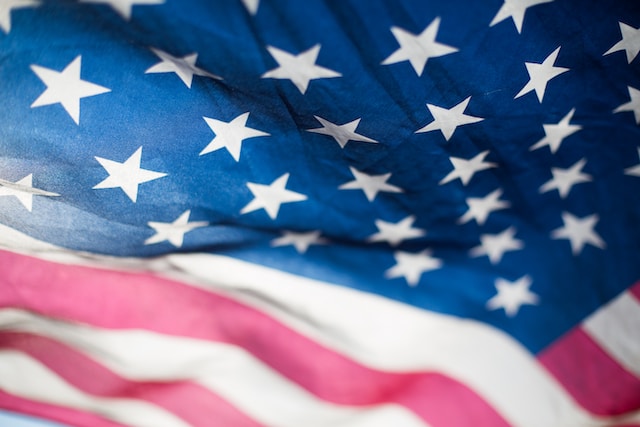
Vote for Democracy #37

(Photo by Lucas Sankey on Unsplash)

I am watching the United States, the only country where I have lived for over sixty years, disintegrate around me.

My heart is broken and I don’t know how well I can convey the gravity of the situation, but I have to try.

I will say that there is massive and growing resistance among the public and within the government at various levels but it’s unclear whether or not we can keep our democracy and its Constitution and laws in effect.

The Trump/Vance administration has defied court orders trying to contain their illegal behavior. There have been orders to reinstate employees and officials wrongfully terminated, to restore funding cuts and agency closures that the administration has enacted when only Congress has the authority to do so, and to give due process rights to immigrants and visitors who have been imprisoned in different parts of the country or even sent to a notorious foreign prison in El Salvador.

Trump has written executive orders that don’t reflect reality, declaring states of emergency where there is no emergency so that he can attempt these illegal actions that are terrorizing millions of people, in the United States and around the world.

At the moment, he is trashing our national economy and disrupting the global economy with his tariff policy. He has threatened the sovereignty of other nations who are our allies. The world order that rose from the ashes of World War II over the past 80 years, led by the United States, is damaged and, I’m afraid, irreparable because our allies will not be able to trust us again.

What should be happening is that Congress should impeach and convict the president of high crimes and misdemeanors and remove him from office. Other executive branch officials, including the vice-president, should resign or themselves be impeached for their unconstitutional actions. This would include the current House speaker, who would become president under the Constitution, if he would not restore the rule of law and stop the takeover of the government by oligarchs and corrupt politicians.

Given the way the Republican majorities of both houses of Congress have been behaving, the above scenario will only happen if dozens of Republicans either decide to fulfill their oaths to uphold the Constitution and laws or resign their seats, either to protect their families from threats or to accede to the demands of their constituents who are being harmed by the Republican regime.

I have no illusions that this scenario, which is in accordance with the way our Constitution is designed, is going to happen.

I know that things can get worse. There is the possibility that Trump will try to declare a state of emergency to allows him to use the military within the US to go after peaceful protesters. He could try to jail members of the media or elected officials who oppose him. He could start a war with Canada because he wants to annex them or with Denmark over Greenland, either of which would turn into a major conflict as the other NATO nations would come to the aid of Canada and Denmark under Article 5 of the treaty that formed NATO in 1949.

Or any number of other horrible things that would harm millions of people.

That’s why so many of us are speaking out to resist Trump/Musk/Vance/DOGE.

While my fears are national and global, they are also personal. Among my friends and family are people who are immigrants, naturalized citizens, people of color, part of the LGBTQIA+ community, living in poverty, dependent on government programs for health care or food assistance or income, retired, dealing with illness and/or disabilities, children, elders, students, writers, teachers, government workers, people of various faiths and non-religious philosophies, rural, suburban, and urban dwellers.

In all of that, I think I am typical of most people in the United States.

When I hear about funding cuts for medical research and vaccines, I know that my own health and that of my family and friends has been vastly improved by these in the past and will suffer in the future if these cuts remain in place.

When I hear about visitors from other countries being harassed, turned away, or even imprisoned without cause, I worry about what might happen the next time the UK branch of my family comes to visit because it includes a foreign national.

Watching the wild gyrations in the stock, bond, and currency markets, I worry about our financial stability as we begin our retirement.

I don’t know what will happen next, but I know that millions upon millions of us are trying to keep our democracy intact so there is some chance to repair some of the harms of the last few months.

I wonder if this is how people felt at other times of national peril, especially during the Civil War.

We are not currently forming “a more perfect Union” as the Preamble to our Constitution calls us to do. We aren’t fulfilling any of the purposes of government found there either.

Deep breath.

Keep trying.
Vote for Democracy #7

(Photo by Lucas Sankey on Unsplash)

Over the last several decades, it’s become customary to ask the electorate in the run-up to presidential elections if they were better off four years ago.

I can safely say that our family is much better off now than four years ago.

During Trump’s last year in office, we spent a lot of time in either complete COVID isolation or significant restrictions. There were shortages of many consumer goods. While we were fortunate that B’s job could be done remotely, our finances had been negatively impacted by the Trump/Republican tax cuts, which saved wealthy individuals and corporations millions of dollars but raised federal income taxes for those of us who live in states with higher property and state income taxes by restricting our ability to itemize. (Republican Claudia Tenney was our representative at the time and put out an illustration of how much a family with three children under 14 would save in federal income tax, ignoring that the vast majority of her constituents didn’t fit that model and certainly a household like ours, older couple with no dependents, had a significant tax increase, not a cut.) Our retirement savings took a hit as both stocks and bonds were suffering from the disruption of the world economy due to the pandemic.

While we were fortunate to have a stable home and employment, 2020 was generally a scary time. Many in our community had job losses and health problems, including serious COVID cases. Too many people suffered lasting health consequences or death from the pandemic. While our state government did their best to deal with those early pandemic months, President Trump was a hindrance rather than a help in safeguarding our well-being.

In this final year of President Biden’s first term, things are much better for our family. With federal support for vaccines and treatments and with our own precautions, we have only had one relatively mild COVID case in our household. While inflation has raised some of our household costs, wages have gone up, too. We have appreciated higher interest rates on our savings and the record levels of the stock market have helped our retirement savings to recover and grow. The current unemployment rate in Broome County NY, where I live, is 4.5%, slightly higher than the national average of 3.9%. By contrast, in April 2020, our county set its record high unemployment rate at 15.2%.

While I know there are individuals who were better off four years ago, the majority of people are healthier and in a more stable situation than they were in 2020.

Still, many people feel differently. Perhaps, the trauma of the early part of the pandemic caused them to forget the fear, illness, job losses, shortages, and isolation we experienced. Perhaps, their personal income wasn’t able to compensate for inflation. (For the record, the supply chain problems that caused some of the inflation surge have resolved but the extra profit-taking by companies has not, especially with products that have only a handful of suppliers. The blame for price gouging should fall on greedy corporations, not on the administration.) Perhaps, some people are victims of fear-mongering or misinformation about the economy and public policy.

Admittedly, as I decide which candidates to support, I prefer to look at the broader picture of my local community and the country rather than the small picture of my household. In my area, there are lots of infrastructure improvements underway, especially with our roads. The local hospital just opened a new building. There is lots of government and private support for new and expanding business because we are a nationally recognized center for battery technology. Old factory buildings that were sitting vacant for decades are being renovated for housing and business use. Our regional airport is undergoing enhancements.

Many other counties around the country have similar stories of positive change.

I hope that voters will look honestly at their own past and present when evaluating the economic and health aspects of deciding among candidates. Don’t let other people or the media tell you what you should think. It’s also helpful to look at how government helped or hindered the economy or public health. The United States economy, including employment and inflation, has recovered much more quickly from the shock of the pandemic than other countries with advanced economies. The actions of the Biden administration are a factor in this economic strength.

An example of how public sentiment diverges from legislation and statistics is this poll from late April which finds that, when asked whether Biden or Trump did “more to promote infrastructure and job creation,” the results were 40% Biden, 37% Trump, 12% both equally, 12% don’t know. The fact is that no major infrastructure bills passed during the Trump administration while the Biden administration was heavily involved in crafting the bipartisan Infrastructure Investment and Jobs Act. This law along with the American Rescue Plan, the CHIPS and Science Act, and the Inflation Reduction Act have contributed to 15 million jobs added to the US economy under President Biden while the Trump presidency saw a loss of 2.9 million jobs. That the poll opinions deviate so dramatically from the legislative record and statistics suggests that other factors are at play, such as dis/misinformation, taking personal experience as universal, fear, and partisanship. Robert Reich had an interesting piece on his Substack yesterday exploring some of the facts, possible reasons they aren’t breaking through with the public, and possible ways to address the disparity.

When I look at this question of how my family, community, state, and country are doing during the Biden presidency and contrast it with the Trump presidency, it’s clear that Biden has the better record and plans for the future. I will vote for Biden and for Congressional candidates who will support Biden’s agenda.

I hope that all voters will evaluate the facts on the economy as they make decisions about voting.

the (not clean) debt ceiling bill

Taking a break from posting about my chapbook Hearts to update you on the United States’ struggle on the debt ceiling.

Both houses of Congress passed a deal agreed to by President Biden and House Speaker Kevin McCarthy which suspends the debt ceiling until January 2025, after the next Congressional and presidential elections. It also limits some spending over the next two years and makes changes to some programs, such as food assistance and environmental project permitting.

While I’m grateful not to have the risk of default and national/global economic consequences hanging over our heads for the next two years, I would have much preferred for Congress to have passed a clean debt ceiling bill months ago. Then, they could have debated budgetary bills as part of the usual preparation for the fiscal year that begins October first. I also prefer raising taxes on the wealthiest individual and corporate taxpayers, in order to increase spending on social needs, while decreasing the extremely high military budget. (The CBS program 60 Minutes recently aired a piece investigating part of the reason.)

One of the absurd aspects of the bill is the inclusion of special permitting and judicial review provisions for the Mountain Valley Pipeline, a partially complected methane pipeline through West Virginia and Virginia that has been held up over its poor adherence to environmental regulations. It’s a pet project of Senator Joe Manchin of West Virginia, which he has tried and failed to include in past legislation. My heart goes out to the people and places along the pipeline route that will suffer damage because of its construction. It also flies in the face of our need, in light of global warming, to stop new fossil fuel extraction and infrastructure projects.

The best course of action for our financial future would be to eliminate the debt ceiling altogether. It seems to be in contradiction with the 14th Amendment, which states, “the validity of the public debt of the United States, authorized by law, including debts incurred for payment of pensions and bounties for services in suppressing insurrection or rebellion, shall not be questioned.” Whether this action comes through Congress or the courts, it would at least keep us from going through a similar scenario in the future with Congressional Republicans threatening to damage the economy if they don’t get their way on future budgetary policy.

A sigh of relief for now…

inflation and energy

As the United States Senate passed a major budget reconciliation bill dealing with climate change, energy sources, health care, and corporate taxes this weekend, there has been a lot of public whining from Republicans and industry, saying that the bill will increase, not lower inflation.

Judging from my family’s experience, the bill will lower inflation by decreasing energy costs.

As regular readers may recall, my household has spent years in efforts to reduce our carbon footprint. We have electrified everything in our home, including a geothermal heating/cooling system. We reduced our demand by increasing our insulation and installing LED lighting. We drive our fully electric Chevy Bolt for local driving. (For trips over 200 miles, we drive our plug-in hybrid Chrysler Pacifica, which gets better mileage in gasoline mode than the non-hybrid version.) We own panels in a solar farm because our home was not a good candidate for rooftop panels.

So, this summer, our monthly electricity bill is $17.35, which is the delivery charge from our electric utility. This covers all our household lighting, cooling, laundry, electronics, water heating, etc. plus all our local and short-trip driving.

Meanwhile, many households are burdened with paying $100 to fill their gas tank for the week, plus the cost of their household electricity and methane, propane, or other fuels that they use for heating water, cooking, drying clothes, etc.

A large share of recent inflation is due to increased fossil fuel prices. For our family, that has been felt mostly in the higher cost of food, which is largely driven by the expense of fuel.

I realize that not every household will be able to follow our exact path to be nearly free of fossil fuels but the Inflation Reduction Act just passed by the Senate, which is expected to be passed by the House and sent to President Biden to sign into law later this week, will go a long way to reducing expensive fossil fuel use for residents. As more renewable power comes on line, electricity costs will come down because it is cheaper to produce than fossil fuel electricity. There are rebates targeted at lower-to-middle income folks to help move to electric vehicles, which are much cheaper to run than internal combustion engines. As battery costs have fallen, electric cars are already around the same price as some conventional cars/trucks, so the rebates may make them cheaper to buy.

It’s true that inflation will not suddenly disappear, but this bill has provisions that will bring it down and will help to decrease future inflation spikes by removing inherently volatile fossil fuel prices from the center of our economy. The bill is projected to save average households about $500/year in energy costs. Some households, such as ours, will be able to save much more than that.

So, let’s get this done and enacted! The sooner we do, the sooner it will help people and the planet.

One-Liner Wednesday: charity

“Charity is the humanitarian mask hiding the face of economic exploitation.”
~~~ Slavoy Žižek

Join us for Linda’s One-Liner Wednesday and Just Jot It January! Find out more here: https://lindaghill.com/2022/01/12/one-liner-wednesday-jusjojan-the-12th-2022-clutter/

School/work

The pandemic has heightened awareness of a number of social problems in the United States.

One revolves around the care and education of children. Political and business leadership often spout platitudes about how important children are and how much they care about them, but they seldom back up their words with meaningful policies that help children and the people who love, care for, and educate them.

Before the pandemic, American families often cobbled together child care with parent(s), school, relatives, neighbors, and paid caregivers, who often had to charge more than the family could afford to pay even though their own salaries were so low it was hard for them to get by. When schools and most day-care centers closed due to the pandemic, parents were suddenly trying to do paid work themselves from home while simultaneously trying to care for and educate their children or were forced to quit a job outside the home to be at home for their children.

It’s not a sustainable situation for many families.

There is a big push by the president and some state and national leaders to re-open schools full-time and full-capacity in the fall, even though that is against the recommendations of public health experts, in order for adults to return to jobs outside the home or so they can work from home without interruptions, but, besides being a huge health risk for children and adults, it fails to address the root of the issue.

Somehow, caring for children in exchange for a salary is considered “work” but caring for children without a salary is not considered work. Hazel Henderson calls this non-monetized part of our system the “love economy.”

The United States lags far behind other countries with advanced economies in acknowledging the love economy. We don’t offer mandatory paid sick leave, parental leave, or caregiving leave. People who do get paid as caregivers, whether for children, elders, or other vulnerable people, often earn shockingly low wages. For that matter, many people working in other kinds of jobs also don’t make a living wage, making it impossible to fully care for their family. Other countries also have a must more robust system of social services, so that people have access to adequate clothes, shelter, food, medical care, and education regardless of their income level.

As part of our efforts to #BuildBackBetter, the United States should reform our economic, health, educational, and social systems so that every person has adequate resources to lead a life of dignity. Some components of such a system that have proven successful in other countries have been single-payer universal health care, required living wages for workers, a graduated tax system that raises enough revenue from the top of the income spectrum that those in the lower end can afford their tax bill without compromising the needs of their household, free public education, paid leave for sickness, caregiving, and vacation, and a robust social safety net so that no one goes without food, housing, and other basic necessities. I would also like to see more social recognition and financial support for caretaking that is currently part of the “love economy.” A possible way to address this would be through a program of universal basic income or a stipend for those caring for a child, elder, or person with a long-term illness or disabling condition.

Obviously, crafting systemic change will take time and new national leadership. For the moment, I think it is foolish to implement a national school opening policy. Historically, education has been the province of local districts within the framework of state policy, allowing the system to adapt to local conditions. The wisdom of that flexibility is even more evident during the pandemic. Areas with low rates of illness may plan to implement hybrid systems where students attend in person part-time and online part-time so that physical distancing can be used to keep the virus in check. Areas with very high infection rates may need to keep students at home learning virtually until their infection rate is under control, when they could begin to phase in in-person attendance. All schools will need plans for dealing with changing circumstances; as there have been school closing plans to deal with severe flu outbreaks or natural disasters, there will need to be COVID plans to try to keep the school community and the general public as protected as possible.

Everyone wants students to be back to in-person classrooms, but only if it is safe for them, the school staff, their families, and the community. Pretending we can go back to the pre-pandemic system without grave public health consequences is foolhardy. Instead of wishful thinking, we need to use data, science, expertise, care, and intelligence to adapt to our changed and changing circumstances.

It’s what our children and youth need and deserve.

SoCS: New York State re-opening

I live in the Southern Tier region of New York State (USA), where we are undertaking a methodical re-opening of businesses after we successfully drastically lowered our number of COVID-19 cases.

Every day, I listen to the press briefings from Governor Cuomo. He has been very transparent on what the state is doing and what the role of the public is in protecting public health during our stay-at-home period and now our phased re-opening.

The Southern Tier region is about to enter Phase 3. One of the services that is allowed in phase 3 is nail salons. Hair salons were allowed to resume, with masks and other safeguards in place in phase 2, but nail salons had to wait for phase three as it involves longer face-to-face interaction.

I don’t do manicures, but I do have an appointment for a haircut in a couple of weeks. After that, I’ll be able to go without the headband that has become part of my wardrobe in order to keep my bangs out of my eyes.

Long bangs is an infinitesimal price to pay for what has been great news for New York State. Unlike other states that were less careful about re-opening businesses, our infection rates have continued to decline. The numbers are constantly monitored with widespread testing and contact tracing for positive tests so that we know we are not starting an outbreak. As soon as the numbers in a region start to creep up, there are plans in place to cut back on the re-opening until the infection rate is under control again.

I’m proud of everyone in New York and our leadership team for the thoughtful, caring, science-based, and successful way we have tackled this challenge. I hope that more states and countries, seeing our approach working so well, will follow our lead and be able to save their people from further suffering from the pandemic.
*****
Linda’s prompt for Stream of Consciousness Saturday this week is “nail.” Join us! Find out how here: https://lindaghill.com/2020/06/12/the-friday-reminder-and-prompt-for-socs-june-13-2020/

2019-2020 SoCS Badge by Shelley!
 https://www.quaintrevival.com/

pandemic shopping

During our stay-at-home order period, shopping for food and other necessities has been one of the few opportunities to be away from the house, unless one is an essential worker. Most households have one designated shopper and it is suggested that shopping occur only once every 1-2 weeks.

At our house, I am the designated shopper. I also shop for my dad, who lives in a nearby senior community. He gets some meals through their dining service, but prepares breakfast and most lunches on his own.

Ideally, I would do one, very large shopping trip every two weeks, but this has proved impossible. Our area still has supply problems that cause stores to be out of stock of certain items, for example, flour, yeast, peanut butter, meat, toilet paper, canned beans, rice, frozen vegetables. It’s not that you can’t find your favorite brand. It’s that these products can be totally missing. There are also often limits to the number of containers you can buy of a product, as well. Staples like bread, milk, pasta, and canned beans are most likely to have that kind of restriction.

Because of this, I usually shop weekly, but need to go to two or three stores to find what we need. I am also making sure to keep a two-week supply of food on hand in case we need to quarantine, so I need to have food for immediate consumption and to keep the pantry stocked without compromising our emergency provisions.

We are also trying to give business to our local restaurants that are open for curbside pick-up. We are afraid that some of the local businesses that closed may never re-open, although we were happy that our favorite neighborhood Chinese restaurant, though closed for a few weeks, has now re-opened for carryout.

We have also been enjoying trips to our favorite ice cream stand, Sugar Lips, which makes their own hard ice cream and usually about ten vegan flavors. This is a special place for the lactose-intolerant people in my family. Sugar Lips usually attracts a lot of customers from the university, so we are hoping that the local folks can give them enough business to stay open until the students are able to return to campus.

Today, thanks to our region meeting the criteria for phase one re-opening, I was able to support one of my favorite shops in a nearby town to our west. They specialize in locally made products. I usually buy handmade soaps from them and I’m pleased that I was able to put in an order online. Bonus: they had some multipurpose headband/face masks for sale. Pickup from the store is by appointment. Maybe the next time, they will be able to be open for in-person browsing. I think that might be phase four, with facemasks and social distancing, of course.

Are you having shopping adventures in your area? Please share in the comments.

SoCS: re-opening?

I want to believe that our region’s re-opening of some businesses will not spark more cases of COVID-19.

I wrote earlier in the week about our area of New York State qualifying to re-open certain businesses. As of yesterday, non-essential retail can be open for curbside pick-up. Some construction and manufacturing can start up with appropriate precautions to protect workers. Plans have to be filed with our regional commission to make sure that they comply with CDC and state guidelines. This is stage one of four. All seven metrics that govern re-opening have to be met at all times. If something slips, signalling a possible outbreak, businesses will have to close again until conditions improve.

It’s bothering me that the media are lumping New York State in with the other 47 states that are ending stay-at-home policies. The vast majority of those states have not met the CDC guidelines for two weeks of declining cases, making public interaction much more dangerous. Those states are not trying to contain the virus but to mitigate it.

New York is putting in place a much different strategy. Only those areas of the state that have the virus contained are eligible. There is a requirement to do a certain number of tests weekly and there are contact tracers, so many for every thousand residents, so that if a case is detected, they can quarantine all contacts that have been close to the infected person so that we don’t get community spread. We hope that the testing, tracing, and monitoring will keep the virus contained, allowing more businesses and services to re-open over the coming weeks and months, while protecting public health. If the program is effective, we won’t need to back off and go back to stay-at-home, but we can if infection rates go up. More importantly, we would know that infection rates are climbing before they get out of control. It turns out that the reason New York had so many cases is that the virus was already out in the community months before anyone realized, coming into New York/New Jersey airports from Europe when everyone was thinking that it was only travel to China that was worrisome. Even now, the downstate region is still under stay-at-home for at least another month. The other area of the state that is still under stay-at-home is western New York, including Buffalo.

Because New York State’s plan is so well-thought-out and relies on science and the experiences of other countries in re-opening, I am hopeful that we will be able to protect public health while gradually getting more people back to work.

I am very afraid for the states that are re-opening more haphazardly, which is, sadly, most of them. They didn’t even follow the CDC guideline to have two weeks of declining infection rates before opening businesses. Many places also opened high-risk businesses, such as hair salons and bars, where social distancing is impossible. The experts who model suspected outcomes have all raised their estimates for infections and fatalities because so many states are taking such a risky path.

I’m sad and scared.

I want New York’s path to work. If it does, I want other states to adopt similar plans, so that we can save as many people as possible from illness and death.

Is that too much to ask?
*****
Linda’s prompt for Stream of Consciousness Saturday is using the word “want” within the first three words of the post. Join us! Find out more here:  https://lindaghill.com/2020/05/15/the-friday-reminder-and-prompt-for-socs-may-16-2020/

2019-2020 SoCS Badge by Shelley!
https://www.quaintrevival.com/