Spouse B, Daughter T, and I are in London, UK, visiting Daughter E, Son-in-law L, and Granddaughters ABC and JG. Yesterday, we made a trip to the Battersea Power Station.
Battersea Power Station as seen from the Tube station
Having grown up around power stations, I am geeky about them and would like to tour them, but the Battersea Power Station after decades of use as a coal-fired power station, designation as a historic landmark, and decades of disuse and deterioration, has been transformed into a shopping mall, apartments, offices, restaurant, and entertainment complex. The mall only opened a few months ago and more shops will be opening later this year.
On our way to the main entrance, we passed this sign. Of course, I had to take a photo of it as a shoutout to my friends of the Boiler House Poets Collective!
The main part of the old Art Deco-style power station that has been transformed into shops and restaurants is massive. Here is a view as you look down one of the main galleries that once housed multiple turbines:
The amount of detail that went into the restoration is staggering. Here you can see some of the Art Deco elements and part of one of the old control room through the windows.
There are lots of fun elements that play off the power station theme, such as the Control Room B cocktail bar, which features lots of dials and gauges as part of the decor.
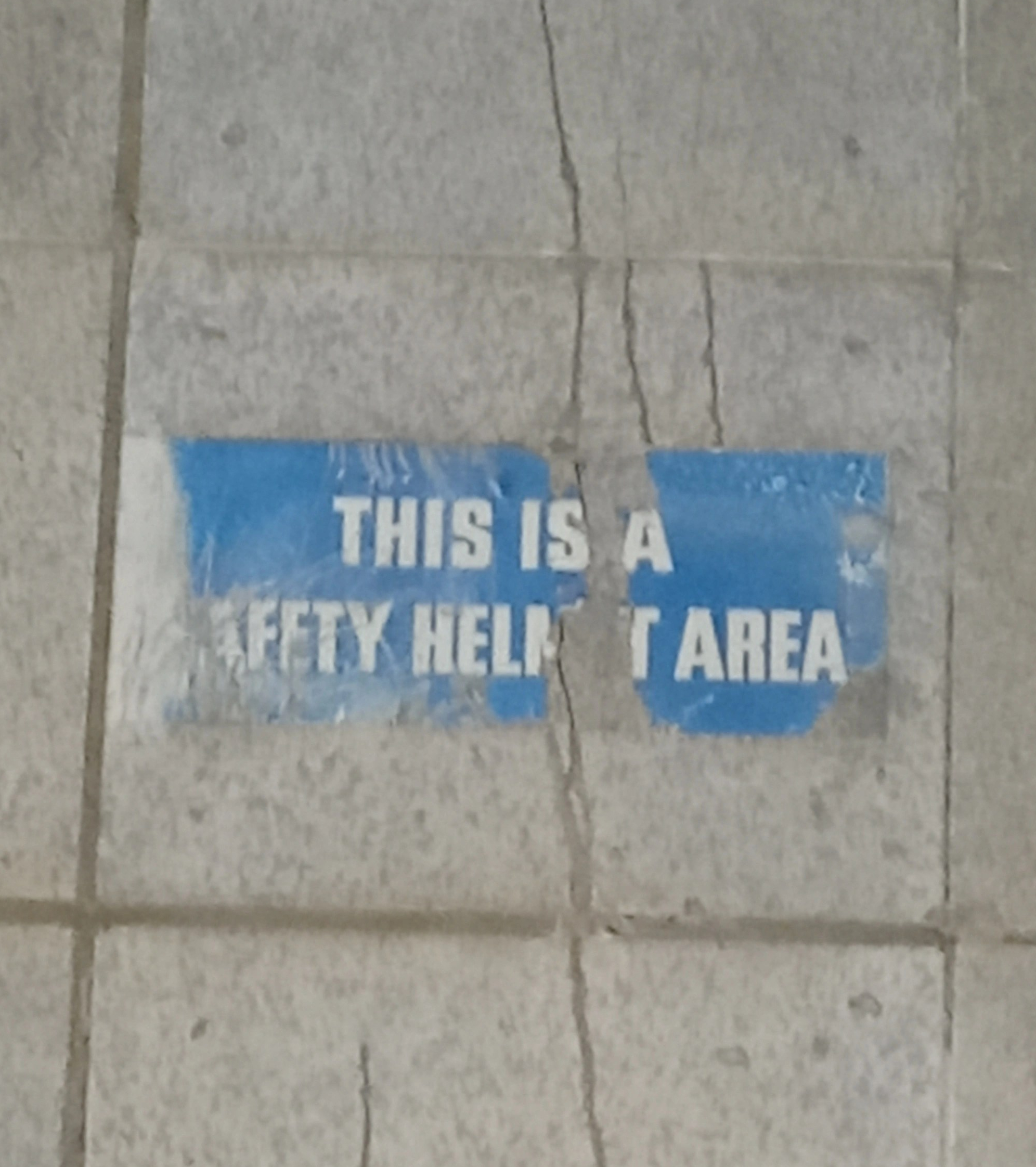
I loved seeing the remnant of this safety helmet sign. When we used to go to the hydro stations with Paco, this would have been termed a “hard hat area.” (Yes, I am just that geeky about these things, as anyone who has heard me going on about the industrial roots of the MASS MoCA complex will know.)
There are, of course, many distinctly modern features. For example, one of the old smokestacks now houses an elevator to take people up to the top to look out over London and the Thames. Not being particular fans of heights, although it is glass encased at the top, we did not go up in Lift 109, so called because the top of the stack is 109 meters from the ground, but it’s there for those with the inclination and pounds to do so.
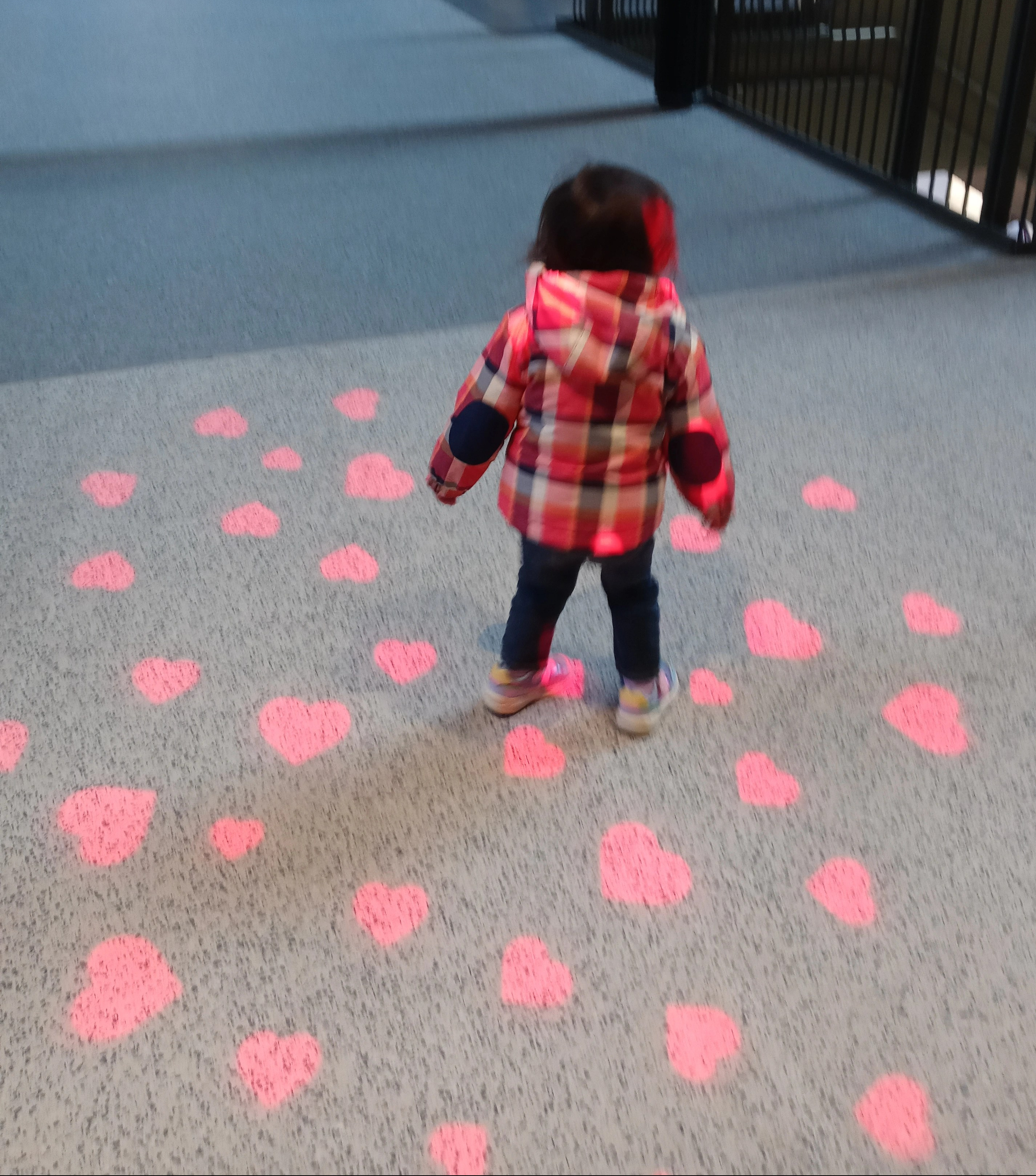
At the moment, there are a number of light installations scattered around the complex. JG was especially taken with these hearts and kept hopping from one to another, while saying “another heart” over and over in an enthusiastic, two-year-old voice. I suppose it’s possible that this was more of a valentine feature than part of the light installations, but it was fun, none the less.
So, Happy Valentine’s Day from London for those celebrating!
So, it’s late afternoon on January 31st and I’m just getting the chance to write my final post for Linda’s Just Jot It January.
Linda’s prompt for today is “write” and my original intent had been to write about the end of Just Jot It January, so two birds with one stone.
I had been trying for the month to prepare my posts a day ahead in order to get them out in the morning, but I didn’t manage it today. I didn’t even check my blog this morning, as I had decided to do some more work on the final layout for my chapbook manuscript, Hearts, to send to Kelsay Books, my publisher.
Of course, I got distracted and wound up sending out a submission of three ekphrastic poems for a contest, which meant writing a more-involved-than-usual cover letter. (I did get some manuscript work done, too.)
I also wound up contributing to a couple of “poetry business” email threads, one for the Grapevine Poets and one for the Boiler House Poets Collective.
I wrote a birthday card and note to a friend – longhand and everything!
And now, finally, this post.
I am happy and relieved to have managed to post every day this month for #JusJoJan. I wrote more “heavy” posts than I intended, but it’s been that kind of month.
I’m not planning to post every day in February, though.
I need to spend some time on other projects and to get ready for a trip to the UK to visit our family there.
Spouse B, daughter T, and I were on our own this Christmas. While we had originally hoped that daughter E, son-in-law L, and granddaughters ABC and JG were going to be able to join us from London, UK, circumstances prevented that, probably a blessing in disguise given the travel disruptions caused by the extreme weather here in the US.
We here in Broome County, New York, were spared the worst of the storm. While it was cold and windy, we didn’t get a lot of snow and ice. Our hearts go out to places that suffered flooding or blizzard conditions. Erie County, about 200 miles to our west, has reported 25 deaths so far from the intense blizzard.
I did change my plan for when I went to church, in deference to the cold. I decided to attend the 4 PM vigil rather than the 10 PM. We had a prelude program from a wonderful brass quintet from Southern Tier Brass. I especially appreciated their rendition of “Lo, How a Rose” which was arranged from the Brahms organ chorale prelude that I learned when I was in college and which has always been a favorite of mine.
I also loved the introduction to the liturgy, which welcomed everyone whatever their state in life. It meant a lot to me to hear such an explicit statement of universality. The word catholic means universal but the Church has often strayed from that concept. I appreciated hearing this all-encompassing welcome at Christmas-time when people who aren’t members are often in attendance while visiting family or friends.
In the evening, B, T, and I watched Miracle on 34th Street, which is celebrating its 75th anniversary this year. T had never seen it and it had been many years since B and I had watched it. It was a sweet way to spend Christmas Eve.
In the morning, we enjoyed cranberry and date nut bread so breakfast, made by B who does a lot of the cooking and baking, especially over the holidays. We opened stockings and gifts. I was especially pleased to receive a 10th generation iPad from B; our current one is 2nd generation, so definitely a step up!
We had a chance to video chat with our London family when it was mid-morning here and mid-afternoon there. The energy of a two- and a five-year-old was palpable, even five time zones away. B and I were also lucky to have phone conversations with our siblings.
When E and T were young, celebrating Christmas was a days-long endeavor. Christmas Day would be spent with my parents who lived nearby. In the following days, my sisters would arrive with their families for a couple of days and then we would travel to B’s parents’ home in Vermont, which usually involved a celebration with his extended family. Days and days of gifts, socializing, and eating.
With just the three of us, we scaled back on the extent of our traditional holiday fare. B did make lasagna for Christmas dinner, using Nana’s recipe. He also made fresh, artisanal bread and sauteed asparagus, followed by tiramisu for dessert. On Christmas Day, we used to have a variety of homemade Christmas cookies for dessert; we would make eight or so types, sometimes supplemented by homemade dried-fruit fruitcake and chocolate fudge. At the moment, we only have two kinds of cookies, pecan puffs from B’s family recipe and cranberry-pistachio biscotti.
Although our celebration was scaled down this year, it felt right, homey and comfortable and mostly low-stress.
I don’t know if we will ever return to a predictable pattern for Christmas celebrations. With all our elder generation now passed on, it’s unlikely that we will have big, extended family gatherings as we were accustomed. Last year, the first Christmas after Paco passed away, we went to London for three weeks over the holidays, just as the first wave of Omicron was cresting. It was complicated.
The pandemic has reinforced the lesson to expect the unexpected and to be open to change. It’s difficult because we often carve certainty and routine. The parlance you often hear is “return to normal.” For me, there is no way for that to happen – for holidays or for much of the rest of life.
So, this year I will be content with a quiet Christmas, having no idea what next year will bring but hoping I will have the grace and support to handle it.
Happy to share another poem from the Silver Birch Press ONE GOOD MEMORY series! Enjoy “Pulling Off Route 79 on a Summer Day” by fellow Grapevine Poet Sharon Ball! Bonus: a cool photo of Sharon and Miss Kitty.
Pulling Off Route 79 on a Summer Day
by Sharon Ball
1.
Watching the white butterfly stop and sit
on a leafy green sunspot, then lift again
flickering on bright air,
propelled up, down, sideways across the road,
flying toward my open window.
Will it flap in or pass on through the trees to the river?
2.
White butterfly floats
Aspens quake against blue sky
Sun-dappled woods keep secrets.
3.
Through the trees, the river moves fast with yesterday’s rain.
I barely hear the water over the whoosh and hum
of coming cars and going trucks.
In between, leaves whisper of gifts as
the white butterfly melts into quiet woods.
Photo by Saturday Sun on Unsplash.
NOTE FROM THE AUTHOR: This poem is the unexpected result of a solo drive through the countryside. At some point, I pulled off the road, rolled down all my car windows, and paid attention to…
At the Vatican on October 4, 2022, the feast day of St. Francis of Assisi, a new film premiered, entitled The Letter.
The Letter in the title refers to Laudato Si’: On Care for our Common Home, Pope Francis’s 2015 papal encyclical which was addressed not only to Catholics around the world but also to all people of good will. Its release in May helped to build momentum for the Paris climate talks that fall that resulted in 196 countries signing onto the landmark agreement on climate change.
Laudato Si’ espouses integral ecology, which involves both care for the earth and care for all people, especially those most vulnerable. The encyclical cites science and various faith traditions to build a framework for fighting climate change and for lifting up those dealing with hunger, poverty, dislocation, water scarcity, and other challenges.
The film’s title has a second meaning, as the first part of the film shows five people around the world receiving a letter from Pope Francis, inviting them to the Vatican to discuss the issues of Laudato Si’ with him. Together, they represent both “the cry of the earth and the cry of the poor.” It is these five people and the communities they represent that form the bulk of the film.
They are: ~ Cacique Dadá, an indigenous leader of the Borarí people from the Maró Indigenous Territory of Brazil, representing indigenous communities ~ Arouna Kandé, a climate refugee from Senegal, representing the impoverished ~ Ridhima Pandey, a teen-aged climate justice activist from India, representing young people who are inheriting a world that has been damaged by prior generations ~ Greg Asner and Robin Martin, a married couple from Hawai’i in the United States, who are both marine biologists studying the impacts of climate change on ocean ecosystems, representing the voice of nature
The stories of their native places are stunningly conveyed by director Nicolas Brown and the team of Off The Fence Originals, in conjunction with The Laudato Si’ Movement. I especially appreciated the segments from the Amazonian rain forest and the Pacific marine environments.
I also appreciated the diversity of age, race, gender, country of origin, and faith portrayed in the film. While Pope Francis and the Vatican officials are, of course, Catholic, we see participants who follow other faiths, including Islam and indigenous traditions. It is a true reflection of the encyclical being addressed to “all people of good will.”
In keeping with that diversity, people in the film speak in their native languages with subtitles and narration available in English, French, Spanish, Italian, and Portuguese. There are also subtitles available for the entire film in many other languages. You may watch the film free of charge at the link in the first paragraph of this post or on the YouTube Originals channel. Details about offering a free screening for groups can be found here.
My hope is that many people around the world will view the film and take action on social and environmental justice issues. We are one human family and we must together care for each other and our common home.
On September 17th, I returned to my hometown, Monroe, Massachusetts, for their bicentennial celebration.
The day began with a presentation from State Representative Paul Mark of a framed copy of the restoration of the original town charter. In his remarks, he noted that, unlike most Massachusetts charters, Monroe’s does not have any mention of an English king. The town was incorporated from parts of other towns and named for President James Monroe, who was president of the United States at the time.
The charter was hung up right away!
When I was growing up there in the 1960s-70s, the town had about 200 residents. In the 2020 census, there were 118 residents, making it the smallest town by population on the mainland of Massachusetts.
The festivities centered around the Town Community Center, which was the school back in my day. (Also, in the days of my father and his siblings, when it was built by the Works Progress Administration in the 1930s.) The building still houses the town offices and library. What had been the classroom for grades 1-4 when I attended is now a community meeting room where many of the indoor activities were housed. The rest of the building is now used as offices by the power company that is the successor to New England Power, for which my father worked for over forty years.
I was able to make some contributions to the memory board and books. I sent some poems and was surprised to find one of them on display with a vintage newspaper photo of me when I graduated from high school.
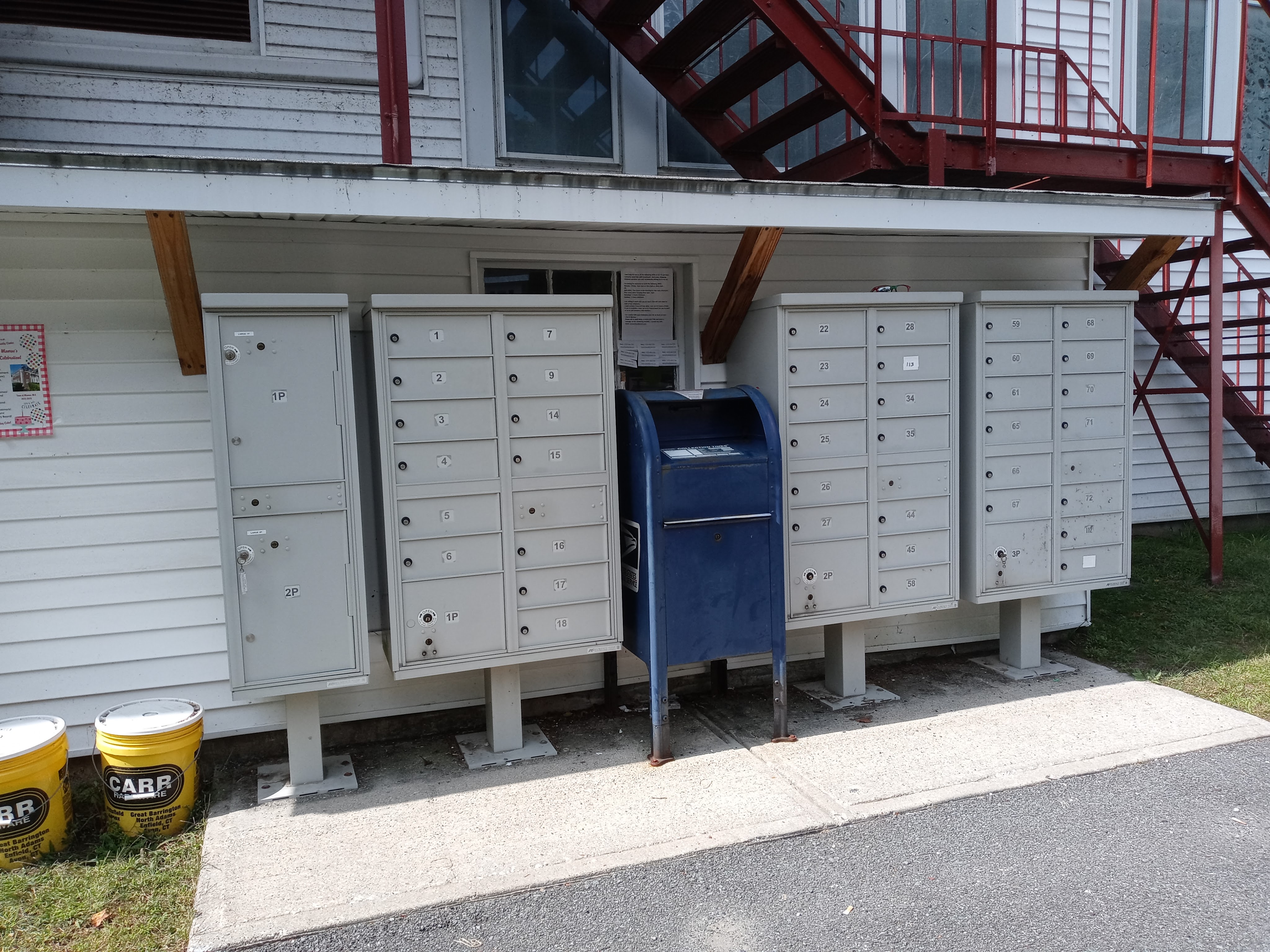
Many of us were feeling nostalgic about the post office. There were two postal employees there to hand-cancel envelopes with a bicentennial commemorative postmark, even though the Monroe Bridge post office closed years ago to be replaced by this:
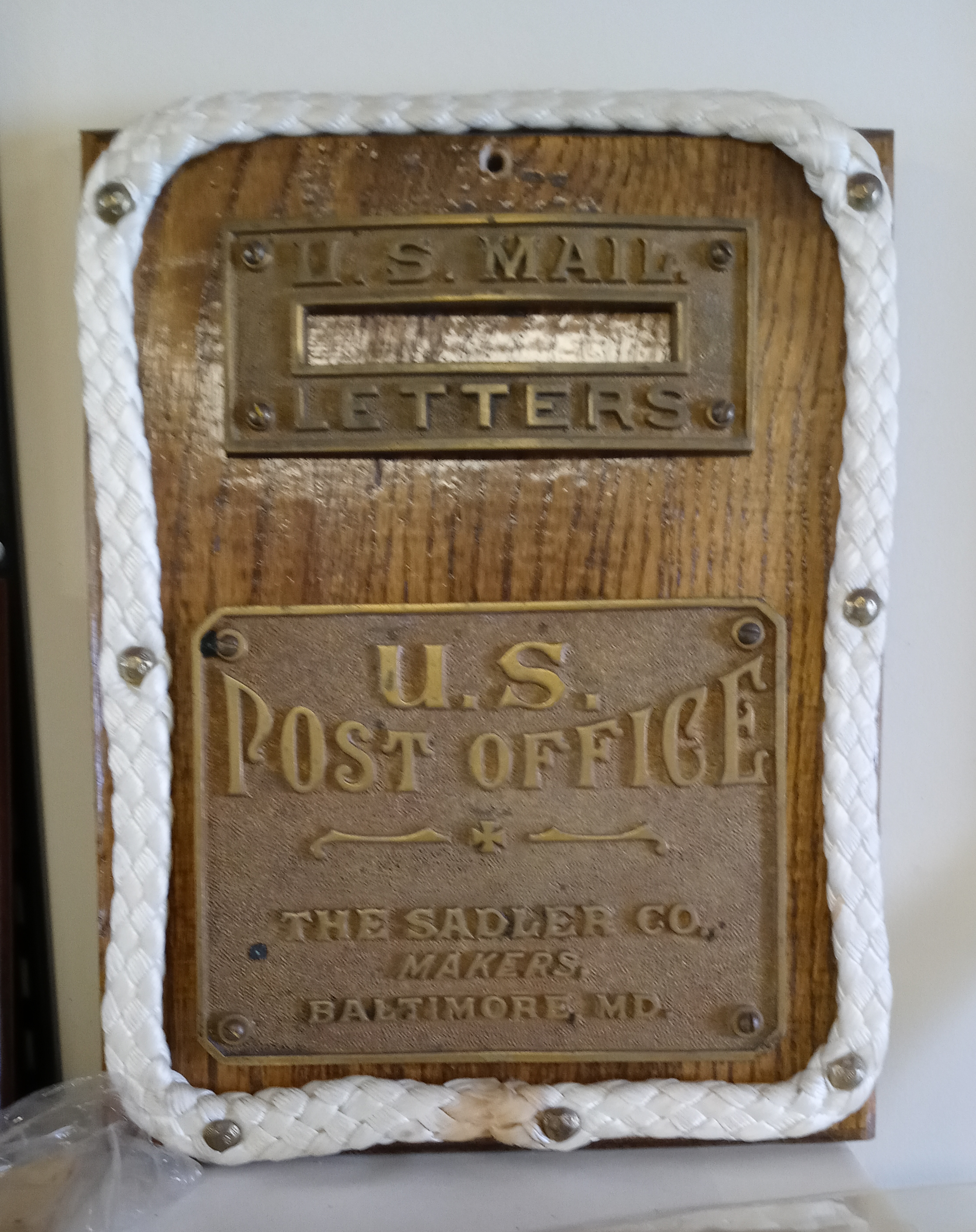
Not nearly as distinctive looking as this mail slot which was salvaged from the old post office and is now in the Monroe Historical Society’s collection.
For an explanation of why it was the Monroe Bridge post office and why I often refer to my hometown as Monroe Bridge, you can read my poem “Monroe Bridge Mail” published by Wilderness House Literary Review here. (It’s the final poem in a set of five.)
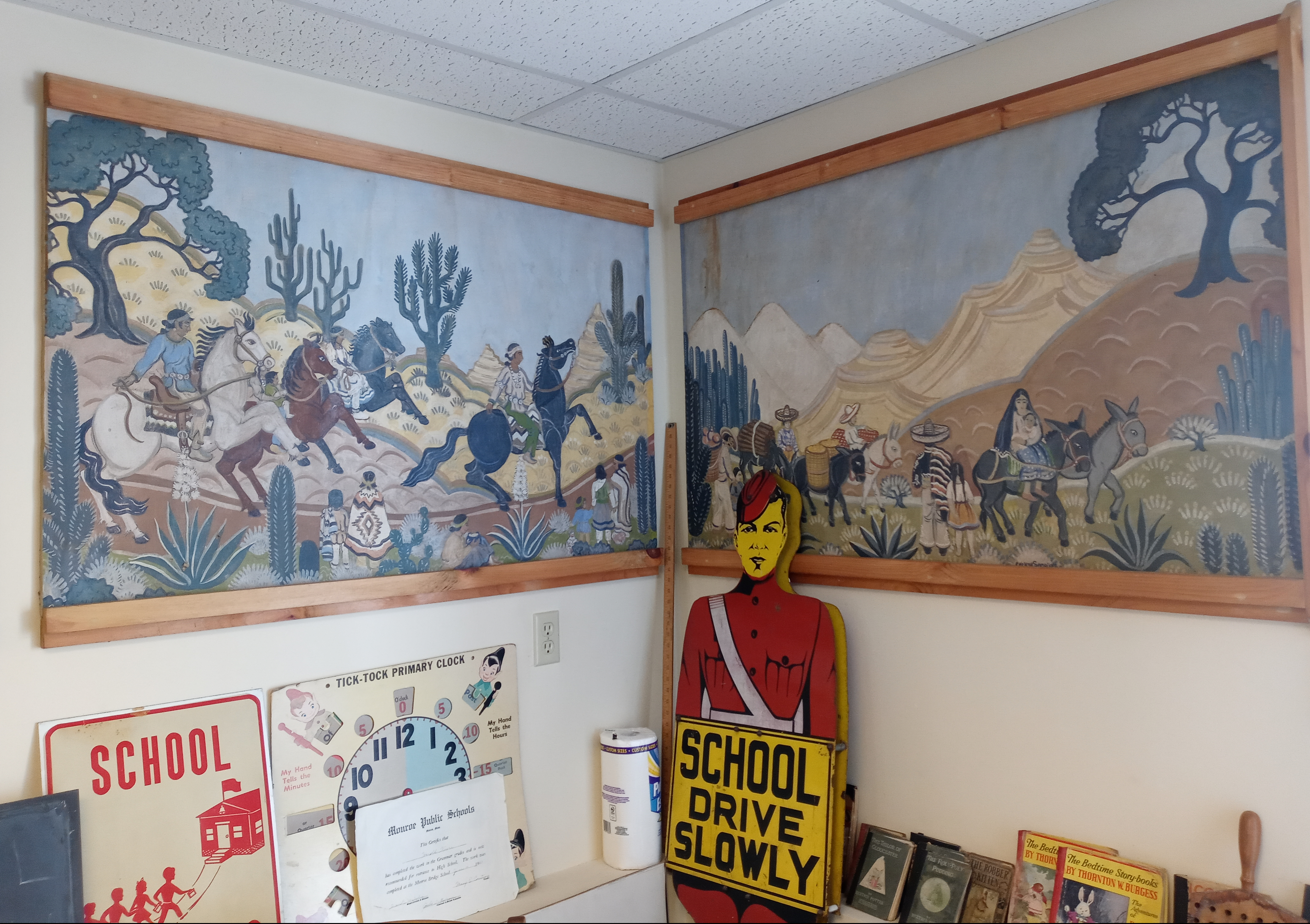
I spent quite a lot of time in the Historical Society, looking at the artifacts and photos. It was nice to see that the murals that had been painted by a WPA artist for our classroom had been moved there:
There was memorabilia from the Town’s sesquicentennial (150th anniversary) which I remembered as a very exciting time when I was in grammar school.
It was fun to get to reminisce with people who had been in town when my family lived there. Some are still residents or folks who have stayed local, while a few, like me, had travelled from further afield. I especially appreciated the time that Lucy spent with me, pointing out family connections among the memorabilia on display or in the Historical Society. I was touched by all the kind words about my parents and the expressions of sympathy on their passing. The celebration was just a few days after the first anniversary of my father’s death; he and my mother were among the founding members of the Monroe Historical Society.
There was Bicentennial swag available! One of my purchases was the Bicentennial History Book. I was honored that my poem “Playground” was chosen to be on the back cover. It reads:
Our WPA-built school housed two classrooms, eight grades, two teachers, twenty-some students, old textbooks, reams of assignments designed to keep us quiet at our desks.
Morning and afternoon recess and the remainder of lunch hour, we jumped off swings, attempted running up the two-story slide, sent the spinning merry-go-round swaying to crash with a satisfying clang into the metal pole from which it hung.
Dodge ball, monkey-in-the-middle, a dozen variations of tag, where the tap of a classmate’s hand thawed you from your frozen state or freed you from jungle-gym-jail.
Jump rope chants “Not last night, but the night before, a lemon and a pickle came a-knockin’ at my door.”
Upper-grade boys against girls in Wiffle ball or kick ball. Despite our skirts, the girls, already becoming young women, usually won. *****
Of course, as promised, there was cake!
It was a great celebration for a little town! Even though I’ve lived out-of-state for forty years now, a part of me is still at home there.
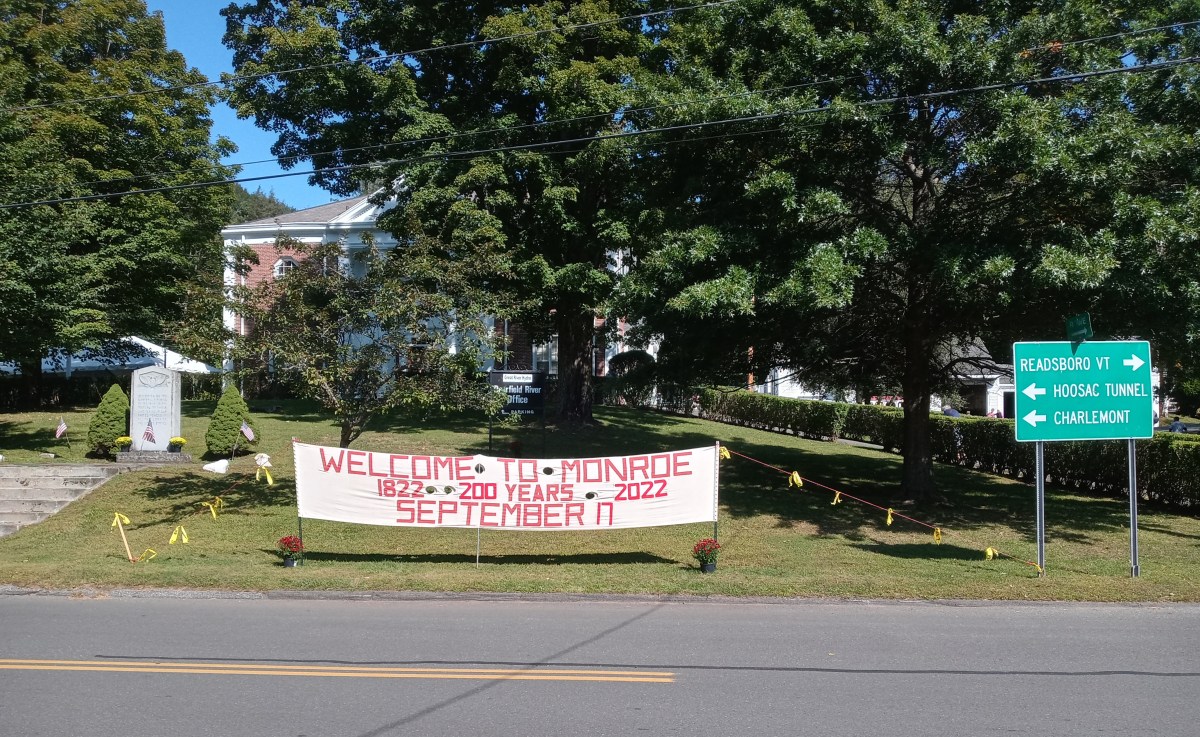
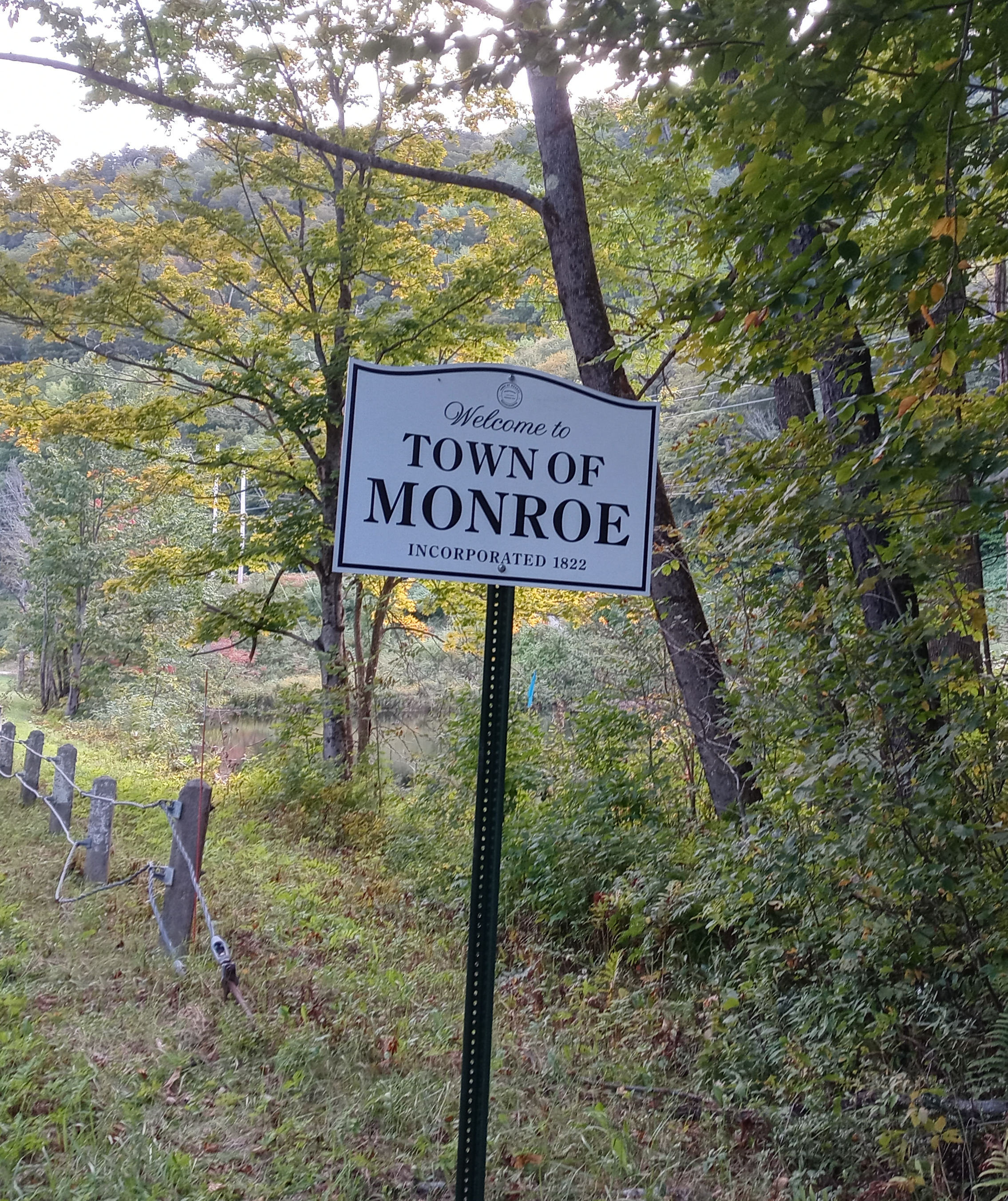
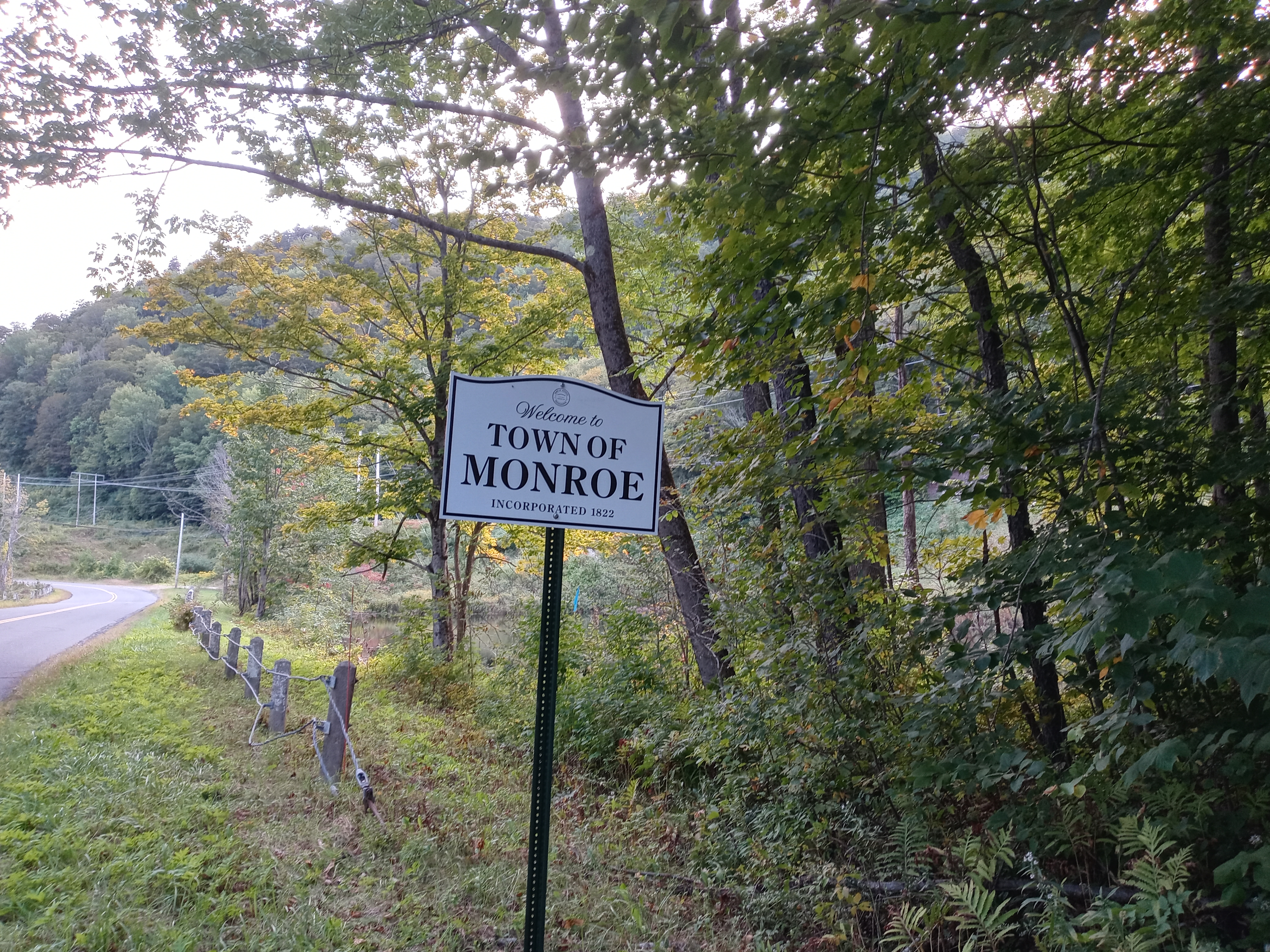
And even if you have never visited, there are now new signs to welcome you. This is the one you will see if you cross the state line from Whitingham, Vermont into Monroe.
On Saturday, September 17, 2022, I went back to my hometown, Monroe, Massachusetts, for their bicentennial celebration. There will eventually be a proper post about the fun and meaningful day I had there but I wanted to give a little shout-out today.
These welcome signs are new. This is the one at the Massachusetts/Vermont state line about half a mile from where our house was back in the day.
When we were visiting in London last Christmas, daughter E gave us a calendar featuring photos of granddaughters ABC and JG. Most often, the photos were taken in that month the prior year, so turning the page for August brought a four generation photo with Paco from their visit last year.
The timing of that visit was a blessing, existing in the tiny window of their being able to get travel permission from the US and UK and before Paco’s final steep decline that led to his death in September.
I’ve been struggling this summer with the memories from last year, many of which have been difficult.
It’s good to have this photo with smiles that I can feel in my heart, even if my eyes fill with tears.
It’s still going on, even though most people here in the US are ignoring it. We crossed the one million death threshold in mid-May, although it is likely that the true number is higher as not all deaths caused by COVID are listed as such.
The good news in the US is that both the Moderna and Pfizer/BioNTech vaccines have been approved for children beginning at six months. It remains to be seen how many parents/caregivers decide to vaccinate their babies/toddlers/preschoolers. If it were me, I’d be first in line, but I expect we won’t see very high numbers. Only about 30% of 5-11-year-olds are fully vaccinated, despite availability since November, 2021. This boggles my mind, given that these same parents have vaccinated their children against a host of other serious diseases, yet have chosen to leave them unprotected against a disease that has sickened and killed so many here and around the world. It’s true that the vaccines are not a guarantee against infection but they prevent some infections and usually keep those that do occur from causing hospitalizations or deaths. From a public health standpoint, the more people who are vaccinated, the more likely it is that the pandemic will end and COVID-19 becomes endemic.
We are still far from that point, especially as new variants and subvariants are better at evading immunity, whether from vaccination or infection. The US right now is still dealing with Omicron subvariants. BA.2.12.1 is still responsible for the majority of cases here at about 56% but BA.4 and BA.5 are up to 35% of cases which is a large increase and a sign that they may out-compete the already wildly contagious BA.2.12.1.
Our county, which has been struggling with high infection rates for months, mostly due to BA.2 sub-variants that originated in central New York before causing misery more widely, is finally back in the “medium” risk category according to the CDC. It’s a bit discouraging in that Broome and our neighbor Tioga are the only two counties in all of upstate New York that haven’t dropped down into the “low” category. Maybe soon. Meanwhile, I’m continuing to avoid crowds and mask in public places like stores and church.
As you may recall, spouse B and I left the Pfizer/BioNTech COVID vaccine trial this spring in order to receive a fourth shot to boost our immunity before we travelled, but daughter T is still participating. Next month will be the one-year anniversary of her third dose, so she will be having an in-person visit for blood tests and such.
Pfizer and Moderna have both developed newer forms of their vaccines to better battle Omicron. The Food and Drug Administration scientists are meeting today to begin consideration of a new round of booster shots this fall to try to increase protection. It would be great if we can do so. I will definitely get another booster if it is offered, as I am still trying to keep from getting infected because I don’t want to be sick, especially with long COVID.
In the UK, where our daughter E and her family live, BA.4 and 5 are causing another spike in cases. Last week, it is estimated that 1 in 40 people in England and 1 in 20 in Scotland were currently infected. While the UK was initially slow to immunize children, earlier this year they began routine availability for COVID vaccination at age five. ABC’s recent fifth birthday came with the opportunity for her first Pfizer dose, for which we are grateful in the midst of the current wave. While it remains true that children have much lower rates of severe illness than adults, by not immunizing them you are allowing a large pool of little people to congregate, pass around germs, and spread them to their homes and communities. It’s one thing when we are talking about colds or even flu, but COVID-19 is a much more serious public health threat.
As usual, I renew my plea. Vaccinate if you are eligible and have access. Pay attention to infection rates in your area. Mask in indoor public places unless transmission rates are low. Avoid large crowds. Increase ventilation. Stay home if you are sick. Test and talk to your health care provider if you have symptoms. The SARS-CoV-2 virus has already caused immense suffering. Do everything you can to keep it from affecting you, your loved ones, and your community.
Spouse B and I returned yesterday from a weekend celebrating our 40th wedding anniversary at Geneva on the Lake. We had never been there before but had received a gift certificate for the inn as an expression of gratitude from my sisters after our father’s death for the years of caretaking for Nana and Paco as the “local daughter.”
Geneva on the Lake is located in the Finger Lakes region of central New York State, on the north end of Seneca Lake, about a two-and-a-quarter hour scenic drive from our home, featuring views of farms, vineyards, forested hills, and the entire western side of the lake.
After delays in our getaway due to pandemic surges, weather conditions, and our trips to the UK to visit family, we decided to go for the weekend of our 40th wedding anniversary. The gift certificate allowed us to splurge on the Loft Suite in the original 1910 portion of the villa, directly overlooking the gardens and Seneca Lake. In this photo, our suite is located on the third floor above the central doors, where you see three half-moon windows and three rectangular windows above.
Here you can see the windows from the inside and why it is called the Loft Suite:
All the furniture in the suite, including in the adjoining bedroom, is Stickley, which is a venerable upstate New York mainstay, still headquartered in Manlius, near Syracuse. I especially enjoyed the loft space for reading and looking out at the lake.
There was also a full kitchen and a small dining table, although we didn’t have much use for them as we ate breakfasts and dinners at the Inn. Our first evening there was warm, so we ate under the canopy on the terrace but the other meals were in the Lancellotti dining rooms. Because we like to eat (unfashionably) early, we were able to sit near the windows and enjoy our food and the view in relative – and unmasked – quiet.
When staff asked if we were there celebrating, we told them it was our 40th anniversary. They would offer congratulations, followed on a couple of occasions by the question, “What’s your secret?” Like the college reunion question about what I’d been doing for the last forty years, I didn’t have a ready answer. If I had been able to think quickly enough, I might have echoed Paco’s line about taking it one day at a time, although I don’t think that is the answer.
Like my answer to most questions, it’s complicated. First, I don’t think there is a secret to being married for forty years. It helps to find the right person when you are young and to manage not to develop a grave illness that threatens longevity. Of course, there needs to be love and respect between the spouses, but that is not a secret.
I think, for B and me, an important factor is that we met and became friends early in high school. Because we experienced adolescence together, we managed to influence, complement, and support each other as we grew into adulthood. I don’t think I would be the same person that I am now without B’s love, encouragement, and commitment over the years.
B and I share our rural roots and were both raised by long-married parents; my parents, known here as Nana and Paco, celebrated their 65th anniversary not long before her death in 2019. We both are of a serious temperament with wide-ranging interests and the inclination to dig deeply into topics. However, our central interests differ. I spend much more time on the arts, especially music, writing, and poetry, and on spiritual/philosophical issues, which influence my analysis on politics and public policy. B is much more involved with technology and quantitative/analytical issues with additional interests in history and science fiction/fantasy. We are both liberal-artsy enough, though, to be able to understand and approach different topics and problems from multiple vectors. This helps when we have to make decisions, whether it’s nuts and blots plans for our home or complex care-giving situations. We have faced a greater than average number of medical problems across our families’generations. Many marriages succumb to these kinds of stressors, but B and I have been able to weather them with our ability to think and talk things through and our commitment to dedicate ourselves to doing the best we are able. Our mantra has been “no regrets” and, while we certainly do have instances where outcomes were not what we had hoped, we are content that we were able to give comfort and care to the best of our abilities.
Sunday was also Father’s Day, our first without Paco and B’s first as being part of the eldest generation in the family. I admit that our anniversary was a good distraction for me to keep me from dwelling too much on being without my father on Father’s Day for the first time. I hope that B will be granted a similarly long stint as a grandparent and, if ABC and/or JG choose, the opportunity to become a great-grandfather someday. B loves being a grandpa, although the distance factor does present complications. We are hoping, though, that when B retires, we may be able to spend some longer periods of time in the UK.
We returned home from Geneva in time to celebrate Father’s Day and our anniversary with daughter T, who had chosen cards for the occasion. When we decorate envelopes for hand-delivered greeting cards, we often draw a personalized “stamp” in the corner. On our anniversary card, T had drawn a shining ruby. As I don’t often wear jewelry, I had neglected to look up that the 40th anniversary is commemorated with rubies.
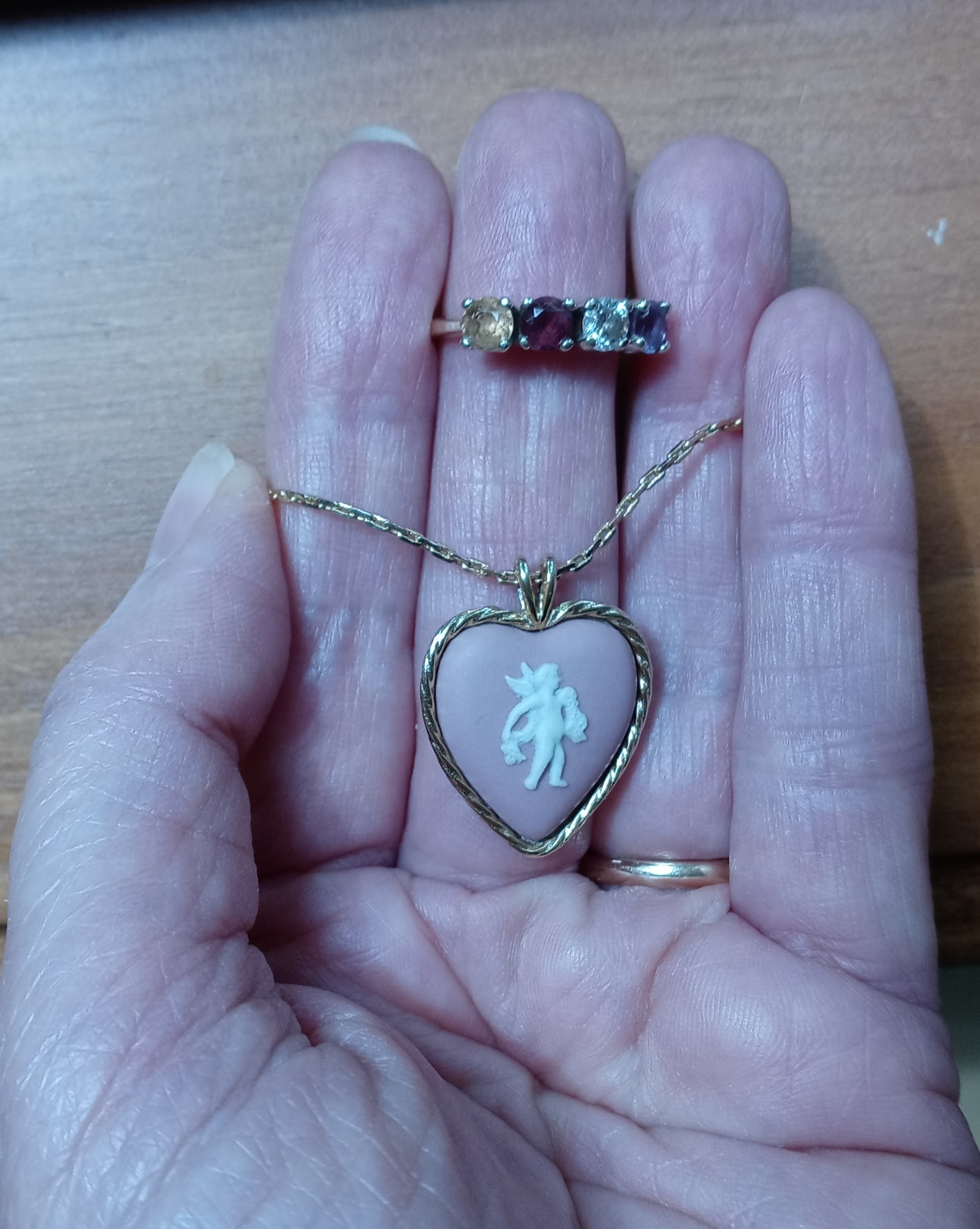
I had, however, worn two significant pieces of jewelry for the weekend.
The ring is a family birthstone ring with topaz for B, rose zircon for me, the diamond that was originally in my engagement ring for E, and alexandrite for T. The necklace is by Wedgwood and was B’s wedding gift to me.
In the photo, you can also see my gold wedding band, which I always wear. It’s a simple gold band and has been resized once but still bears its original inscription of our name and wedding date on the inside.





 Pulling Off Route 79 on a Summer Day









 Joanne Corey