No to CO2 drilling in New York!

One of the things that has been occupying me over these last weeks is the unwelcome and unexpected need to return to the battle against unconventional gas drilling in my home region, New York’s Southern Tier (central NY along the border with Pennsylvania).

I was active with the coalition that successfully advocated for a ban on high-volume hydraulic fracturing in New York, which was first regulatory/executive in Dec. 2014 and made legislative in 2021.

In late summer/fall of 2023, a newly-formed, Texas-based company called Southern Tier CO2 to Clean Energy Solutions, Southern Tier Solutions or STS for short, began approaching landowners in Broome, Tioga, and Chemung counties with lease offers to use supercritical carbon dioxide to extract methane from the Marcellus and Utica shale formations thousands of feet under their land, claiming that it would also sequester the carbon. The scheme would involve thousands of miles of new CO2 and methane pipelines, plus ten or so new methane-burning power plants, which would burn the methane to produce carbon dioxide to use to extract more methane.

Mind you, this has never been done at scale anywhere in the world and does not have any solid scientific backing. The very real negative impacts of high-volume hydrofracking would be compounded by the dangers of carbon dioxide pipelines and injection, all at a time when New York State is implementing its landmark Climate Leadership and Community Protection Act to move us away from fossil fuels and toward renewable energy powering our lives efficiently.

When news of STS’s plans came to light, my New York State legislators, Assemblymember Donna Lupardo and Senator Lea Webb, began asking the Department of Environmental Conservation questions. I admit that I was alternating between fear and disbelief that the hard-won ban might be in jeopardy because it was predicated on the volume of water used and STS’s proposal plans to use supercritical carbon dioxide instead of water.

Fortunately, the coalition that had fought for years to win the hydrofracking ban quickly reconstituted and got to work. A coalition letter from over 90 organizations went out in December. Legislators got to work on legislation to add carbon dioxide to the existing ban with Dr. Anna Kelles as sponsor in the Assembly with Donna Lupardo as a prime co-sponsor and Lea Webb as sponsor in the Senate.

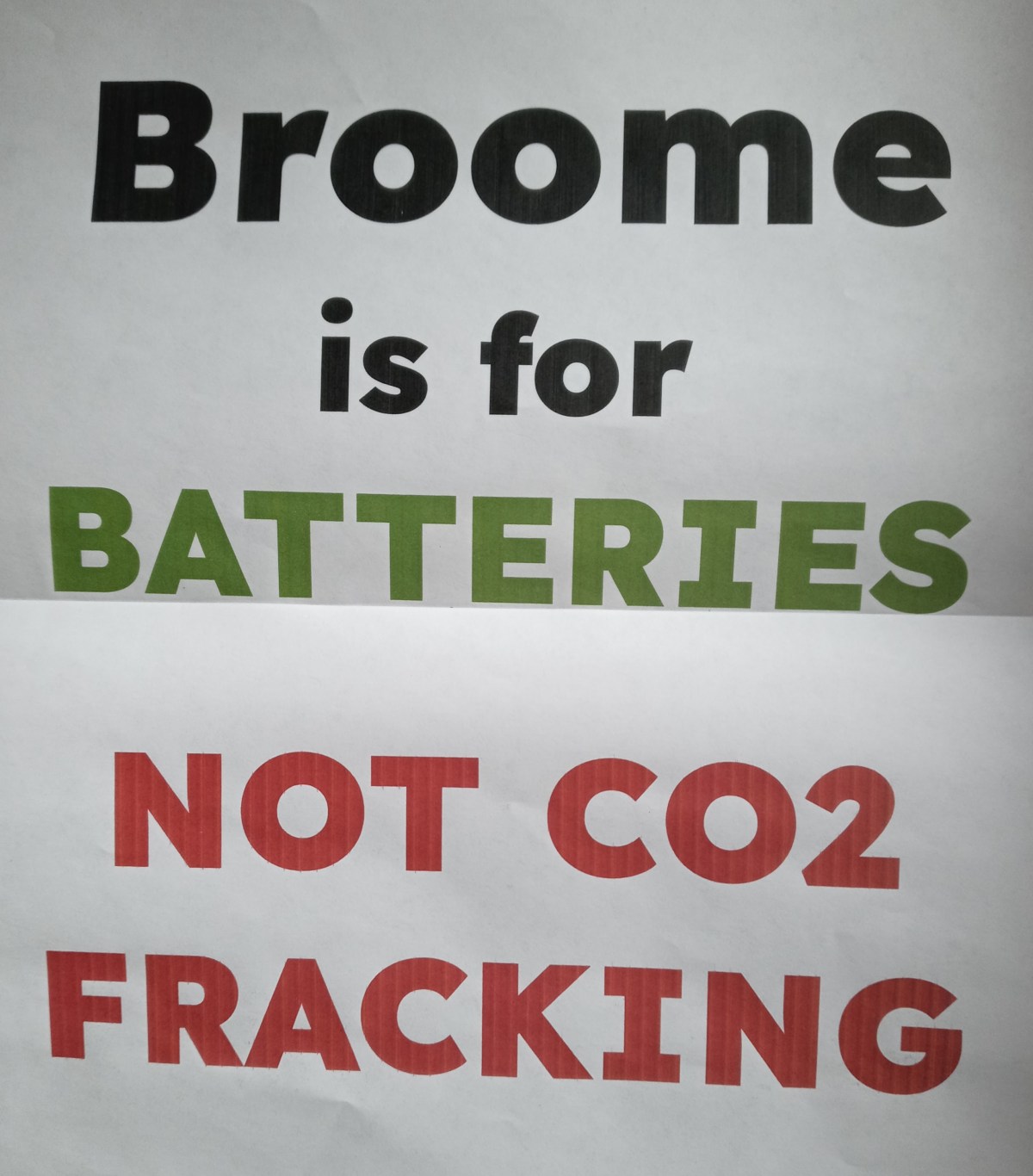
On March 5th, the coalition held a rally/lobby day in Albany. We had great speakers at the rally, including legislators, scientists, and leaders of organizations. I went local with my sign, emphasizing that the Broome County (Binghamton) area is part of the clean energy future as the center of a national technology hub for battery storage through the New Energy New York coalition and neither needs nor wants to be tied to dying fossil fuels. This was my first experience with in-person rallying and lobbying at the New York State Capitol. I was overwhelmed by the noise and busy-ness of it all but grateful to have been able to do my small part in the effort.

I’m thrilled to report that, on March 12th, the Assembly passed the bill with a vote of 97-50 and. on March 20th, the Senate followed with a vote of 45-17. Now, we are moving into the final phase, asking Governor Hochul to sign the bill quickly.

I’m shocked that the coalition was able to get this to move so quickly in Albany. As a Southern Tier resident, I’m immensely grateful to have support from around the state. In the original fight against hydrofracking, there were some very loud voices that were willing to use the Southern Tier as a sacrifice zone to get cheaper methane for their own use; this time, with the CLCPA in place, we didn’t encounter that sentiment as much. I’m also especially grateful to the Third Act Upstate NY working group, who jumped in as soon as I raised the alarm. Third Act is too new an organization to have been around for the original fracking battles but many members have extensive experience with climate activism and organizing and know how to get the word out.

While it seems that this is a local issue of a few counties in New York, the carbon dioxide drilling/sequestration scheme has global implications. Like plastics, it is an attempt by the fossil fuel industry to keep the world dependent on fossil fuels for decades to come, in defiance of the science that demonstrates the need to reduce atmospheric greenhouse gases as quickly as possible to keep the planet livable.

Part of the price to get fossil-fuel bro Joe Manchin’s vote in the US Senate on climate legislation was to include massive subsidies for carbon sequestration. It’s those subsidies that are behind STS’s proposed scheme to profit from the methane in the Marcellus and Utica shales, which is not economically viable to produce on its own. Using carbon dioxide from burning fossil fuels to extract even more fossil fuels is also inherently deleterious to environmental health and the climate. While there may be some instances where industrial carbon emissions can be collected and sequestered, the geology of the Southern Tier would not seem to support long-term sequestration. Sequestration would also be near-impossible in areas with a history of oil and gas wells because there would be too many pathways for injected carbon dioxide to escape.

My hope is that the example of New York banning this extraction/sequestration scheme will help other jurisdictions around the world see through the fossil fuels industry’s increasingly desperate attempts to keep the world burning their dirty products, even with the effects of climate change already causing damage and misery on a global scale.

Watch for news of these kinds of proposals near you. Don’t fall for the lies of the fossil fuel industry. Follow the science. Advocate for clean, renewable energy. Let elected officials know that we need and want protection from pollution and climate change. With so much damage already having been done, we need to act decisively now.

Together, we can move in a positive direction, as we are here in New York.

long COVID research summary

I realize I’ve done A LOT of COVID posts this month, but I had to share this post from Dr. Katelyn Jetelina, writing as “Your Local Epidemiologist.” She gathers together the major research advances in understanding long COVID from 2023, with lots of links to the original research.

One of the main takeaways, which I included in this post earlier in the week, is that vaccines help cut down on long COVID cases, with more doses contributing to lower risks.

Dr. Jetelina also suggests subscribing to The Sick Times newsletter, which is dedicated to sharing the latest information about long COVID weekly.

I’m grateful that the rate of long COVID has declined from early in the pandemic, but it is still affecting millions, some new cases and some months or years old. It’s important to learn more about it so treatments can be developed for long COVID and other post-infection syndromes.
*****
Join us for Linda’s Just Jot It January! You can use provided prompts or post whatever you like, even multiple posts about COVID. (Okay, that’s just me,) Find out more here: https://lindaghill.com/2024/01/19/daily-prompt-jusjojan-the-19th-2024/

JN.1

It’s been four years since the first cases of COVID-19 were confirmed in the US but it’s still a major health issue. While vaccines, treatments, and preventative measures have made the current situation less severe than the initial onslaught of SARS-CoV-2, people are still getting sick, with some needing to be hospitalized and some, unfortunately, succumbing to the disease, including the person I referenced in this post. In the week of Dec. 31, 2023-January 6, 2024, COVID caused 4% of all deaths in the United States.

The virus continues to mutate. The current strain that is dominant in the United States and globally is JN.1, which is related to the BA.2.86 variant of Omicron. The good news is that the most recent vaccine, which is based on the related XBB lineage, is a good match for JN.1, so the vaccine significantly reduces the risk of severe symptoms, hospitalization, and death while offering some protection against infection. The bad news is that, in the United States, only about 8% of children and 19% of adults are estimated to have received the newest vaccine, contributing to a surge of cases, amplified by holiday travel and gatherings.

More good vaccine news. This large study from Sweden concludes that vaccination reduces the risk of developing long COVID and that additional vaccine doses reduce risk even more. As someone who has particular concerns about long COVID, I appreciate that these studies are continuing to increase our understanding.

Another recent study shows that the Omicron variants don’t cause peak viral loads until day 3-4, much later than the earlier strains of the virus. The practical implication of this is that at-home COVID tests may not pick up a positive reading until several days into the illness, during which time the person could be infecting others. It also has implications for prescribing anti-virals, which need to begin within the first five days of symptoms to be effective. For me, this is a reminder to mask around other people whenever I have symptoms, as an early negative test might not be accurate.

A study published just a few days ago seems to put some science behind what we have all experienced, that SARS-CoV-2 doesn’t have a “season” in the way that some other viruses, like influenza, do. Changes in temperature and humidity don’t appear to have significant influence in transmission. This seems to go along with what we have experienced in the United States, with major waves happening in different seasons of the year. We’ve had waves in the heat of summer as well as the cold of winter. This suggests that our current winter wave is due more to low vaccination rates and holiday travel and gatherings than to the fact that it is winter. It also highlights the importance of increasing ventilation and using masks in crowded indoor spaces, as both summer heat and winter cold tend to drive people to gather indoors.

Four years in, I’ve written a lot of COVID-19 posts. From my days as part of the Pfizer/BioNTech vaccine trials through the present, I’ve always tried to give the most updated information and public health guidance available. It’s frustrating that there is less information from the Centers for Disease Control and Prevention than when the state of emergency was still in effect but some useful recent data can be found here. A lot of the information in this post came to my attention through this post from Dr. Katelyn Jetelina, writing as “Your Local Epidemiologist” and this post from Those Nerdy Girls.

Through all these challenges, especially when spouse B had the first case of COVID in our house in November, I’ve managed to avoid infection, unless I had a totally asymptomatic case at some point. I use my research to make decisions about vaccination, masking, crowd avoidance, etc. that are right for me and my family. I don’t think that advocating for health measures ought to be seen as controversial or political. There are, though, forces in the US that have warped disease prevention into a political test. It’s very sad that Republicans are more likely to die from COVID than non-Republicans. Please, don’t put your health and the health of your family and neighbors at risk over politics. COVID-19 is still out there. Take care of your health and your loved ones.
*****
Join us for Linda’s Just Jot It January! Find out more here: https://lindaghill.com/2024/01/15/daily-prompt-jusjojan-the-15th-2024/

Energy, exercise, mitochondria, long COVID, ME/CFS, etc.

I almost started to cry when I heard this piece on National Public Radio’s Morning Edition. (The audio clip is at the link, as well as a written transcript which may offer a bit more information than the audio in addition to links to the studies cited and to people providing commentary.)

The piece discusses that people with long COVID have physical changes in their tissues that showed cause for their exhaustion or “post-exertional malaise.” The mitochondria in the muscle cells were not functioning properly, so the muscles could not get the oxygen and energy they needed. It appears that this mechanism is also at work in people diagnosed with ME/CFS and other similar, poorly understood syndromes that exhibit these symptoms.

A member of my family was diagnosed with ME/CFS, then called fibromyalgia/chronic fatigue syndrome in the United States, as a young adult, although she had been having symptoms since early adolescence. She was told that she needed to exercise to build her strength, which was common advice at the time but which proved to be detrimental to her. If she tried to push herself physically at all, she would wind up in so much pain and with so much fatigue that she could barely move for a week or more. As I was listening to the radio piece, I was thinking back to those days, when she was so debilitated that we would strategize when or if she could join the family from her upstairs bedroom because she could only manage the fourteen stairs between the levels once a day, at most.

What made a terrible situation worse was that the doctors would think she “wasn’t trying to get better,” essentially blaming her for her condition when the root of the problem was their lack of understanding of ME/CFS. Effort or mental attitude is not going to repair one’s mitochondria.

I appreciate that research money going to study long COVID is also increasing understanding of ME/CFS and other conditions with similar symptoms. (You can read some of my prior posts referencing long COVID and its commonalities with ME/CFS here and here.) I’m hoping that increased understanding will bring more effective treatments and, at least, an end to blaming patients for “not trying hard enough” to get better.

Compassion is needed in these situations, not judgmentalism.

Compassion is always needed. 
*****
Join us for Linda’s Just Jot It January! Find out more here: https://lindaghill.com/2024/01/12/daily-prompt-jusjojan-the-12th-2024/

a change in the weather

We went from having a winter storm warning over the weekend to having flash flood and high wind warnings today as we have a rainstorm with above freezing temperatures.

The increasing volatility of weather, including extreme weather, is sometimes called “weather weirding” and is evidence of climate change. It’s occurring everywhere in the world and is most pronounced in the Arctic and Antarctic regions. While the rising global temperatures don’t cause particular weather systems, they do turbocharge them.

World leaders in government and business, take action now! Believe the scientists, not the greenwashing of fossil fuel companies.
*****
Join us for Linda’s Just Jot It January! Find out more here: https://lindaghill.com/2024/01/09/daily-prompt-jusjojan-the-9th-2024/

One-Liner Wednesday: a sobering reminder

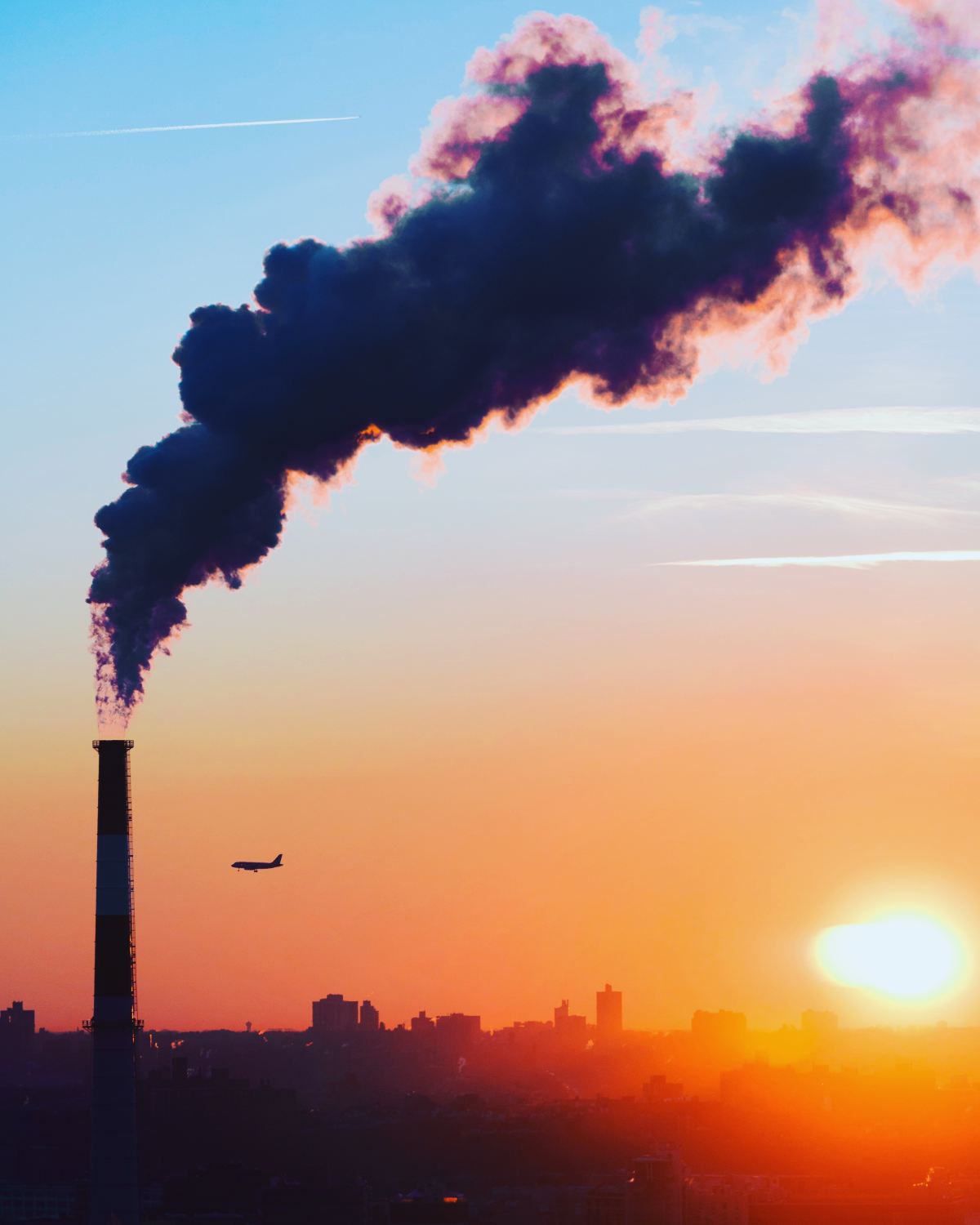
So, bottom line: when you burn fossil fuel you produce particulates which lodge in lungs and kill you (one death in five on the planet comes from breathing the byproducts of fossil fuel combustion), and when you burn fossil fuel you produce carbon, which lodges in the atmosphere, driving heatwaves and floods that kill you.

Bill McKibben

Feature photo by Thijs Stoop on Unsplash

Join us for Linda’s One-Liner Wednesdays! Find out more here: https://lindaghill.com/2023/10/25/one-liner-wednesday-pumpkinferno/

help from Two Nerdy Girls

This past Sunday, I couldn’t make mass at my usual parish, so I attended another Catholic church in the area which shall remain nameless.

I was dismayed that the homily veered into anti-trans pseudo-science which I will not recount so as not to spread further misinformation. I was upset, though, that I had no viable way to counteract this hurtful message. I hoped that there were no members of the LGBTQIA+ community in attendance, although, statistically, it’s likely.

Later in the week, I ran across this Two Nerdy Girls post, entitled “What does the science say about gender identity?” I learned a lot from it and thought it was a good summary of the topic from two public health experts which included links to the underlying scientific findings.

I was able to find a contact form for the church I had attended and sent the link to the homilist. I don’t know if he will read it – or believe it, if he does – but, at least, I tried.

Even if it is too little, too late.

SoCS: rocks

When I was a child, I collected rocks in a shoe box. Maybe “collected” is too strong a word as it usually denotes some kind of organization or classification that was not the case. I just picked up rocks that I thought were interesting or pretty for their color or shape.

Rocks were part of every day life – the stepping stones in the brook that we used to get across, the huge boulders under the high lines across from the house, the stones in the yard, the pea-stones along the side of the macadam road.

We had stone samples with garnets in them from the excavation of the underground powerhouse carved out of the mountain for Bear Swamp, a pumped storage power plant that was part of the hydro system that my father oversaw as superintendent of what was then called New England Power. (The plant is still operating over fifty years later, although under another name and company.)

I loved earth science when I took it in high school, so much so that I took a few geology courses when I was in college.

I do still have a few special rocks, including some that have been carved or inscribed with special words. I love their ability to help me feel grounded.

We all come from the earth, after all…
*****
Linda’s prompt for Stream of Consciousness Saturday this week is “rock.” Join us! Find out more here: https://lindaghill.com/2023/06/30/the-friday-reminder-and-prompt-for-socs-july-1-2023/

What comes after emergency?

As someone who participated in a COVID vaccine clinical trial, who has other vulnerable people in my life, and who tries to be a diligent and responsible community member, I’ve been following the science, public health information, and news about the pandemic over these last, long 3.5 years. I’ve done so many blog posts about it, I’ve lost count.

As you may know, the World Health Organization and the United States are winding down their public health emergency declarations.

This does not mean, though, that the pandemic itself has ended. COVID-19 is still widespread across the world and hundreds die every day as a result. There is still the potential for new variants and COVID is not yet seasonal, like influenza. Eventually, COVID will become endemic, as the flu is, but we aren’t there yet.

While some US programs, such as tracking hospitalization rates and wastewater testing, will continue, others will end. I will miss the COVID maps and risk ratings that the CDC has been providing. Besides the overall community risk assessment, the transmission rate maps were important to me in deciding how much public masking I needed to do or whether large, indoor gatherings were advisable at all. It’s true that, with so many COVID cases discovered through home testing and never officially recorded, the statistics are not as comprehensive as they were during the months of testing centers, but, for example, it’s helpful for me to know that my county has a moderate transmission rate but the county to our east is currently at the highest transmission rate level, two notches higher than here. Having that information could inform a decision between using a drive-through or dining in on my way through the county, as well as alerting me that the higher infection levels could spread in my direction. After Thursday, that information will not be readily available to me.

I’ll still follow the science and public health advice as best I can and will get my next booster when recommended. I’ll test at home if I have symptoms and avoid being in public when I’m sick with anything, COVID or not. I’ll keep a supply of KF94 masks in my size nearby for high-risk situations that may arise. I’ll try to do all the things we should be doing all the time, like eating well, getting enough rest, and practicing good hygiene.

I still, though, don’t want to get COVID if I can help it. To the best of my knowledge, I’ve never been infected, although I could have had an asymptomatic case at some point. I know very few people who are in that category these days.

Will the end of the emergency declarations and the resulting decline in data be a factor in my eventually contracting COVID?

Impossible to predict, but fingers crossed.

COVID-19 origin stories

A leak of a “low confidence” assessment from the United States Department of Energy that COVID-19 originated from a lab leak in China has set off another round of upset.

The base problem is that no one has access to all the data to come to a definitive conclusion and likely never will.

Most epidemiologists, researchers, and US government departments think that the most likely origin is from markets in Wuhan that dealt with wild animals that harbored the virus which then jumped to people. This article in Science is representative of that opinion. The animal to human route is a common mechanism which we have seen with diseases such as ebola and SARS-CoV-1.

Rather than arguing about lab leaks, we should put our energies toward strategies that will help to avoid or contain future illnesses. Yes to tightening controls at laboratories doing research on pathogens. Yes to limiting exposure to wild animals that can carry diseases to humans. Yes to rapid response and open sharing of information about emerging diseases.

No to wild speculation that is not grounded in fact. For example, there is no evidence that SARS-CoV-2 was lab-engineered rather than naturally occurring. It is irresponsible to share disproven theories.

As I know from public health statistics and recent cases among friends, COVID-19 is still out there, sickening millions and adding to the global death toll of over 6.8 million people. Protect yourself in accord with your local conditions and resources. Vaccinate and receive the bivalent booster if it’s available. Increase ventilation in indoor spaces. Avoid crowds. Wear a high-quality mask indoors when transmission rates are significant. Wash your hands. Take extra caution if you or someone you live with or visit is especially vulnerable due to age, medical condition, etc. Make sure you have accurate, scientifically valid information behind your decisions. Be respectful of those who choose to mask in public. They are trying to protect themselves and their loved ones. It’s possible they are getting over an illness themselves and are being cautious in order to protect you.

At some point, COVID-19 will become endemic. We aren’t there yet. Do your best to be a help, not a hindrance, to that end.