JC’s Confessions #11

In the first few seasons of The Late Show, Stephen Colbert did a recurring skit, now a best-selling book, called Midnight Confessions, in which he “confesses” to his audience with the disclaimer that he isn’t sure these things are really sins but that he does “feel bad about them.” While Stephen and his writers are famously funny, I am not, so my JC’s Confessions will be somewhat more serious reflections, but they will be things that I feel bad about. Stephen’s audience always forgives him at the end of the segment; I’m not expecting that – and these aren’t really sins – but comments are always welcome.
~ JC

I find it easier to deal with suffering that isn’t right in front of me.

There is still concern and worry, but it is much less likely to reach a paralyzing level.

With the pandemic, I know there are many people suffering in many places around the world. There is a certain level of continuing worry and heartache.

Still, it is not as painful for me as being with someone who is suffering.

Some of the most difficult things I have had to deal with in my adult life have been medical issues with my family. Some of these have been difficult to diagnosis conditions with my children which have resulted in being home with them continually and not having effective treatment available. It was so stressful to see someone need to hold onto things to be able to navigate, to know that there was only enough strength to make one trip a day up and down the stairs to the bedroom, to not be able to relieve constant pain.

And it is always there in front of you and, despite different doctors and their opinions and hours on the phone with the insurance company and trying everything the doctors recommend, you are helpless.

Somehow, though, when suffering is at a distance, I can imagine that, perhaps, things are not as dire, that things are bearable or treatable or maybe even okay. Sometimes, I can even banish worry for a little while.

I don’t know if other people find it more painful to witness suffering of a loved one firsthand or to be seperated from them. It’s not something that people tend to discuss.

I only know that it is much more painful for me to watch a loved one suffer, especially when everything I can do seems so small in the face of the problem.

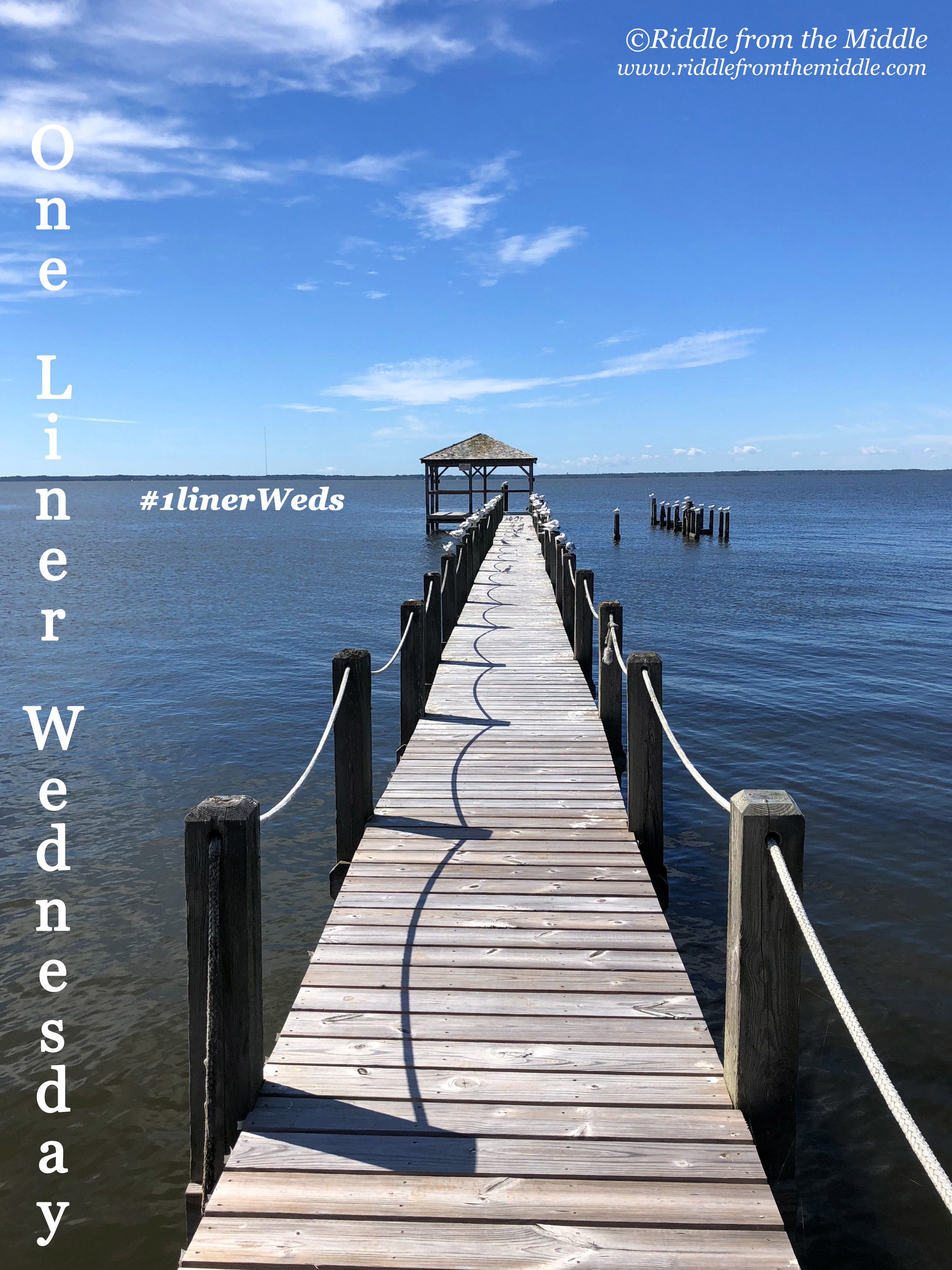
One-Liner Wednesday: COVID-19

I’m thinking today of the 3,000,000+ people worldwide, including 1,000,000+ in the United States, who have been infected with the virus that causes COVID-19, their friends and family, and all those working in the medical field and all the essential workers serving to keep our communities functioning. ❤
*****
Please join us for Linda’s One-Liner Wednesday! Find out how here:  https://lindaghill.com/2020/04/29/one-liner-wednesday-april-29th-2020-ladies

Badge by Laura @ riddlefromthemiddle.com

how things are here and there

I know there are other things to write about than novel coronavirus status at the moment, but it’s hard for me to write about them without doing the update first. It’s top of mind for millions upon millions of people around the globe.

I live in New York State in the Northeastern United States. Our state is very hard-hit right now, although the majority of the cases are down near New York City, about 150 miles (240 km) from Broome County, where I live. As of this moment, there are 32 known cases in the county and three deaths. The health department is trying to quarantine contacts, but we are seeing community spread.

B is working from home and will continue to for the foreseeable future. We are staying at home, other than for walks in the neighborhood, during which we keep our distance if we happen to see someone else out, and for necessary food and supplies shopping, which is usually my job. I haven’t shopped for a few days, but the last time I tried to do weekly shopping I had to go to several stores. There aren’t real shortages of anything; it’s just that some people are still panic buying and the stores run out of categories of items until they can get their next shipment from the warehouse.

The biggest change in the last week is that we aren’t going to Paco’s everyday. Because my dad lives in a senior community – in other words, a collection of people who are especially vulnerable to COVID-19 complications – we are trying to restrict our visits to only the most necessary ones. Even though I had tried to set up things so that Paco can manage with just telephone reminders, it is difficult not to be able to be there. I’m afraid, though, that it will be many weeks before it is considered advisable to visit frequently.

Meanwhile, daughter E, her spouse L, their daughter ABC, and L’s parents live in one of the global hotspots, London, UK. They were all exposed to the virus the last Sunday that people were allowed to go to church. E and L have both been sick with something that, symptom-wise, could be COVID-19, but they don’t know because tests are only being run on people sick enough to be hospitalized, which, thankfully, they are not. Once this outbreak calms down, E, at least, will probably have an antibody test to confirm if she has had the virus, because she will be having a baby, most likely in August. (This is what is known as burying the lead.)

We are all very happy that there will be a new member in the family. ABC will be three by the time her new brother or sister arrives. We had hoped to visit this spring and then again after the baby’s birth, but all travel plans are on indefinite hold because of the virus and travel restrictions.

It will certainly be very different than having ABC living with us for her first two years, but at least E, L, ABC, and Baby will in the same country and under the same roof. I’m sure L’s parents will enjoy having so much time with the new baby, as we did having ABC on this side of the pond when she was little.

Wishing everyone good health and safety in these difficult times.

in the current tangle

I’ve been meaning to post an update on our situation here for several days, but my brain keeps jumping from task to task, not a very effective way to get anything done, but I’ll try to focus for a bit here and get this post done.

Here in Broome County in upstate NY, we went, over the span of a few days, from no confirmed COVID-19 cases to our first recorded death, although the test came back positive only after the gentleman had passed away, to several other known cases, which means that there is community spread occurring.

Meanwhile, as you may know, New York State has become the epicenter of the pandemic in US. Most of the known cases are in the New York City+suburbs/Long Island area, but the whole state is at risk. Governor Cuomo has implemented more stringent shelter in place policies. All non-essential businesses are closed. To protect the elders and other vulnerable populations, Gov. Cuomo has implemented Matilda’s Law, named after his won 90-some-year-old mother. The whole program is called PAUSE. Gov. Cuomo has been giving press briefings most days. I try to watch them as often as I’m able. He is straight-forward, factual, informed by experts in science, public health, and medicine, and compassionate, all while accepting responsibility for his decisions – everything that one expects from a civic leader. Here in New York, we are being much better served by our state government than by the federal government, whose response is still haphazard.

Because of the increased level of alert, I am no longer going to visit Paco in person. The risk of unwittingly bringing the infection to him or someone else in his senior community is too great. Over these last weeks, I have been setting things up to function without my physical presence. We’ll see now how well I did with that task. Fortunately, the staff of independent living is also stepping up their level of service, so I know there will be help available to him if he needs it. For example, because the dining room had to close for safety reasons, dinner orders are now called in with delivery brought to residents’ doors. Paco is happy to have food arrive at the appointed time without having to sit at the table and wait.

My sisters are also sheltering in place and can’t travel, so they have been sending Paco care packages. Over the last week, jigsaw puzzles, brownies, breakfast breads, and homemade apricot bars and Blarney cake have arrived. Paco will turn 95 later this week and is enjoying all these gifts! We are hoping to bring him carryout from his favorite local Italian restaurant on the big day, providing they remain open. All restaurants are open only for takeout or delivery; some have had to close under these conditions, while others are continuing to keep their business going as best they can.

B is working from home for the foreseeable future. We have set up a home office in a currently unoccupied bedroom. He is among the fortunate employees with a job that can be done totally online, so we don’t have to worry about him being laid off, which is a huge blessing and one that we do not take for granted.

I have used his office setup a couple of times for Zoom poetry meetings. Last Saturday, my previously scheduled chapbook manuscript review party was moved online. It was great to see everyone, even though we existed in rectangles on a monitor rather than in the flesh. I received lots of good feedback and have started in on revisions. Last night, we had the first online iteration of the Binghamton Poetry Project. Everyone had been disappointed that our usual in-person sessions had to be cancelled this spring; we are grateful to keep the Project going in a new form. On Wednesday, my local poetry circle, the Grapevine Group, will convene via Zoom to workshop each other’s poems. We will miss our usual home at the Grapevine Cafe, but hope that we will be back soon.

One of my other activities has been doing the essential shopping for our house and for Paco. It’s been an adventure. Some people are still in a (totally unnecessary) hoarding mindset, which makes it hard to find certain categories of goods. In order to do weekly shopping, it can take three or four trips to different stores. If you are lucky, at least one will have a supply of the hard-to-find categories, such as meats, bread, eggs, frozen vegetables, and milk. It is a major time sink, as well as being an exposure risk, although I try to shop at times when the stores are not crowded to maintain distance from others. For the record, I do have a two-week supply of basic necessities stored away, but the point is to keep that in case we needed to go into total isolation. Dipping into that for our regular needs seems unwise.

I wish I could say that I am settling into a routine, but it is still too new an endeavor. I admit that keeping track of the news and the changes we need to make is taking up quite a lot of mental space. This is increased because I am also watching developments in the UK, with daughter E, her spouse L, and granddaughter ABC in London. I know that literally millions of other people are finding their minds in a similar whirl. I’ll try to untangle the mess and see if I can create some order, however illusory…

today’s changes

When I wrote about covid-19 over the weekend, I assumed that things would continue to change.

I was correct.

Today, I learned the following:

  1. While visitors are still allowed in Paco’s independent living apartment building, they are no longer allowed in public areas, including the dining room. This means that our usual Sunday morning breakfast together won’t be possible, unless we order ahead and Paco goes to pick it up from the dining room.
  2. My hopes that the panic buying for groceries, medications, and household goods was just for Friday and over the weekend were dashed. It took three stores today to find a short list of items that Paco or my household needed. None of it was hoarding or earth-shatteringly necessary, but it was so strange to still see entire categories of foods unavailable.
  3. Stores are adjusting to the circumstances as best they can. Wegmans, where I usually do most of my shopping, has instituted limits on certain items, hoping to keep staples available for as much of the day as they can. They are usually open 24 hours a day, but are now closing between midnight and 6 AM to allow for more extensive re-stocking. Even with that, there was almost no fresh meat this morning and there were signs up saying they wouldn’t be getting a shipment until tomorrow afternoon.
  4. People must rely a lot on peanut butter, because it is very hard to find.
  5. France is reporting that over-the-counter anti-inflammatories may worsen covid-19 symptoms. They recommend other fever-reducing medications, such as acetaminophen.
  6. Starting at 8 PM today, all restaurants in New York, New Jersey, and Connecticut will be open only for takeout and delivery. Also, the new definition of allowable gathering size is 50. This will effectively close lots of businesses and organizations.
  7. Many of the closures are scheduled until end of March or mid-April, but many of us assume they will go on longer.
  8. I had thought that the United States national government had the most haphazard response to covid-19, but it appears the United Kingdom is also in the running for this dubious distinction. Because my daughter and her family are in London, we often exchange news. The UK is not even using social distancing as a strategy for the population at large. It’s mind-boggling and scary. [Update:  Right after I published this post, my daughter sent me a link showing that someone finally got through to Boris Johnson that he needs to change his strategy for the UK.]

Who knows what tomorrow will bring?

(I will try to make my next post be about something cheerier.)

charting a pandemic path

Around the world, most of us are sharing in the battle to limit the damage from COVID-19 to the extent possible.

In some places, the path is proscribed by local or national government and there are not a lot of personal decisions to make.

Here in my county in upstate New York (USA), things are not laid out as clearly. I have been trying to prepare and make plans, but circumstances keep changing – and so must the plans. Our state and local governments and community organizations have been much more proactive than the federal government, but, as more and more cases are diagnosed closer and closer to where I live, additional measures continue to roll out.

Over a week ago, I started the general preparedness guidelines to have a couple of weeks of food and medications available in case we had to self-isolate. This was not a big deal for our house, but I have been much more concerned about preparing things for my dad, known here as Paco. He lives in a senior community in an independent living apartment, so he has a number of services available in-house, but I visit every day to check on him, make sure his medications are all organized and his schedule is laid out, etc. Early last week, a sign went up that people who were having any symptoms of illness should not visit. This is practical and a commonsense precaution that I would follow anyway, but, later in the week, the health care part of the center was closed to all visitors, except those whose loved one is in very grave condition. This meant that Paco could no longer go over to concerts and singalongs held in the health care facility. At the same time, they cancelled activities in independent living that involved outside performers or volunteers. For example, the Irish dancers would not be able to come for a scheduled pre-St. Patrick’s Day performance.

At this point, I had to face the probability that even healthy visitors might not be able to visit independent living at some point, so I started making contingency plans that could be carried out reasonably well without me. Sadly, we’ve had to cancel a planned visit from my sisters and their families to celebrate Paco’s 95th birthday later this month. They all live in areas where the virus is more prevalent and we didn’t want to risk them bringing it with them, given that they might not have obvious symptoms.

Thursday night into Friday, several large employers announced that they would be having most of their employees work from home starting on Monday. The universities had also announced that they were moving most of their instruction online for several weeks or the rest of the semester. Professional sports leagues announced they were suspending or delaying their seasons. Some combination of these functioned as a trigger that caused some people who hadn’t been taking the virus very seriously to spring into action – or, at least, into shopping. I went to my favorite grocery store to pick up a few things for Paco and for my household and was surprised to find that there was almost no peanut butter, canned legumes, frozen vegetables, etc. in the store. And I hadn’t even checked the cleaning supplies and paper goods aisles. The evidence of panic-buying took me by surprise. Given that I had been in concern and preparation mode for days, I had obviously underestimated the number of people who were suddenly paying attention and freaking out a bit.

On Saturday, the county executive announced that all primary and secondary schools will close through mid-April. Now, people are even more upset.

It appears that there are some people who still think that fears of the virus are overblown, given that we have no known cases in our county, even though our neighboring counties do have confirmed cases; they don’t want their personal and family routines disrupted. Others have been following the news and the advice of medical experts and realize that, while we can’t stop the virus completely, there will be fewer deaths and more treatment available to those with severe illness if we can spread out the number of cases over a longer period of time, so as not to overwhelm our medical system. The way to do that is to reduce the number of people who are in close contact and in large groups, also known as social distancing.

There are a number of different opinions about how much distance is required and how many is considered too many to be in a crowd. This leaves some situations to personal discretion. I admit that I had a difficult time figuring out what to do about church attendance this weekend. Our diocese has dispensed with our obligation to attend mass, but services are still being held. I am not especially concerned about my getting seriously ill, but I am concerned with the possibility of bringing the virus into Paco’s community, so I’ve decided to participate in a mass on television. At least for now, I plan to still shop. occasionally eat at restaurants, and attend small gatherings with friends. If we start seeing community spread in my town, though, I’d cut back further. If we get to that point, I’m sure I wouldn’t be able to visit Paco; it’s likely that only residents and staff would be allowed in the building.

I admit that it is disconcerting to know that, despite our best efforts, people are going to continue to get sick, some of them severely sick, and some of them will die. I hope that our communities will face up to this challenge and do as much as we can to protect people, especially the most vulnerable.

Be well. Be kind. Be thoughtful. Be considerate.

SoCS: a disconcerting disconnect

There is a major disconnect between the president of the United States and public health regarding covid-19, the form of coronavirus that is causing illness and death around the world and which may soon cross the line to become a pandemic.

From its start in China, there are now major outbreaks in Japan, South Korea, Italy, and Iran, with cases in lots of countries in both hemispheres. Some of the countries have tested thousands of people, ramped up medical care, imposed quarantines, even closing schools for weeks as was just announced in Japan in the last few days.

Meanwhile, the United States has only tested a few hundred people. There are under a hundred confirmed cases, but most likely there are more cases that only had mild symptoms or no symptoms. This is dangerous because those people can spread the virus unknowingly.

Ordinary Americans have been watching the news of the spread of covid-19, first in China and then into other countries. Some doctors and public health specialists were speaking in the media about the epidemic – and preparedness and cases in the US. Earlier this week, some federal government officials who work in agencies like the Centers for Disease Control and Prevention had spoken publicly about the virus in the United States.

The stock market in the United States went down – a lot – this week, the steepest decline since the financial crisis of 2008. This finally got the president’s attention and there was an evening news conference about the virus in the US. Unfortunately, the president made mistakes in his remarks, including saying there were only 15 cases in the US when there were actually 60 confirmed cases. He also put the vice-president in charge of the US efforts against the virus, which is disconcerting because, as governor of Indiana, he botched an early intervention effort against HIV. It’s also disconcerting that all communication from the federal government has to be approved by him first, including public statements by Dr. Anthony Fauci, longtime director of the infectious disease department for the country.

Late this week, there was the announcement of the first covid-19 case that couldn’t be traced to someone who had contracted it abroad. This is an important development because it could mean that there would be community spread here in the US, which would also bring the world closer to declaring a pandemic. It’s scary because it brings to mind the flu pandemic of 1918, which infected millions worldwide and had a mortality rate of almost two percent. Early statistics from China show that covid-19 has a mortality rate of a little over two percent, which is beyond the ability of even large modern health systems to combat. There would be shortages of needed equipment like respirators and of appropriate hospital facilities that can isolate the patients so that no one catches the virus in the hospital.

Yesterday evening, I was watching a news station. Several times throughout the evening, the stories they were covering were interrupted by news of several new confirmed cases in different locations that appeared to be the result of community spread, instead of direct transmission from abroad or from being in the household of someone who contracted it abroad. This bring some communities in the US close to needing to impose states of emergency and doing things like prohibiting public gatherings, including school and work and church.

The most chilling thing for me was that, at the same time, the president was speaking to a rally in South Carolina, telling them that covid-19 in the US was a hoax perpetrated by Democrats.

This is disconcerting and irresponsible and shows how disconnected the president is from the reality that the country is facing.

To be clear, I am not a paranoid person regarding disease. I’m not running around in a mask and gloves in fear of covid-19. I am, however, vigilantly watching the public health news and, as recommended, making plans for possible cases and restrictions on travel and being out in public in my region.

While I hope and pray for safety and good health around the world, I want to be prepared to stay as safe as possible if this epidemic does become a pandemic. In the US, I hope that people will make sure that the information they get comes from a reliable source.

Sadly, our president is not a reliable source.
*****
Linda’s prompt for Stream of Consciousness Saturday this week is base the post on a word that contains “ect”. Join us! Find out how here:  https://lindaghill.com/2020/02/28/the-friday-reminder-and-prompt-for-socs-feb-29-2020/

2019-2020 SoCS Badge by Shelley!
https://www.quaintrevival.com/

intention

Other than One-Liner Wednesday and Stream of Consciousness Saturday, I don’t usually follow the Just Jot It January prompts, but today’s prompt is “intention”, which sparked my interest. If the prior sentence makes no sense to you, you definitely need to visit Linda Hill’s blog, Life in Progress, and check it out!

It was my intention to try to re-organize my life after so many changes in 2019.

Or maybe I should say “organize,” given that I can’t actually remember the last time I felt that my life was organized.

This is definitely not the first time I have felt that I should (re)organize. In truth, I have had multiple junctures in my adult life – when my daughters started school, or moved away from home for higher education or work, or when Grandma moved nearby and we weren’t trooping back to Vermont so frequently, etc. etc. – when I thought I would re-organize and have a schedule and maybe make progress on long-term goals.

Somehow, it never quite worked out.

I know that this sounds like either an excuse or a complaint, but it is not meant to be either.

It is a recognition of the vicissitudes of life and how priorities need to be reshuffled to meet a new challenge. I chose to prioritize caregiving over other possible activities – and caregiving is seldom a follow-the-schedule sort of thing. Unfortunately, my extended family has suffered an unusually large number and variety of diagnoses, some of which took years to pin down and some that are difficult to treat. I’ve spent time supporting friends who have had cancer and died at a much younger age than we had hoped. I’ve spent major amounts of time volunteering to address emerging community needs.

These choices were all intentional, but they meant postponing or jettisoning personal goals. There were times earlier in my life when I thought I would have my musical compositions published and might return to paid work as a church musician. Circumstances, including orthopedic problems and a crisis that tore my church community apart, intervened and those dreams disintegrated.

Serendipitously, my music losses made room in my life for more writing, albeit in a somewhat haphazard way. My blog and my poetry have shoehorned themselves around major caregiving challenges in the twenty-teens. My dreams of submitting poems for publication on a regular basis and of having a book in print by sixty turned out to be unattainable. I suppose the book part is still a possibility, but it is unlikely because now, at 59, neither of my poetry manuscripts is currently in shape to submit.

Which circles me back to my intention to organize my life…

It is true that my caregiving activities are lessened now, but they are still there and somewhat unpredictable. Something that I have said often over the last few years is also still true; sometimes, the problem is not so much lack of time as lack of brainpower. I definitely can carve out more time for writing now, but I don’t necessarily have the brainpower to do it effectively.

I’m tired.

I guess that, sometimes, when you have run on adrenaline and/or cortisol for a long time and then you stop, your mind and body don’t just jump back to normal function. (I’m not sure that this is medically true, but it is my current way of understanding how I am feeling.)

A week ago, while writing for Stream of Consciousness Saturday, an idea floated to the surface that has kept coming back to me. Perhaps what would be most useful right now is not a schedule, but a sabbatical.

I had intended, early this year, to do revisions on a few individual poems and to assemble my chapbook manuscript for critique by my local poet-friends, so that I could submit to contests and publishers in the spring.

Now, I am feeling that I should not put that pressure on myself.

Maybe I will rest for a while and then feel rejuvenated and creative and I will be able to work on it.

Maybe I won’t.

I just feel too tired to force the issue.
*****
Join us for Linda’s Just Jot It January! You can follow the prompts or not as you wish. Find out more here: https://lindaghill.com/2020/01/05/daily-prompt-jusjojan-the-5th-2020/

Hospice month

November is National Hospice and Palliative Care Month in the United States. Some people don’t realize that palliative care exists outside of the context of hospice. Palliative care addresses pain that affects someone from any cause. People who are dealing with chronic or severe pain can consult with a palliative care specialist, who will put together a pain management plan for them. Hospice care involves palliative care for those in their final weeks/months of life.

While the alleviation of pain is an important part of hospice care, hospice is meant to serve other needs for the person who is dying and their loved ones. There are social workers and chaplains for help with personal, social, and spiritual needs. Aides help with physical care and companionship. Volunteers come to keep the patient company or offer special skills, such as massage, to relieve pain and stress. Nurses are the driving force that coordinates care. They visit as often as needed as circumstances change.

Hospice as a philosophy is meant to unfold over the final weeks and months, but sometimes is only called in for the very last days. For decades, hospice care providers have been advocating for referrals to be made enough in advance that there is time to develop a relationship with the patient and their loved ones, so that they can provide services while the patient is still able to interact. There are, of course, instances in which that is not possible, when an accident or final illness occurs without notice, but it is still unfortunately common for primary care physicians and specialists to delay hospice referrals.

We experienced such a delay with a family member, so that hospice was only called in for the final day. Even though time was brief, the experienced nurses were able to give us the tools we needed to relieve pain and recognize the progression of symptoms when our loved one was near death.

Our experience with Nana was on the other end of the spectrum. She was under hospice care for fifteen months, was decertified and off hospice for four and a half months, and back on for her final ten weeks. Some people commented to us that we had called hospice in too early, but that wasn’t really the case. Without hospice care, Nana would have died much sooner. At least twice, they were able to treat symptoms that would have caused fatal repercussions, had the hospice nurses not been able to get them under control.

It is true, however, that there are a lot of rules, especially with insurance, about hospice care. Those rules are set up for people who have a fairly accurate life expectancy estimate, such as someone with late stage cancer or kidney failure. With something more unpredictable, like certain types of congestive heart failure or pulmonary disorder, the hospice rules requiring a certain amount of decline over a given time don’t fit very well. I hope that, over time, the rules will be changed to make hospice care more accessible.

As National Hospice and Palliative Care month comes to a close, I salute all the compassionate nurses, aides, volunteers, social workers, chaplains, and administrators of hospice. You help people at one of their most vulnerable times. I wish you the strength and peace needed to continue in such important work.

IC Awareness Month

September is IC Awareness Month, so, as someone living with IC, I am doing my part to spread awareness.

IC stands for interstitial cystitis, which is also known as bladder pain syndrome or hypersensitive bladder syndrome. Symptoms, for most, include pelvic pain or pressure and increased urinary frequency/urgency. It affects millions of people in the US and millions more around the world, although estimates of prevalence differ. Part of the reason that statistics are hard to come by is that many people see multiple doctors for years before they are correctly diagnosed. This delay is further exacerbated by the fact that IC is more common among women. As with other ailments among women, some patients have been told their symptoms are “all in the their heads.”  Others have been misdiagnosed with reproductive system problems. Among men with IC, the misdiagnosis is usually chronic prostatitis.

Another problem with getting a correct diagnosis is that there is no definitive test for IC. One subtype of IC, accounting for about 10% of cases, causes lesions in the bladder, which can be seen during cystoscopy, but the other types do not have that straightforward a presentation. Diagnosis is also complicated by the fact that no one knows what causes IC. It behaves somewhat like an autoimmune disorder and also seems to be related to the nervous system. Research is ongoing. Many patients with IC also have periods where the symptoms flare up and other times when they are lessened or absent. This can also be a factor if you have a long wait to see a specialist; your symptoms may have disappeared by the time of your appointment.

I have one of the subtypes of IC in which its symptoms occur in conjunction with other pain syndromes, such as irritable bowel syndrome, endometriosis, and vulvodynia. This can complicate treatment because there are so many different factors involved. Some people with IC, like me, have success with medications. Once symptoms have calmed down, the medication regimen may be ended and other methods, such as dietary changes and stress reduction, may be able to avert flares or, at least, keep them manageable.

One of the things that I need to avoid is acidic foods. I do have a dietary supplement that helps with eating acidic foods, including fruits, although I still avoid citrus. When I make tomato sauce, I put in a bit of baking soda to counteract the acidity. Bonus: it’s fun to watch the sauce foam and bubble! It can be difficult to find things to drink beyond water and milk. I never was a coffee and tea drinker, so I didn’t have to worry about giving those up. I can’t have anything carbonated, so no sodas or sparkling water. (Some people with IC can drink certain varieties of coffee, tea, and soda; sometimes, trial and error is needed to figure out what works for an individual.) My new splurge drink is Hint, fruit-flavored water without added sweeteners or calories. It’s fun to have another option.

The most difficult thing for me to avoid is chocolate. I can have white chocolate, although I need to shop carefully as some of it is just bad. It is the cocoa component that is the culprit with IC, causing a histamine reaction in the bladder. I admit that I miss milk and dark chocolate, and, especially, hot cocoa, which I used to make with cinnamon and ginger. Every once in a while, I will eat a bit of chocolate. I’ve found if I eat just a little, I can manage the flare that will follow, but usually I am good and avoid it completely.

If you think you may have IC, bring it up with your doctor. My doctor recommended that I see a urogynecologist, who was able to diagnose and treat me properly. There are treatment options out there, which differ depending on the subtype of IC you have. Some types are able to be cured with the right therapy, while most others can learn to treat and manage their symptoms.

Don’t let anyone tell you that your symptoms are all in your head! Don’t try to self-treat because of embarrassment or other factors. You can find more info about IC from the Interstitial Cystitis Network, which is one of the sponsors of IC Awareness Month, or from reputable medical websites.  The stress of feeling alone with your illness can make it even worse, so reach out.

One final thought:  Please keep in mind that IC and many other illnesses are invisible. This does not mean that they aren’t causing pain or other symptoms. Just because someone “looks fine,” doesn’t mean they are fine. If someone you know has or may have an invisible illness, treat them with kindness and understanding. Help them find the medical help they need. Support them as they deal with their illness. It will make a difference in their lives.