vaccine trial – injection 2

This week, B, T, and I are receiving our second injections of the Pfizer/BioNTech experimental COVID vaccine or placebo, three weeks after the first round. There is COVID testing and general health screening but no blood draw, which will wait for the next visit to see the antibody response. Throughout the two years of the trial, we will continue with a weekly diary of possible COVID symptoms, although we would contact the trial staff immediately if we suspected we had COVID. We each have an emergency test kit at home to collect samples if we are directed to do so by study personnel.

The possible date of vaccine approval in the United States has become a hot topic. The president has intimated that a vaccine could become available before Election Day, November third. Local health departments around the country are supposed to have plans in place for distribution by November first.

However, that timeline doesn’t jibe with the amount of time needed for preliminary Phase III trial results. Yesterday, Pfizer, BioNTech, and seven other drug companies involved in COVID vaccine development signed a joint pledge to uphold their rigorous testing measure and not request authorization without the requisite data showing safety and efficacy.

I’m pleased that they made this commitment to the public. When vaccines do become available, it is vital that billions of people around the world receive them so that we can end the pandemic. If only a small fraction of the world’s population receive it, the pandemic will not end because there will still be a large pool of potential victims for the virus. Some of those victims will be people who were vaccinated, as no vaccine is 100% effective. The vaccine should lessen the severity in those people who do contract it, as we see with current flu vaccines. It’s important to remember, though, that part of the way vaccines work is by creating herd immunity so that a pathogen can’t create an outbreak. Vaccines offer a safer, less lethal path to herd immunity than just allowing vast swaths of the population to be infected.

I suppose it’s possible that a vaccine might receive emergency use authorization this fall so that it could be used by front-line medical workers and extremely vulnerable individuals before long-term safety and efficacy could be established, but widespread vaccination isn’t possible until next year, at the earliest.

The wisdom of moving forward scientifically and methodically was illustrated this week by AstraZeneca, which put their COVID vaccine trial on hold in order to investigate a possible adverse reaction. It may be that the reaction had another cause, but, until that can be determined, they don’t want to risk the health of their participants. Rushing the swine flu vaccine out to the public in 1976 caused enough serious complications that it had to be suspended after ten weeks; no one wants to repeat that experience with COVID.

Meanwhile, our family will keep doing our small part in advancing the science in hopes that COVID-19 can be brought under control, saving as many people as possible from illness, disability, and death.

SoCS: penny box

Like many people, we have a coin jar at home. When our daughters were young, when the coin jar was full, I would roll the coins and bring them to our credit union for deposit to the girls’ accounts.

That was a long time ago now, but I still have a coin jar. I didn’t fill it very fast in recent years because I would only take coins out of my wallet when it got over-full. I used to do a lot of my everyday shopping in cash, so I would spend my coins. Since the pandemic, though, I seldom use cash, so I’m not accumulating coins.

I was concerned this spring because there was a coin shortage caused by lack of commerce and I was anxious to find a couple of 2020 pennies. Two of my long-time friends have penny boxes that I gave them for their birthdays. The idea came from a book for children titled “The Hundred Penny Box” which had a centenarian who had a penny from each year of her life. Each year, on my friends’ birthdays, I would send them a penny for that year.

My friend with a May birthday had to take an IOU, but I was pleased to pay cash at the grocery store self-checkout one day in late June and receive three shiny 2020 pennies in change. I sent a (very belated) birthday card to my first friend and had a penny to send to my friend with an August birthday on time.

I used to supply pennies to two other boxes. One was a birthday box for my friend Angie, who passed away in 2005. (If you search her name, posts will come up about her here at TJCM.) The other was an anniversary box for my parents, known here as Nana and Paco. We added the last penny to it last year, a few weeks before Nana passed away.

Someday, I may make a penny box for B and my anniversary. Maybe in two years for our 40th. That was when I gave my parents theirs and they wound up making to their 65th.

May we be so blessed.

*****
Linda’s prompt for Stream of Consciousness Saturday this week was to write about something of which we had more than a hundred in our home right now. Join us! Find out how here: https://lindaghill.com/2020/08/28/the-friday-reminder-and-prompt-for-socs-aug-29-2020/

2019-2020 SoCS Badge by Shelley!

Old haunts

This is my last full day in the North Adams area. MASS MoCA is closed today, so I planned to go back to Monroe Bridge, Paco (my dad) and my hometown, and Hoosac Tunnel, Nana’s (my mom) hometown. I thought it would take a couple of hours this morning and I’d be back to the hotel by noon.

I got carried away.

I wound up stopping at a lot of old-but-changed haunts and taking tons of photos. (Don’t worry. I’ll only share a few.) Many of the ones I won’t show are unlikely to be meaningful to anyone without long-standing personal history in the area, as there is a lot of “what used to be here” in play. Warning: There will also be a lot of dams and reservoirs and hydroelectric plants. Paco was superintendent of the Upper Deerfield River (southern Vermont/western Massachusetts) for what was then New England Power Company and my sisters and I grew up traipsing around powerplants and such.

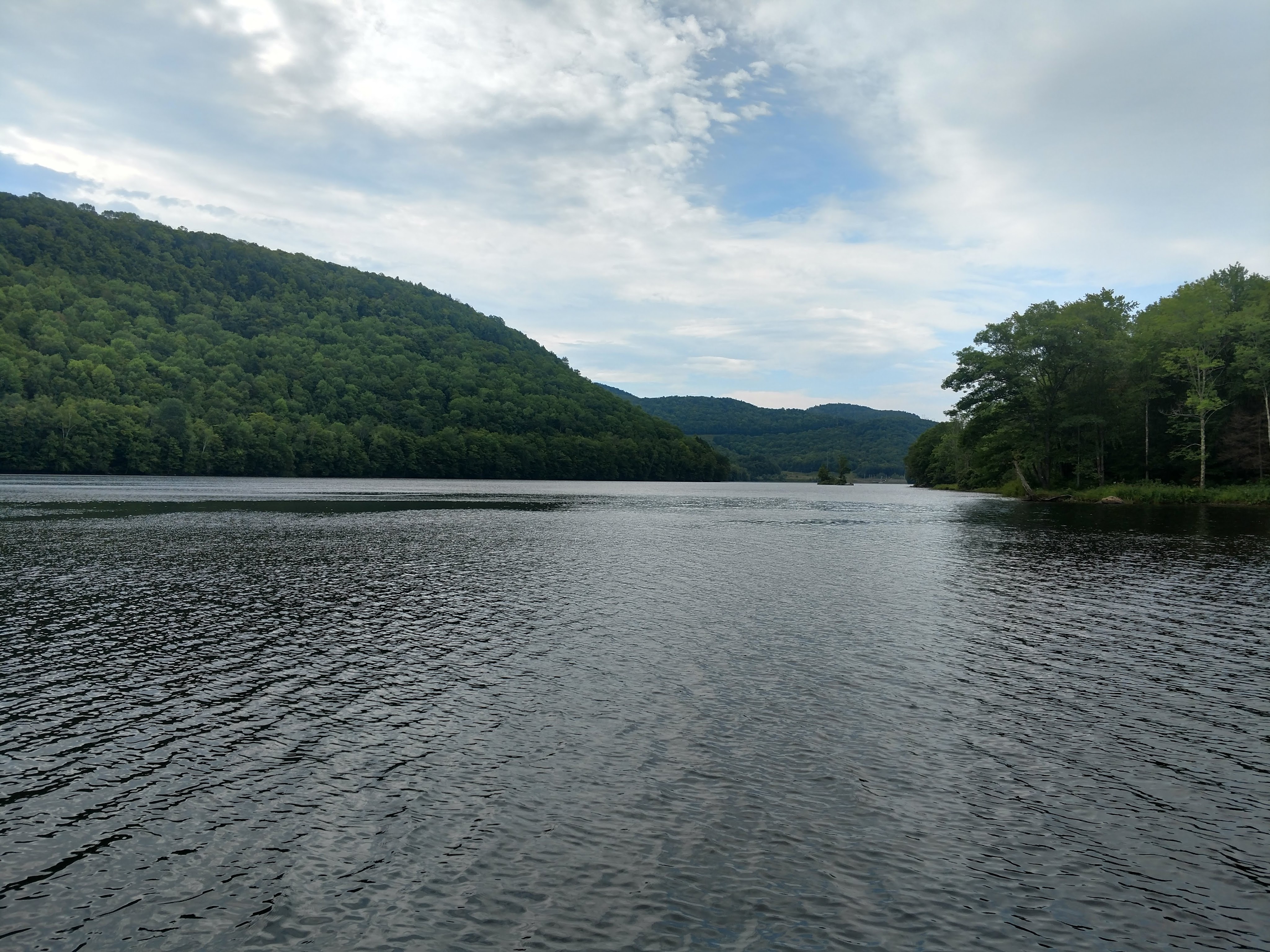
Sherman Reservoir – our house, which is no longer there, was near the dam that created the reservoir
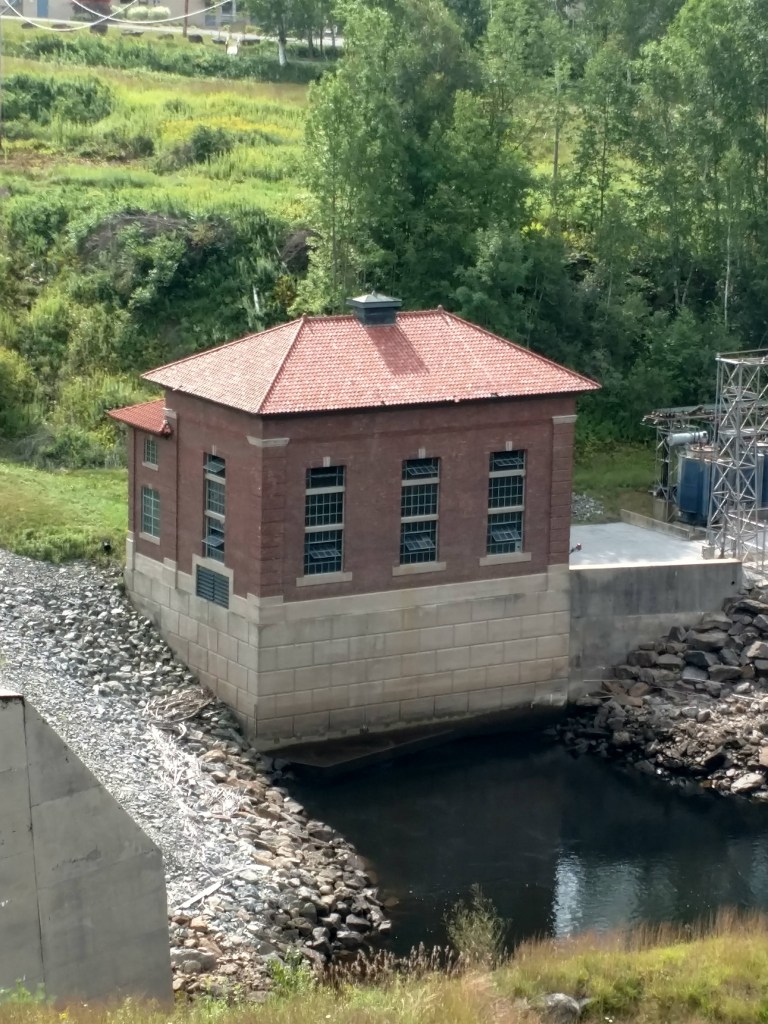
Sherman Station, the hydroelectric plant just below the dam and our “neighbor”

The building in the photo below was built by the WPA in the 1930’s. My father and some of his siblings attended school there when it was new. It also housed the town office and library. They are still there, but most of the building is now offices for the current successor of New England Power Company. The array of mailboxes is a poor substitute for the post office, which was the center of town life for many years. Olga, the postmistress was a good friend of my mom’s; they saw each other nearly every day and stayed in touch after retirement and moves put them at a distance.

Front of the former school with tree dedicated to Olga Simonetti, former postmistress
Olga’s memorial plaque

I went down to the river and crossed the bridge; our town’s name was Monroe, but the mailing address became Monroe Bridge because they would leave the mail at the Monroe bridge. This iteration of the bridge was built in 2015. The dam is quite a lot older. Part of the old paper mill was torn down and replaced with a little park. The rest is still there, although the worse for wear.

I continued downriver. I visited the Dunbar Brook picnic area, which was deserted except for a toad that I startled as I walked across the grass. I got to take a ride on a swing, which was refreshing and nostalgic. When I went back to my car, I was surprised to see that the old road along the river leading toward the Bear Swamp lower reservoir was open. I drove all the way down to the gate just before the Number 5 Station.

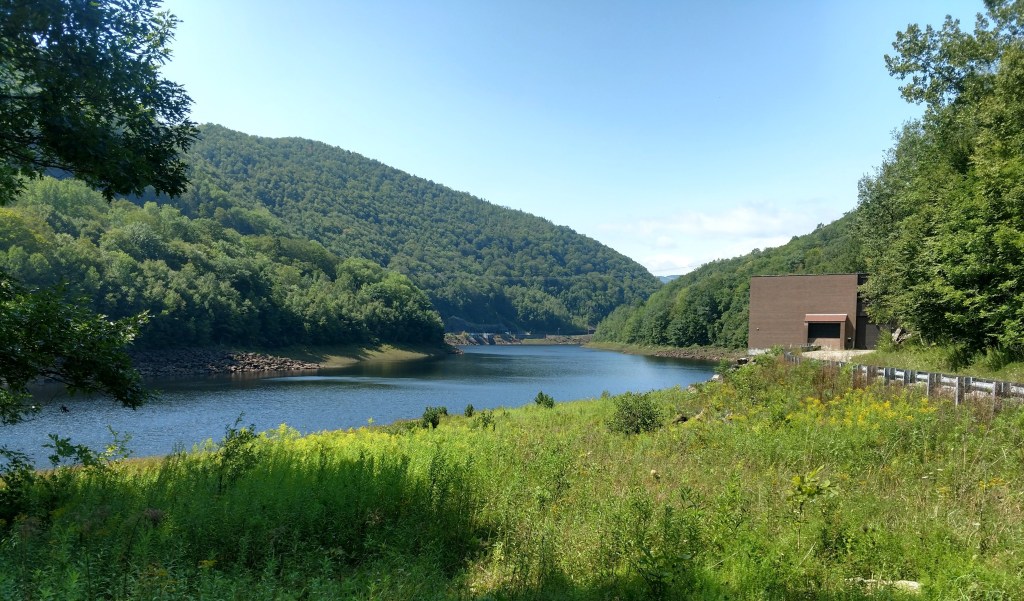
Number 5 Station and the Deerfield becoming the lower reservoir for Bear Swamp pumped storage

When I went back up to the main road, I stopped to pay my respects at the Legate family cemetery. When Nana and Paco were first married, they lived in the old Legate House, which was then owned by New England Power. The house was torn down decades ago, but the little cemetery is still tended to.

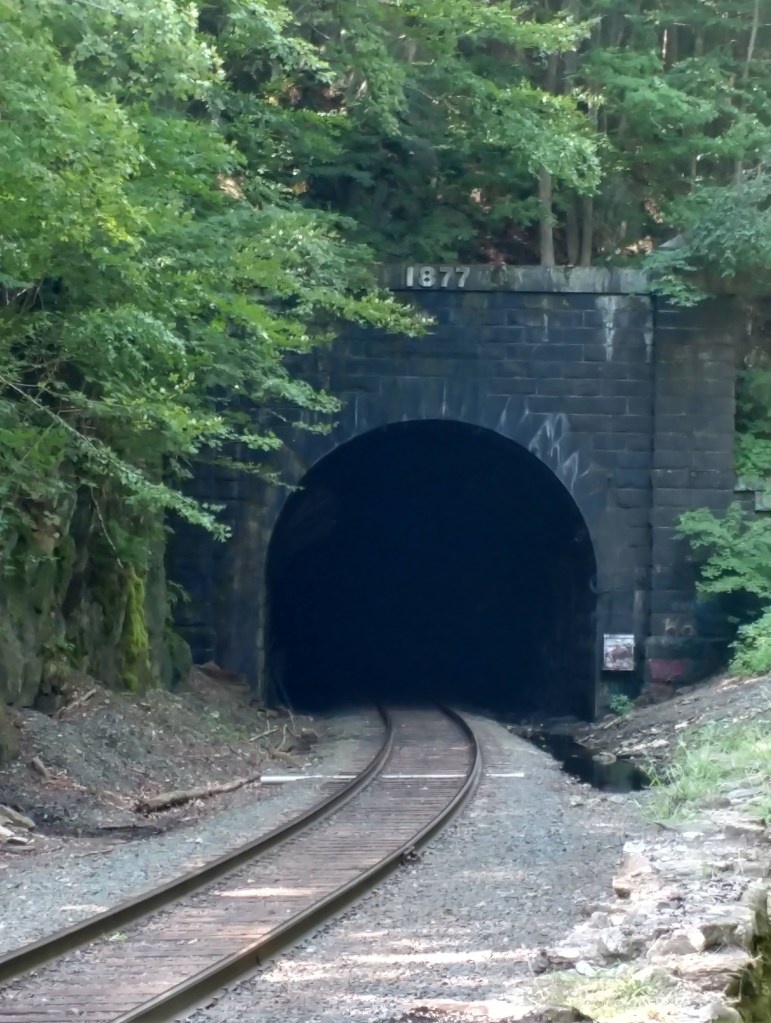
I wish I could show you a decent photo of the lower reservoir for Bear Swamp. I wish even more that I could tour the underground powerhouse that we visited with Paco so many times as it was being built and after it was completed, but it is all fenced in for safety and security reasons. I will close, though, with a photo of the Hoosac Tunnel. Nana grew up in Hoosac Tunnel, a part of the town of Florida, Massachusetts, because her father headed a maintenance crew for the Boston and Maine Railroad. At the time it was built, the Hoosac Tunnel was an engineering marvel. This is the less-fancy eastern portal. The North Adams side was more decorative, befitting a growing city in the late 1800s.

I feel very fortunate to have had the opportunity to revisit my roots. I hope that the sense of connection and the energy and the comfort of familiarity will stay with me so that I can make progress on my poetry collection after I am home.

If not, I may have to come back.

Or, maybe, I’ll come back regardless.

COVID vaccine trial update

Last week, B, T, and I each had our initial visit for the Pfizer/BioNTech vaccine trial for COVID-19. There was a lengthy informed consent document, medical history and physical exam, COVID test, blood draw, and injection with either the trial vaccine or placebo. Two of us had some mild side effects and one of us did not, so we are surmising that one of us received the placebo, but the study is triple-blind (participant, care provider, investigator) so we don’t know for sure if that is the case.

The Pfizer/BioNTech vaccine is a messenger RNA vaccine; this type of vaccine has not previously been approved for widespread use. It works by enclosing a strip of messenger RNA in a lipid shell. When it gets into cells, it manufactures the spike protein that the SARS-CoV-2 has on its exterior, so that the body recognizes it and makes antibodies and T-cells to combat it.

The phase I data looks promising, so I hope that this vaccine will be found effective. RNA vaccines are able to be manufactured quickly, which will be a plus if they are approved for use. I am hoping that a number of vaccines will be able to complete Phase III trials and earn approval, so that we can get as many people around the world vaccinated as quickly as possible. It’s the only way to gain herd immunity without a horrifying level of illness and loss.

The Pfizer/BioNTech trial is expected to finish its primary collection of data needed for approval in mid-April 2021, although the trial will continue to follow participants through November 2022 to see how well antibodies and T-cells persist.

Science takes time and the COVID vaccine is being developed at a blindingly fast rate in terms of past vaccine development. Remember that we are still looking at months before approval, not weeks. Even when one or more vaccines are approved, people will need to keep up with distancing, masks, sanitizing, etc. to keep the disease at bay while vaccination production and distribution campaigns occur.

Please, everyone, do your part to keep yourself, your family, and your neighbors as safe as possible, while vaccines and effective treatments are developed. I’ll post more information about our trial as time goes on.

Retreat in progress

I wrote here about heading to North Adams on a private writing retreat and wanted to give an update.

I have made two visits to MASS MoCA (Massachusetts Museum of Contemporary Art), concentrating on exhibits that have arrived since the Boiler House Poets Collective’s last residency in early fall 2019. I’ve taken a lot of photos to help me with my work on my collection and have even been able to sit in the galleries and work on some first drafts for poems. I have a growing sense that I need to center the collection on place, on what it means to be from and of this part of the world. To help with this, I’ve also been taking photos of the plaques scattered around the museum about the history of buildings and people’s remembrances. I even bought a book from the gift shop by Joe Manning, an artist/poet/author/historian, filled with interviews from people in the area.

While I miss my Boiler House poet-friends, I am enjoying the freedom of being totally on my own. I watched a long video about Sol Lewitt and spent time writing in the galleries, which I probably wouldn’t have done if I had our usual studio access, workshopping schedule, and shared meals. I certainly miss the immediate feedback on my poems, although I can sometimes hear echoes of their comments from prior years and feel that this is helping me in my writing and edits now.

The Museum is very responsive to the COVID dangers. Everyone has masks and distances appropriately. The Museum itself is huge, given that it is located in a series of old factory buildings, so it is easy to not be close to other people. They are leaving some windows open to increase air exchange and there are abundant hand-sanitizing stations. The cafe has expanded its indoor and outdoor seating to safe distances. Admission is arranged in advance so that there are not crowds trying to get in at the same time. During the shutdown, B and I became members of the Museum, so I am making good use of my free admission privileges.

Today, I decided not to go the museum. I did practical things in the morning and spent the whole afternoon writing and editing. It felt like a luxury. This evening, I’m catching up on reading, blogging, and email.

I’m also getting to visit some of the people I know who still live in the area. I got to have outdoor and distanced dinner with a high school friend and will have a cousin visit tomorrow in B’s hometown, Stamford VT. On Tuesday, when the Museum is closed, I will most likely drive to my and my dad’s hometown, Monroe Bridge, and my mom’s, Hoosac Tunnel. They appear in some of the poems in my collection.

I am more than halfway through my time here and am feeling like I have accomplished a lot. Perhaps, the most useful thing I have learned is that this time away is fruitful and a possibility to repeat in the future, COVID and family obligations permitting.

Looking out on part of the Ledelle Moe exhibit “When” https://massmoca.org/event/ledelle-moe/

SoCS: News!

In a shameless bit of self-promotion, I’m using #SoCS to shine a spotlight on the post I just published announcing the birth of our new granddaughter! Check it out!

Linda’s prompt this week was to post about an image related to the word spot. Join us! Find out more here: https://lindaghill.com/2020/08/07/the-friday-reminder-and-prompt-for-socs-aug-8-2020/

2019-2020 SoCS Badge by Shelley!

A new arrival!

I’m happy to share the news that B and I have a new granddaughter! Daughter E gave birth to her second daughter, Jillian Grace, earlier this week. Proud daddy L was able to be there despite the pandemic hoopla and now-big-sister ABC was able to meet Jillian Grace when they were able to take her home at only twelve hours old! As I usually do initials here at Top of JC’s Mind to protect family privacy, I’ll hereafter refer to Jillian Grace as JG.

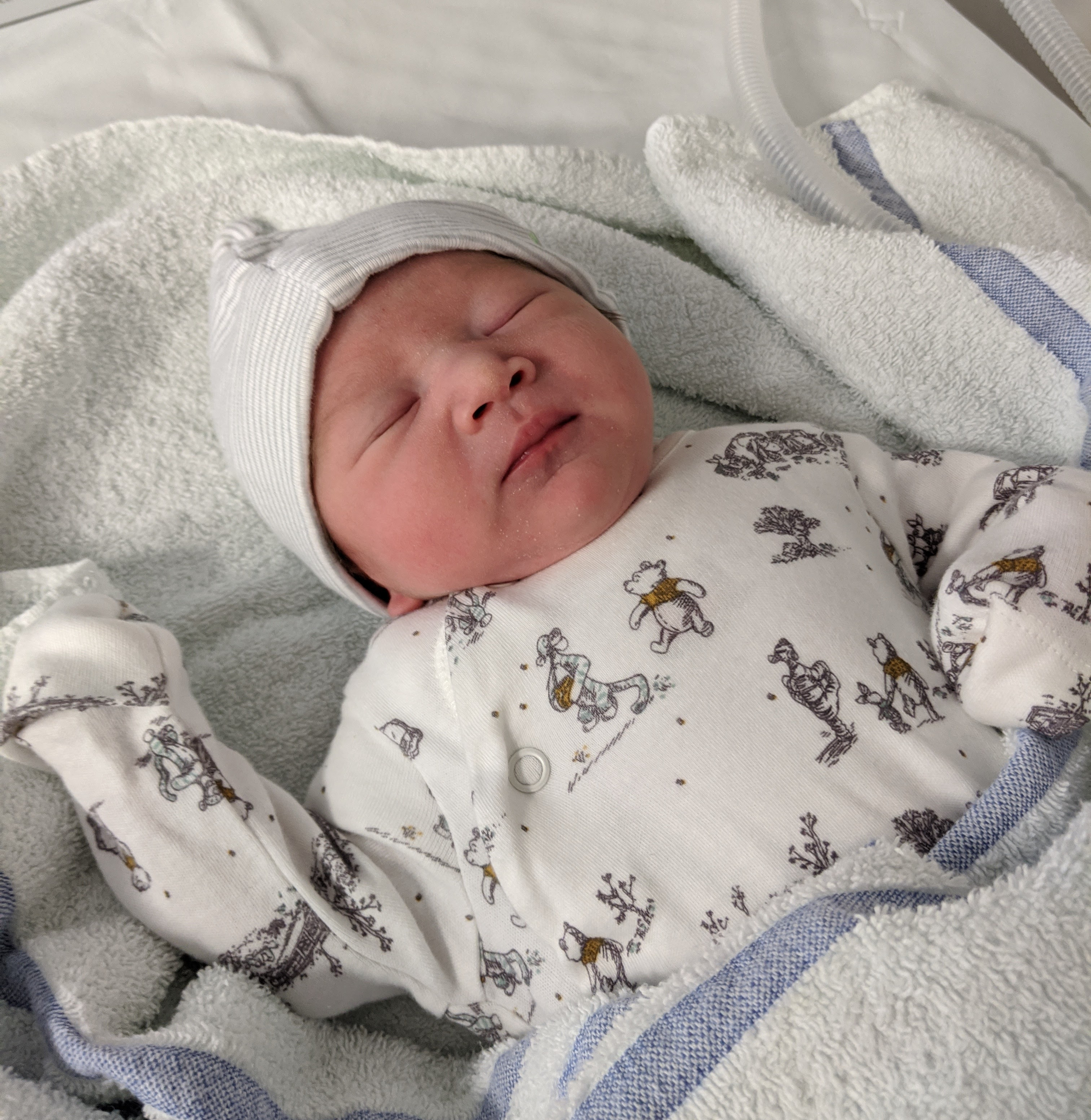
This photo was taken in the hospital with the very cute Pooh sleeper:

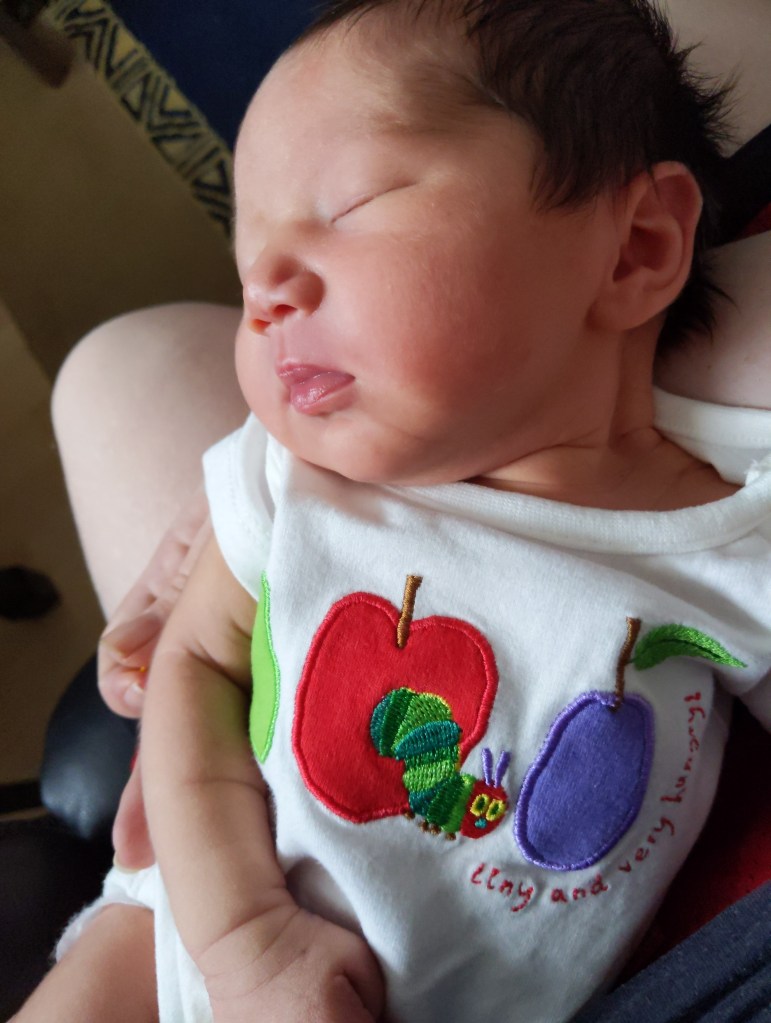
In keeping with the literary clothing theme, here is a photo taken the next day wearing a “Very Hungry Caterpillar” outfit. The script says “tiny and very hungry” which is a) adorable and b) true, although JG managed to wait until 38 weeks to be born while ABC appeared at 36 weeks and so was even tinier. “The Very Hungry Caterpillar” is a family favorite by Eric Carle, who lived for many years in western Massachusetts and used to visit and sign copies of his books at B’s mom’s school.

Of course, B and I and Auntie T wish we could rush over and cuddle JG, play and sing with ABC, and hug and help out E and L, but they are in London, UK and we are in upstate New York in the US. With pandemic travel restrictions, it’s difficult to go there, although we are hoping we will be able to visit this fall. Fortunately, L’s parents, known here as Lolo and Lola, are on hand and we are able to exchanged messages and videochat.

And there is still the promise of hugs.

Someday.

One-Liner Wednesday: US census

People living in the United States, whatever your immigration status, please safely and confidentially complete the census form here: https://my2020census.gov/ if you have not already done so.

This US public service announcement is brought to you through Linda’s One-Liner Wednesday. Join us! Find out how here: https://lindaghill.com/2020/08/05/one-liner-wednesday-august-5th-do-you-ever/

Karens

Lately, some people in the US have taken to referring to a white woman who calls 911 on a black person without cause as a “Karen.” Sometimes, this broadens to any white woman who tries to leverage her white privilege.

While I think it is legitimate to call out destructive behavior, I wish people would do it directly, not by name-calling. If one is referring to a specific incident, use the name of the person involved. If it is a more general comment about white privilege or entitlement, call it that.

There are lots of people named Karen and they don’t deserve a negative connotation being attached to their names. Some of them are men. Some of them, like Congressmember and potential vice-presidential nominee Karen Bass, are black. Karens are our neighbors, teachers, business owners, and friends. Karens are beloved members of families, including mine.

So, please, think twice about turning a name into an insult. Use a few more words and say what you intend without resorting to name-calling.

JC’s Confessions #15

In the first few seasons of The Late Show, Stephen Colbert did a recurring skit, now a best-selling book, called Midnight Confessions, in which he “confesses” to his audience with the disclaimer that he isn’t sure these things are really sins but that he does “feel bad about them.” While Stephen and his writers are famously funny, I am not, so my JC’s Confessions will be somewhat more serious reflections, but they will be things that I feel bad about. Stephen’s audience always forgives him at the end of the segment; I’m not expecting that – and these aren’t really sins – but comments are always welcome.

JC

I’m not a vegan.

I’m also not likely to become one.

I know that eating a vegan diet is gentlest on the planet and its resources and I have made a lot of lifestyle changes to address climate change and other environmental threats, but I can’t manage going vegan.

I try to be mindful of what we eat and where it comes from. We eat a number of vegetarian meals during each week and utilize local, in-season produce when available. You can read my paean to the 2020 strawberry season here. I often have access to organic produce and meats, which are less stressful on the ecosystem than large-scale conventional farming. I have tried to experiment with some of the plant-based substitutes for ground meat, but the smell, taste, and digestibility caused a number of issues within our family.

I enjoy lots of vegetables, fruits, grains, and nuts.

The problem is that I have a couple of medical issues that limit or eliminate quite a few vegan sources of important nutrients and there are times when symptoms are acting up that it is already difficult to figure out what I can safely eat without throwing in the additional strictures of veganism.

So, I will keep on, in my less-than-perfect way, eating not as bad-for-the-planet as I could be, but not as good-for-the-planet as I could be, either…