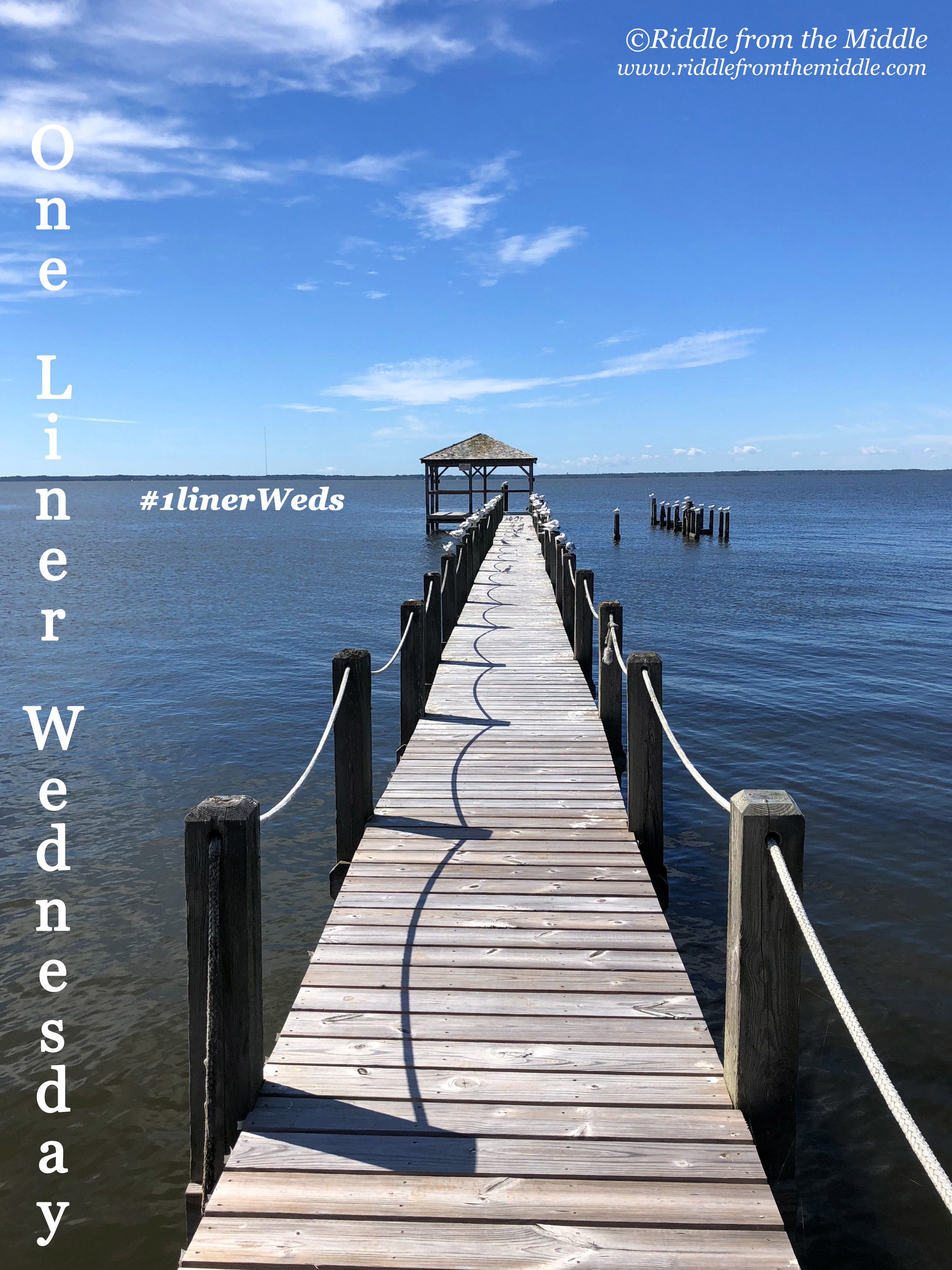
SoCS: What will the new year bring?

I wish I knew what the new year will bring.

Or maybe not.

On the one hand, I’m worn out by feeling that I can’t make long term plans and that I’m always waiting for the other shoe to drop. There have been so many years of uncertainty both on a personal and a community/national/global level that I would welcome a sense of stability.

On the other hand, it would be terrifying and/or depressing to know that things are going to go badly and that there would be no way to ameliorate or avert them.

So, I guess I will remain in my state of unknowing, making plans, then modifying or dropping them when the next unexpected thing occurs.

I guess the “not knowing” leaves room for hope.

Wishing us all the best in 2023. May it be a year of hope, increasing peace, and caring for one another and our planet.
*****
Linda’s prompt for Stream of Consciousness Saturday this year is “new/knew.” Join us! Find out more here: https://lindaghill.com/2022/12/30/the-friday-reminder-and-prompt-for-socs-dec-31-2022/

One-Liner Wednesday: taking sides

We must always take sides. Neutrality helps the oppressor, never the victim. Silence encourages the tormentor, never the tormented.

Elie Wiesel

Join us for Linda’s One-Liner Wednesdays! Find out more here: https://lindaghill.com/2022/12/28/one-liner-wednesday-temporarily-out-of-order/

Binghamton Poetry Project anthology – Fall 2022

I’m pleased to share the Fall 2022 online anthology of the Binghamton Poetry Project, which includes four of my poems, some of which need more explanation than others!

“Ode to Pentel P207” was written from a prompt during a summer workshop on response poetry with Samia Ahmed. Not surprisingly, we were studying odes that week. As it happened, odes were also a topic of a workshop on Romanticism with Samantha Flatt this fall, so this poem represents both of those sessions.

I do have a special relationship with my Pentel mechanical pencils! I started using them extensively when I was in college. They fit my hand well and are great for fine work, such as writing music manuscripts by hand, which we had to do before music editing software became readily available. I’ve continued to use them and they are my go-to writing implement when I draft poems and when I workshop them.

I hadn’t thought it was weird to have a favorite pencil until I was workshopping this poem, first published by Wilderness House Literary Review:

In my purse

cheap pens I won’t miss if they’re lost
my wallet, heavy with too many coins
ibuprofen for headaches
a pack of tissues
hair ties for windy days
a dog-eared calendar
my license to drive
a crumpled shopping list
emergency cough drops
a pyx
my favorite mechanical pencil, extra lead
credit cards – insurance cards – loyalty cards
a laminated prayer card from my mother’s funeral

Several people commented that the line that let them know something was up was the line about the mechanical pencil, which to me was just a normal thing to carry in a purse. Perhaps, though, it is a bit strange to make a pencil the subject of an ode, although we did study some odes that had been written about everyday objects.

“Beauty can be…” was written in response to Samantha Flatt’s workshop on Romanticism and Beauty with a prompt to describe my relationship with beauty. I was trying to capture the sentiment that I find beauty in many, seemingly contradictory circumstances.

“Hoosic” was written in response to the second week of Suzanne Richardson’s workshop on prose poems. Those three weeks were my first time to attend an in-person Binghamton Poetry Project workshop series since we went virtual in spring 2020 due to the pandemic. The prompt was to include in our prose poem an illogical or associative leap or a surreal moment or a mix of fact and fantasy. As often happens when presented with a prompt and the need to write quickly, I turned to a familiar topic, here, the Hoosic River, about which I have written several poems as part of my full-length manuscript centered on the North Adams, Massachusetts area. I will leave it to the reader to decide if my personification of the river fulfills the prompt.

The reason that there is a fourth poem listed is because “He Pines” was written at a special summer event, Much Ado in the Garden, a Shakespearean-themed festival. I participated in a Binghamton Poetry Project reading and mini-workshop, resulting in this very atypical poem. In keeping with the prompts, it includes some no longer used (and somewhat insulting) words. It also has the line count and rhyme scheme of a Shakespearean sonnet, although not the iambic pentameter. I am notoriously bad at writing in Western received forms, so that I managed anything even sonnet-like is an achievement. This is a disclaimer, though, that I agreed to include it in the anthology only as an example of playing with language for this special event, not because it is actually a good poem!

This fall also marked the return to an in-person Binghamton Poetry Project public reading, although I had a conflict and couldn’t attend. Perhaps in the spring, I will be able to participate, if the tripledemic has alleviated by then.

Please feel free to read the whole Fall 2022 anthology. You can also view past anthologies and browse the site for other features. Enjoy!

a quiet Christmas

Spouse B, daughter T, and I were on our own this Christmas. While we had originally hoped that daughter E, son-in-law L, and granddaughters ABC and JG were going to be able to join us from London, UK, circumstances prevented that, probably a blessing in disguise given the travel disruptions caused by the extreme weather here in the US.

We here in Broome County, New York, were spared the worst of the storm. While it was cold and windy, we didn’t get a lot of snow and ice. Our hearts go out to places that suffered flooding or blizzard conditions. Erie County, about 200 miles to our west, has reported 25 deaths so far from the intense blizzard.

I did change my plan for when I went to church, in deference to the cold. I decided to attend the 4 PM vigil rather than the 10 PM. We had a prelude program from a wonderful brass quintet from Southern Tier Brass. I especially appreciated their rendition of “Lo, How a Rose” which was arranged from the Brahms organ chorale prelude that I learned when I was in college and which has always been a favorite of mine.

I also loved the introduction to the liturgy, which welcomed everyone whatever their state in life. It meant a lot to me to hear such an explicit statement of universality. The word catholic means universal but the Church has often strayed from that concept. I appreciated hearing this all-encompassing welcome at Christmas-time when people who aren’t members are often in attendance while visiting family or friends.

In the evening, B, T, and I watched Miracle on 34th Street, which is celebrating its 75th anniversary this year. T had never seen it and it had been many years since B and I had watched it. It was a sweet way to spend Christmas Eve.

In the morning, we enjoyed cranberry and date nut bread so breakfast, made by B who does a lot of the cooking and baking, especially over the holidays. We opened stockings and gifts. I was especially pleased to receive a 10th generation iPad from B; our current one is 2nd generation, so definitely a step up!

We had a chance to video chat with our London family when it was mid-morning here and mid-afternoon there. The energy of a two- and a five-year-old was palpable, even five time zones away. B and I were also lucky to have phone conversations with our siblings.

When E and T were young, celebrating Christmas was a days-long endeavor. Christmas Day would be spent with my parents who lived nearby. In the following days, my sisters would arrive with their families for a couple of days and then we would travel to B’s parents’ home in Vermont, which usually involved a celebration with his extended family. Days and days of gifts, socializing, and eating.

With just the three of us, we scaled back on the extent of our traditional holiday fare. B did make lasagna for Christmas dinner, using Nana’s recipe. He also made fresh, artisanal bread and sauteed asparagus, followed by tiramisu for dessert. On Christmas Day, we used to have a variety of homemade Christmas cookies for dessert; we would make eight or so types, sometimes supplemented by homemade dried-fruit fruitcake and chocolate fudge. At the moment, we only have two kinds of cookies, pecan puffs from B’s family recipe and cranberry-pistachio biscotti.

Although our celebration was scaled down this year, it felt right, homey and comfortable and mostly low-stress.

I don’t know if we will ever return to a predictable pattern for Christmas celebrations. With all our elder generation now passed on, it’s unlikely that we will have big, extended family gatherings as we were accustomed. Last year, the first Christmas after Paco passed away, we went to London for three weeks over the holidays, just as the first wave of Omicron was cresting. It was complicated.

The pandemic has reinforced the lesson to expect the unexpected and to be open to change. It’s difficult because we often carve certainty and routine. The parlance you often hear is “return to normal.” For me, there is no way for that to happen – for holidays or for much of the rest of life.

So, this year I will be content with a quiet Christmas, having no idea what next year will bring but hoping I will have the grace and support to handle it.

new poem and feature at Portrait of New England!

I’m thrilled to share the new issue of Portrait of New England, which includes my poem “State Line” and my very first published interview!

Those of you who are regular readers here at Top of JC’s Mind know that I usually post here about the story behind the writing of my published poems but the featured Q&A handles that, with shout-outs to the Boiler House Poets Collective and MASS MoCA.

Many thanks to editor Matthew Johnson for the honor of being chosen as featured writer for this amazing issue! In addition to sixteen poems, there are pieces of fiction and creative non-fiction to enjoy, all by writers who have a connection to New England. I also love the wintry cover art by Akseli Gallen-Kallela.

Comments are always welcome here. Please also feel free to share the issue with your friends and family. (The link in the first paragraph is permanent, so if you are visiting this post in 2023 or later, you should still have access.)

two years into COVID vaccines

After yet another period of high community risk level for COVID here in Broome County, New York, we have just today returned to medium level. After a post-Thanksgiving spike in infections, we experienced a hospitalization spike which had increased our community risk level. With the US health system also dealing with an early, hard-hitting flu season and RSV, the dreaded triple-demic, in some areas hospitals are reaching capacity and sending patients to other locations. Additionally, infection rates are predicted to rise as family and friends gather for Hanukkah, Christmas, and New Year celebrations in the coming weeks.

This comes at a time when only 14.1% of people five and over in the US have received the new bivalent COVID booster, which was designed to better combat the Omicron BA.4/5 variants and is proving effective against the current dominant strains, BQ1 and BQ1.1, which are part of the BA.5 lineage.

Furthermore, a recent study indicates that the US vaccination program likely saved 3.2 million lives and prevented 18.5 million COVID-related hospitalizations. The vaccines are estimated to have averted nearly 120 million infections. Another recent study shows that in the two years of COVID vaccine availability in the US, the excess death rate among Republicans is significantly higher than among Democrats, mirroring the difference in vaccination rates, a sad reflection of the politicization and misinformation around vaccines by many prominent Republicans.

It’s horrifying.

The mistrust sown over the COVID vaccine among Republicans seems to be spreading to other vaccines as well. A newly published survey finds that over 40% of Republican or Republican-leaning respondents oppose requirements for the MMR (measles, mumps, rubella) for school children.

This does not bode well for public health measures. It’s frightening how many people will believe politicians or media figures rather than doctors and public health experts on these important issues. People have been infected because they weren’t up to date on vaccinations. People have been hospitalized, developed long COVID, experienced complications, or died at higher rates because they refused vaccines or boosters. The data show this.

Please, get a bivalent COVID booster if you are eligible. Begin or continue the primary vaccination series if you haven’t completed it. If you get symptoms, test immediately and contact a health professional if you test positive to see if antiviral medication is right for you. Don’t go out and expose others if you sick with COVID, flu, or anything else. Mask indoors when infection levels for COVID, flu, RSV, etc. are high in your area. Avoid crowds. Increase ventilation. Wash hands and avoid touching your face – more for flu/cold prevention than COVID. Try to eat and sleep as well as possible.

If you are someone who has been getting health information from pundits, please turn to your personal health care provider, public health department, or national health organizations, such as the CDC. Look for data and advice from public health experts, not anecdotes.

For readers outside the US, turn to your public health experts to see what measures are available and appropriate for you.

Reminder to all: COVID 19 is still a global pandemic. Act accordingly for your health, your household’s and community’s health, and global health.

delayed, partial justice for Dimock

I live in Broome County in New York’s Southern Tier. My town is on the border with Pennsylvania. During the early years of the fracking boom – technically, horizontal hydraulic fracturing with long laterals or shale gas drilling – I was involved with efforts to keep fracking out of New York and to support our PA neighbors who were being devastated by it. My main role was providing factual comments on articles in the media and reading research and articles to make sure I was accurate and up-to-date.

I also attended rallies, panels, and press events, with a bit of bird-dogging on the side. (Bird-dogging is the practice of showing up in places where a public official is speaking or visiting with signs for your cause in order to increase your visibility with the official and, if you’re lucky, the press. It is not illegal or disruptive.) Through these events, I heard from the people of Dimock, PA, which is about thirty miles south of my home, and their allies about the horrible environmental impacts and suffering that fracking was causing there.

Cabot Oil & Gas was the company that was drilling there at the time. In 2008, they contaminated the water supply but refused to take responsibility for the damage. The elected officials and Department of Environmental Protection did not intervene as they should have. Cabot did settle with some people whose homes were affected but with gag clauses that prevented them from saying anything about the situation, although the fact that some houses were torn down and that the lots were restricted from new construction spoke volumes. Meanwhile, other neighbors continued to live in houses without usable water, their properties basically unsaleable. Cabot was eventually restricted from further drilling in a nine square mile section of Dimock, but the damage had already been done.

Finally, on November 29, 2022, Coterra Energy, which includes what had been Cabot, pleaded no contest to a misdemeanor violation of the PA Clean Streams Law, even though they had originally been charged on fifteen counts, including nine felonies. They are ordered to pay $16 million for a water system to bring fresh water to Dimock, which, like many rural towns, has gotten its water from individual water wells. Coterra will also pay the water bills for 75 years for current and future residents.

I found out about the plea from this video by area resident, fracktivist, and citizen-journalist Vera Scroggins. It shows the press conference from the courthouse. The main speaker is Josh Shapiro, current attorney general and governor-elect of Pennsylvania. His office brought the charges against Cabot in 2020, before the merger that formed Coterra. Also speaking is Victoria Switzer, a Dimock resident who has been a leading voice in the cry for justice. After the press conference, Vera includes clips from a rally at the courthouse, featuring more familiar faces and voices from the anti-fracking movement.

I appreciated seeing the people who fought so long and hard for some measure of justice for the affected residents of Dimock, even though it is fourteen years late. As Victoria Switzer pointed out in the news conference, some people have passed away in those years. Others were forced to move out of the area. The fractures among townsfolk may never be mended, as some who had leased their property for drilling became hostile toward those whose water was contaminated because Cabot had to stop drilling and, therefore, paying royalties.

I am sickened to learn this week that, on the same day the plea was entered, the Department of Environmental Protection changed the order regarding gas extraction in the nine square mile area in Dimock. While Coterra may not drill vertically in that area, they are now allowed to drill horizontal laterals into it. These miles-long laterals will be burrowing into the Marcellus shale from vertical wells outside the exclusion zone and then explosive charges will fracture the shale to release fossil methane and potentially other types of hydrocarbons. Theoretically, that methane is then collected from the well for use. In practice, though, some of it also migrates through the rock layers for thousands of feet where it can contaminate aquifers or even reach the surface and cause atmospheric pollution. Additionally, fracking can mobilize radon and other naturally occurring radioactive elements, as well as waste products from the fracking fluids and brine. I am dumbfounded that DEP is risking further pollution in Dimock when so many have already suffered so much.

Article I, Section 27 of the Pennsylvania Constitution states, “The people have a right to clean air, pure water, and to the preservation of the natural, scenic, historic and esthetic values of the environment.” It’s (past) time for the Pennsylvania government to honor that Constitutional provision.

Pulling Off Route 79 on a Summer Day by Sharon Ball (ONE GOOD MEMORY Series)

Happy to share another poem from the Silver Birch Press ONE GOOD MEMORY series! Enjoy “Pulling Off Route 79 on a Summer Day” by fellow Grapevine Poet Sharon Ball! Bonus: a cool photo of Sharon and Miss Kitty.

silverbirchpress's avatarSilver Birch Press

saturday_sun-CfaqmAcQKuw-unsplashPulling Off Route 79 on a Summer Day
by Sharon Ball

1.
Watching the white butterfly stop and sit
on a leafy green sunspot, then lift again
flickering on bright air,
propelled up, down, sideways across the road,
flying toward my open window.
Will it flap in or pass on through the trees to the river?

2.
White butterfly floats
Aspens quake against blue sky
Sun-dappled woods keep secrets.

3.
Through the trees, the river moves fast with yesterday’s rain.
I barely hear the water over the whoosh and hum
of coming cars and going trucks.
In between, leaves whisper of gifts as
the white butterfly melts into quiet woods.

Photo by Saturday Sun on Unsplash. 

NOTE FROM THE AUTHOR: This poem is the unexpected result of a solo drive through the countryside. At some point, I pulled off the road, rolled down all my car windows, and paid attention to…

View original post 150 more words

One-Liner Wednesday: London snow

My granddaughters after a rare snowfall in London, UK – excited 5-year-old ABC who remembers snow from living with us in upstate NY when she was little and 2-year-old JG who had never experienced snow.

Join us for Linda’s One-Liner Wednesdays! Find out more here: https://lindaghill.com/2022/12/14/one-liner-wednesday-the-lost-days/

Sweets by Wendy Stewart (ONE GOOD MEMORY Series)

Another poem from a fellow Grapevine and Boiler House Poets Collective friend as part of the Silver Birch Press ONE GOOD MEMORY series! Enjoy “Sweets” by Wendy Stewart, especially those of you who enjoy marzipan treats for Christmas.

silverbirchpress's avatarSilver Birch Press

fieryphoenixSweets
by Wendy Stewart

For Christmas we make marzipan fruits.
They are as big as my thumbs.

Apples are round and red,
like apples. I get it.

Plums are purple like plums.
I like them best.
Bananas are yellow and long.

I say grapes and she laughs.
I get it. They’d be so little.

Once she says Oh! That one
I thought must be a real plum.

She puts them on the glass tray.
They stay set on the cold porch.

When company comes,
we offer them our candies.
She holds the tray.

I tell how my mum
was fooled by my plum:
That one.

PHOTO:Marzipan fruits by Fiery Phoenix.

NOTE FROM THE AUTHOR: I wrote “Sweets” when my daughter was little, perhaps littler than I was in this poem, and I was missing my mother. It is a fond memory. It struck me that you don’t know what’s…

View original post 70 more words