Sleep (or lack thereof)

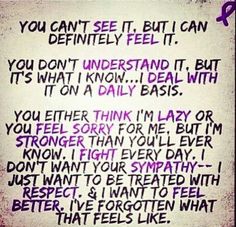
One of the features of wearing a Fitbit is that you get a weekly report. Mine arrived in my inbox this morning and reported that I had averaged 3 hours and 50 minutes of sleep in the last seven nights.

This is not good, although, to be fair, the last week was worse than typical. While I do often have trouble sleeping, I usually have more good nights’ sleep thrown into the mix.

I actually do go to bed at a reasonable hour and spend eight to nine hours attempting to sleep. I’m not fighting off sleep on purpose. I also follow a lot of the advice on sleep hygiene, but its helpfulness is limited.

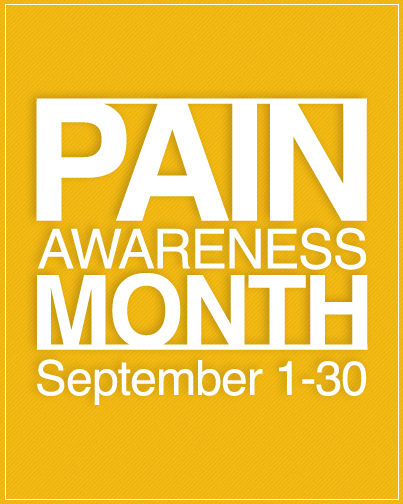
Last week was busy and also featured flares of some chronic health issues, one of which I will write about later this month as September is its “awareness month.”

I promise not to be too graphic…

The Summons

Church yesterday was unexpectedly difficult.

Our younger daughter Trinity was with me, which is a rare occurrence in the last year as she has been away from home for grad school and a summer internship. She pointed out that we were singing some of our favorite hymns, including “The Summons” which we were singing for entrance. (Text is at link; other sources list the author as John Bell.)

I love “The Summons.”  I love its message and its challenge. I love Kelvingrove, the lilting Scottish tune to which it is usually sung. I loved singing it. I loved conducting it during the years that I volunteered as accompanist with our youth and junior choirs.  (I usually accompanied anthems, but conducted hymns.) “The Summons” was an important part of an ordination and first Mass weekend for a member of our parish ten years ago last June.

And that is the problem.

That momentous celebration weekend was also our last with that parish, which had been my church home for over twenty years, where our daughters were baptized and made their first Eucharist, where I volunteered extensively with the music ministry and liturgy committee, where our daughters sang and cantored and rang handbells, where “The Summons” was an important call to mission, where I felt called to serve.

And it all fell apart.

The gospel reading yesterday spoke to what had happened. Someone in authority had fallen victim to an obsessive and slavish regard for the “laws of men” at the expense of love, justice, mercy, and compassion.  I believe that this person suffered from mental illness, but our bishop, to whom we had appealed, would not protect us.

After the ordination/first Mass weekend, we left the parish in solidarity with a staff member who had been unjustly terminated after decades of service.

Ten summers ago, Trinity was transitioning from 9th to 10th grade, which meant that she was in the middle of a two year sequence to prepare for the sacrament of confirmation.  In order to continue, we joined a parish near her school, so that she would already know some of the other students in her confirmation class. The circumstances surrounding our departure from our former parish had been soul-crushing for all of us, but she was in the most vulnerable position. She considered not being confirmed at all.  In the end, she did decide to request confirmation, which involved writing a personal letter to the very bishop who had refused us his protection.   The parish confirmation director told me the letter was honest and powerfully expressed Trinity’s feelings about what had happened.

I’m sure it did. I never saw it. I think that Trinity wanted to spare me any additional pain.

“The Summons” became a painful reminder of what we had all lost. Whenever it came up at Mass during the first six years, I would cry through it, unable to sing. Gradually, as some healing occurred, I found that I could sing it again, especially once Trinity had graduated from college and was singing with the choir at Holy Family.

I thought I was finally over attaching pain to hymn.

Until yesterday.

I was thinking  – it’s ten years. Trinity is beside me, she is strong spiritually, and she is singing this beautiful song of mission which we both love.

And I started crying. Not enough that I wasn’t able to still sing, albeit tremulously and missing a phrase here and there.

Some tears of loss and pain. Some tears of gratitude.

And some tears right now, while writing this…

I’m in!

Just an update for all those who have been following my deliberations about attending this residency/workshop at MASS MoCA given by Tupelo Press.

I sent my registration yesterday and have already received confirmation that I am in!!!

I’m so excited – and a bit anxious. Given that it doesn’t take place until mid-November, I’ll have lots of time to get used to the idea that I am really doing this.

Stay tuned! And thanks to everyone who helped me clarify that this was the right path for me at this time!

SoCS: Poet

I am a poet. I claim the title, even though it isn’t the way I make a living or something for which I have academic credentials.  (Realistically, very few poets make a living at poetry.)

I read an essay a couple of years ago by a young, credentialed poet, who was published and had been an editor, but who still felt he shouldn’t be called a poet because he wasn’t suffering for his art in a garret somewhere.

I, however, don’t make it that complicated for myself.

I considered myself a poet before I was even published because it was what I felt I am, in the same way that I am a daughter, a spouse, a mother, a woman, a musician.

It’s what I am, not what I do.

Maybe it is easier for me because I don’t do paid work, so I don’t have a ready-made answer when someone asks what I do, by which they nearly always mean “what is your job?”

I can claim to be a poet, because it is a mode of expression that is important to me and that I have been working on developing.

I am also a late-developing poet, given that I have only started writing seriously in my fifties. In the last two years, I have been working on improving my poems through participating with the Binghamton Poetry Project (a community workshop run by grad students at Binghamton University), a group of local poets who meet regularly to critique each other’s work, and a new women’s group called Sappho’s Circle.

I am about to take another big step as a poet – attending a residency/workshop. I have been angsting/mulling this over the last couple of days, which you can read about here and here.

So, I think this weekend I am going to register.

It’s one of those things that we poets do.

Because of who we are.
*****
This post of part of Linda’s Stream of Consciousness Saturdays. The prompt this week is “four-letter word.”  Join us! Find out how here:  http://lindaghill.com/2015/08/28/the-friday-reminder-and-prompt-for-socs-august-2915/

SoCS badge 2015

Q & A on the poetry workshop

In response to my post about the writing workshop opportunity I am contemplating, my friend, artist and poet Lorrie Lane, sent a series of clarifying questions to me via Facebook. Here are her questions and my answers:
1. Why are you writing poems? It can’t be for the money – hahaha.
I write poems because I have something to say. A large part of the turn to poetry for me was losing my will/venue/capability to write church music, coupled with an extraordinary opportunity to study “Women Who Run With the Wolves” with Yvonne Lucia and a wonderful group of women.
2. What are you trying to say that can’t be said in an essay?
Essays are lovely, but some ideas and images live much better in poetic form. I love the concentration of language and meaning in poems. I also love the greater room for the reader/listener to enter the poem. Essays tend to report or expound on the views of the author, I often try to leave some mystery in my poems – to give space for the reader to bring their own thoughts and experiences to the poem, although I am finding that some readers and editors do not like this approach.
3. Are you trying to talk to others, yourself, or both?
I write both for myself and for others, sometimes at the same time and sometimes not. There are some poems I write that will probably never be shared, although a couple of poems that started out that way have been seen by at least a few others.
4. How much risk are you willing to take? Will you risk exposing your flaws, your weakness, your guilty pleasures, your loves, your infidelities, your hatreds, your selfishness, your gullibility, your foolishness, your vulnerabilities? and by ‘you’ I certainly mean ‘y’all.
While I am not by nature a risktaker, I am willing to take a calculated risk as long as the threat of harm isn’t dire. The things most at risk would be my pride and my sense of competence, but I think I am mature enough now to shake it off if things go badly. In the second question, there are some of those attributes that I would risk writing about my/y’all’s experience, but some that I would choose not to. For example, I don’t think I could write credibly about infidelities, possibly not about hatred or selfishness, either. It’s hard for me to write about things I don’t understand well and I think it would show if I tried.
5.  Are you more interested in manipulating words or manipulating ideas?
I don’t think I am interested in manipulating at all. I use words to evoke ideas, but I am not wedded to others’ ideas being identical to mine.
6.  What inspires you? Would going to a workshop be inspirational or kind of boring?
I draw inspiration from random everyday encounters and from personal history that can take a long time to distill into a poem. I think that the setting of this workshop is one of the things that draws me to it. It is in a familiar place with ties to personal and family history, but it has been transformed into this arts community. Interestingly, I have a first draft of a poem that I wrote about the work of a particular artist when we visited MASS MoCA a couple of years ago. I think that the combination of the art and the place and my personal connection to it could produce some really interesting poems that would be cohesive enough to eventually become a chapbook.
7.  Would it be better for your poems to go off for a week by yourself? Because other people’s voices could confuse yours…
I don’t think I would be able to go off on my own and write for a week without some kind of interaction. I’ve learned through the Binghamton Poetry Project and my critique/workshopping group that it is incredibly helpful to have other voices to point out parts of the poem that are not concise enough or redundant or confusing. I’m still developing judgement on taking advice and on revision – and learning that what one editor likes, another won’t. I have a feeling that, even over years of writing, the balance between my voice and the critical voice of others will be difficult to achieve. At the moment, I feel that the other voices are helping to make my work stronger so that a bit of it can get out to the public in some way.  I do consider myself a general audience sort of poet, rather than a more erudite “poet’s poet.” That being said, there needs to be a certain level of craft to get work published and I need others’ help to achieve that.
8.  Think of the most ridiculous and long poetry project you can–say, a blank verse epic about some obscure historical event–and write the first page. (That’s not a question, is it? Well, do they make you do these kind of exercises in poetry workshops and why don’t they?)
Some workshops do give prompts or assignments, often around poem exemplars. Usually though, they give several prompts from which you can choose one to work on. I have some experience writing from prompts from Binghamton Poetry Project, which is how I actually attempted a slam poem – not my natural bent! I don’t think that this workshop will be set up like that, though, as it seems that the expectation is that some people may be generating new work while others may be revising individual poems or collections.
9.   Are you, a polite person, willing to write a rude poem? then do it or why not?
If I were writing from a prompt, I could write a rude poem, perhaps even a profane poem. I would probably than tear it up and throw it away. I write to express myself and would only share work that I felt conveyed what I wanted to say in the manner in which I wanted to say it.
10.  If you read all the literary journals published in 2014, would you ever be able to do anything else for the rest of your life?
There are a zillion literary journals – and they come and go all the time. I would not attempt to read a year’s worth of journals, because, yes, it would take a lifetime. I do read a variety of contemporary poetry, but snatched from here and there. And, yes, I do understand that my journal publications will reach relatively few and rarefied readers, but it seems to be part of the way things work. Enough journal publications – and some of the “right” ones, eventually – are needed to get a small press to consider a chapbook. Or people self-publish, but I don’t think I am cut out for that.
11.  Can you learn anything other than technique at a workshop? This applies to painting workshops, and my answer has been ‘no.’ Technique is essential but secondary.
I think that one can learn things other than technique at a workshop, but first I have to consider the subject of technique. Whereas you studied both English and art at the collegiate level, the last time I had formal instruction in poetry, I was an 8th grader in Monroe Bridge. One of the things I enjoy about Binghamton Poetry Project and Sappho’s Circle is the opportunity to learn more technical aspects and craft of poetry. Other things I can learn are some of the ins and outs of the editorial and publishing processes, at which I am a novice, at best. I also think that I could learn a lot about my by-then 55-year-old self, as I will be walking into an unknown territory, interacting with a group of new people which is daunting for someone who has become more and more of an introvert over time, facing the possibility that I could be totally out of my depth, and perhaps spectacularly failing in front of an award-winning poet and publisher. But, probably not. I hope.

Should I apply for this poetry workshop or not?

Yesterday, this link appeared in my inbox https://tupelopress.wordpress.com/tupelo-press-writing-conferences/the-studios-at-mass-moca/ announcing a one-week poetry residency/workshop at MASS MoCA, offered by Tupelo Press of North Adams MA.

And I am totally freaking out about it.

I have never done anything even remotely like this and the prospect is simultaneously exciting and terrifying.

And I feel that I need to decide quickly as it is limited to eight participants.

Update:  To read more about my deliberations, click here.

This is where I should present an orderly list of pros and cons. Instead, there will be a tangle of pros and cons, sorted by topic.

Place:  My hometown is twenty miles from North Adams and it is the home of the high school where I met my spouse. It was also the home of my grandparents, the place we went shopping, and the area is still home to some family and friends.  Although the city has undergone a transformation from the time I was growing up, because we have visited frequently over the years, I am still comfortable there.

On the other hand, I have only been to MASS MoCA once, on a visit a couple of years ago. I am not at all knowledgeable about visual art, but we loved our visit. If I do go, most of the exhibits will be different than the ones we saw. Unlike most museums, MASS MoCA does not have a predominantly permanent collection. I am nervous about how inspirational the current exhibits will be for me in terms of writing new poetry. But, if it is, it could form the basis for a chapbook, which would be a good growth opportunity for me.

Time:  That week in November is fairly easy to re-arrange for me. Fortunately, our University Chorus concert is not until early December this year and we are doing Carmina Burana, which I know well. The sad thing is that my husband’s birthday is that week, although he has said that he is okay with my being away.

Readiness:  I have never done anything remotely this intensive with poetry – or, come to think of it, anything else. I haven’t concentrated on poetry or been in the company of poets for more than a few hours at a time. Am I ready to spend a week alternately interacting and living with poets and spending time alone writing and revising? Would I ever feel ready or is it just something one jumps into, ready or not?

There is some comfort in that the registration screen has several categories with which to describe one’s publication history, beginning with novice and ending with publishing one or more books. I at least get to claim the “one or two journal acceptances” category. Bonus:  I have some anthology credits and online credits from Silver Birch Press, even though I only have one actual journal credit. Enrollment is limited to eight participants, but I could easily find myself surrounded by much more experienced and formally educated poets, which could be intimidating, depending on personalities. Fortunately, I have had good experiences with the local established poets, who have helped me so much.  On the other hand, I could find myself being in a group of predominantly novice poets, which I am used to from Binghamton Poetry Project, although it would be strange to be the experienced one in the group for the week. Or we could have a range of experiences among the group, which would probably be most comfortable.

Perhaps “Readiness” is not the proper name for this category. It’s more how much uneasiness/fear I can face. Although we have to submit sample poems, it does not seem that Tupelo is looking to cull applicants. They seem willing to work with whomever wants to be there – and can pay them, which leads to…

Money:  It’s not that I can’t afford to do this. It’s that I don’t generally spend much on poetry because it is unlikely I will ever recoup costs through publication.  But I do think I would learn a lot and get more insights into what publishers are looking for, which would be really valuable as one of my goals is to publish a chapbook someday. There. I actually admitted that publicly.

Okay. Time to stop hashing and publish this. Any and all are welcome to weigh in in comments or by email/FB for those who have those addresses. I need to decide quickly, as I would hate to delay, decide to do it, and find out that I waited too long and it was full.

Do I try to do this or not?

One-Liner Wednesday: Women’s Equality Day (USA)

“As we celebrate the last 95 years of progress in advancing women’s rights, let us rededicate ourselves to the idea that our nation is not yet complete: there is still work to do to secure the blessings of our country for every American daughter.”
– President Barack Obama, from the declaration of today, August 26, 2015, as Women’s Equality Day in the United States, in recognition of the adoption of the 19th Amendment to the US Constitution, barring sex discrimination in voting rights.

This post is part of Linda’s One-LIner Wednesdays. Join us! Find out how here:

A big thank you!

I’m grateful to everyone who has been visiting Top of JC’s Mind over these past couple of weeks. Since I did my 500(ish) followers and SoCS posts, I have received many encouraging compliments, likes, and follows.

It is so heart-warming and affirming that I have been trying to get a post or reblog out every day, even if it is short, as this one will be. It’s a busy week, as we try to fit in appointments, family visits, shopping, packing, and move-in for T in the one week between the end of her summer internship and the start of the semester.

It’s finally starting to sink in that this is the last year of grad school for both E and T. The end of the journey of having one or both daughters in formal schooling which began in 1991.

Wow! That looks like such a long time when it is written down.

Maybe I should take a rest…

the start of Sappho’s Circle

Today was the first meeting of Sappho’s Circle, a women’s poetry workshop group convened by Heather Dorn, whom I first met through the Binghamton Poetry Project of which she is currently director.

We will study women poets, write from prompts, have sessions where we workshop poems by group members to help them revise, and have publication parties where we choose publications to which to submit our poems and send them off – before we get distracted, chicken out, etc.

I am so excited to have another group, along with my regular workshop group and the Binghamton Poetry Project,  to help me become a stronger poet.  I’m also looking forward to being in another circle of women. I have been privileged to belong to other women’s circles over the decades and always find great support, generosity, and understanding within them.

My heartfelt thanks to Heather who has been such a great help to me as a poet. I’m so looking forward to being a part of Sappho’s Circle through the coming year!

Small Gestures

I’m thankful for this reminder that the small actions we take are important in ways that we often cannot see.

Karen Lang's avatarLIVING IN THIS MOMENT

“It is a serious thing, just to be alive on this fresh morning, in this broken world.” ~ Mary Oliver

View original post 254 more words