Yesterday, 90+ New York State organizations sent a letter to NYS officials, did a press release through Food & Water Watch, and held a press event, requesting that New York ban using carbon dioxide to fracture underground shale formations to extract methane and attempt to sequester carbon dioxide; this is important not only regionally in the Southern Tier of NY where it is being proposed (and where I live) but also nationally and internationally because fossil fuel companies are using this unproven, dangerous, and most likely ineffective scheme for extraction/carbon sequestration to justify their continued drilling for decades to come, despite the gravity and acceleration of climate change impacts.
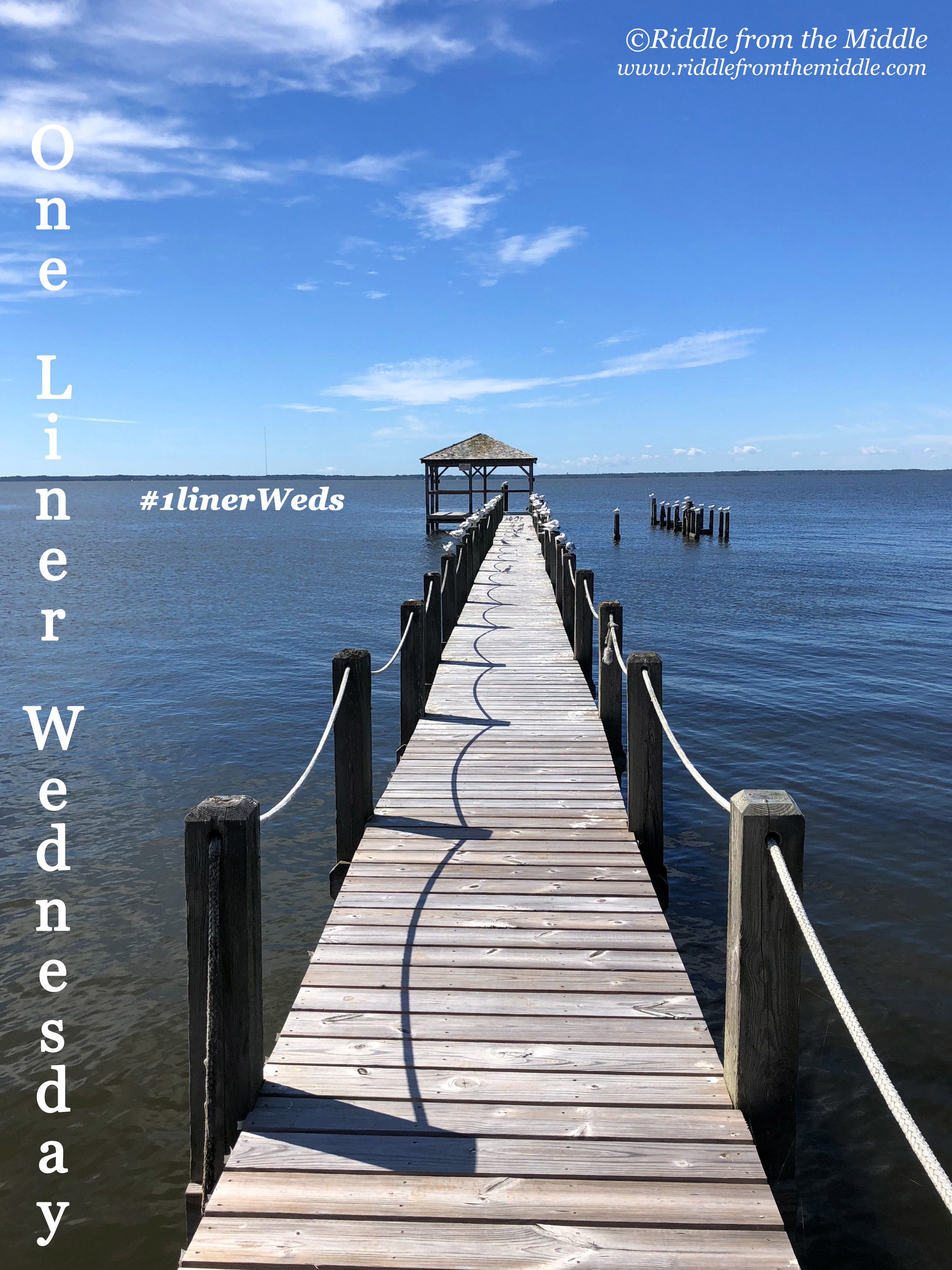
B took this photo in front of our house yesterday morning (June 7, 2023) as the early morning sun tried to break through the wildfire smoke coming down from Quebec, several hundred miles away.
Things got worse as the day went on.
The air at ground level smelled like a campfire and an orange-tinged haze reduced visibility so that you couldn’t see the hills or tell where the horizon was. You could see smoke in the air just looking across the street. You needed indoor lighting even with the drapes pulled back on the windows.
We were keeping a watch on the air quality index numbers from airnow.gov. By mid-afternoon, they reached 460, well into the hazardous category. At that level, people should stay indoors with filtered air. If people have to be outdoors briefly, they should wear masks that are good at filtering out particulates, such as N95 or Kf94. Fortunately, many people still have some on hand from our pandemic experience.
B came home from work early because the smoky air began penetrating the stairwells in his building. It became quite windy. I was hoping that there were some rain clouds up above the smoke but no precipitation fell.
We aren’t alone in this phenomenon. Much of the Northeast and Mid-Atlantic regions of the US are having significant smoke impacts, sometimes even worse than areas in Canada that are much closer to the fires, due to a stationary low pressure system that is circulating in such a way that it draws smoke in our direction. It’s been a dry spring, so there are hundreds of wildfires in Canada right now, with over two hundreds that are considered out of control.
That’s a lot of smoke.
We need rain to help quell the flames and to prevent even more fires from erupting. Also, the plants and animals need more water. We are getting to what should be peak strawberry season here but the crop is expected to be low due to lack of rain, although a late freeze in May didn’t help matters.
As frequent readers may recall, I’ve been active around environmental issues for a number of years, particularly around climate change. I know that the extra carbon people have put into the air through fossil fuel extraction and use, deforestation, unwise agricultural practices, etc. has increased the risk of all kinds of extreme weather events. It makes the likelihood of heat waves, droughts, and wildfires higher and the changes in the air, land, and ocean temperatures make severe storms and stalled weather systems more likely.
We can see it with our own eyes.
I’m frustrated that corporations, politicians, and world governments did not make this a priority years ago. We might have averted some of the impacts we are experiencing now and reduced our future risk. I’m grateful that some action is coming on line now, but we need to make changes more quickly and more universally to reduce the severity of hurricanes/typhoons, wildfires, droughts, floods, sea level rise, biodiversity loss, heat waves, coral bleaching, etc.
In my little corner of the word along the New York/Pennsylvania border, we have a bit of improvement today. For the last few hours, our air quality is rated as “unhealthy for sensitive groups” rather than hazardous for everyone, although I know that, in the New York City area, airports have had to suspend service due to lack of visibility from the smoke. Washington, DC is having a purple alert for air quality, which is one level higher than red alert. The upper level winds have shifted enough that we aren’t in the worst sector today, but others are suffering higher levels than yesterday.
My fear is that a report that I heard today will come true – that this pattern will repeat itself throughout the summer.
It’s hard to predict.
A moment ago, I saw a bit of sunlight break through. I looked out the window and can see the sky with some clouds.
I haven’t seen the sky for a couple of days because of the smoke.
The clouds don’t look like rain is imminent, but I will try to have hope.
Over the last ten or so years, I’ve spent a lot more time thinking about methane than most people.
This is due to the fighting against fracking here in my region with the Marcellus shale, in the shale plays in the US, and the export of the technology around the world.
I will spare you all the detailed things I learned about fracking and methane’s effects on climate from Bob Howarth, Tony Ingraffea, Sandra Steingraber, Walter Hang, and so many others back in the thick of the fight in New York State, which led to first an administrative ban and later a legislative one. One of my roles at the time was to comment on media articles as part of a rapid response team. I learned to argue from economic, health, environmental, social, and other perspectives, depending on the circumstances.
Fun times.
N0t really. It was super stressful. It was also important to get accurate information out into the public and I was very grateful that we were able to get some better policies in place.
Unfortunately, the damage done by fracking and by methane leakage is still with us, widespread and massive.
Atmospheric methane levels are at record highs and are part of the supercharging of global warming that we are seeing now. As a greenhouse gas, methane is more short-lived in the atmosphere than carbon dioxide but it is much more powerful in the near term. In a ten-year timeframe, methane is about a hundred times more powerful than carbon dioxide, so it is imperative to cut emissions of it now to avert various tipping points.
There was a major methane reduction initiative signed last year, which is good. The problem is that emissions have not been carefully measured or monitored by governments and the fossil fuel industry and estimates have been much lower than what some scientific studies have shown. I was just reading about a study earlier in the week and will try to insert the link after I’m done stream-of-conscious-ing.
It’s cold comfort that the problems the scientists and environmentalists have been pointing out for years are finally being more widely acknowledged when so much damage that could have been averted has already been done.
We need to stop adding fossil methane to our climate system in order to have any hope of meeting the 1.5 degree C level in the Paris accord.
I am very distressed about the breaks in the Nordstream pipelines. Every time I see video of the roiling, methane-saturated sea water, I feel sick, knowing how dangerous it is. It’s especially upsetting to see it in juxtaposition with the footage of the devastation caused by hurricane Ian. Most media coverage is finally acknowledging the role of climate change in supercharging storms but I wish they had been doing it years ago when it would have been easier to avert this level of greenhouse gases. We finally have some decent federal legislation in place but the scope of the problem outstrips that level of spending. The damage estimates from Ian will be higher than the climate spending in the law.
Our family over these last years has taken steps to stop using methane. When we installed a geothermal heat pump a few years ago, we were able to disconnect from the methane system. Our electricity comes from either our solar panels or a 100% renewable grid supplier, so we aren’t using electricity generated from burning fossil fuels. I continue to advocate for the transition away from methane and other fossil fuels.
On Thursday, I posted that I had a new poem available on Silver Birch Press as part of their series “How to Heal the Earth.” The prompt for the series read, in part, “Your poem can offer practical ideas of how to heal the earth from a personal perspective (i.e., something specific to you and not didactic or soapboxy) or your poem can offer fanciful thoughts that defy the practical.”
Anyone who knows me will not be surprised that I came down on the practical rather than fanciful side. (I’ll leave it to you to determine whether my poem or this post is soapboxy.)
I wrote a list poem, helpfully formatted into a checklist by Word, that relates some of the things I and my family have done to help combat environmental degradation and climate change. The list blends practical, individual actions, like using LED bulbs and driving an electric car, with social and political actions, like voting and boycotting. Okay, there are also a few more poetic lines thrown in, too.
One of the excuses people use for not taking individual action is that they don’t think that their change will have any impact in the face of such a large challenge as global warming. It’s true that the impact of any one individual action is infinitesimally small but those actions do add up within your household, in your neighborhood, your region, your country to something larger and helpful. If everyone, though, throws up their hands and accepts the polluting status quo, the condition of the planet worsens faster, often harming worst and first those who did the least to create the problems in the first place. As someone from the United States, which is historically the largest contributor to global warming, I feel a particular responsibility to cut carbon emissions as much as I can and am fortunate enough to have the resources to do so.
Individual actions will never be enough, though, unless systemic changes also occur. The political and economic systems in most countries are heavily weighted toward fossil fuels and those companies wield a lot of power. Trying to counteract that is also an example of needing many, many individual actions to create positive change. For example, I and hundreds of thousands fellow New Yorkers worked for years to ban fracking and enact a climate bill in our state. There were protests, public commentary, writing and calling elected officials, court cases, elections, research, networking, meetings, and on and on, but the needed legislation finally passed. Of course, there is still work to be done as it is being implemented but, if so many of us hadn’t made our voices heard, my region would probably look like our neighboring counties in Pennsylvania with large fracked gas wells and the pollution they bring as part of our landscape.
There is still plenty of work to do on the systemic level in the US and around the world, too. Current efforts include boycotting the banks that fund fossil fuel extraction and infrastructure, despite the danger that the companies may never be able to pay the loans back and will go bankrupt with lots of stranded assets in the form of rights to extract fossil fuels that cannot be fulfilled if the world is going to stay under 1.5, or even 2, degrees Celsius in global warming. There is also a major divestment push against fossil fuel companies with some pension funds, universities, and other large institutions refusing to hold stock in those companies. In the US, we are also trying to get more federal funding for the transition to renewable energy and an end to decades of subsidies for fossil fuels.
All of these efforts have an individual as well as a corporate component. Whether you are inspired by prose or by (the much shorter and easier to read) poetry, I hope you will join me by doing what you are able to do to fight global warming and heal help the earth from wherever you are. ***** Join us for Linda’s Just Jot It January and/or Stream of Consciousness Saturday! I chose to not take Linda up on the SoCS prompt this week, which is “icing on the cake”, but do want to wish Linda a happy birthday and a peaceful, healthy, creative year to come! You can find out more about #JusJoJan and #SoCS here: https://lindaghill.com/2022/01/21/the-friday-reminder-for-socs-jusjojan-2022-daily-prompt-jan-22nd/
I’ve spent a lot of time over the last decade plus thinking, writing, angsting, and trying to work on climate change issues. This was especially evident during the protracted battle to ban high-volume hydraulic fracturing in New York State, as we also endeavored to help our Pennsylvania neighbors cope with the damage they were seeing from the industry. I was part of a team that wrote comments on media articles and rebutted industry talking points with facts and science.
Because of this, I read a lot of science and heard a lot of speakers on the topics of fracking, fossil fuels generally, and climate change. Because the Binghamton area where I live was one of the most heavily targeted by the fracking industry, there were frequent rallies that drew experts from the Ithaca area, most of whom were connected to either Ithaca College or Cornell University, which is where my daughter T did her undergraduate degree in environmental science.
One of the many environmental warnings that we sounded was the risk of accelerating climate change, particularly due to methane leakage, which occurs at every point from production through transport, storage, and use.
The powers that be didn’t listen.
Atmospheric methane levels climbed to all-time highs, which has the effect of forcing climate change effects in the near-term. While methane is much more short-lived in the atmosphere than carbon dioxide, it is much more potent in trapping heat than CO2, over a hundred times more in a ten-year timespan.
Finally, at the COP26 climate change summit currently meeting in Glasgow, over a hundred countries have agreed to limit methane emissions. In the United States, the Biden administration is finally putting in place regulation of existing fossil fuel wells regarding methane leakage as well as tightening of other rules regarding methane emissions from the fossil fuel industry. Previous efforts targeted new wells only.
One of the sorrows of dealing with climate change is the “what if” factor. What if governments and industry had acted to curtail methane emissions over a decade ago when scientists and activists were pointing out the dangers? What if government and industry had taken global warming from carbon dioxide seriously over fifty years ago when scientists, including industry scientists, made clear the dangers of burning fossil fuels?
If they had, we would not be dealing now with the large increases of extreme weather events, heat waves, floods, and droughts; rising sea levels; loss of glaciers and polar ice; ocean acidification and massive death of corals; weakening of ocean currents; climate refugees; and the threat of even worse consequences in the decades to come.
We can’t redeem the missed opportunities, but we can take action now, including helping those already suffering from climate change impacts.
Linda chose “where” as a prompt for this September 11th, assuming, perhaps correctly, that most posts would be about where we were when we found out about the 9/11 attacks in the US twenty years ago.
In Broome County NY where I live, besides the twenty year retrospectives of the 9/11 attacks, we are having the ten year retrospective of a record high flooding event on the Susquehanna River. The ground was still saturated from hurricane Irene when the remnants of tropical storm Lee dumped about ten inches of rain.
Where my house is is near a flood wall for a creek that runs into the Susquehanna. The creek came up fast with the river flooding a bit later as it collected all the run-off from the creeks as well as what was running off the hills and being dumped by storm drains.
The power was shut off in our neighborhood as the houses closer to the river started to flood. If we didn’t have a generator, our basement would have flooded when our sump pump lost electricity. One of my Memories on Facebook helpfully reminded me that two blocks from us houses had basements totally full of water and two blocks in the other direction the road was washed out and a gas main was broken. Three blocks away there was standing surface water. A big intersection of Main Street and the Parkway was underwater, too.
Most of our neighborhood had been evacuated the night the flooding began, but our little section was only under evacuation order for a few hours on the third day of the flood. We later discovered that the reason was that they were afraid of the flood wall being overtopped. Even though the creek itself had begun to recede, the flooding of the river had backed water up into the creekbed so that the water was within a foot of the top of the wall. (Just to clarify, this is an earthen/stone flood wall, not a concrete one.)
We have been lucky not to have had another severe flood like that one in the last ten years. The prior record-setting flood had been in 2006 and I fully expected we would have had another horrible flood by now.
Unfortunately, I know it is just a matter of time. Looking around the US, we have catastrophic fires in the West and flooding aftermath in Louisiana and the South, in Tennessee, and across a swath of the Mid-Atlantic and Northeast. There are fires in Siberia, floods in Germany and other areas in Europe, killer heat waves, and on and on. While the events themselves are natural, they have been made worse by human-caused climate change.
We have so much work to do to try to stabilize the climate and protect human, animal, plant, and marine life. And we are far behind in our efforts.
I’m upset because scientists and activists have been warning about this for decades. I myself have tried to amplify the message about climate change. It seems that people are finally listening but the amount of change of policy and behavior now will have to be huge to make a dent. Our family has tried hard to reduce our carbon footprint and to advocate for change but the world needs those in power to finally step up and lead. Governments and businesses need to put people and planet over profits. The money won’t be worth much if the planet becomes uninhabitable. **** This less-than-cheery post is part of Linda’s Stream of Consciousness Saturday series. Join us! Find out more here: https://lindaghill.com/2021/09/10/the-friday-reminder-and-prompt-for-socs-sept-11-2021/
Bill McKibben writes a weekly newsletter on climate issues for The New Yorker. The link will take you to a recent one that encourages readers to explore a website that allows you to devise your own climate action plan and see the likely results. There is an introductory video:
The En-Roads website from Climate Interactive and MIT Sloan’s Sustainability Initiative is fascinating. You can change parameters, such as the mix of energy supply, energy efficiency measures, and electrification, and see what the global warming impact would be. You can tweak your plan and then share it with others via social media. Check it out!
Large swaths of the Amazon rainforest are on fire. Media tends to call these wildfires, but the vast majority of them are intentionally set. I think of wildfires as being caused by lightning strike or an accidental spark. When fires are set intentionally, they should be called arson.
While the current scale of the fires is new, the problem is not. For years, farmers and ranchers have burned parts of the Amazon rainforest to clear land for themselves. They have been opposed by indigenous people and their allies, some of whom have been killed trying to defend the forest.
The fires are devastating for the plants, animals, and people who live there, but the scale of the destruction now threatens the very mechanism that makes the rainforest possible. The vegetation, especially the large, tall trees, transpire large quantities of water, which form clouds and help to keep the rainforest green. If too much land is burned, the amount of rainfall will decrease so much that it would be impossible to sustain a rainforest ecosystem.
Plants also take in carbon dioxide and release oxygen. It is estimated that 20% of the world’s atmospheric oxygen is produced in the Amazon. As more and more of the rainforest is destroyed, thelevel of oxygen in the air that all people and animals need to breathe could diminish, while the level of carbon dioxide, already at record highs, could become even higher, accelerating global warming and increasing drought, which diminishes plant growth and causes a downward spiral.
The government of Brazil is making only half-hearted measures to control the fires and has refused the assistance of other nations. President Bolsonaro is a climate change denier, who sees this issue as being solely about the economic development of Brazil. His short-sighted actions may cause world-wide suffering for decades.
It highlights to me how interconnected we are as a planet. At this point in human history, we can’t afford countries being isolationist and concerned only with making their rich citizens even richer.
Money can’t buy oxygen or make more rainfall or change the temperature.
I spent a lot of time involved with the eventually successful efforts to ban high-volume hydraulic fracturing (fracking) for fossil fuels in New York State. Meanwhile, from my town on the NY/PA border, we have watched a host of negative consequences unfold for some of our PA neighbors. I am also only an hour or so from Cornell University, home to some of the leading researchers on fracking. I was privileged to see these professors speak a number of times, both on campus and at community events.
One of these researchers, Dr. Robert Howarth, has just published a new paper in the journal Biogeosciences about one of the most unfortunate environmental effects of the fracking boom, the release of methane to the atmosphere. Global atmospheric levels of methane are at all-time highs since recording began. The levels started a steep rise in 2006, just as the fracking boom in the United States was picking up.
Having heard and seen so much evidence of methane leakage from fracking, I had already assumed that the two were related, but, in this paper, Dr. Howarth explains the evidence by measuring the amount of 13C present, allowing him to determine the part of the global rise in methane related to fracking, most of which was emitted in the United States. The industry tries to tell us that they are controlling methane emissions through detecting and fixing leaks on the wellpads, but there are many other ways in which methane is released, including venting and flaring at the site, especially in areas where the methane is released when the company is primarily drilling for oil; well leakage that develops over time as casings fail; methane that seeps through the ground to the surface, similar to the way radon reaches basements when it originated thousands of feet below; abandoned wells when fractures intersect with them; compressor station leaks and releases; leakage from transmission and delivery pipes, some of which are over 100 years old; and the production, transport, and use of LNG.
Methane is a much more powerful greenhouse gas than carbon dioxide but is relatively short-lived in the atmosphere. This makes reducing it quickly imperative in the effort to limit global temperature rise to 1.5 degrees Celsius.
It is also why the more ambitious climate plans in the United States, such as those of Gov. Jay Inslee and Sen. Bernie Sanders, call for a ban on fracking.
The sooner this happens, the better. The economics of fracking are already poor, with a number of companies going bankrupt because of it. In many markets, renewable energy is cheaper than fossil fuel energy already and energy storage technology is progressing rapidly while falling in price. It’s time to ban fracking and new fossil fuel infrastructure and go all in for renewable energy, energy storage, and energy efficiency.
We need to do all we can to keep the planet livable for people and all other life forms. Banning fracking would be a great step in the right direction.
I am a veteran of the fight against shale gas development in New York State, and, more broadly, against unconventional fossil fuel development and for a rapid increase in renewable energy in order to cut greenhouse gas emissions and keep global warming as low as possible.
I am fortunate to live in the Binghamton area, not that far from Ithaca, where several prominent scientists and professors work. They often came to speak at events in Binghamton and I sometimes would travel to Ithaca for lectures. I learned a lot from them and would use their research in commenting on news articles and in writing blog posts.
One of my favorite speakers is Dr. Anthony Ingraffea, Dwight C. Baum Professor of Engineering Emeritus at Cornell University. His specialty is rock fracture mechanics and he had done hydraulic fracturing research for many years, putting him in a unique position to anticipate the dangers of combining high-volume slick-water hydrofracking with long laterals in shale. He teamed with Dr. Robert Howarth, an environmental scientist at Cornell, in the first major paper raising an alarm about methane leakage from shale oil/gas development; the paper was controversial, but prescient, with subsequent research affirming levels of methane leakage much higher than industry and government projections.
This newly released twelve minute video with Dr. Ingraffea shows the climate consequences of the decision to develop shale gas. This blog post by Sharon Kelly gives some further background and also has a link to the video, in case the embedded one below isn’t working.




 Joanne Corey