LA fires

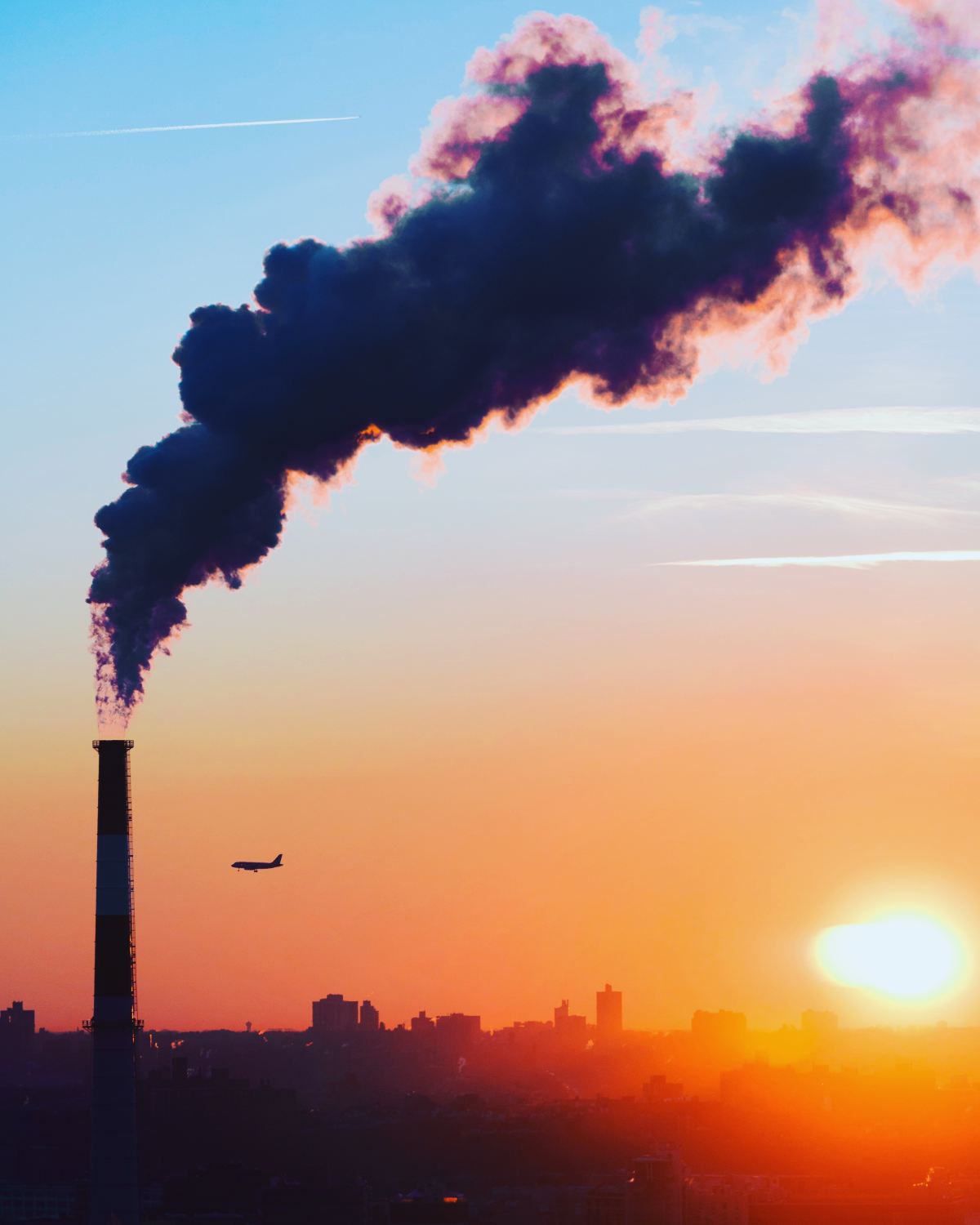
Here in the US, the dominant news story this week is the horrific wildfires in Los Angeles, California. The area has had less than a quarter inch of rain since May. This should be their rainy season but nothing has fallen. The year prior had been very wet so there had been a lot of vegetative growth but it had dried out because of the drought, making it more susceptible to fire. The dry, Santa Ana winds are blowing through the mountains at near-hurricane strength.

So, widespread fires hitting populated areas in Los Angeles.

The fires are so widespread and numerous that the local firefighters, supplemented by others from as far away as Canada, plus aircraft cannot contain the fires, so entire neighborhoods have been leveled.

Some people are blaming the government for not being more prepared but the truth is that the scale of these fires is beyond any hope of control.

Many of the reports are talking about how climate change has altered the conditions so much that what has always been a risk in the LA area has become an epic disaster. Insurers have been refusing to renew homeowner policies in these areas as the danger increased and there is a question if some of these neighborhoods will be able to be rebuilt or if their residents will, in effect, become climate refugees.

There are, of course, already climate refugees around the world. People on islands or low-lying areas that are facing rising seas or catastrophic flooding. People facing prolonged drought and crop failures. People who have lost access to fresh drinking water. People fleeing armed conflicts that erupted over control of scarce resources.

The uncomfortable truth is that many of the people who come to the US as refugees are doing so because of an underlying climate-related cause. For example, asylum seekers from the Northern Triangle of Central America (Honduras, Guatemala, and El Salvador) are most often fleeing from climate-change-induced conditions.

Will the devastation of the LA fires finally get through to climate-change deniers what humanity has done to our planet? Trump and his team are promising to ramp up fossil fuel production, despite the US already being at record-high production levels and despite the fact that people in the US and around the globe are already being devastated by climate change.

I can’t muster hope anymore.

If only the country had taken the environmental message of President Jimmy Carter, whose state funeral was yesterday, seriously, we would not be in this state now.
*****
Join us for Linda’s Just Jot It January! Find out more here: https://lindaghill.com/2025/01/10/daily-prompt-jusjojan-the-10th-2025/


a change in the weather

We went from having a winter storm warning over the weekend to having flash flood and high wind warnings today as we have a rainstorm with above freezing temperatures.

The increasing volatility of weather, including extreme weather, is sometimes called “weather weirding” and is evidence of climate change. It’s occurring everywhere in the world and is most pronounced in the Arctic and Antarctic regions. While the rising global temperatures don’t cause particular weather systems, they do turbocharge them.

World leaders in government and business, take action now! Believe the scientists, not the greenwashing of fossil fuel companies.
*****
Join us for Linda’s Just Jot It January! Find out more here: https://lindaghill.com/2024/01/09/daily-prompt-jusjojan-the-9th-2024/

One-Liner Wednesday: Ban CO2 fracking!

Yesterday, 90+ New York State organizations sent a letter to NYS officials, did a press release through Food & Water Watch, and held a press event, requesting that New York ban using carbon dioxide to fracture underground shale formations to extract methane and attempt to sequester carbon dioxide; this is important not only regionally in the Southern Tier of NY where it is being proposed (and where I live) but also nationally and internationally because fossil fuel companies are using this unproven, dangerous, and most likely ineffective scheme for extraction/carbon sequestration to justify their continued drilling for decades to come, despite the gravity and acceleration of climate change impacts.

This long, informative One-Liner is part of Linda’s One-Liner Wednesdays series. Join us! Find out more here:  https://lindaghill.com/2023/12/20/one-liner-wednesday-a-more-honest-version/

One-Liner Wednesday: COP 28

As North America slept, delegates from around the world concluded the global climate conference in Dubai, when the chair—local oilman Sultan al-Jaber—quick-gavelled through an agreement that included a sentence calling for “transitioning away from fossil fuels in energy systems, in a just, orderly and equitable manner.”

That may not seem like much—it is, after all, the single most obvious thing one could possibly say about climate change…

And by itself it will accomplish nothing….

But it is—and this is important—a tool for activists to use henceforth. The world’s nations have now publicly agreed that they need to transition off fossil fuels, and that sentence will hang over every discussion from now on—especially the discussions about any further expansion of the fossil fuel energy.

Bill McKibben on the final COP 28 agreement by 190+ countries

Feature photo by Thijs Stoop on Unsplash

This super-sized One-Liner Wednesday is part of Linda’s long-running series. Find out more here: https://lindaghill.com/2023/12/13/one-liner-wednesday-how-do-i-know/

One-Liner Wednesday: a sobering reminder

So, bottom line: when you burn fossil fuel you produce particulates which lodge in lungs and kill you (one death in five on the planet comes from breathing the byproducts of fossil fuel combustion), and when you burn fossil fuel you produce carbon, which lodges in the atmosphere, driving heatwaves and floods that kill you.

Bill McKibben

Feature photo by Thijs Stoop on Unsplash

Join us for Linda’s One-Liner Wednesdays! Find out more here: https://lindaghill.com/2023/10/25/one-liner-wednesday-pumpkinferno/

NCR comment

A comment I wrote about fossil fuel subsidies in response to this piece by Thomas Reese, SJ is now available on the NCR (National Catholic Reporter) website.

Some of Father Reese’s proposals to combat climate change strike me as not likely to be sufficient in the time frame available but I wanted to offer an additional suggestion rather than being critical.

This post is a bit of a throwback to the early days of Top of JC’s Mind when I was often posting comments in opposition to fracking.

Next month will mark the tenth anniversary of Top of JC’s Mind, which hardly seems possible.

Stay tuned…

SoCS: methane

Over the last ten or so years, I’ve spent a lot more time thinking about methane than most people.

This is due to the fighting against fracking here in my region with the Marcellus shale, in the shale plays in the US, and the export of the technology around the world.

I will spare you all the detailed things I learned about fracking and methane’s effects on climate from Bob Howarth, Tony Ingraffea, Sandra Steingraber, Walter Hang, and so many others back in the thick of the fight in New York State, which led to first an administrative ban and later a legislative one. One of my roles at the time was to comment on media articles as part of a rapid response team. I learned to argue from economic, health, environmental, social, and other perspectives, depending on the circumstances.

Fun times.

N0t really. It was super stressful. It was also important to get accurate information out into the public and I was very grateful that we were able to get some better policies in place.

Unfortunately, the damage done by fracking and by methane leakage is still with us, widespread and massive.

Atmospheric methane levels are at record highs and are part of the supercharging of global warming that we are seeing now. As a greenhouse gas, methane is more short-lived in the atmosphere than carbon dioxide but it is much more powerful in the near term. In a ten-year timeframe, methane is about a hundred times more powerful than carbon dioxide, so it is imperative to cut emissions of it now to avert various tipping points.

There was a major methane reduction initiative signed last year, which is good. The problem is that emissions have not been carefully measured or monitored by governments and the fossil fuel industry and estimates have been much lower than what some scientific studies have shown. I was just reading about a study earlier in the week and will try to insert the link after I’m done stream-of-conscious-ing.

It’s cold comfort that the problems the scientists and environmentalists have been pointing out for years are finally being more widely acknowledged when so much damage that could have been averted has already been done.

We need to stop adding fossil methane to our climate system in order to have any hope of meeting the 1.5 degree C level in the Paris accord.

I am very distressed about the breaks in the Nordstream pipelines. Every time I see video of the roiling, methane-saturated sea water, I feel sick, knowing how dangerous it is. It’s especially upsetting to see it in juxtaposition with the footage of the devastation caused by hurricane Ian. Most media coverage is finally acknowledging the role of climate change in supercharging storms but I wish they had been doing it years ago when it would have been easier to avert this level of greenhouse gases. We finally have some decent federal legislation in place but the scope of the problem outstrips that level of spending. The damage estimates from Ian will be higher than the climate spending in the law.

Our family over these last years has taken steps to stop using methane. When we installed a geothermal heat pump a few years ago, we were able to disconnect from the methane system. Our electricity comes from either our solar panels or a 100% renewable grid supplier, so we aren’t using electricity generated from burning fossil fuels. I continue to advocate for the transition away from methane and other fossil fuels.

It can’t come soon enough.
*****
Linda’s prompt for Stream of Consciousness Saturday this week was to base your post on “me” or a word that begins with “me.” Join us! Find out more here: https://lindaghill.com/2022/09/30/the-friday-reminder-and-prompt-for-socs-oct-1-2022/

a helpful provision

When I wrote this post on environmental policy in the United States, I hadn’t realized an important section of an earlier House version on Environmental Protection Agency regulation of greenhouse gases had made it into the final version of the Inflation Reduction Act.

The language amends the Clean Air Act and is very specific that the EPA has the authority to regulate all greenhouse gases and to reduce them through the promotion of renewable energy.

This should blunt the impact of the Supreme Court decision in West Virginia v. EPA which held that the Congress had not been explicit enough in defining the scope of the EPA’s work in moving the country away from fossil fuels in order to limit global warming.

One more step in the right direction…

inflation and energy

As the United States Senate passed a major budget reconciliation bill dealing with climate change, energy sources, health care, and corporate taxes this weekend, there has been a lot of public whining from Republicans and industry, saying that the bill will increase, not lower inflation.

Judging from my family’s experience, the bill will lower inflation by decreasing energy costs.

As regular readers may recall, my household has spent years in efforts to reduce our carbon footprint. We have electrified everything in our home, including a geothermal heating/cooling system. We reduced our demand by increasing our insulation and installing LED lighting. We drive our fully electric Chevy Bolt for local driving. (For trips over 200 miles, we drive our plug-in hybrid Chrysler Pacifica, which gets better mileage in gasoline mode than the non-hybrid version.) We own panels in a solar farm because our home was not a good candidate for rooftop panels.

So, this summer, our monthly electricity bill is $17.35, which is the delivery charge from our electric utility. This covers all our household lighting, cooling, laundry, electronics, water heating, etc. plus all our local and short-trip driving.

Meanwhile, many households are burdened with paying $100 to fill their gas tank for the week, plus the cost of their household electricity and methane, propane, or other fuels that they use for heating water, cooking, drying clothes, etc.

A large share of recent inflation is due to increased fossil fuel prices. For our family, that has been felt mostly in the higher cost of food, which is largely driven by the expense of fuel.

I realize that not every household will be able to follow our exact path to be nearly free of fossil fuels but the Inflation Reduction Act just passed by the Senate, which is expected to be passed by the House and sent to President Biden to sign into law later this week, will go a long way to reducing expensive fossil fuel use for residents. As more renewable power comes on line, electricity costs will come down because it is cheaper to produce than fossil fuel electricity. There are rebates targeted at lower-to-middle income folks to help move to electric vehicles, which are much cheaper to run than internal combustion engines. As battery costs have fallen, electric cars are already around the same price as some conventional cars/trucks, so the rebates may make them cheaper to buy.

It’s true that inflation will not suddenly disappear, but this bill has provisions that will bring it down and will help to decrease future inflation spikes by removing inherently volatile fossil fuel prices from the center of our economy. The bill is projected to save average households about $500/year in energy costs. Some households, such as ours, will be able to save much more than that.

So, let’s get this done and enacted! The sooner we do, the sooner it will help people and the planet.

heatwave kitchen

I did something I seldom do this morning.

I wore an apron.

Like many other locations in the Northern Hemisphere, this week we are having a heat wave. It was already 90 F (32 C) by 11:00 AM, so two hours before solar noon, given Daylight Saving Time. Not quite as bad as daughter E in London which set an all-time record at 40 C (104 F) earlier this week, but hot enough that I wanted to get kitchen work that involved heat out of the way this morning.

When I was at the farmstand earlier this week, they were selling beets for only a dollar a quart, so I bought some to roast. I decided to peel and cut them in chunks before roasting. Because I didn’t want to risk splattering my cream and blue print sundress with red beet juice, I donned the apron that B wears sometimes when he is baking.

While the beets were roasting, I made cooked butterscotch pudding for a pie. When I was growing up, my mom used to make pudding pies or sometimes fruited jello pies in the summer. I think that it isn’t a very common practice anymore because there were no pie directions on the pudding package. I remembered the modifications well enough, I hope, that the pie should set. Bonus: I had a graham crust in the cupboard so I didn’t have to bake one.

Admittedly, I don’t have to worry about our kitchen getting unbearably hot because of our air conditioning, provided very efficiently by our geothermal heat pump system. (Geothermal heat pumps use much less energy than conventional central air systems but I wanted to get my electric cooktop and oven work done early so as not to add to the electricity burden which rises in the late afternoon/evening.)

As I keep hearing about people in Europe and the US suffering from extreme heat, my mind goes to heat pumps which will keep them warm in the winter without burning methane and safely comfortable in the increasingly hot summer heat waves, all while helping to combat the greenhouse gas emissions that worsen climate change. Bonus: Heat pumps can break the stranglehold that Russia and other oligarchies have over fossil fuels, promoting peace and economic stability. So much conflict has fossil fuels as an underlying cause. We would do well to stop using them as quickly as possible, so, for peace and the planet, let’s transition to heat pumps NOW.