Our last full day in Slovenia

After collapsing into bed after our bus ride back from our Koper concert, we were gifted with a (mostly) free morning. B and I took the opportunity to finish shopping for gifts and remembrances to bring back. We shopped for honey, as Slovenia is home to a long-standing tradition of bee-keeping. We bought two Christmas ornaments, one of handmade lace and one of wood, both crafts that are important culturally. We bought sea salt from Piran. A cute, artist-designed Ljubljana dress with a dragon on it for ABC. Chocolate because they had interesting flavors, including a lot of white chocolate products, which I appreciated as I need to avoid dark chocolate.

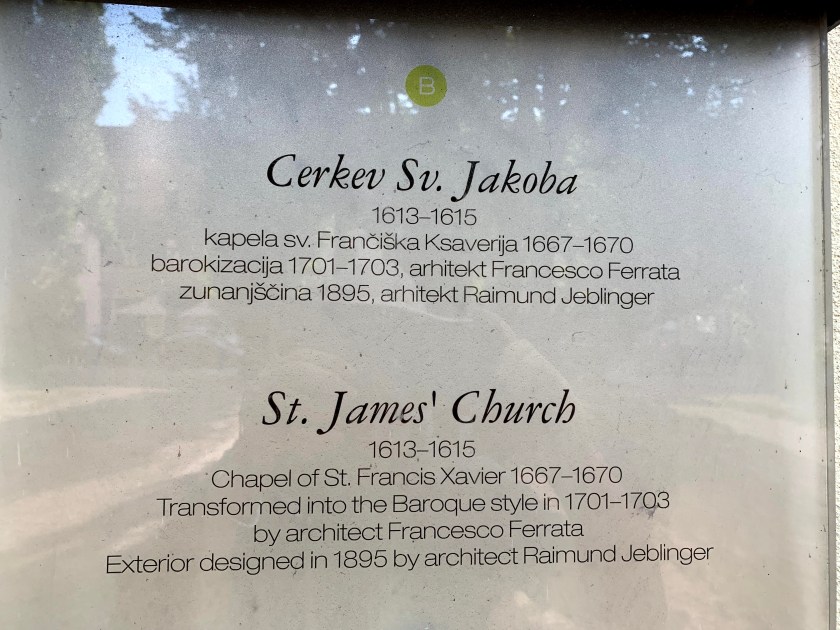
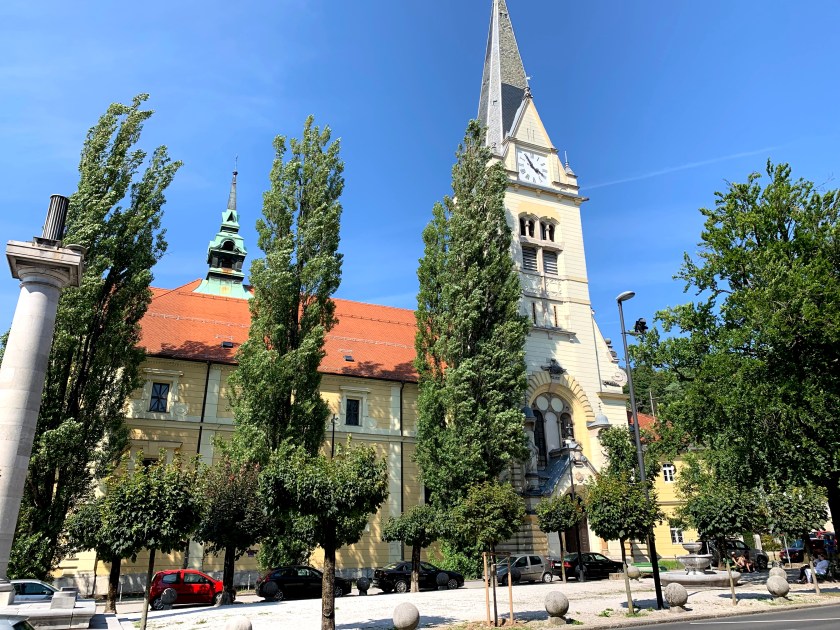
Then, we started a string of official Smith College Alumnae Chorus events. We had a meeting to hear from our officers and take care of some organizational tasks. We went to a local restaurant for our farewell luncheon.  We proceeded to St. Jakob Church for our last rehearsal.
img_0344

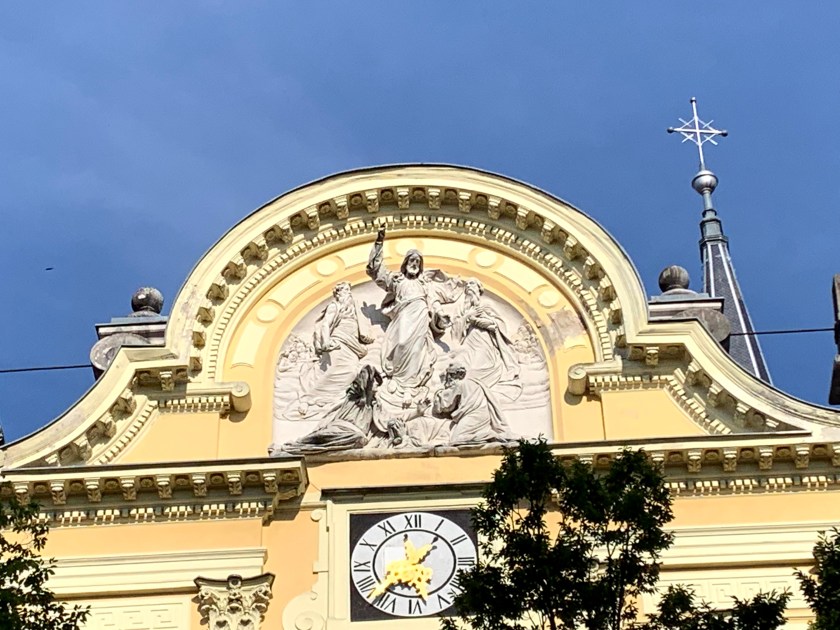
LIke many other churches we visited, it had been renovated and changed styles as the centuries went on. Also, like other churches, some of the renovations had been necessitated by earthquakes.
img_0353

We were surprised to see a vehicle from the Slovenian version of public broadcasting. They were setting up to record the concert for broadcast. Our rehearsal in the church was quite short; we couldn’t run long because we needed to clear out for vigil mass. While we rehearsed, B took some more photos.
img_0355

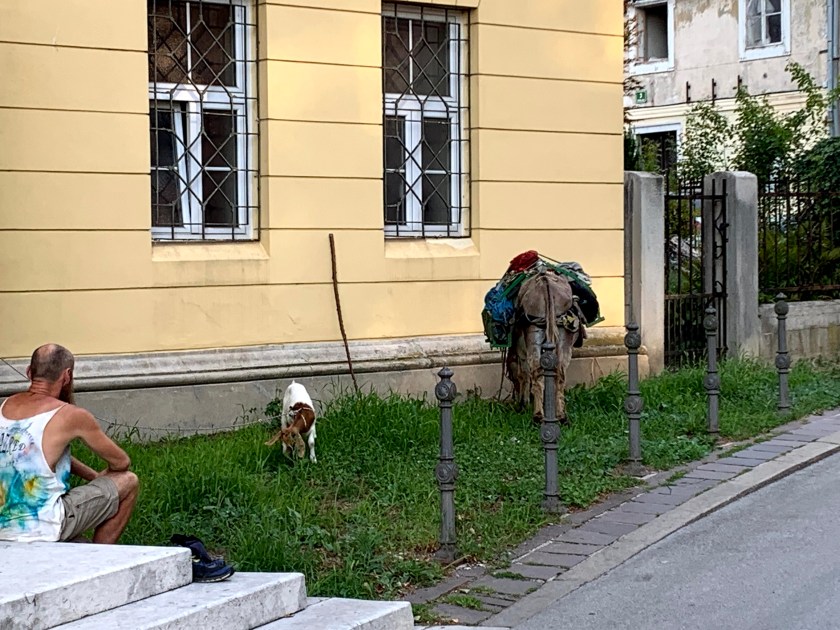
For some reason, there was a donkey grazing beside the church…
img_0359

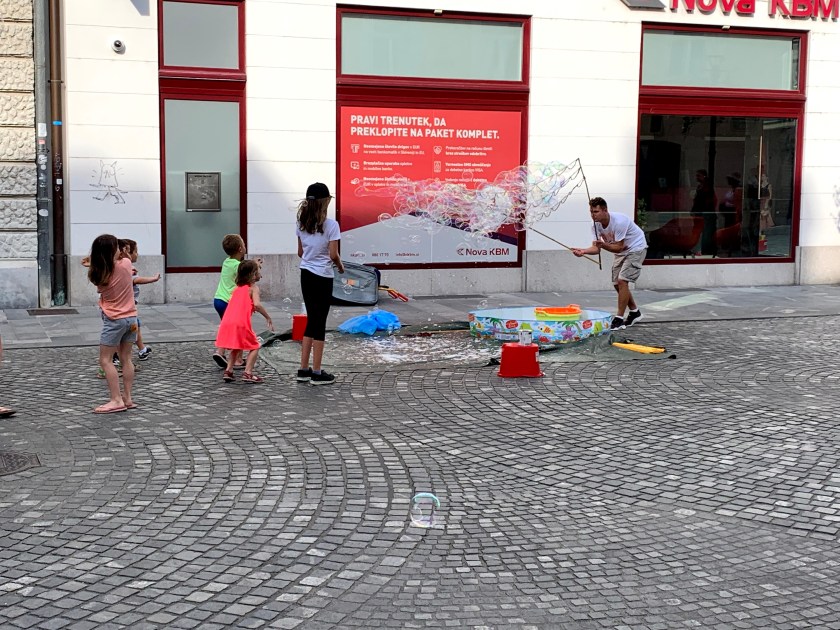
Street performers were amusing the children with giant bubbles.
img_0352

After rehearsal, B and I grabbed a quick salad from an al fresco restaurant before returning to the church to get ready for the concert. We were honored by a visit from a representative of the US embassy, who wanted to meet us before the concert.

The concert went very well. We again had a full house and the audience was very appreciative.
concert in Ljubljana

We had a reception back at our hotel, a last chance to talk and laugh together – and to compare which sections of the Haydn and Duruflé kept playing over and over in our heads.

And to eat cake, because, I, for one, always have room for a good piece of cake.


Koper

After a few hours in Piran, we boarded our bus for a late lunch in Koper and then went to the cathedral to rehearse for our concert that evening.
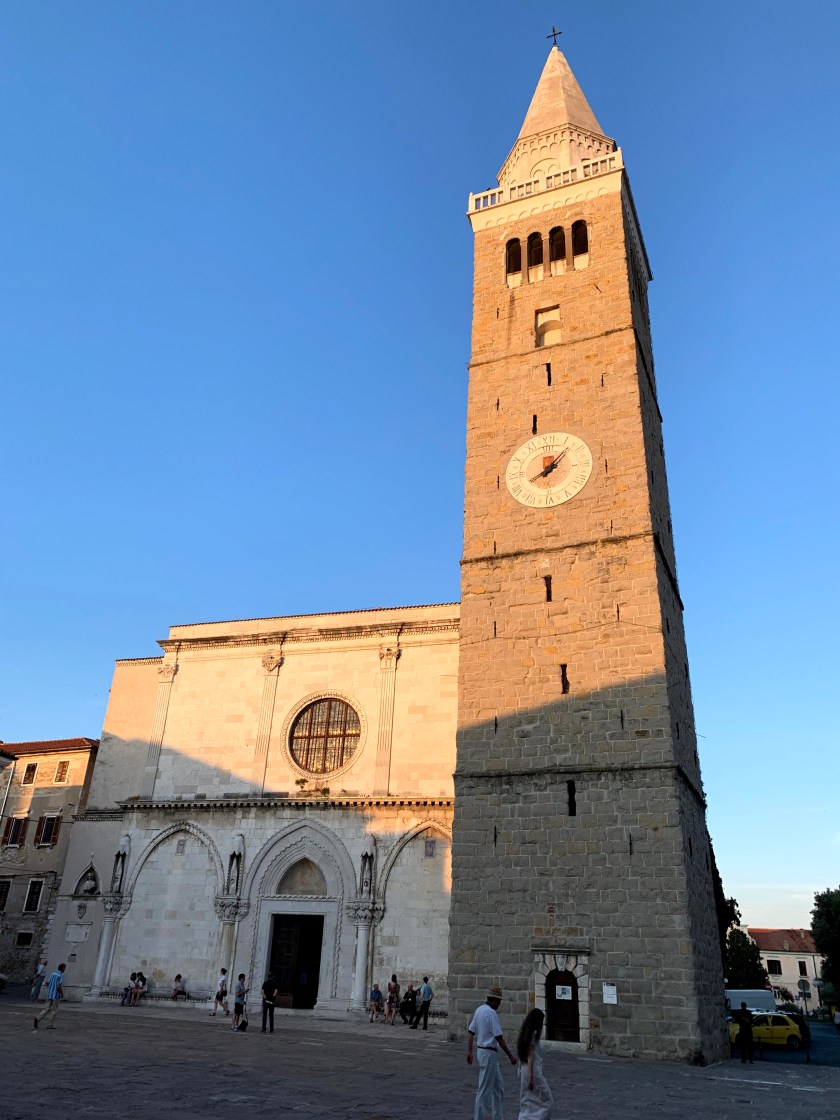
img_0339
The cathedral is dedicated to the Assumption of Mary. Our Slovenian guide told us that about half of the churches in Slovenia are dedicated to Mary under one or another of her many titles. Originally built in the 12th century, the cathedral evolved over the centuries to incorporate elements of later styles. Interestingly, the bell tower was originally a Roman watchtower, which explains why the stonework is so different from the rest of the cathedral. You can see some beautiful photos of the cathedral, including its impressive artwork, here.

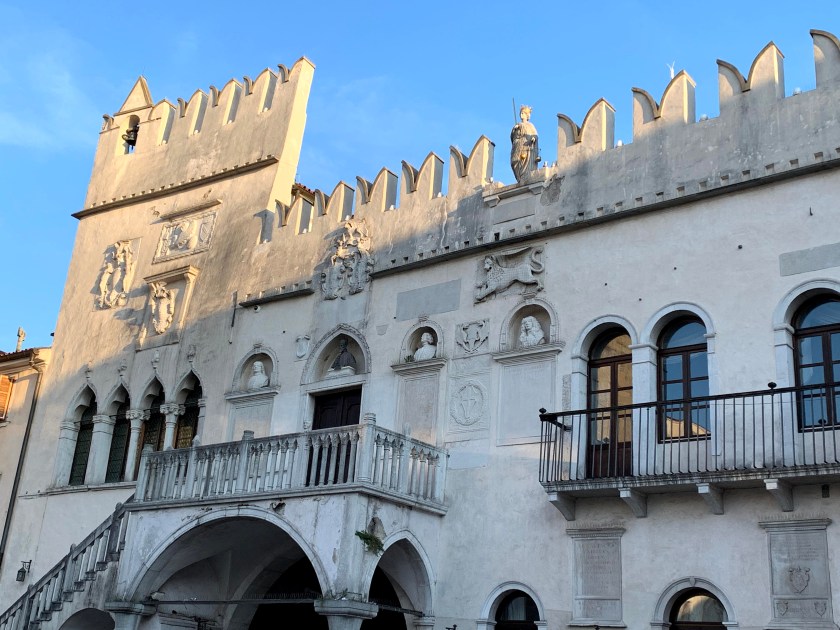
As we saw often in Slovenia, locations tend to be a mix of styles over its long history, most of it spent dominated by other entities. The square where the cathedral is located is named Tito Square, after the president-for-life of Yugoslavia. The City Hall, which is on another side of the square, is a 15th century Venetian palace.
img_0337

After rehearsal, we had a bit of time to get something to eat before we had to dress for the concert. Given that our lunch had been both late and large, B and I decided to visit a gelato shop down near the port. We ate quite a lot of gelato in Slovenia, as there were shops or stands selling it wherever we had free time, perhaps a nod to the Italian influence in at least the southern part of Slovenia. Fortunately for B, who is lactose intolerant, most of the shops had a nice selection of sorbets and vegan gelato. On this evening, I chose a yummy vegan peach gelato.

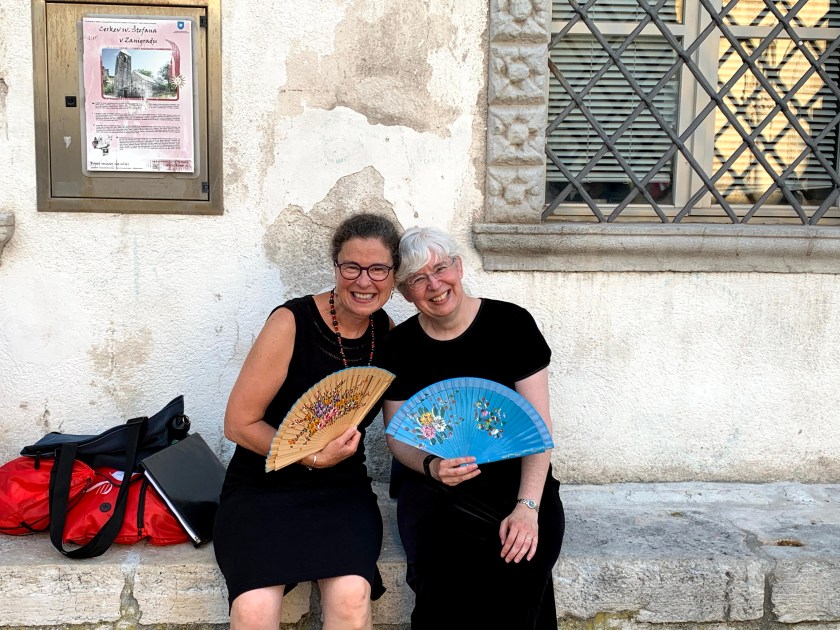
After we dressed in our black concert attire, we waited outdoors until it was time to file into the cathedral. Here, my roommate at Smith and my first Smith friend are sitting and waiting, utilizing the fans that she brought for us. The sitting was important because we would be spending a lot of time standing on stone floors. The fans were important because it was July and quite warm. We were lucky, however, to have been in Slovenia in the time between two major European heat waves that set many all-time high temperature records. (I’m the one on the right with the silver hair and blue fan.)
img_0336

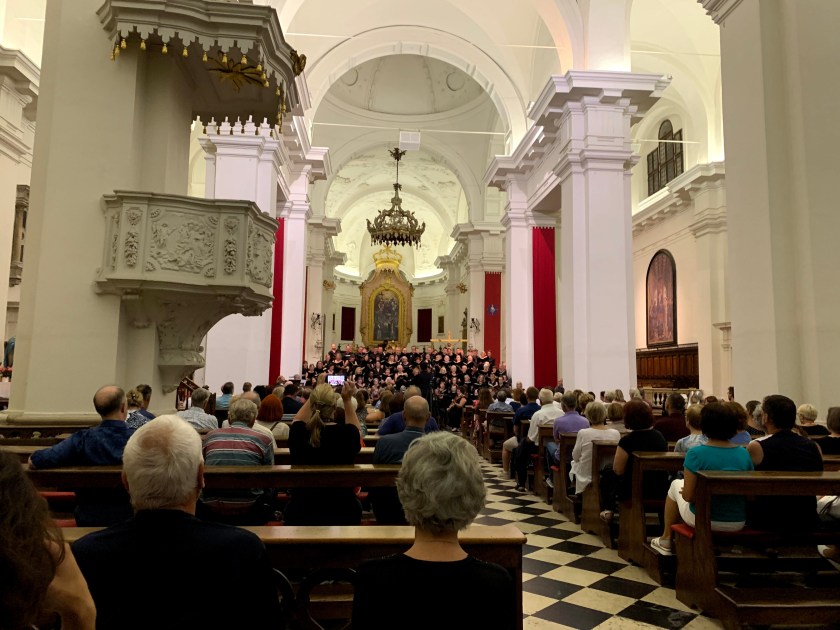
The concert was well-attended and well-received. It was so much fun to sing in that acoustical environment. You can read more about the music and concerts here.
img_0340


Piran

On Friday, the Smith College Alumnae Chorus and our travelling companions visited Piran, a beautiful, historic town on the Adriatic coast of Slovenia. Slovenia, before its independence in 1991, had spent centuries under the dominance of other entities. Piran shows the influence of its time as part of the Venetian republic.

The main square has a statue of Italian composer and violinist Giuseppe Tartini, whose birthplace, now a historic landmark, is on the piazza.
img_0259

As you would expect, some of the streets, now used as footpaths, are very narrow.
img_0295

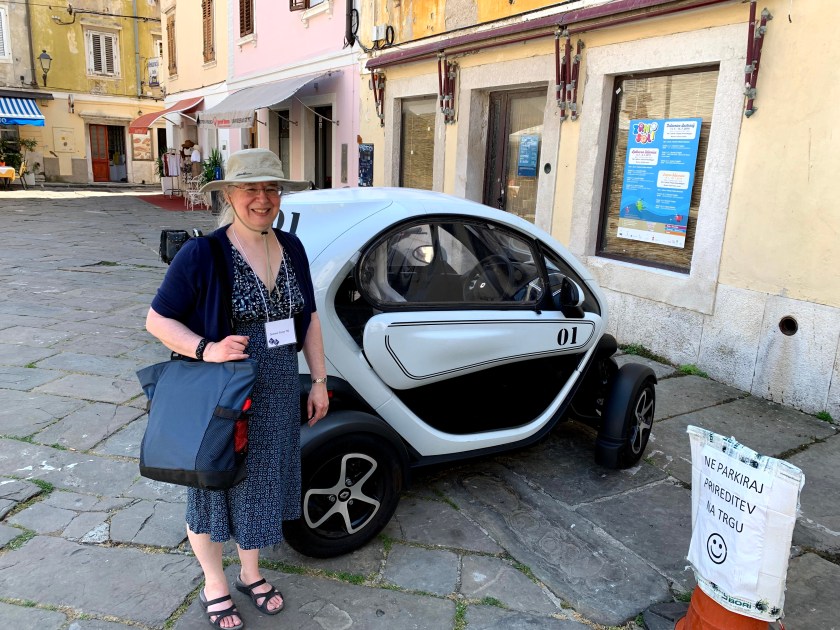
Consequently, the cars are very small by US standards. (For scale, I am 5’1.5″ or 156 cm.)
img_0326

We walked up to the Church of St. George, shown here from Tartini Square.
St. George, Piran, Slovenia

The baptistry is the small, octagonal building whose roof you see to the right of the belltower, which is itself a smaller replica of the tower of St. Mark’s in Venice.
img_0270-2

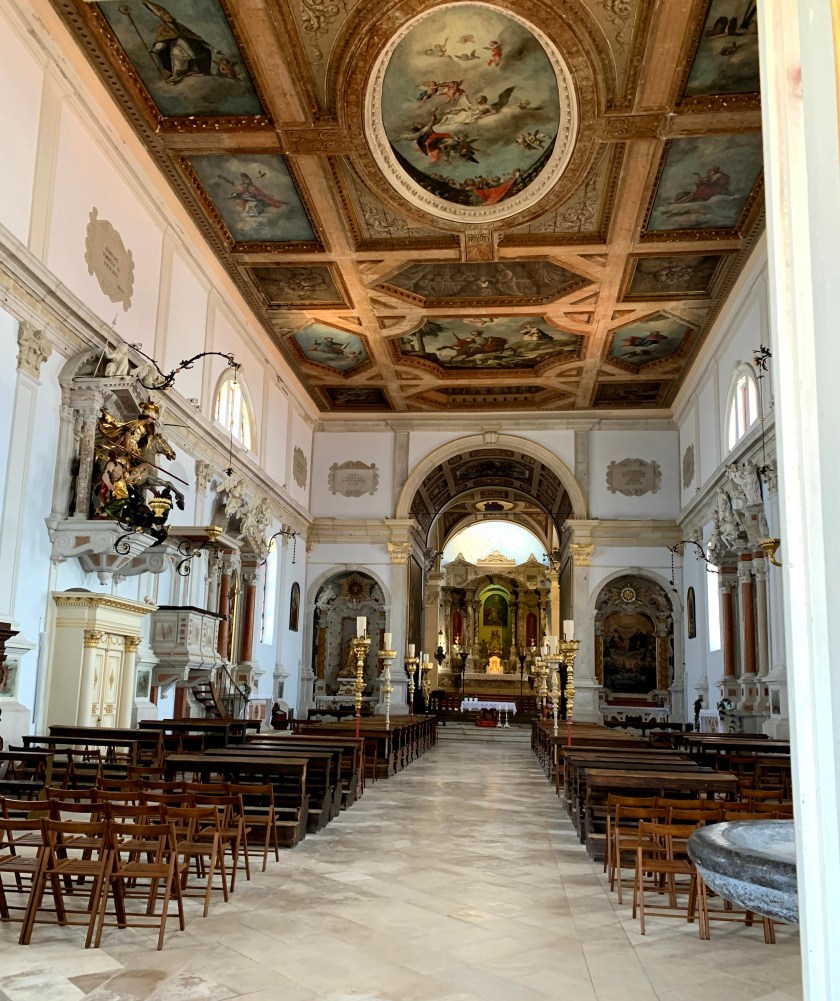
The restoration of the church is amazing! The wall on the left has a sculpture of St. George slaying the dragon.
St. George church, Piran, Slovenia

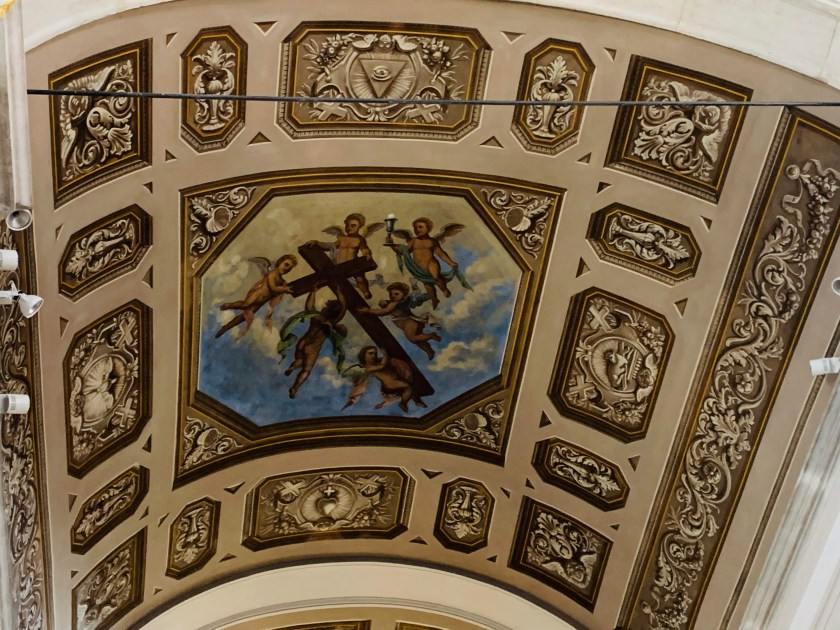
The ceilings were especially eye-catching.
img_0320

Because I was an organist, B took a special photo of the organ.
img_0313

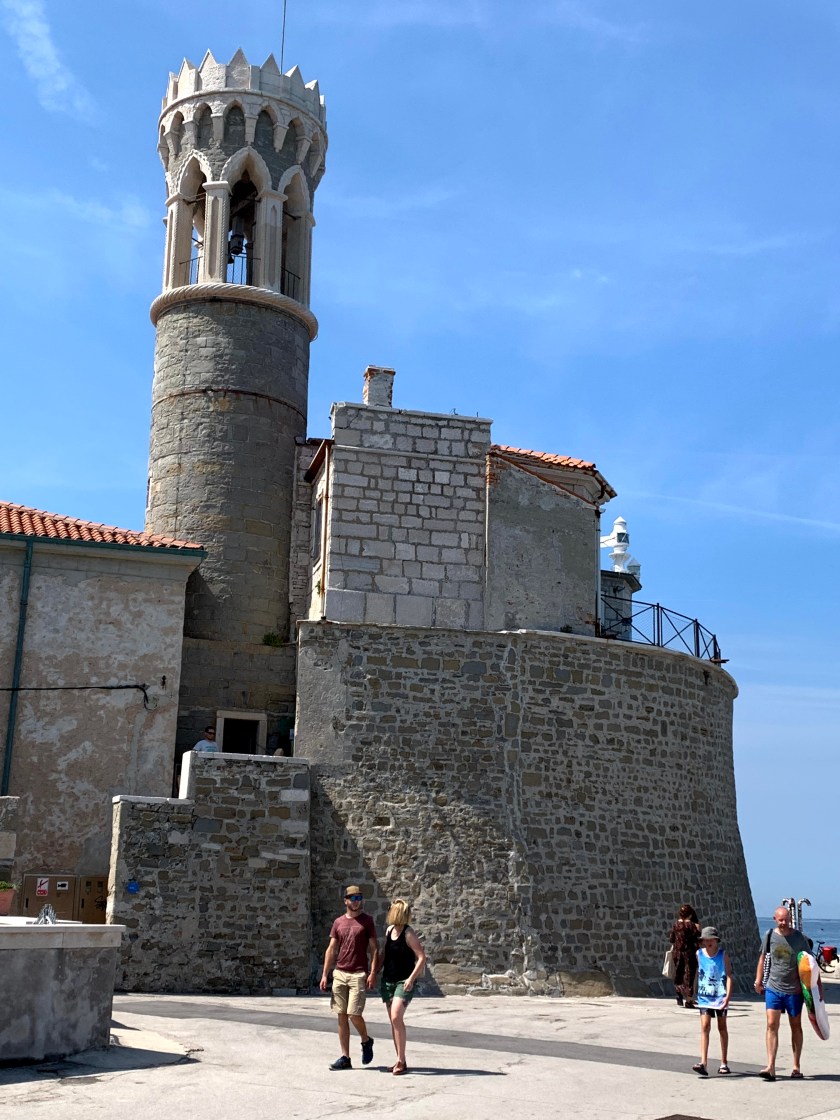
A path leads down from the church to the point and lighthouse.
img_0292

Piran affords views of the coast of Italy, Slovenia, and Croatia.
Piran view of the Adriatic

We loved our visit to Piran and definitely recommend including it in your itinerary if you visit Slovenia.

Lake Bled

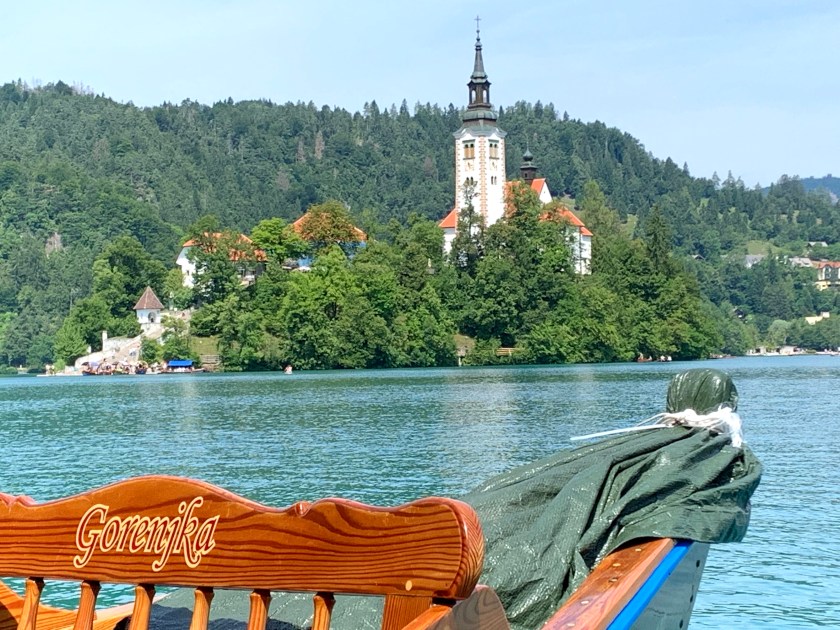
Our first excursion away from Ljubljana was to Bled, which is northwest of Ljubljana and close to the border with Austria. Bled is famous for its beautiful lake, which has an island with a church and belltower.
img_0159

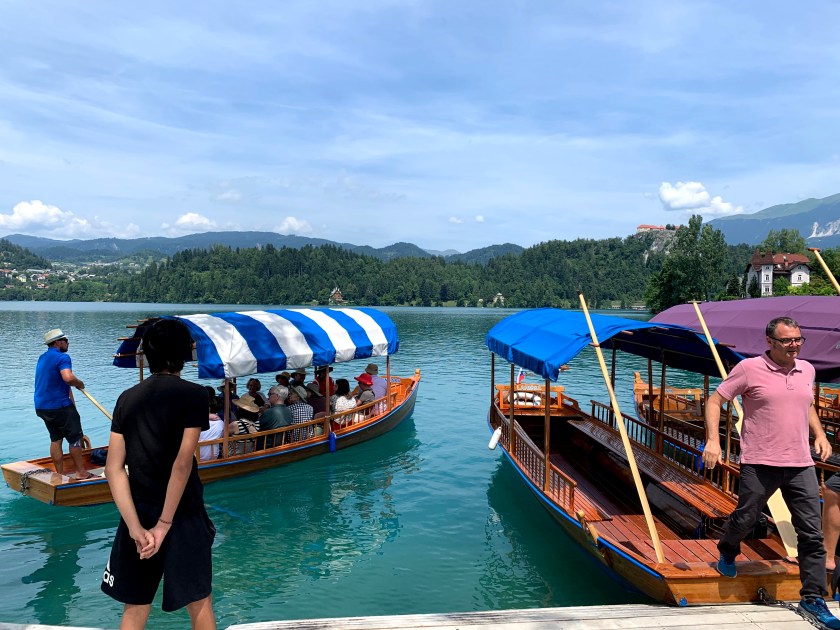
As you can see in the foreground of the photo above, one common way to visit the island is by pletna boat, powered by a single (very adept) oarsman. This is a job that tends to be passed down within families; our rower had a brother working on the lake, both following prior generations of their family.
img_0194

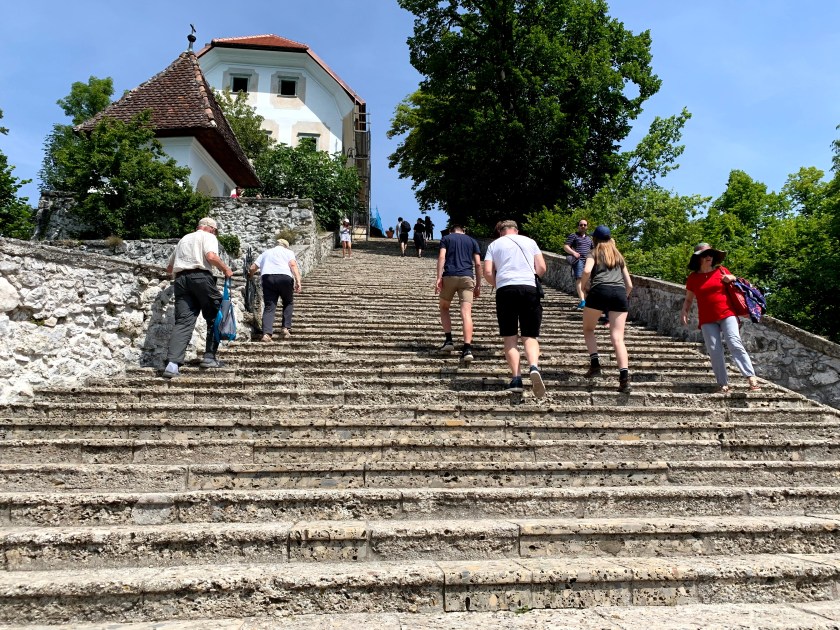
One must climb 99 steps to reach the church.
img_0161

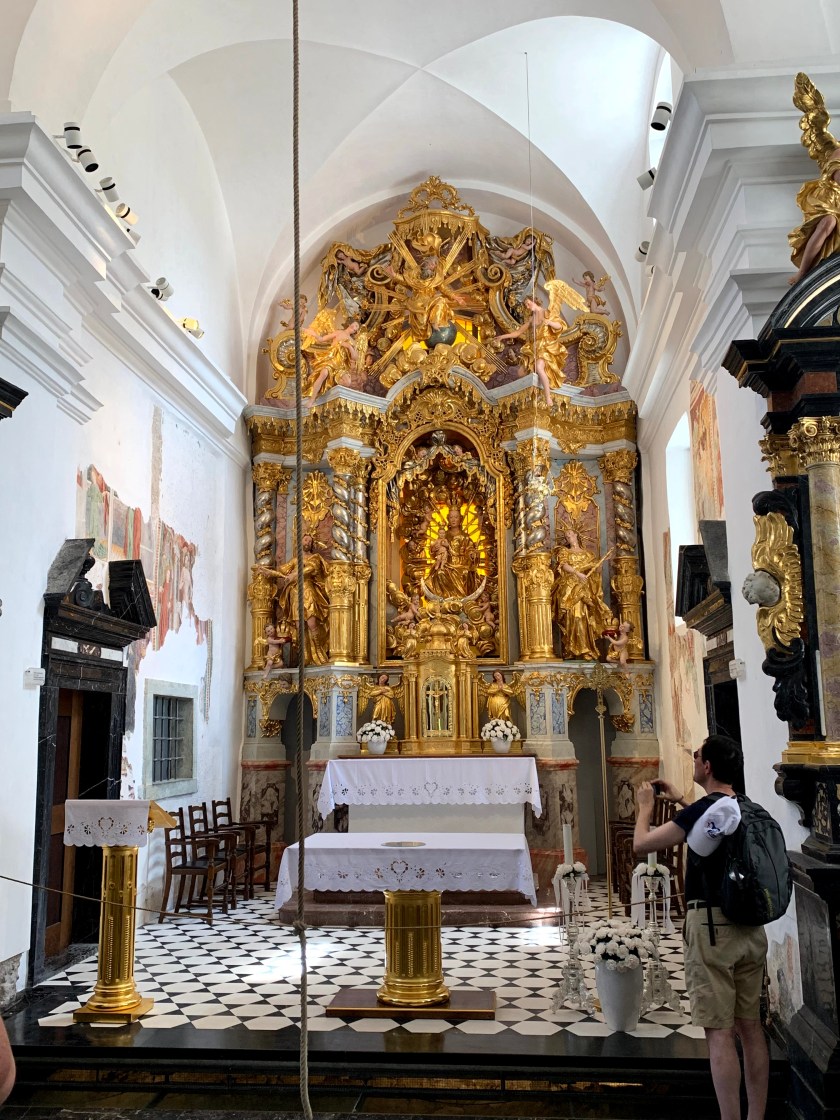
The current form of the church dates from the the 17th century but there has been a Christian church at the site since the 12th century. In earlier times, it is believed that a temple to a Slavic goddess stood at the site. The church is dedicated to the Assumption of Mary, but is sometimes called, for obvious reasons, Our Lady of the Lake. Here is the main altar in the Baroque style; on the side walls are fresco remnants of the prior Gothic-style church, which was damaged in an earthquake. img_0180

After spending some time in the church, we climbed the belltower.
img_0171
B took this interesting shot as we ascended the stairs, showing the weights that make the clock work.
img_0188
We were in the tower at noon. Unlike many clocktowers which would just ring the hour, these bells rang for several minutes. It was a bit loud, being that close to the bells, but it was interesting to watch the mechanism work.
img_0187

After our time on the island and the return to shore by pletna, we took our buses up to Bled Castle. And I do mean up! Here is what Bled Castle looked like from our boat.
img_0158

And here is what Lake Bled looked like from the castle.
img_0197

The castle paths were quite steep, but we were rewarded with a fancy lunch at the restaurant. It was the first time I have had trout caviar; probably the first time I have had caviar at all.
menu from Bled Castle

And because it never hurts to end a post with dessert…
dessert at Bled Castle

Remembering Nana

My mother, known here at ToJCM as Nana, passed away last month.

I have been wanting to write a post about her funeral and other commemorations but I haven’t been able to find the quiet time needed to do so. When a loved one dies, close-by family members often become very busy with memorial planning and estate issues and a rather astonishing amount of phone calling and paperwork. It’s necessary, but also distracting and can make it seem that reflection and grieving have to be stuffed into little pockets of time between tasks.

I also realize that I have been grieving over a long period of time as Nana was declining. This anticipatory grief has made my initial reactions to my mother’s death very different from the shock of my mother-in-law’s death, which was like being suddenly submerged rather than a slow walk into the waves.

I have begun this post in the middle of the night when I should be sleeping. The silence in the house reminds me of my mother’s absence. We literally spoke to each other almost every day of my 58 years. Will I eventually get used to that silence?

But, I set out to write about the funeral, so I will try to re-direct my thoughts…

I should probably start with the planning. My sisters, who live out of town, were staying with my dad and helping with tasks like moving Nana’s things out of the skilled nursing unit, while I embarked on the funeral planning and paperwork. I am very grateful that my spouse B took time off work to be with me while we met with the funeral director and the florist and signed papers at the memorial park and such. Some of the plans were already in place, but other decisions remained.

One of these was choosing prayer cards. The funeral director gave us a binder with pictures for the front of the cards and verses for the back. Even in the midst of such a solemn occasion, there are moments of levity and the prayer card binder provided that opportunity. Most of the pictures were mid-20th century paintings of praying hands, or Jesus crowned with thorns, or various saints in pious poses, none of which seemed appropriate. We decided to use the one set of nature photographs, which reminded us of various places where Nana had lived or visited. Finding the most appropriate choice among a hundred verses was more difficult. Most of the Bible verses were King James, which is not a translation that my church uses any more. The poems were incredibly sappy with the kind of rhymes that give poetry a bad name; this was the source of most of the levity. Poems in which one invites the Blessed Mother to tea just don’t quite have the cultural relevance they used to, if indeed they ever did. We did, though, find a very nice quote from Ralph Waldo Emerson to use, even though it meant that our prayer cards didn’t have a prayer on them. The quote can be found at the end of this post.

Planning the funeral gave me several writing assignments: the obituary for the newspaper, the words of welcome which would preface the funeral mass, and the intercessory prayers that conclude the liturgy of the word. Usually the family chooses from a set of readings and prayers that are already established, but because I spent a lot of years doing liturgy committee and music ministry, I was able to suggest some other choices. My daughters helped me choose the scripture readings and I had my writing done and some music ideas before I met with the pastoral minister Sister A and the music director, with whom I have been friends for many years. Everything focused on love because that seemed the best expression of Nana.

The hour before the funeral, we had time for friends to visit with the family. My younger sister had put together some photographs which were on a table as people entered. Nana had chosen cremation, so the urn with her cremains was there with flowers on either side. We had a mix of my parents’ friends and staff from their retirement community and caregivers and hospice volunteers. There were also some of B’s co-workers and my friends, including some poets, singers, and spiritual companions. I appreciated everyone’s support.

The funeral was very meaningful for me. My words of welcome focused on how Nana was so welcoming and loving with people and how she was such a good listener. I admit that I was grateful to speak first, because then I could concentrate on the rest of the service without distraction. Well, without distraction other than grief and tears, both personal and family. We were blessed to have family and friends in special roles. A priest-friend who came to concelebrate. Sister A who had been visiting Nana and Paco over the months reading from Proverbs. My niece and nephew sharing the reading of 1Cor 13. The hospice volunteer who had visited and called on a regular basis for almost two years reading the prayer petitions. My daughters E and T and the almost-two-year old ABC, along with son-in-law L, who was able to make the trip from London to be with us, bringing up the offertory gifts. Music ministers singing with the Resurrection Choir representing the parish community. My long-time friend at the organ, who had been such a support to me during Nana’s illness as I had tried to be to her through years of struggle with her parents.

After the mass, the family and two of Nana and Paco’s closest friends proceeded to the chapel at the memorial park for the committal service, led by the deacon from our church, and reminiscences shared by my younger sister. Then, we went to one of Nana’s favorite restaurants for lunch. We had a server who remembered what Paco usually ordered, even though he hadn’t been there over the last couple of years. The restaurant also treated us to desserts, which was so thoughtful of them.

The next day, we had a gathering in the social hall of the senior living community that has been home to Nana and Paco for over ten years. Along with coffee, punch, and cookies provided by dining services, we had an assortment of homemade cookies, mostly made by B – lemon and chocolate pizzelles, snickerdoodles, shortbreads, and cherry-pistachio biscotti, all family favorites. The snickerdoodle recipe is written in Nana’s cursive. Nana was especially fond of the lemon pizzelles, shortbread, and biscotti. The photos were on display, which was nice because some of the residents, staff, and hospice folks weren’t able to come to the church, but could join us then.

I’m so grateful for all those who have supported us during Nana’s decline and who are grieving with us, offering the love and compassion which Nana had shared with so many over the course of her eighty-seven years. Her example is the reason we chose this passage by Ralph Waldo Emerson for the remembrance cards:

To laugh often and much; to win the respect of intelligent people and the affection of children; to earn the appreciation of honest critics and endure the betrayal of false friends; to appreciate beauty; to find the best in others; to leave the world a bit better whether by a healthy child, a garden patch, or a redeemed social condition; to know even one life has breathed easier because you have lived. This is to have succeeded.

 

One-Liner Wednesday: Pentecost

Pentecost

Because I posted Lent and Easter pictures from church, I thought I’d post the Pentecost photo with its liturgical color red and themes of wind and flame.
*****
Join us for Linda’s One-Liner Wednesday! Find out how here:  https://lindaghill.com/2019/06/12/one-liner-wednesday-its-true/

Moses Hogan concert

Amazingly enough, I got to attend another concert this past weekend with my daughter T at Trinity Church where we heard the St. John Passion in April. This was also a concert with the Madrigal Choir of Binghamton and Trinity Church Choir, along with Tabernacle United Methodist Choir and members of the Binghamton High School Choir. They were joined by countertenor Derek Lee Ragin and pianist Pej Reitz for “A Moses Hogan Celebration.”

Moses Hogan (1957-2003) was a multifaceted musician who is most well known for his stunning arrangements of Negro spirituals and most of the program was given to performances of these arrangements. Derek Lee Ragin met Moses Hogan at Oberlin College Conservatory and, while pursuing a career in opera, also performed and recorded with the Moses Hogan Chorale and Moses Hogan Singers. Also, Moses’ younger sister, Dr. Ava Hogan-Chapman, and her daughter were in attendance. It was wonderful to have people who knew him so well there to tell us more about him, and, of course, to hear Derek Lee Ragin sing.

I had sung a couple of Moses Hogan arrangements and had heard a number of them when E and T were singing in high school and college choirs. These tended to be the more up-tempo songs such as “Elijah Rock” and “Ride on, King Jesus”. While I loved hearing these familiar arrangements in the concert, I was especially moved by some of the pieces that were unfamiliar to me.

Among these was “His Light Still Shines”, a choral medley in honor of Dr. Martin Luther King, Jr. The piece is a blend of narrative and spirituals. Sharon Ball offered very powerful narration in alternation with the choral pieces. I knew Sharon Ball as the retired director of the Broome County Arts Council and as a candidate for New York State Senate in our district. I hadn’t realized that earlier in her career she had been a broadcast journalist, professional singer, and White House staffer in the Carter administration. She brought all of these skills together to speak so clearly and movingly about Dr. King’s work and legacy. Last year marked the 50th anniversary of Dr. King’s assassination; it saddens me that we still have so far to go in social justice and peacemaking in the United States all these decades later.

The piece, though, that had both T and me on the verge of tears was “There’s a Man Goin’ Round”, which is a piece about the death of a parent. With my mom in hospice care and the recent death of my college roommate’s mother, that piece was especially meaningful and heart-rending.

It’s a testament to the power of the spirituals, born as they were under the weight of slavery, oppression, and suffering, that they transcend and bring hope, even in difficult times centuries later.

St. John Passion

Over the weekend, daughters E and T accompanied me to a concert of Bach’s Passion According to St. John. The Binghamton Madrigal Choir was joined by the choir of Trinity Memorial Episcopal Church, soloists, and an 18-piece orchestra for the performance.

Trinity Church was filled to capacity for the concert. I worked at Trinity for a couple of years in the mid-1980s and sometimes visited there afterward for concerts and services, as my friend Peter Browne served as organist and choirmaster there for many years. The choir stalls had been removed and the organ console moved to the center, a reminder that the organ had recently been extensively rebuilt, as the console used to be fixed in place. The accompanist of madrigal choir played the organ while Peter’s successor played the harpsichord.

Bruce Borton, under whose direction I sang for many years with the Binghamton University Chorus until his retirement, directs the Madrigal Choir and conducted this performance. It was great to see him conducting, even though we could only see him from behind.
The concert was very moving. I especially enjoyed the choral movements. I had had the opportunity to sing the St. John Passion with University Chorus in the ’80s, when we were still under the direction of founding director David Buttolph. I love to sing Bach and was remembering many passages as the choir sang, including how many (terrifying) times the choir has to begin a movement with no introduction, finding their pitches from the prior cadence.

In order to make the concert more easily understood, especially as it was just before Holy Week, the original German had been translated into English. The English translation was occasionally awkward, but it did allow the audience to join the chorus in singing the chorales that appear among the recitatives, arias, and choruses. When the director invited us to sing the chorales, which were printed in the extensive program, some people laughed as though they thought he was joking, but that is how the congregation in Bach’s time would have participated in the Passion.

My daughters and I thoroughly enjoyed singing the chorales. After the concert, the man who had been sitting in front of us turned around and said that someone behind him had a lovely voice. I told him that it was E and T.

As we were putting on our coats, the woman next to me told me that I had a nice voice, too. I know that I will never have as nice a voice as my daughters, especially E who had sung the soprano arias when she was in school, but it was a sweet gesture.

I want to thank all the musicians who made the performance of the Passion possible. It was also special to be able to attend a concert with my daughters. Because the last few years have been so intensive on the caretaking front, I haven’t been able to get out to cultural events very often, so it was extraspecial to be able to experience this together.

Lent in my church

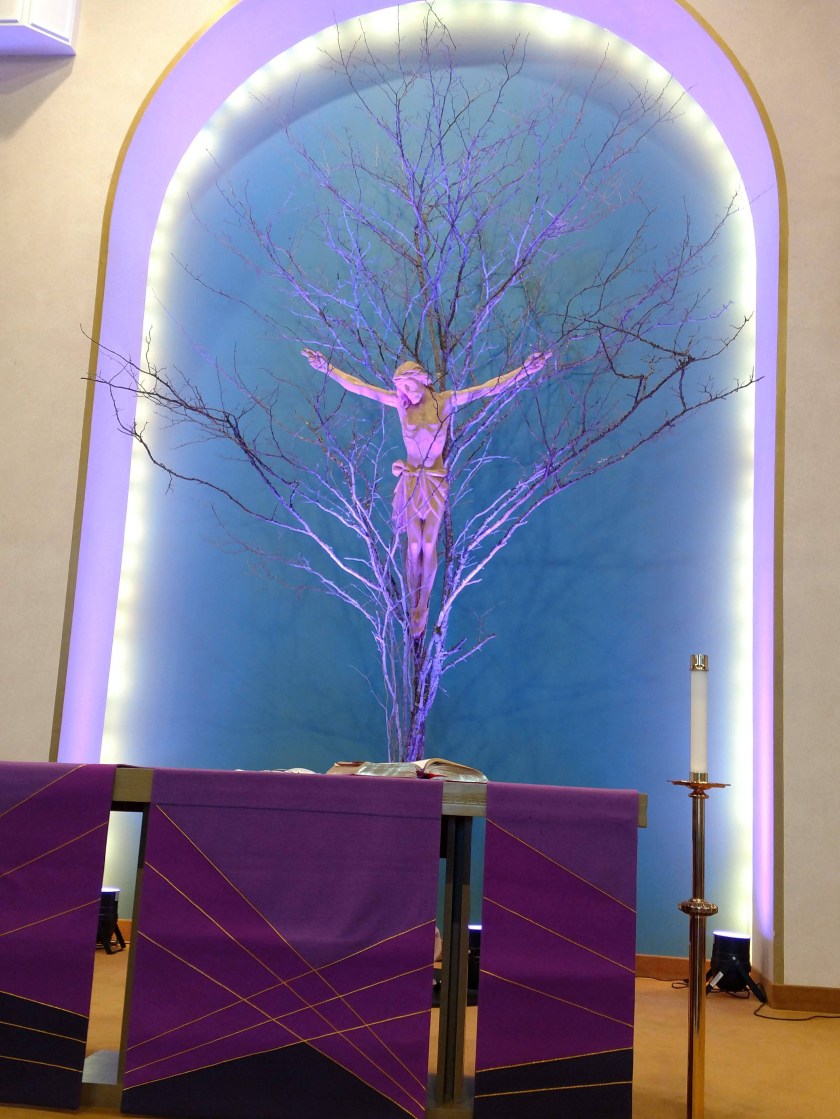
Many Catholic churches use bare branches instead of flowers during Lent. In recent years, my church has used small trees instead of branches. This Lent, the church environment committee went one step further.

img_20190309_165820503.jpg
It’s the first time I can recall seeing the corpus removed from the cross.

I find it very striking. It reminds me of some of the Lenten hymns that speak of Jesus being hung on or nailed to “a tree.”

Some people may find this too unusual a presentation.

Feel free to share your comments below.

blue Christmas

Several years ago, I attended a Blue Christmas service, led by a pastor-friend. It is a service during Advent to help those who are experiencing loss or struggles, acknowledging that the Christmas season is difficult in their circumstances.

It would have been beneficial to attend such a service this year.

I have been preoccupied with caregiving responsibilities and concerns over these last months, which don’t pause just because it is December. I outsourced nearly all the Christmas preparations to my family, even sending holiday cards and letters, which has long been one of my highest priorities. I couldn’t make myself try to sum up what has been a complex year, so spouse B and daughter T wrote a letter instead.

One of the blessings of this year, though, has been that our Christmas celebration has been elongated, starting with St. Nicholas Day on December 6th, which we observed so that we could celebrate with daughter E and granddaughter ABC before they left to spend several weeks with son-in-law L and his family in London. My older sister and her husband came to visit weekend before last. T and I attended Christmas Eve mass at 6:00 last night, with the instrumental ensemble and choir and the handbell choir. T loves handbells and ringing, so it was wonderful to hear them, especially with the new addition of handchimes.

On this Christmas morning, we opened stockings and a few presents, given that we already did stockings and gift exchange for St. Nicholas Day. We will have dinner at noon with Nana and Paco, bringing Nana over from her room in skilled nursing to the main dining room for the holiday buffet, as we did at Thanksgiving. Tomorrow, my younger sister and her family will arrive for a couple of days.

Still, it is difficult for me to feel festive. It’s hard to marvel at the wonder of the Incarnation while thinking about logistics and everyday details.

Perhaps, that is the message, though. The wonder of the Incarnation is that it arrived by everyday means, the birth of a child in complicated circumstances, something that happens around the world every day.

Perhaps, I can take that message into my own heart today, reminding myself that the spirit of Love is within and around us in our everyday experiences, if we only reflect and notice.

Wishing that spirit of Love to each of you,
Joanne