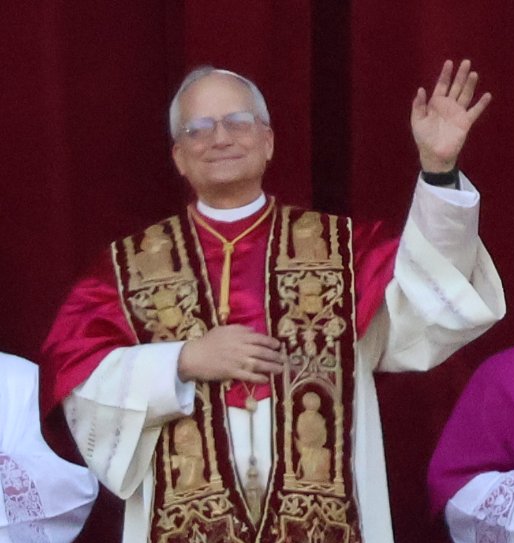
Welcome, Pope Leo XIV!

(By Edgar Beltrán / The Pillar – https://x.com/edgarjbb_/status/1920590815472108021, CC BY-SA 4.0, https://commons.wikimedia.org/w/index.php?curid=164970023)

When I wrote about Pope Francis right before the conclave, I didn’t expect that the conclave would end on the second day. As a reader of NCR (National Catholic Reporter), though, I was delighted but not shocked by the selection of Cardinal Robert Prevost as the next Pontiff. Although he was born in Chicago and educated in the United States (with an additional degree from the Pontifical University of St. Thomas Aquinas in Rome), most of his ministry has been outside the US. Fluent in several languages, including Spanish and Italian, he spent over twenty years in Peru as a pastor and, later, Francis-appointed bishop. He is well-known in church circles internationally because he visited close to fifty countries as prior general of the Augustinian order and, for the last two years, had been in Rome serving as head of the Dicastery for Bishops, which advises the Pope on the appointment of bishops world-wide. He was chosen as a cardinal on assuming this prominent role in the Curia, which is the Catholic Church’s bureaucracy.

While many had felt that it was impossible for anyone from the US to be chosen as Pope because the United States is such a powerful country, Cardinal Prevost was seen as more of an international figure. He is a citizen of Peru as well as the United States and has lived in Rome for over a dozen years. He understands the workings of the Vatican but retains the skills of a pastor. He supports Francis’s efforts to make the church more synodal in its approach, which broadens those with input into church matters instead of everything being concentrated in the power of the bishops, led by the Pope, who is given primacy as the bishop of Rome. I think that his skills and resume, as well as his familiarity in so many countries, made him a natural choice for the cardinal-electors.

I was struck that the name he chose was Leo XIV. This immediately brought to mind Leo XIII, whose 1891 encyclical Rerum Novarum (Of New Things) is the bedrock of Catholic social justice doctrine. That encyclical is subtitled Rights and Duties of Capital and Labor; it brought moral teaching to bear in response to the challenges of the industrial revolution. This choice of name signals that the new pope hopes to bring social justice doctrine to bear on the current challenges of the digital age. He also will continue the work of Francis’s 2015 encyclical Laudato Si’: On Care for Our Common Home, which emphasizes working to address “the cry of the earth and the cry of the poor.”

I was struck by his age. Born in 1955, Leo XIV is the first pope who was raised in the post-Vatican II church from childhood. My hope is that his papacy will continue the reforms of Vatican II which place the Catholic Church in the modern context rather than trying to isolate itself. This is the first time that a pope feels like a brother to me because he is actually close in age to my older sister. Being from the United States, I also understand better the environment in which he grew up. It lends a feeling of closeness that was not possible with the prior popes in my lifetime.

Leo XIV’s age also opens the possibility of a long pontificate. Leo XIII had one of the longest pontificates in history at 25 years; Leo XIV may not match that length but could remain pope for over two decades if his health holds.

I also have a personal attachment to the name Leo, which was my father’s name. He was named after his own father, although not a Junior as they had different middle names. Family lore is that my great-grandparents, after suffering the loss of several children, started to name them after popes, so my grandfather was literally named after Pope Leo XIII, who was serving at the time of his birth. All their sons who were named for popes survived into adulthood.

Welcome, Leo XIV! May God bless your pontificate and all the work you do for peace, justice, the world, and all peoples.

Pope Francis

(Image by manfred Kindlinger from Pixabay)

Before the conclave to choose his successor begins, I want to take a moment to write about Pope Francis, who died on Easter Monday after twelve years as pope.

From the moment that he was announced after his election with the name Francis, I knew he would be a different kind of pope than his immediate predecessors, especially when he asked the people to bless him before he blessed them. Like St. Francis of Assisi, Pope Francis dedicated himself to peace, to serving all people, especially the most vulnerable, and to caring for creation. I appreciate how he led the church in those directions while also offering his message to the whole world.

Within the church, he opened the door to greater listening and dialogue, especially through the synodal process that included the laity as well as clergy. This was especially meaningful to me as John Paul II and Benedict XVI tended to shut down discussion and silence voices that offered a different viewpoint. Francis also engaged with people of other faiths and philosophies around the world, travelling broadly and meeting with people in many different circumstances. He would even acknowledge that when he would ask people to bless him or pray for him by asking people who did not have a prayer tradition to offer their well wishes on his behalf.

I appreciated Francis’s humility in choosing to live simply in Casa Santa Marta rather than the opulent papal apartment. He dressed simply and liked to be out among the people. Even his funeral showed his humility. He simplified the papal rite so that it was recognizable to anyone that has planned a Catholic funeral. Only the final commendation and funeral procession through Rome stood out as being papal in scope. One of the most moving moments was when his body arrived for burial at the Basilica of Santa Maria Maggiore, where he was greeted by the poor of Rome and children carried baskets of flowers to place before the altar. The inscription for his grave reads simply Franciscus.

As an environmentalist, my favorite writing of Pope Francis’s is his first encyclical, Laudato Si’, which called for everyone in the world to care for our common home, the earth, and for other people, especially the most vulnerable. It was important in securing the Paris Accord and remains, along with its companion, Laudate Deum, a continuing challenge to how we address the climate crisis and social inequities.

As a feminist and progressive Catholic, I appreciate that Francis invited discussion of women’s role in the Church and appointed women to positions of authority they had never before occupied. However, it was disappointing that he could not see the full vocation of women in church and society. Still, we are further along the path toward the radical inclusion that Jesus modeled for us than we were and for that I am grateful.

Like many Catholics, I will be watching for the white smoke to rise from the Sistine Chapel where the cardinals will meet to select the next pope. The name he chooses may give us a window into the direction in which he will lead the church. For example, a John XXIV would continue in the direction of Vatican II and Francis’s synodality while a Benedict XVII would likely call for a “smaller, purer Church” that would exclude people like me.

The word catholic means universal. Pope Francis spoke to that sense of universality which I hope the next pope will continue.

In a small group a few days ago, we were invited to pray that the next pope be a woman who would take the name Clare and continue in the mode of St. Francis of Assisi and St. Clare. The Holy Spirit would have to blow through the conclave with hurricane force for that prayer to be fulfilled, but, maybe, some day?

Only God knows.

Vote for Democracy #22

how being a Catholic woman serves as preparation for the incoming administration

(Photo by Lucas Sankey on Unsplash)

I’ve written before about the intersection of how the conservatives in the Catholic Church treat women and issues such as abortion. I’ve also posted more specifically how Leonard Leo and Opus Dei have impacted the Supreme Court and broader governance issues.

While many in the contemporary Catholic church have come to embrace the radical inclusiveness of Jesus, especially for those who are oppressed, others cling to the misogyny, racism, and bigotry that held for centuries when the Church engaged in empire and building of worldly rather than spiritual power. Even into modern times, this has resulted in women not being treated as equals in the Church and in society, along with discrimination against people due to their race, religion, sexual identity, place of origin, and economic status.

While I am blessed to know many in the Catholic church who do recognize my dignity and gifts, there are a number of powerful bishops and laity who do not. These, including an out-sized number of Supreme Court justices, governors such as Texas’s Abbott and Florida’s DeSantis, and the incoming vice-president, JD Vance, are loudly proclaiming and taking action that restrict the rights and freedoms of women and girls. Besides restrictions on abortion that have resulted in permanent injury or death to women, there are also moves to restrict contraception and recognize any fertilized egg as a person, all the while denying personhood rights to any pregnant person.

We are even hearing calls for women, especially mothers, to give up paid employment in order to be at home full-time. Shockingly, some are even calling for the repeal of the 19h Amendment of 1920 which recognized women’s right to vote everywhere in the United States.

While I am sadly accustomed to being recognized as less than a full and equal person in the Catholic church, it is frightening to see these same calls in the context of the United States’ government.

I commit to continuing to fight for equal rights for women and girls, as well as for those of all faith traditions or none, those of all races, ethnicities, and places of origin, all genders and sexual orientations, and all ages and health circumstances, to be treated with equal dignity and protection in the United States. This is also in keeping with Catholic social justice doctrine.

I know millions of others are already at work and will never back down on these human right issues. That we will have to fight for these rights that had been considered settled is disconcerting but I know we will prevail in the long run.

I mourn, though, for those who have been harmed and who will be harmed in the meantime.

Catholic women and the diaconate

This week, I’ve attended celebrations at my parish in honor of St. Phoebe, who carried St. Paul’s letter from the area of Corinth to Rome. In the opening of the letter, Paul refers to her as a deacon, diakonos in Greek.

For the first few centuries of the Christian church, women served as deacons (and priests) but this ministry was suppressed as the church took on the power structure of the Roman Empire. The diaconate for men became a temporary step on the way to the ordination as a priest. The permanent diaconate was restored for men in the Catholic Church by the Second Vatican Council in the 1960s and there has been conversation since about restoring it to women. Under Pope Francis, there have been two study commissions and many bishops at the synod on the Amazon voted in favor of ordaining women, who are already doing this ministry as lay workers, as permanent deacons. However, their recommendation was not included in the final report.

On October 4th, Pope Francis will convene a new synod, called “For a Synodal Church: Communion, Participation, and Mission.” While the majority of voting members will still be bishops, there will also be vowed religious and lay men and women as voting members. It will be the first time that women have ever been voting members in a synod. The document that will be the center of their discussions, called the Instrumentum Laboris, available in several languages here, is made up largely of questions gleaned from listening sessions around the world. A major theme that arose in every region was the treatment of women in church and society and ways to recognize their ministry, service, and leadership in the Church.

The truth is that women constitute the majority of those who work in church ministry but, because they are not ordained, they seldom serve in official, high-level leadership roles. Meanwhile, in many parts of the world, particularly in the global South, where ordained priests are rare, women are ministering in their communities, teaching, preaching, leading prayer services, visiting the sick, and acting as the leader of their parishes without having the option of diaconal ordination. There is hope that this synod, which will conclude next year, will finally make women deacons a renewed reality in the Catholic Church.

So, sorry for the long wind-up, but back to celebrating St. Phoebe this week…

The impetus to celebrate St. Phoebe on or near her September third feast day comes from an organization named Discerning Deacons, whose “mission is to engage Catholics in the active discernment of our Church about women and the diaconate.” I admire their work and pray that the Synod will heed the voice of the Holy Spirit and restore the diaconate to Catholic women.

But, it’s complicated for me to have hope because of my and my sisters-in-faith’s history on the issue of women’s ordination.

I have long believed that God calls people to ordained ministry without regard to their age, gender, nationality, race, language, or any other personal characteristic. In his earthly ministry, Jesus called many disciples from among the marginalized, including women. Besides historical evidence of Catholic women deacons, there is evidence of women priests and bishops in the early centuries. Married men as priests persisted into the twelfth century; their prohibition had more to do with inheritance and property rights than with spiritual matters. For centuries, the power in the church has resided in the clergy. During Pope Francis’s papacy, he has worked to re-organize the structures of the church to allow more lay people, including women, to have leadership roles and to combat the clericalism that led to so many abuses of power and the ensuing cover-ups over the centuries.

While having women restored to ordination in the diaconate could increase leadership roles for women in the church, it doesn’t address the continued denial by the Church of the full personhood of each individual, regardless of their gender. The Church considers sexism a social sin but it cannot credibly call it out in other institutions while continuing to practice it itself.

As Catholics, we are taught to see the image of Christ in each person. Somehow, though, we are supposed to believe that only a celibate male can image Christ while standing at the Eucharistic table.

Treating women as second-class, sadly, also spills over into our social world with serious, even deadly, consequences. For example, the official Catholic viewpoint that prioritizes fetal life over the life and health of the pregnant person is leading to death or loss of fertility when care for a complication is delayed because a fetal heartbeat can still be detected, even when the gestational age or medical condition of the fetus makes survival impossible.

Even within the Church, women are not equally respected as employees. I have experienced this personally and seen it happen over and over with other women, including vowed religious. In the US, church employees don’t have recourse to employment discrimination law, so the Church can act without regard to state and federal law. Of course, it does violate Catholic social justice doctrine on respecting the dignity of work and of the worker. Sadly, restoring the diaconate to women will not address these larger inequities unless it is accompanied by intensive structural reforms of the institution, especially the clergy.

So, now comes the hard part of this post – the personal history.

Back in the mid 1980s- 1990s, I belonged to a local group called Sarah’s Circle. We began as a group of Catholic women, most of whom felt called to ordination – we did also include a couple of male members – who gathered once or twice a month for prayer, discussion, and support. While we did participate in an occasional public prayer service or event, we existed for our own spiritual fulfillment and to hold each other up when life in the Church became difficult.

Some things that our members did ruffled some feathers in the diocese. For example, the diocese ran a program to enlist parishioners to submit names for possible candidates to ordained ministry or vowed religious orders. A number of Sarah’s circle members, including me, submitted women’s names to become priests or deacons.

We wound up being discovered by the broader community when someone wrote a letter to the editor of the local newspaper accusing us of being witches, which was laughable as we were Catholics, not Wiccan. Somehow, this morphed into a brief moment of national notoriety, which included us being denounced by radio personality Rush Limbaugh. It was all very strange but served to make our local circle more powerful. We even were featured as part of a 60 Minutes piece about women’s ordination in 1996.

Over time, most of our members drifted away from the Church. Some joined other Christian denominations. One is now an ordained minister. I still grieve that the Catholic Church was so blinded by patriarchy that they turned away these compassionate, talented, holy women from ordained ministry.

Despite the pain, I stayed in the Church. I used to joke that it was “just me and the nuns” who were sticking it out. (Technically, they weren’t nuns, who are usually cloistered; they were vowed religious sisters.) As more and more of our members were drawn in different directions, we stopped meeting, staying in touch in little arcs, instead of a full circle. Sarah’s Circle’s records are now part of the archives of the Burke Library of the Union Theological Seminary, part of the Columbia University system, in New York City.

So, back to the present reality. My parish is looking into starting a Discerning Deacons group and I don’t know if I should join. Part of the reason I was able to stay within the Church was that, in a long-standing attitude of cowardice, I never did the spiritual work to discern if I was being called to ordained ministry as a deacon or priest.

Not that there weren’t signs that I should do so.

When I was a young mother, I had two vivid dreams in which I was a priest.

Back in the days before the diocese started to specify that only men and single women were invited to inquiry meetings about the call to ordination or religious life, I attended one. After the more general information sessions, we had to break into groups for prospective deacons, priests, or sisters. I originally wanted to join the priest group but didn’t want to disturb the teens and young-adult men there, so I joined the deacon’s group. I remember the deacon who was leading the group saying that, often, the wives of deacons would attend all the preparatory courses and training with their husbands and what a shame it was that, at the end, their husbands were ordained and they received no recognition of their own gifts.

Later, after my daughters were grown and before I joined my present parish, there was a powerful homily about God’s call to individuals that was entwined with the singing of the hymn “Here I Am, Lord” by Dan Schutte. At the time, the deacon serving the parish was ill and I remember looking at his empty seat near the altar and thinking, “I could be that.” I was crying while singing the refrain: “Here I am, Lord. Is it I, Lord? I have heard you calling in the night. I will go, Lord, if you lead me. I will hold your people in my heart.” I did make an appointment to speak to the pastor, who was sympathetic but, at the time, there wasn’t really anything to be done.

So, moving on to this summer. As the St. Phoebe observance was coming together at my current parish, the pastor invited me to read the gospel passage for the prayer service. I was honored to be asked because, during mass, reading the gospel is reserved to ordained clergy only. During a prayer service, lay people may read from the gospels so I wasn’t breaking any rules, but the symbolism of the invitation to publicly read from the gospels was significant for me.

I expected the evening to be emotional for me, which it was, and fraught, which it also was.

I have circled back to another opportunity to discern God’s call, but now about to turn 63 and unsure of how long I will live in this place – or live at all. I’ve amassed a lot of valuable experience but also am burdened by the pain the Church has inflicted on me and my loved ones. I’m tired. Of the struggles. Of the dismissals. Of the lack of charity. understanding, and compassion.

Do I dare to discern?

Do I, despite the history, dare to hope?

Catholicism and governance in the US

When I wrote this post on the immediate aftermath of the Dobbs decision in the US Supreme Court throwing all abortion rule-making back to the states, I alluded to the way the opinion followed Catholic teaching and my fears for what that would mean.

Of the nine justices on the current Supreme Court, seven were raised Catholic. (Justice Gorsuch was raised Catholic but is now an Episcopalian.) Of the seven, only Justice Sotomayor was nominated by a Democratic president; her views seem to be more mainstream among Catholics in the US.

The five Republican-appointed practicing Catholics (Justices Roberts, Thomas, Alito, Cavanaugh, and Barrett) and Justice Gorsuch are/were all either members of or closely affiliated with members of Opus Dei, a secretive, ultra-conservative group that rose to prominence in the fascist period in Spain. Leonard Leo, a board member of Opus Dei and, for many years, a powerful leader of the Federalist Society, was a supporter/promoter of all six Republican-nominated justices and is also known to have fostered relationships between conservative billionaires and various justices. Beyond the Dobbs ruling, there have been a number of Supreme Court decisions that seem to reflect the Opus Dei viewpoint more than Supreme Court precedent and mainstream Constitutional interpretation.

Sadly, many of the fears I had about the out-sized influence of conservative Catholic opinions about abortion have come to pass, in some states, aided and abetted by conservative, Catholic-raised governors, such as Greg Abbott of Texas and Ron DeSantis of Florida. In states where abortion is illegal or restricted to early weeks, women have hemorrhaged, developed sepsis, lost their ability to carry a child, or even died from lack of timely abortion care. There is currently a lawsuit in Texas by women who were denied abortion care in cases of pregnancy complication or fatal fetal conditions; these stories illustrate what happens when you force the conservative Catholic viewpoint that privileges the life of the unborn over the life of the mother on the public and medical providers. Indeed, in many of the states with restrictive abortion bans, medical providers trained in women’s/maternal health are leaving the state and medical schools and hospitals are having difficulty attracting students and providers to their programs because they can’t offer the full range of services to their patients. This is worsening already critical shortages of providers, especially in rural areas. When statistics become available, we may see a worsening of maternal morbidity/mortality and infant mortality rates, which are already much higher in the US than in most other countries with advanced medical systems.

The states with the most restrictive abortion laws are seeing some other impacts. Young people are sometimes refusing to consider going to school or taking jobs in states that restrict abortion, not only for fear of not being able to get care they need but also in recognition of inequality on the basis of sex. Lack of choice about where service members will be stationed is adding to recruiting problems for the armed services. Currently, Sen. Tuberville of Alabama is holding up all high-level military appointments in the Senate because the military policy is to pay for service members to travel out of state for reproductive care that is not provided in the state where service members and their families are stationed. (Note: Federal money is not used to fund elective abortion. This controversy is about funding travel/leave only.) I don’t think that it occurred to me that the Dobbs decision would impact our military readiness as a nation, but here we are.

We are also seeing proof that the overruling of Roe is not the end of the story. In some states, the legality of birth control is being challenged in the legislature. Many Republicans on the national level are proposing a national ban on abortion, even though the Dobbs decision said that the issue should be decided state by state. Voters in the midterm elections are weighing in on the side of abortion rights as articulated in Roe; it seems they may continue to do so in future elections.

I’m also afraid that this ultra-conservative Catholic viewpoint on the Supreme Court is feeding the larger problem of Christian nationalism. The United States is not a Christian nation; it is a pluralistic nation. The First Amendment of our Constitution tells us that our country shall not have an established religion.

The Federalist Society members are supposed to be originalists. You would think they would know that.

As an American, it is my right to make personal decisions based on my beliefs. The government does not have the right to impose a religious belief on me. It seems to me that this Opus Dei-influenced Supreme Court has crossed that line more than once. Whether a future Court overrules these decisions or Congress passes laws clarifying their intent remains to be seen.

Review: The Miracle Club

Do you believe in miracles?

Would you recognize a miracle if you experienced one?

In The Miracle Club, four women from three generations, played by Maggie Smith, Kathy Bates, Laura Linney, and Agnes O’Casey, travel from 1967 Dublin, Ireland to Lourdes, France, in search of miracles.

The women share a complicated history which viewers discover as the movie unfolds.

All of this occurs within the context of Catholicism and Irish family structures that resist women having full agency over their lives. All of the women have suffered losses and are in need of healing but will the waters of Lourdes provide them with the miracles they seek?

People tend to think of miracles as sudden events, where individuals are immediately and fully restored to health. Even at Lourdes, the film points out, those kinds of miracles are rare.

But healing is possible when women, though burdened with their own struggles, support and strengthen each other.

I believe that these are miracles, too.

the aftermath of Dobbs

When I wrote this post after the leak of US Supreme Court Justice Alito’s draft opinion on an abortion law in Mississippi, we weren’t sure if there would be changes before the decision was announced.

When the decision was announced on June 24, it was little changed from the draft. The majority signed on to the opinion that Roe v. Wade had been “wrongly decided” and threw the matter of the legality of abortion to each state’s legislature.

It’s not that long-standing Supreme Court precedents have never been overturned or declared “wrongly decided” – the Dred Scott decision springs to mind – but the Dobbs case was the first time that such a reversal came at the expense of a recognized right.

Many lawyers and Constitutional scholars have faulted the majority’s decision on historical and legal grounds, as Alito seems to cherry-pick sources in support of his view while ignoring the mainstream history and scholarship to the contrary. For example, while it is true that the Constitution does not specify a right to an abortion, it also never uses the word “woman” or “family.” There are many rights that have been recognized by the courts over the centuries that are not specifically cited in the Constitution under the Ninth Amendment which states “The enumeration in the Constitution, of certain rights, shall not be construed to deny or disparage others retained by the people.” The right to privacy and to bodily autonomy belong to each person and should not be under the jurisdiction of the government at any level. The Alito opinion also seems to violate the Thirteenth Amendment against involuntary servitude and the Fourteenth Amendment which promises “equal protection of the laws.”

While Alito said that abortion was a unique situation in terms of privacy protections, Justice Clarence Thomas wrote a concurrence that openly questions other rulings, such as those allowing contraception and marriage equality in all states. Somehow, he didn’t suggest that the Loving case, which forced all states to allow interracial marriage, had been wrongly decided, one assumes because he is a partner in one.

It’s now a little less than a month since the decision was handed down and there is upheaval. There have been many protests and public demonstrations. Some states moved to ban all abortions or all after six weeks of pregnancy. Some states are even trying to prevent people from crossing state lines to receive care, as though being a resident of a state gave them ownership over you. While the House has passed legislation to codify abortion rights similarly to Roe and to allow interstate travel for medical care, the Senate Republicans have blocked both measures from coming to a vote.

Some states are protecting and codifying the Roe framework. My home state, New York, had done this previously and is now beginning the years-long process to amend the equal rights protections of the state constitution to include “sex, including sexual orientation, gender identity, gender expression, pregnancy, pregnancy outcomes, and reproductive health care and autonomy”. Bonus: this will protect marriage rights and stand against all gender-related discrimination, as well as returning reproductive health rights to each individual.

Before the decision was handed down, those of us warning of the dangers to the health and well-being of pregnant people were scolded for being alarmist, but we were being realistic. Every day, there are stories in the news of delayed care for miscarriages that threatens the health and life of the mother. There are stories of rape victims having to go to another state for an abortion. The most heart-breaking of these is the case of a ten-year-old rape victim who had to travel from Ohio to Indiana to receive an abortion at six and a half weeks pregnancy. This child has had to endure not only rape and the severe threat to her health that pregnancy at such a young age entails but also the trauma of some politicians and commentators questioning the veracity of her story.

These cases show the dangers of trying to legislate what should be private medical decisions. While some are contending that it’s not really an abortion if a child is pregnant and her life is endangered or if there is an ectopic pregnancy or if there is an incomplete miscarriage, medically speaking, all pregnancies end either in live birth or an abortion. Miscarriage is not a medical term; on medical records, it is termed a spontaneous abortion. Health care providers are being put in the impossible situation to provide the best care to their patients or to be forced by lawyers to wait until their patients are clearly dying themselves before intervening to remove a doomed fetus. When the federal government reminded hospital emergency rooms that they are required to treat any endangered pregnant person to save their life, the state of Texas filed suit, saying that their state law against abortion should take precedence.

Some states are making moves not only against abortion but also against contraceptives, even though these are not abortifacient. They are trying to prevent people from crossing state lines to receive care. As I mentioned previously, while the US House of Representatives has passed legislation to codify abortion rights and to affirm the right to interstate travel, the Senate is not taking these up because of obstruction by Republicans. Chillingly, there is talk of the Republicans passing a national abortion ban if they regain the Congressional majority. Meanwhile, Republicans fail to pass legislation that would uphold the health and dignity of each person, such as universal health care, living wages, social welfare support, etc.

As a Catholic woman, I knew this was coming. Alito was parroting the arguments that Catholic bishops have made against abortion and Thomas went even further down that road in his calls against contraception. I have struggled for years against a church that denies my full personhood as a woman, despite their lip service to the concept of human dignity. I did not expect my country to follow suit.

Like most women my age, I didn’t think we would still be fighting these kinds of equality battles, but we will. I can’t predict the manner or timing of victory, but we will not be demoted to second class citizenship by a skewed Supreme Court.

what I’ve been writing

Although you can’t tell from the count of my recent blog posts, I have been carving out some writing time.

Unfortunately, you can’t tell that from my poetry output either, although I do have one recently written and accepted piece that I will share when it is published. I have had to compose a fair number of cover letters as I have done quite a few chapbook and full-length submissions, as well as some individual poems. I’ve gotten a number of rejections, but currently have the chapbook manuscript under consideration in four places and the collection in nine. I can hear my fellow poets saying that’s not enough, but I’m hoping to get a few more in later this week.

I spent a major amount of time thinking about, writing, and editing comments for a listening session with our bishop in preparation for a diocesan synod and the World Synod of Bishops called by Pope Francis to discern the future path of the church. The official title in English is “For a Synodal Church: Communion, Participation, and Mission”. In keeping with this, individuals were asked to share our hopes, dreams, and experiences with the church and our visions for the future. I chose to focus on the voices that have been marginalized in the church, concentrating on the voices of women. I prepared written remarks and then a shorter version that I could read aloud at the session within our three minute time limit. I do not like speaking in public but, inspired by others, especially some teens and young adults, I managed to do it. There was a lot of “speaking truth to power” at our session, one of at least twenty planned for our diocese, which is doing a credible job in reaching out to the people. Some diocese around the world are not doing much outreach, which could limit the effectiveness of the process when the bishops convene in 2023.

I have also been doing some holiday-related writing. My first priority was to write a letter to people on my parents’ Christmas card list who may not have heard about Paco’s death in September or even Nana’s in May 2019. It was difficult to write but I’m glad that I made myself do it because I heard back from several people who expressed their sympathies and shared memories with me. I also had the opportunity to do some reflective writing about this in conjunction with a support group I have been attending on preparing for the holidays after the loss of loved ones.

After sending out the letter to my parents’ friends, I tackled my own list, which was a bit more complicated. I did a family newsletter, still a difficult thing when having to report a death, that went in some cards, while others got a handwritten note or just a signed brief greeting, depending on how regularly I have been in contact with the recipient. All the addressing, stuffing, and stamping of envelopes adds to the time involved but most of them are in the mail now. A few are set aside for other members of the family to complete.

Now, there is, finally, this blog post. I’d like to say that I will post regularly from now on but I know that would be more wishful thinking than promise. B, T, and I are preparing for an extended holiday trip, which could create more leisure time for writing or be a total whirlwind with too little sleep to be cogent.

Which will it be? Stay tuned…

vaccines vs. variants

Right now, the United States is a place of both hope and fear regarding COVID-19.

The hope comes from the increased pace and availability of vaccine distribution. The two-shot regimens from Pfizer and Moderna and the single-shot Johnson & Johnson have all been approved for emergency use and are being distributed as quickly as possible. There have been over three million shots given daily in recent days. It’s possible that a fourth vaccine, a two-shot course from AstraZeneca may also receive emergency use authorization in the coming weeks. Approximately 29% of adults in the US have received at least one vaccine dose. While most states concentrated first on the older demographic and health care workers, eligibility has expanded to include medically vulnerable adults and middle-aged adults. In some states, the eligibility age has or will soon drop to 16 where Pfizer vaccine is available or 18 with the other two vaccines. Trials are underway to determine the appropriate dosages for younger children. New data have shown that the Pfizer and Moderna vaccines are 90% effective at preventing infection in real-world application; this expands the information from the trials which looked for COVID symptoms and could have missed asymptomatic infections.

There are problems looming, though. A significant proportion of adults say that they will not be vaccinated at all. There is also a political divide in evidence. A recent survey showed that 49% of Republican men are refusing the vaccine. It will be very difficult to halt community spread if so many millions of people remain unvaccinated.

This vulnerability is in addition to the fact that too many places have relaxed their rules about wearing masks, the size of public gatherings, and capacity of indoor venues. Travel within the US has skyrocketed, including air travel. Many college students have gone on spring break trips to warmer states and gathered in large crowds without masks. The majority of states are seeing their COVID cases rise. Yesterday, Dr. Rochelle Walensky, director of the Centers for Disease Control and Prevention, said that she felt a sense of “impending doom” because cases, hospitalizations, and deaths are rising as restrictions have been lifted. She and other health experts fear that the US is at risk for a fourth surge. The protection of the vaccines won’t be able to keep pace with the virus spread by people not observing public health guidance on precautions.

There is also the problem of more infectious variants. The B1.1.7 variant is spreading rapidly in some regions and there is a separate variant that has been identified in the New York City area. While the current vaccines seem to be doing a good job preventing these variants, it will still be harder to stop community spread with the more infectious variants in circulation.

I urge everyone to get vaccinated as doses become available for their age group in their localities. Because spouse B, daughter T, and I all participated in the Pfizer/BioNTech Phase III trials, we are fully vaccinated, B and T last August during the blinded phase of the study and myself in February when the placebo group was offered the vaccine to join the study group on long-term efficacy. (There are numerous posts about our experiences with the vaccine trial if you type Pfizer in my blog search box.)

I appreciate the things that are easier to do now that I am vaccinated. The most important thing is that I am much less worried when I visit my 96-year-old father, know here as Paco. Paco is also fully vaccinated and, while I still follow the protocols to mask and distance, I am now allowed to visit inside his apartment in assisted living.

I took an unmasked walk outdoors with a friend. I have been able to do some health care visits in person rather than virtually. I go to the grocery store with just one mask instead of two. I went to mass in person for the first time in a year and have reserved a place to attend Easter Vigil Saturday evening. My fully vaccinated sister stayed overnight at our house where we could safely be together maskless.

She and I even ate at an indoor restaurant for lunch, masked when we were not eating. The restaurant had good table spacing; our region currently allows 75% capacity at restaurants and our community transmission rate is low. In general, we usually still order carryout, but I think in a few months we may be more comfortable with dining in on a more regular basis. One of the good things about living in New York State is that we have generally been cautious about public health measures and the extent to which certain activities are allowed. Extensive testing is being done so that, if the number of cases begins to rise, they can react quickly to dial back on activities to keep the outbreak from getting worse. Having seen this measured, data-driven approach work in New York, I am that much more worried when I see other places abandon mask mandates and capacity restrictions precipitously. It not only hurts their own residents but also people in other locations because travelers can bring the virus home with them.

I don’t know yet when I will be comfortable resuming travel. If we can continue robust vaccine distribution and infection rates are low, maybe B and I will be able to take a short trip together for our anniversary in June. I had hoped to return to North Adams for another private writing retreat this spring, but I need to see what happens with vaccine distribution and transmission rates over the next few weeks to decide if that would be wise.

Of course, the big prize will be when we can go to the UK to visit daughter E, son-in-law L, and granddaughter ABC and finally get to meet granddaughter JG in person. We are hoping it will be on or before her first birthday in August, but it is impossible to plan. While the UK has also been on a vigorous push for vaccine distribution and re-opening, E and L haven’t been eligible for vaccination yet and what the rules will be for summer visitors from the US is a mystery.

Still, we are closer to being able to go than we have been before and we have also built up our own capacity for patience. Love, care, and concern for others are great motivators to remain cautious and vigilant until the pandemic is truly over.

JC’s Confessions #16

In the first few seasons of The Late Show, Stephen Colbert did a recurring skit, now a best-selling book, called Midnight Confessions, in which he “confesses” to his audience with the disclaimer that he isn’t sure these things are really sins but that he does “feel bad about them.” While Stephen and his writers are famously funny, I am not, so my JC’s Confessions will be somewhat more serious reflections, but they will be things that I feel bad about. Stephen’s audience always forgives him at the end of the segment; I’m not expecting that – and these aren’t really sins – but comments are always welcome.

JC

I should be watching the Senate Judiciary committee’s hearings on the nomination of Amy Coney Barrett to the United States Supreme Court right now.

I can’t bring myself to do it.

There are a lot of reasons.

First, it renews my sorrow at the loss of Ruth Bader Ginsburg.

Second, it is difficult to cope with the nomination going forward under the current circumstances. There is the proximity to the election with voters already casting their ballots and the hypocrisy of the Republicans in moving forward with the confirmation process when they would not allow a hearing for President Obama’s nominee in 2016 many months before the election. There is also the fact that the Senate is not in session due to several senators being COVID positive; if it isn’t safe to be in session, in-person hearings should not be held, either.

Third, I’m leery of how the subject of religion will be handled. Like me, Judge Barrett is Roman Catholic, as are five current members of the Supreme Court with a sixth having been raised Catholic. In a country that is predominantly Protestant, it seems odd to have so many Catholics on the Court. I realize that justices make determinations on the basis of the law, but there are times that some of the arguments made in cases cross into religious belief and the Catholic hierarchy sometimes makes arguments that are factually incorrect. For example, some recent cases have upheld employers’ refusal to offer birth control in the medical insurance of women employees on the grounds that birth control is abortifacient, which, while taught by the Catholic bishops, is not medically true. Likewise, you see arguments that same-sex marriage is an assault on religious freedom even though it is a civil law; while some religions choose to offer ceremonies for same-sex couples, no religion is compelled to do so.

Fourth, I remain suspicious of the originalist/textualist bent that Judge Barrett exhibits. That judicial philosophy fails to account for how the meaning of words changes over time. In my view, one of the strengths of our Constitution and laws is that it can be interpreted in the light of new circumstances. Let’s face facts: many of the men who wrote the Constitution were slaveholders who never envisaged that one day Blacks, women, and people who don’t own property would be voters. Many modern issues could not have been imagined by people in the 18th century.

However, some issues that were clearly spelled out in the legal writings of the 18th century are ignored by originalists when it suits them. For example, the second amendment very clearly places the right to bear arms in the context of a “well-regulated militia” but originalists often ignore that part of the text and original intent. It’s also very clear that the Founders understood that corporations are not people; a future Supreme Court may someday strike down the Citizens United ruling on that basis.

I don’t know what will happen with this nomination or with the Court in the coming years, but, right now, I can’t bear to watch.