looking for antibodies

Last week, B, T, and I had our third visit in the Pfizer/BioNTech coronavirus vaccine trial.

The main purpose of the visit was to draw blood to analyze for the presence of antibodies and other factors involved in viral immunity. Because the study is placebo-controlled and blinded, neither we nor the researchers will know our individual results, but the data will be important in determining how quickly and how well the vaccine works.

Our next appointments aren’t until March when more blood work will be done to check on antibody levels again and to see if they have remained and/or declined. In the meantime, we will continue to check in weekly through a phone app which asks about possible COVID symptoms. We will also contact the office if any of us develop symptoms that could be COVID, so that we can be tested.

The Pfizer phase III trial data will be evaluated when a certain number of COVID cases develop among the participants. When these case benchmarks are reached, the researchers will be able to determine how much protection the vaccine group exhibited compared to the placebo group. That percentage helps to determine if the vaccine will be approved.

If the vaccine is approved, Pfizer may decide to end the trail early so that the placebo group members can receive a vaccine to protect themselves. They would continue to follow the vaccine group from the trial for two years as planned, collecting data on how durable the immunity is and any side effects that might not be evident immediately.

We have also passed the window of time after the second injection in the trial when one couldn’t receive any other vaccines, so all three of us have now gotten our seasonal flu shots. We do always get flu vaccines every year, but public health experts are particularly strong in their recommendations that everyone get a flu shot this year. They are afraid of having a bad flu season on top of the coronavirus pandemic, which would make the fall and winter even more dangerous.

Please, all the Northern Hemisphere folks reading this, make arrangements to receive a flu vaccine, if you haven’t already done so.

unmasked

Last week, I needed to bring one of our vehicles to a dealership for a recall. The one we usually use wasn’t certified to work on the electrical/battery system of our hybrid, so we made the appointment at another dealer in a neighboring county. We live near the county line, so it’s just a couple of towns to our west.

Tioga County is a rural county; Broome, where I live is a mix of rural, urban, and suburban, although Binghamton is a small city by most standards with a population of about 46,000. Broome County’s population is about 190,000 in 716 square miles; Tioga’s is 48,000 in 523 square miles.

Your geography trivia for the day!

So, I arrive at the service department of the dealership, wearing my mask. There is a sign on the door that face coverings are optional for customers but required for staff, which seemed a bit odd as New York State rules are to wear a mask whenever people are closer than six feet (2 meters). I was surprised to walk up to the service desk to find that there was no plexiglass barrier to protect the employee and he was not wearing a mask.

I tried to maintain distance as best I could. I checked in, walked past unmasked customers in line, and sat in the waiting area with unmasked customers while unmasked employees walked through several times. When the repair was complete, the employee doing checkout hastily put on a mask after the window that separated her desk from the hallway was opened.

The experience left me feeling not endangered, because I was masked and maintained social distance most of the time, but disrespected. While the business knew that its employees should be masked when in proximity to another employee or a customer, they were not complying.

As the designated shopper in our house, I’m used to visiting businesses which have implemented careful measures to keep their employees and customers as safe as possible. The result has been that our infection rate in the state has remained very low as we methodically re-open businesses and services. If I am ever in a similar situation that I have to use this car dealership, I’ll make arrangements to drop the car off the evening before so that I only need to go inside to do the final paperwork when it’s ready.

I hope that there won’t be any outbreaks from the disregard that I witnessed at the car dealership, which, presumably, was considered acceptable to others in that community. For me, it seemed a small taste of what I hear on the news from other states, that folks don’t believe that masks and distancing help prevent COVID infections or that masks infringe on their liberties or that COVID doesn’t exist, all of which contribute to the appalling rates of illness and death in the United States.

At least I know that no one there will have contracted COVID from me.

vaccine trial – injection 2

This week, B, T, and I are receiving our second injections of the Pfizer/BioNTech experimental COVID vaccine or placebo, three weeks after the first round. There is COVID testing and general health screening but no blood draw, which will wait for the next visit to see the antibody response. Throughout the two years of the trial, we will continue with a weekly diary of possible COVID symptoms, although we would contact the trial staff immediately if we suspected we had COVID. We each have an emergency test kit at home to collect samples if we are directed to do so by study personnel.

The possible date of vaccine approval in the United States has become a hot topic. The president has intimated that a vaccine could become available before Election Day, November third. Local health departments around the country are supposed to have plans in place for distribution by November first.

However, that timeline doesn’t jibe with the amount of time needed for preliminary Phase III trial results. Yesterday, Pfizer, BioNTech, and seven other drug companies involved in COVID vaccine development signed a joint pledge to uphold their rigorous testing measure and not request authorization without the requisite data showing safety and efficacy.

I’m pleased that they made this commitment to the public. When vaccines do become available, it is vital that billions of people around the world receive them so that we can end the pandemic. If only a small fraction of the world’s population receive it, the pandemic will not end because there will still be a large pool of potential victims for the virus. Some of those victims will be people who were vaccinated, as no vaccine is 100% effective. The vaccine should lessen the severity in those people who do contract it, as we see with current flu vaccines. It’s important to remember, though, that part of the way vaccines work is by creating herd immunity so that a pathogen can’t create an outbreak. Vaccines offer a safer, less lethal path to herd immunity than just allowing vast swaths of the population to be infected.

I suppose it’s possible that a vaccine might receive emergency use authorization this fall so that it could be used by front-line medical workers and extremely vulnerable individuals before long-term safety and efficacy could be established, but widespread vaccination isn’t possible until next year, at the earliest.

The wisdom of moving forward scientifically and methodically was illustrated this week by AstraZeneca, which put their COVID vaccine trial on hold in order to investigate a possible adverse reaction. It may be that the reaction had another cause, but, until that can be determined, they don’t want to risk the health of their participants. Rushing the swine flu vaccine out to the public in 1976 caused enough serious complications that it had to be suspended after ten weeks; no one wants to repeat that experience with COVID.

Meanwhile, our family will keep doing our small part in advancing the science in hopes that COVID-19 can be brought under control, saving as many people as possible from illness, disability, and death.

COVID vaccine trial update

Last week, B, T, and I each had our initial visit for the Pfizer/BioNTech vaccine trial for COVID-19. There was a lengthy informed consent document, medical history and physical exam, COVID test, blood draw, and injection with either the trial vaccine or placebo. Two of us had some mild side effects and one of us did not, so we are surmising that one of us received the placebo, but the study is triple-blind (participant, care provider, investigator) so we don’t know for sure if that is the case.

The Pfizer/BioNTech vaccine is a messenger RNA vaccine; this type of vaccine has not previously been approved for widespread use. It works by enclosing a strip of messenger RNA in a lipid shell. When it gets into cells, it manufactures the spike protein that the SARS-CoV-2 has on its exterior, so that the body recognizes it and makes antibodies and T-cells to combat it.

The phase I data looks promising, so I hope that this vaccine will be found effective. RNA vaccines are able to be manufactured quickly, which will be a plus if they are approved for use. I am hoping that a number of vaccines will be able to complete Phase III trials and earn approval, so that we can get as many people around the world vaccinated as quickly as possible. It’s the only way to gain herd immunity without a horrifying level of illness and loss.

The Pfizer/BioNTech trial is expected to finish its primary collection of data needed for approval in mid-April 2021, although the trial will continue to follow participants through November 2022 to see how well antibodies and T-cells persist.

Science takes time and the COVID vaccine is being developed at a blindingly fast rate in terms of past vaccine development. Remember that we are still looking at months before approval, not weeks. Even when one or more vaccines are approved, people will need to keep up with distancing, masks, sanitizing, etc. to keep the disease at bay while vaccination production and distribution campaigns occur.

Please, everyone, do your part to keep yourself, your family, and your neighbors as safe as possible, while vaccines and effective treatments are developed. I’ll post more information about our trial as time goes on.

baby ash

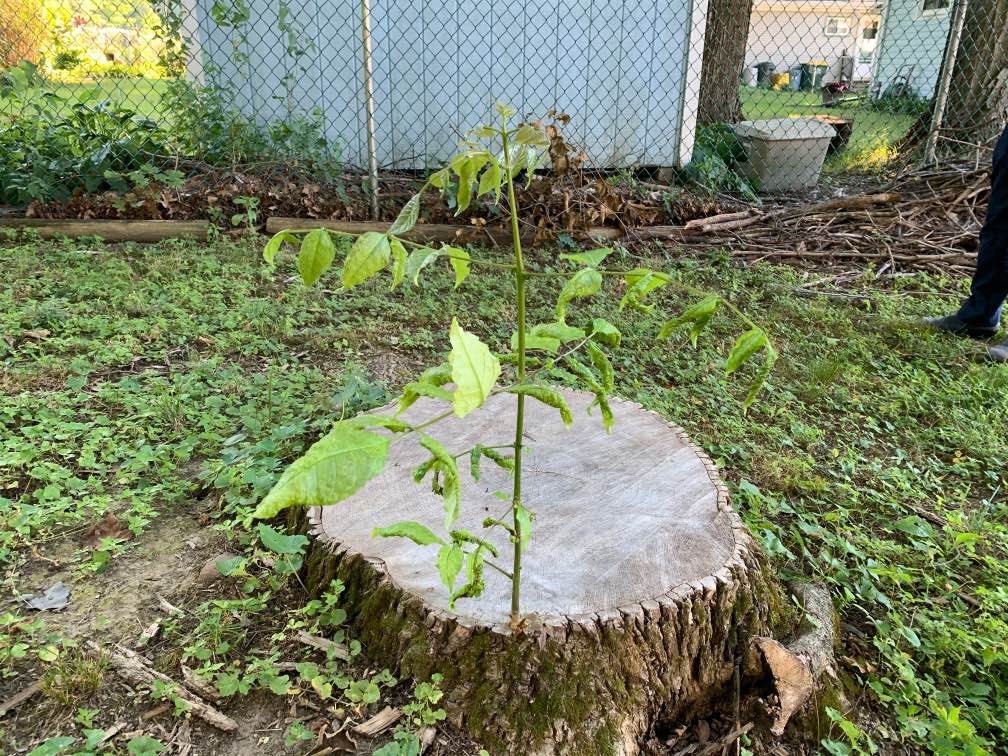
I wrote in January about having to take down the ash tree in our backyard because it had been infested with emerald ash borer.

This week, we noticed something growing near the stump.

It’s a new ash tree!

It’s growing very quickly. It certainly has a very large root structure, given that it is growing directly from where the bark meets the wood of the stump. Given its position, we aren’t sure it will survive long-term, but it is nice to see nature trying to come back from a plague.

A little hope is a good thing to have right now.

unprecedented

For decades, public opinion polls in the United States have asked how satisfied people are with the way things are going in the country, which is often referred to often as the country being on the right or wrong track. A Pew Research Center poll released on June 30th reveals that only 12% of respondents are satisfied with the direction of the country.

Twelve percent is a shockingly low number, but the number today could be even lower, given that the poll was conducted before the revelations about Russia paying bounties for the deaths of United States and coalition troops in Afghanistan, before the daily national number of new positive COVID tests reached 50,000+, and before 38 of 50 states reported rising numbers of cases on a 14-day rolling average.

The COVID numbers are going to get worse in the coming days because the seven-day rolling averages are already worse and because there are likely large numbers of people who are positive but not yet showing symptoms or being tested.

The rise in COVID cases is all the more upsetting because much of this precipitous spread was avoidable. I have written often, for example here, about the battle against the pandemic in New York State, where I live in its Southern Tier region. By following the science and metrics, our state went from having the worst infection rate in the country to the lowest. Mask-wearing, physical distancing, travel restrictions, and enhanced sanitation are part of daily life for nearly all people here. New York, which suffered the first wave of COVID cases coming in undetected from Europe, pioneered many ways to crush the coronavirus curve and keep infection rates low through robust testing, contact tracking and quarantine. It breaks my heart that other states and the country as a whole are not following a similar path to protect their residents and visitors. Governor Cuomo’s office has been in contact with governors’ offices around the country, offering assistance in fighting the virus, but it seems that few are willing to put the lessons we learned into practice in their states.

While we continue to methodically re-open different types of businesses and increase the size of (reasonable and still distanced) gatherings allowed, we keep constant watch on our testing numbers, ready to change plans immediately if the number of positive tests starts to rise. Our greatest threats at this point are complacency among people here leading them to get sloppy with our preventive measures and the risk of travellers bringing the virus with them from another state or country. New York does have quarantine rules in place for those entering the state from places with high infection rates, but we would be much better off with a national policy based on science and metrics.

I think the national polling numbers with which I began this post show that our ship of state is seriously off course and in danger of shipwreck. The vast majority of the country knows it, as does most of the rest of the world. Travel from the United States into the European Union is banned. Both our allies and our adversaries wonder how a strong and proud democracy could have a national government in such impotent disarray.

Long-time readers know that I occasionally indulge in political fantasy. I had one for a while that both DT and the VP were forced to resign due to corruption and that Speaker of the House Nancy Pelosi would become the first woman president of the United States. During the impeachment of the president, some argued that we should wait for an election to get DT out of office. I don’t think any of them imagined the dire mix of pandemic, attack by foreign adversaries, economic collapse, and cries for long-overdue justice and equity with which we are currently dealing. To avert more disaster and to safeguard lives and well-being, we need new leadership now, not on January 20, 2021.

I call on the president, the vice-president, and all appointed Cabinet and high-ranking officials of agencies who are not career professionals within their departments to resign, so that Pelosi, aided by experienced civil servants, can put in place national policies to stem the pandemic and to run a fair election in November, so that the newly elected president has a chance to inherit a country that isn’t a complete disaster area. Some problems could be addressed by executive order and, one hopes, others could be handled legislatively, if enough Republican senators step up to govern, instead of letting Majority Leader Mitch McConnell kill nearly every House-passed piece of legislation that lands on his desk.

2020 has been a year in which we hear the word unprecedented on a regular basis. My suggested course of action certainly would be unprecedented, but I think it offers hope of alleviating at least some of the suffering around us and averting more. It is also constitutionally valid.

Unprecedented times call for unprecedented measures.

a vaccine trial

Our family physicians’ practice has a research department that works in conjunction with national trials. I have done several studies with them in the past, including vaccines for seasonal flu and adult RSV (respiratory syncytial virus).

I got a call the other day because they are signing people up for a SARS-CoV-2 vaccine trial. This is the virus that causes COVID-19. It will be a two-year study looking at the effectiveness of the study vaccine. I qualified and enrolled in the study, as did spouse B and daughter T.

We don’t know whether this vaccine will prove to be effective or for how long, but we are committed to being part of the process to find out. Even if it isn’t protective, that information will be helpful in the search for finding a vaccine that is.

They are looking for more participants. If you are in the Binghamton NY area and are interested, please contact me for a referral to the researchers who can provide full information about the study. You may leave a message in the comments so we can work out how to communicate privately or contact me through Facebook Messenger or email if we are already connected.

Make your own climate plan!

Bill McKibben writes a weekly newsletter on climate issues for The New Yorker. The link will take you to a recent one that encourages readers to explore a website that allows you to devise your own climate action plan and see the likely results. There is an introductory video:

The En-Roads website from Climate Interactive and MIT Sloan’s Sustainability Initiative is fascinating. You can change parameters, such as the mix of energy supply, energy efficiency measures, and electrification, and see what the global warming impact would be. You can tweak your plan and then share it with others via social media. Check it out!

SoCS: re-opening?

I want to believe that our region’s re-opening of some businesses will not spark more cases of COVID-19.

I wrote earlier in the week about our area of New York State qualifying to re-open certain businesses. As of yesterday, non-essential retail can be open for curbside pick-up. Some construction and manufacturing can start up with appropriate precautions to protect workers. Plans have to be filed with our regional commission to make sure that they comply with CDC and state guidelines. This is stage one of four. All seven metrics that govern re-opening have to be met at all times. If something slips, signalling a possible outbreak, businesses will have to close again until conditions improve.

It’s bothering me that the media are lumping New York State in with the other 47 states that are ending stay-at-home policies. The vast majority of those states have not met the CDC guidelines for two weeks of declining cases, making public interaction much more dangerous. Those states are not trying to contain the virus but to mitigate it.

New York is putting in place a much different strategy. Only those areas of the state that have the virus contained are eligible. There is a requirement to do a certain number of tests weekly and there are contact tracers, so many for every thousand residents, so that if a case is detected, they can quarantine all contacts that have been close to the infected person so that we don’t get community spread. We hope that the testing, tracing, and monitoring will keep the virus contained, allowing more businesses and services to re-open over the coming weeks and months, while protecting public health. If the program is effective, we won’t need to back off and go back to stay-at-home, but we can if infection rates go up. More importantly, we would know that infection rates are climbing before they get out of control. It turns out that the reason New York had so many cases is that the virus was already out in the community months before anyone realized, coming into New York/New Jersey airports from Europe when everyone was thinking that it was only travel to China that was worrisome. Even now, the downstate region is still under stay-at-home for at least another month. The other area of the state that is still under stay-at-home is western New York, including Buffalo.

Because New York State’s plan is so well-thought-out and relies on science and the experiences of other countries in re-opening, I am hopeful that we will be able to protect public health while gradually getting more people back to work.

I am very afraid for the states that are re-opening more haphazardly, which is, sadly, most of them. They didn’t even follow the CDC guideline to have two weeks of declining infection rates before opening businesses. Many places also opened high-risk businesses, such as hair salons and bars, where social distancing is impossible. The experts who model suspected outcomes have all raised their estimates for infections and fatalities because so many states are taking such a risky path.

I’m sad and scared.

I want New York’s path to work. If it does, I want other states to adopt similar plans, so that we can save as many people as possible from illness and death.

Is that too much to ask?
*****
Linda’s prompt for Stream of Consciousness Saturday is using the word “want” within the first three words of the post. Join us! Find out more here:  https://lindaghill.com/2020/05/15/the-friday-reminder-and-prompt-for-socs-may-16-2020/

2019-2020 SoCS Badge by Shelley!
https://www.quaintrevival.com/

New York’s reopening plan

I’ve posted several times about how my state is handling the pandemic. Unlike many other states, New York State has taken a methodical, metric-based approach.

The whole state has been under a program called PAUSE, which is a stay-at-home order for all but essential workers and shopping for necessities. Starting on May 15th, certain regions of the state that have met the criteria will be moving into phase one of four for re-opening certain businesses.

My region, the Southern Tier, is qualified to re-open companies with worker and customer safety plans in place in construction, manufacturing, delivery/curbside pick-up retail, wholesale, agriculture, forestry, fishing, and hunting. The region needs to continue to meet the criteria each week, including testing and having contact tracers available. If criteria continue to be met, other businesses will open in phases. If the statistics show an outbreak is developing, the phased-in businesses will close until all the criteria are again met.

The state has a website called New York Forward, which has up-to-date information about the plan and the current status of each region. There is more information about the phase-in of businesses here. For those who would like more detail, there are many different pages and sections available on different aspects of the plan from the New York Forward main page link above, as well as a 50 page book, which includes some history, the basics of the plan itself, and future goals.

While there are no certainties in dealing with the pandemic, I am reassured that there is a detailed plan with metrics based on science and the experiences of other places dealing with the virus. It’s also good to know that there is continuous monitoring of the situation so that we can adapt the implementation as needed.

For the good of our state and the health and well-being of our residents, I hope the plan works well. If it does, I hope other governments will be able to use it as a template for their own plans.

We are better off if we make thoughtful, science-based decisions. This pandemic has shown how connected the world is. We all need to cooperate if we are ever going to end this diesase.