post-vaccine life

With my immediate family in the US vaccinated against COVID-19, we are inching our way back to a more interactive life while still following the national and New York State guidelines.

The most important thing that has happened for us personally is a greater ability to see my dad, known here as Paco, who lives nearby in the assisted living unit of his long-time senior community. After months of not being able to visit, we can now go to his apartment, albeit in pre-arranged thirty minute slots. I can also sign him out to go for a car ride; previously, he was only allowed away from the unit for medical care.

This has meant that I can see him more times per week and that I can take him out for treats. Last week, we went to an ice cream stand in the afternoon. This morning, I was able to bring him to get a doughnut and coffee. We are still being cautious about indoor spaces, so I don’t bring him into buildings. We enjoy our treats in the car or at outdoor tables.

The best thing, though, was that my older sister and her spouse were able to come visit for a couple of days last week. They hadn’t been able to visit since last summer. They live in Maryland and couldn’t enter New York until recently due to our travel/quarantine restrictions. Because of the vaccines, those have been relaxed. With all of us vaccinated, we were able to have everyone to our house for dinner. B made lasagna from Nana’s recipe, homemade Italian bread, sautéed asparagus, and apple pie. It was all delicious – and extra heartwarming to be together after so many months apart.

We are also starting to work our way back to activities like dining indoors. I’ve had one lunch and one dinner inside restaurants. We wore masks when not eating or drinking and the tables were spaced so that we weren’t very close to other diners. We are likely to continue doing carryout more often than dining in for a while, especially because dining in most likely involves having to make reservations while carryout is easier to do spur-of-the-moment.

There was just a national policy announcement clarifying mask use recommendations for outdoor events in light of vaccinations. Vaccinated people can exercise, socialize in small groups, and eat outdoors without needing to wear a mask. They should, though, continue to mask if they are in a large group setting, such as a sporting event or concert where the crowd would be close together for extended periods. It is good to have this clarification, but it won’t make much difference for our family. New York has had a mask mandate in place for over a year, but it was adapted in order to deal with the circumstances. Given that we don’t live in a congested area, we were already accustomed to taking maskless walks in our neighborhood. If we stopped to talk to someone, we would just keep six feet of distance between us. Still, it was good to see that there are now different recommendations in place for vaccinated and unvaccinated people. Perhaps it will serve as motivation for people who haven’t yet been vaccinated to arrange to do that. In many locations, you don’t even need to make an appointment in advance.

If people need more motivation to get vaccinated, they can switch on a news report from India to see the horrific toll that the virus takes when it sweeps through an unvaccinated population. The infection and hospitalization rates are staggering. A new variant has emerged and there are so many deaths that the system to handle them is overwhelmed.

This virus remains very dangerous, capable of inflicting serious illness and death. The vaccines are safe and very effective. Everyone aged sixteen and over in the United States has access to vaccine and should be immunized unless there is a personal medical issue that precludes it. If you don’t feel personally vulnerable, remember that, even if you yourself don’t get severe symptoms, you could pass the virus on to someone else who could become very ill or die.

The only way to end the pandemic is for there to be large-scale immunity everywhere. Every effort we make, whether it is our individual vaccination and precautions or our large-scale efforts such as sending vaccines, treatments, and supplies wherever they are needed around the world, is part of what is needed to end this.

And remember: People taking vaccines approved for emergency use are not “guinea pigs.” The “guinea pigs” are the hundreds of thousands of people like me and my family who volunteered to be in clinical trials. (B, T, and I are all part of the Pfizer/BioNTech phase III trial. I’ve posted about it a number of times over the past months.) Government agencies and the pharmaceutical companies are continuing to collect data and have affirmed that the dangers of contracting COVID are much, much greater than any side effects of the vaccine.

Please, everyone do your part to keep yourself and others safe. Vaccinate, mask, distance, and practice good hygiene. Pay attention to credible medical and public health sources. The rewards of being able to safely gather, to give a hug to a loved one, to see a friend’s smile are simple, yet profound.

We just need to work together to make it possible for everyone, everywhere.

National Poetry Month continues

I have been posting about the Broome County (NY) Arts Council’s celebration of poetry, including last week’s reading in which I was featured. This week’s installment is now available and can be found here, along with the prior weeks’ readings.

This week features three of my local poet-friends, Jessica Dubey, Burt Myers, and J. Barrett Wolf, along with Ithaca-area poet and professor Jerry Mirskin.

Jessica, Burt, and Barrett are all part of the Grapevine Group, the poetry circle with which I meet regularly to workshop poems. Burt is the one among us who writes formal poetry most often. He is very attuned to the rhymes and rhythms of lines, which you can hear in the reading and which is helpful to me when we are workshopping because I am not very conscious of those elements when I write.

Barrett, as poet-in-residence at the Bundy Museum and the founder of The Word Place, is one of the sponsors of this reading series and has appeared in each session to ask the poets questions after they read. It was wonderful to hear him read some of his work this week. I was glad that the other poets got to ask him some questions after his reading because I love hearing poets talk about their work and it would have been a shame if they had skipped over that part.

I’m happy to say that Jessica and I share not only Grapevine Group but also the Binghamton Poetry Project and the Boiler House Poets Collective in common. Her poetry is brutally honest and searing. I also admire her use of metaphor. Her first chapbook will be published next year. I’ll be sure to post about it here when it is available for pre-order.

While April is almost over, the BCAC is carrying the reading series into May, so check back next week for the next installment.

Another reading!

It’s been quite a poetry reading week for me! I shared the link for my reading with the Broome County Arts Council here and now I will be sharing an event that happened on Tuesday evening which is now available for viewing through Facebook.

The University Professors Press hosted a book launch and reading for Lullabies and Confessions: Poetic Explorations of Parenting Across the Lifespan. It is the eleventh volume in their Poetry, Healing, and Growth series. I was honored to have my poem “Hydro Superintendent” chosen for inclusion in this anthology.

The event began with an interview of Dr. Louis Hoffman and Dr. Lisa Xochitl Vallejos, both of whom are psychologist/counselors and poets. They are the anthology editors, as well as contributors of poems and authors of the introduction and response activities. I was fascinated to hear them speaking about how they use poetry in and as therapy. The discussion resonated with me as a poet who recognizes the power of poetry to evoke deeper truths and who often uses writing to work through my reactions to real-life events.

Following the interview, over a dozen of the poets read their work from the anthology, including me. The range of work is wide and, as you might expect, some of the topics of the poems are difficult. A poem that dealt with racism was especially searing as we had learned the verdict in the George Floyd case just hours before the event.

The links in the second paragraph will take you to the reading and to University Professors Press if you wish to order your own copy of the anthology. You can also navigate to other volumes in the series, which I’m sure are all equally illuminating about the human experience.

One-Liner Wednesday: hope

Intellect does not function in opposition to mystery; tolerance is not more pragmatic than love; and cynicism is not more reasonable than hope.

Krista Tippett, from Becoming Wise: An Inquiry into the Mystery and Art of Living, p. 236

Join us for Linda’s One-Liner Wednesdays! Find out more here: https://lindaghill.com/2021/04/21/one-liner-wednesday-random/

Nat’l Poetry Month celebration with me!

I posted here and here about the first two readings from the Broome County Arts Council in celebration of National Poetry Month. I am pleased to announce that this week, I am featured along with Rindi Tas and kohloa, two poets whom I met through the Binghamton Poetry Project. We were scheduled to be joined by another BPP poet, Anita Shipway, but technical difficulties prevented Anita from joining us. The recording of the reading and our bios are available here.

I’m not sure how I came to be invited to participate in this series but I was honored to be asked. And excited. And nervous. This is my first time as a featured reader with a Q&A component and I was anxious to do a good job, knowing that most of the readers in the series are much more experienced, knowledgeable, and academically credentialed than I. I asked poet-friends to review my selections and practiced my reading, recording myself on Zoom to see how I sounded and looked. I plead guilty to over-thinking and over-preparing, but it kept me a lot calmer when we recorded.

I possibly babbled a bit answering Barrett’s questions. Barrett is part of the Grapevine Group, my local circle of poets who meet on a regular basis to workshop our poems, so we are used to “talking shop” together, but I’m not used to interacting with him in a formal setting. He asked thoughtful questions that flowed from the choices I had made for the reading but I am not great at thinking on my feet, so you all can be the judge on whether I made sense or not.

Because I didn’t take up poetry as a serious pursuit until recent years, I am not that well-known or widely published. I decided to do a mini-sampler of the kinds of poems I tend to write, realizing that I would be an unknown quantity to most prospective listeners. Of the four poems I read, only one is published. It appeared in the Nov. 2020 anthology of the Binghamton Poetry Project and can be viewed here.

The recording should be available on the BCAC website at the link at the end of the first paragraph, at least for the next few weeks. It will also be broadcast locally on the Bundy Museum’s radio station WBDY-FM radio (99.5 FM). Because I’m not sure how long BCAC will have the webpage active, I’m embedding the youtube link here, which I think will be permanent:

If you choose to give the reading a listen, I hope you enjoy it. Please feel free to comment here or on the Top of JC’s Mind Facebook page. If you want to send me a private message at topofjcsmind@gmail.com, please put a comment on this post telling me to check for it so it doesn’t get lost among the various digests and posts sent there. My inbox is out of control!

Russia, Russia, Russia

I’ve written a number of posts over the years decrying the malign behavior of Russia. They have interfered in elections in the United States, the United Kingdom, France, and other countries, poisoned and killed Russian dissidents at home and abroad, jailed people on trumped up charges, invaded and taken land from Ukraine, used fossil fuels as a weapon, corruptly concentrated wealth in the hands of a few oligarchs while their population as a whole suffers, hacked into computer systems, and spread disinformation and dissension across the globe.

The US has placed sanctions against Russia in the past. There have also been charges filed against Russian operatives, including over a dozen resulting from the Mueller investigation. Russian personnel have been expelled.

The former administration was not very robust in carrying out sanctions against Russia that had passed through Congress, but the Biden administration did take action in the past week, sanctioning Russian individuals and companies, prohibiting US banks from trading in Russian bonds, expelling personnel, and strengthening cybersecurity. It’s also possible that other measures were taken that are not being announced publicly. This sometimes happen, especially in cyberspace.

Interestingly, the administration acknowledged something that had been suspected but never so clearly stated by the government. A Treasury Department statement on the sanctions states:

Konstantin Kilimnik (Kilimnik) is a Russian and Ukrainian political consultant and known Russian Intelligence Services agent implementing influence operations on their behalf. During the 2016 U.S. presidential election campaign, Kilimnik provided the Russian Intelligence Services with sensitive information on polling and campaign strategy. Additionally, Kilimnik sought to promote the narrative that Ukraine, not Russia, had interfered in the 2016 U.S. presidential election.

Kilimnik was an associate of Paul Manafort, who was one of Donald Trump’s campaign managers in 2016. He gave internal campaign polling data to Kilimnik. This is the first time that there has been official acknowledgement from the government that that information was given to the Russian Intelligence Services. It’s already known that the Russians targeted certain groups and localities in their 2016 election interference operations. This data would increased their effectiveness, especially in an election where Trump lost the popular vote by a significant margin but won the electoral college by winning in a few key districts in three states.

This is what most people would call “collusion” between the Trump campaign and Russia.

Although I wish Russia and Kilimnick had been held to account more vigorously and much sooner, I’m grateful that more is now being done. I also hope that the American people will be more attentive to the veracity of what they see on social media and even what they hear from some politicians who have spouted some of the lies that Russia planted.

The Russians want to divide the people of the United States. We must not let them do that. President Biden is trying to help all Americans to come together after the upheaval of the pandemic, its economic impacts, centuries-old racial/ethnic/religious divides, and environmental degradation. He is the duly elected president. There was not widespread fraud in the election. COVID-19 is a serious public health threat that has killed over half a million Americans, but we can fight it with masks, distancing, vaccines, therapeutics, and other public health measures. Climate change is real and needs to be addressed quickly and decisively to contain the worst impacts.

Don’t let Russia tell you otherwise.

vaccine update

Here in the United States, we are continuing to roll out coronavirus vaccines as quickly as possible, although there are a few snags.

The biggest is that the one-shot Johnson & Johnson vaccine is on temporary pause, due to six cases of a rare blood clotting problem that have been reported among women aged 18-48 within two weeks after vaccination. Given that over six million doses have been administered, the percentage affected is tiny, but the two agencies in charge are being cautious, especially as a small number of similar cases have been reported in Europe in connection with the Oxford/AstraZeneca vaccine, which, like the J&J, is an adenovirus-based vaccine. The pause is allowing them to gather and assess data. Additional cases may surface because of the attention this is receiving in the media. It also lets physicians know to ask about vaccine status when a patient presents with blood clot symptoms. This is important because vaccine-related blood clots call for a different treatment regimen. The hope is that the J&J vaccine will again be cleared for distribution within the next two weeks.

The public reaction has been mixed. Some people say that this pause shows how closely public health officials are tracking the various vaccines and their effects, which raises their confidence level. Others are worried that this means the vaccines weren’t sufficiently tested. A few who have received the J&J vaccine are panicking.

As someone who has been involved in vaccine trials, currently the Pfizer/BioNTech coronavirus vaccine but previously trials for flu, adult RSV, and pneumonia vaccines, I can attest that researchers are very careful in how they conduct trials. However, when you have a side effect that seems to appear in such a small number of people, you are unlikely to find it in a trial of thirty thousand people. If it turns out that the blood clot complication does occur, a person is more likely to be struck by lightning than to develop a blood clot after J&J vaccination. I hope this would calm anyone who is panicking, although people often fear rare events while ignoring those that are much more likely to impact them.

I admit that it boggles my mind that, with over thirty-one million known COVID cases in the US and over 565,000 deaths, people would fear an extremely rare side effect more than the virus itself. There are still about 25% of adults who say they will not get vaccinated, which raises the prospect that we won’t be able to stop community spread and end the pandemic because the pool of susceptible people will remain too large. Also, remember that some people who have been vaccinated may still be infected, but their chances of being severely ill are greatly diminished. Still, the way to end the pandemic is to have 85-90% of people vaccinated so that cases of the virus can be contained rather than spreading throughout the community.

It will help when those younger than 16 can be vaccinated. Pfizer has currently asked for permission to add 12-15-year-olds to those eligible after conducting a trial with that age group. Pfizer, Moderna, and others are also conducting research on the best dosages for younger children.

Meanwhile, research is continuing into how long immunity from the vaccine will remain strong. Spouse B and daughter T who received the Pfizer vaccine last August as part of the phase III trial are part of the effort to answer that question. The six month figures showed that immunity remained strong but they will be followed for at least two years to see how that may change with time. The Pfizer CEO Albert Bourla has said that he thinks a yearly booster is a possibility; they have begun studying this with phase I trial participants. We’ll see when B and T have their one-year follow-up in August whether or not they will have extended the booster dose study to phase III participants.

It is my sincere hope that by then we will have been able to fly to the UK to visit our family there and to meet granddaughter JG in person. While we are doing all we can to make that safely possible, it is frustrating to still see so many people not willing to cooperate with public health measures to keep themselves, their loved ones, and their communities safe using masks, distancing, limits on gatherings, vaccines, etc. to end the pandemic.

Yesterday, there was a Congressional hearing at which Dr. Anthony Fauci, one of the leading health officials in the country, was testifying. Rep. Jim Jordan illustrates the dynamic that has resulted in the unfortunate and dangerous politicization of the pandemic. This is a public health issue, not a “freedom” issue. Living in a free society does not mean that everyone is free to do or say whatever they want; we each have a corresponding responsibility not to cause harm to others or damage their rights and human dignity.

This brings me to my last point. The pandemic affects the whole world. Under the prior administration, the United States suffered terrible losses and did not contain the spread of the virus. Under the Biden administration, the US is making progress and has taken some steps to help the rest of the world in the fight against COVID. The US is now part of the COVAX initiative to help distribute vaccines to lower-wealth countries, although this is just getting underway. It has also sent some of its stockpile of the AstraZeneca vaccine, which has not yet been approved for emergency use in the US, to Canada and Mexico where it has been. While I expect the US to retain doses of approved vaccines as boosters, I’m hoping that once everyone who will accept the vaccine in the US has been vaccinated that we will distribute all the other doses to countries that need them, along with whatever other logistical and medical help is needed.

We can never end the pandemic until the virus has nowhere on the globe where it can run rampant. To me, this is a moral imperative. Others may be motivated by economic self-interest. Whatever the reason, it needs to happen.

One-Liner Wednesday: mini-daffodils

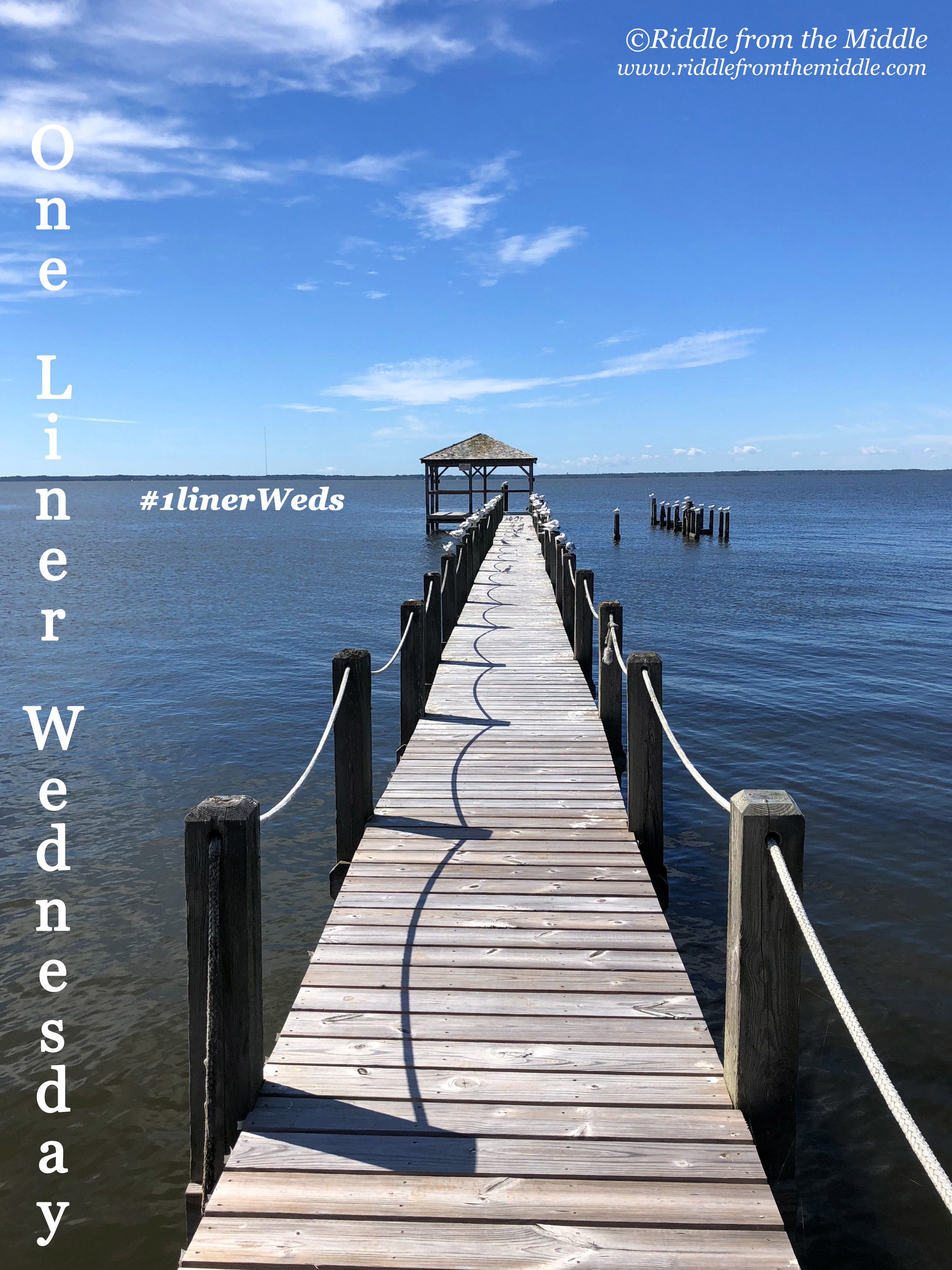
mini-daffodils from the supermarket that we will be able to plant in our yard this fall to bloom again next spring

Join us for Linda’s One-Liner Wednesdays! Find out more here: https://lindaghill.com/2021/04/14/one-liner-wednesday-ive-been-shot/

Nat’l Poetry Month Part 2

The second installment of the Broome County (NY) Arts Council (BCAC) series to celebrate National Poetry Month is now available here. This week features readings and discussion with Nicole Santalucia, Wendy Stewart, Mike Foldes, and Joshua Lindebaum.

I owe two of these poets a particular debt of gratitude.

When Nicole Santalucia, who is a Broome County native, returned to do graduate work at the state university, she founded the Binghamton Poetry Project (BPP). I first heard about BPP when Nicole read at a 2013 National Poetry Month episode of Off the Page, a radio program hosted by Bill Jaker on WSKG, our local public broadcasting radio station. Off the Page invited listeners to send in poems to their website and I was thrilled when they chose to read mine on the air! I began attending BPP’s free community poetry workshops for the general public, led by Binghamton University graduate students, in spring 2014. The connections I made there, particularly with Heather Dorn who has been a workshop leader, assistant director, and director of BPP, led to my joining the Grapevine Group, my local poetry critique group which you will hear more about shortly, and Sappho’s Circle, a women’s poetry circle which is, sadly, not currently active. The BCAC supports BPP through grants, so I was able to connect with them, as well. I was even invited to contribute a poem to BCAC’s Heart of the Arts award dinner in 2016. (Video here and text here.) I don’t think any of that would have happened without Nicole Santalucia and the Binghamton Poetry Project, so I owe her a huge thank you.

A shout-out also to Wendy Stewart, who is a member of the aforementioned Grapevine Group. Wendy always offers thoughtful advice on my poems and is supportive of me when I am being insecure, which happens with some frequency. Sometimes, we joke that she is just being Canadian!

I love the way Wendy uses language. I’ve learned a lot of new vocabulary from her. She is also masterful in the way she juxtaposes seemingly unrelated things so that we are invited to make connections we otherwise would not. She often uses her sly wit and penchant for understatement, both in her writing and in conversation, in a way that I admire, although cannot emulate.

Thank you, Wendy!

I hope you enjoy the recording. I’ll be back next week when I will be one of the featured poets.

Review: A Secret Love

I grew up in a rural area where television was purely by antenna, although we received NBC, ABC, and CBS, the three major networks at the time, which was a luxury. I’ve never been able to keep up with the increasingly complicated media landscape of cable, premium channels, satellite, and streaming options. I’ve gotten used to reading lists of Emmy nominees of shows I have never seen and to which I don’t have access. I usually can’t even keep track of what show or movie is being offered on which platform.

I do occasionally happen upon a recommendation that I can follow through on viewing. I was reading a list of awards geared for older adults from AARP which included the 2020 documentary A Secret Love. It is available through Netflix, the one streaming service to which we are currently subscribed, so spouse B, daughter T, and I settled in one evening to watch it.

A Secret Love is the story of Pat Henschel and Terry Donohue, two Canadian women who fell in love and made a life together in the United States where Terry had played baseball with the Peoria Redwings of the All-American Girls Professional Baseball League. While family back in Canada knew the two were close friends who shared a home, they did not know that they were life partners for many decades. While the film does give us their remarkable personal history, the documentary concentrates on their later years, as they face Pat’s illness and decisions about where to live.

Having dealt with the issues of serious illness, financial and legal complications, and housing decisions with B and my parents, I found much of what Pat and Terry were facing relatable. The complexity of the family dynamic, the cross-border legal issues, and the fact that, while Pat and Terry had been a couple since 1947, they did not have the protection of marriage when it came to things like hospital visitation added even more poignancy to an already daunting situation.

What comes through most clearly, though, is the depth of their love for one another. I am always moved by couples whose bond is so strong that it weathers decades of life together and Pat and Terry’s story is such a beautiful example of that. I will warn you that if you, like me, are inclined to teariness, you may want to have your handkerchief handy.

I will also say that, while the story is about elders, it also holds meaning for younger adults. T loved the film as much as I.