Out like a llama?

In the Northeast US where I live, people often say that March comes in like a lion and goes out like a lamb. This year, March certainly did begin with cold weather.  Later in the month, we did get enough time above freezing that we had thawing so that we could see grass in sunny patches where the snow was not shoveled/plowed/piled up.

Today is March 31st and it is snowing and sticking to the grassy areas and accumulating, so March is not going out like a lamb. I am proposing that it is going out like a llama – still soft to the touch, but with a bit of spit and kick to it.

“Healing the World”

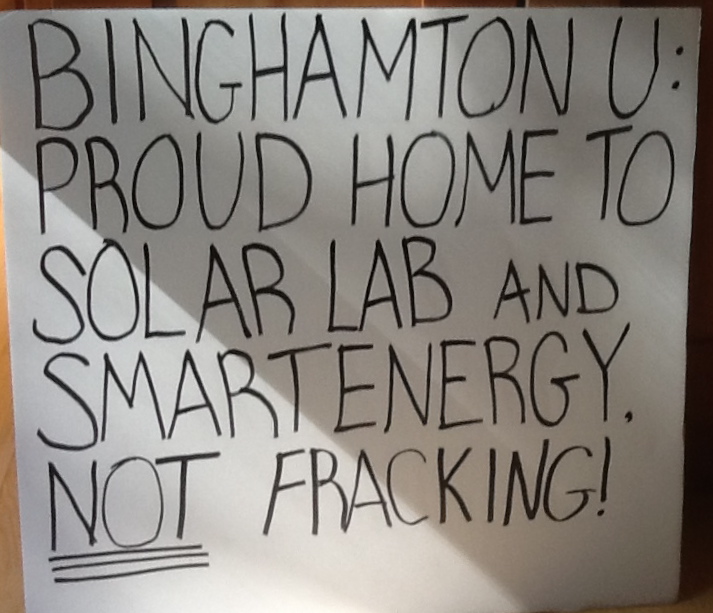
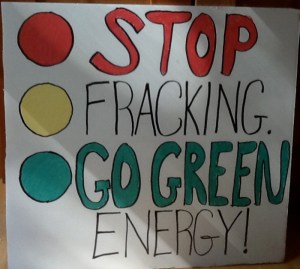
I have spent countless hours over the last several years working on the issues of shale oil/gas fracking, climate change, and renewable energy, primarily through online commentary.  Although I make my case using science, real-world experience, sociology, and economics, much of my personal energy for this work comes from my grounding in the principles of Catholic social doctrine and my calling to live them to the best of my abilities.

Earlier this month, I was very grateful to attend a workshop/retreat entitled “Healing the World:  One Step at a Time” led by the Rev. Dr. Bruce Epperly.  It was designed as a time to reflect on challenges to our natural and human environment as we in the Christian churches prepare for the Lenten season. The timing was perfect for me because just as we in New York received the fantastic, unexpected news of a planned ban on high volume hydrofracking (HVHF), I developed a case of shingles, which kept me from participating in the spontaneous celebrations that happened in the following days.  It was a blessing to have the opportunity to see some of the other people who had worked so hard on this cause and to meet others who were also working on caring for creation, including humanity, and to renew our hope as we continue our work.

There were so many important reminders:
To remember to take time away from activity to reflect, pray, and renew.
To not let opponents become dehumanized in our own minds, which I manage quite well with my environmental advocacy, even in the face of derogatory comments directed at me, but less well when it comes to confronting those who commit atrocities such as the terror attacks in France or the horrible massacres and kidnappings by Boko Haram in Nigeria.
To not get caught in the either/or of dualism.
To realize that one small action or prayer can have an effect in the world that we can neither predict not know, a principle that played out for us in the battle against HVHF in New York, where hundreds of thousands of individual actions added up to what had seemed to be an improbable, or even impossible, victory.
To challenge what is in need of reform while offering an alternative path that is good, sustainable, life-giving, and cognizant of the interdependence of creation, which, while I understand that to be within the concept of God-who-is-Love, exists both within and apart from spiritual traditions.

One of the great gifts of the workshop was a special video message to us from Bill McKibben, co-founder of 350.org and one of the world’s leading voices on climate change issues.  I had expected a somewhat generic welcome and acknowledgment but was stunned at how personally Bill spoke to us. It was obvious that he knew our area of the country, calling Interstate 88 “Warren Anderson’s driveway”, which is an inside, local joke, and talking about our beautiful rolling hills and our history of technological innovation. He recognized the immense work of the Broome County fractivists, which was very meaningful to me because, however hard we worked to get our message out there, it seemed that the public perception of our county was that our pro-fracking politicians were speaking for their constituents rather than for themselves, the JLCNY, and the fossil fuel and other business interests who gave them campaign contributions. While I will always be grateful to our allies in Ithaca and the Catskills and NYC and around New York State and our beleaguered friends from PA who fought so hard for our cause, it was heartening to know that Bill McKibben recognized our efforts here as vital to the victory.

Bill went on speaking to us from both an environmental and a faith perspective, challenging us to build new sustainable systems. I appreciated him mentioning building up local agriculture, in which initiatives are already underway with more to come, and alternative energy, another area in which we have already made advances and hope to build upon rapidly now that we no longer have the threat of HVHF’s industrialization and pollution making our homes unpleasant or unlivable.  I think everyone in the room loved when Bill spoke of taking “energy from above, rather than below.”  Such a potent metaphor.  No to fossil fuels. No to negativity. Yes to wind, water, and sun. Yes to responsible use of biomass/biofuels.  Yes to heat pumps (Even though the geothermal ones probably fit in the “below” category, I’m claiming them for the surface.) Yes to the energy of people taking action to protect the environment and to protect people, especially those most vulnerable to the ravages of poverty and climate change. Yes to the power of Divine Love, which we envision as coming to us from above, but which also surrounds us in creation and imbues us with energy to protect and cherish every being and every thing.

Bill McKibben said, “People of faith bring their own reasons.”  I thank him, Dr. Epperly, all the workshop participants, the Peace with Justice Committee of the Broome County Council of Churches and all the other sponsors for reminding me of my reasons and renewing my energy to continue to serve God in love through cooperating with others to care for creation – the environment, creatures, and humanity.

This post is part of Linda’s Just Jot It January:  http://lindaghill.com/2015/01/01/just-jot-it-january-pingback-post-and-rules/

Giving thanks for no fracking

Dear Governor Cuomo,

Happy Thanksgiving! This year, I am thankful that there has been no shale gas drilling using high-volume hydrofracking in New York State, especially in Vestal, my hometown.

I’m also thankful that this has been the year that many independent scientists have published peer-reviewed work elucidating the damage that shale gas and oil extraction, processing, transport, use, and waste disposal are doing to human, environmental, and planetary health.

The work of climate scientists makes the high stakes abundantly clear. Humans must stop burning fossil fuels as soon as possible, especially unconventional fossil fuels which have a higher greenhouse gas emission burden than conventional fossil fuels.

Therefore, I call on you as governor to enact a permanent ban on unconventional fossil fuel extraction in New York State and to end the expansion of fossil fuel infrastructure and importation of waste products from shale drilling.

Instead, New York State must go all in for renewable energy and efficiency. Wind, especially off-shore wind, solar, electric grid upgrades, biomass, non-food-crop biofuels, heat pumps, geothermal, advanced battery storage, and other emerging energy technologies are what New York, the United States and the world need for our future, not an ever more desperate and expensive scramble for dangerous fossil fuels.

Sincerely,
Joanne Corey

lake effect snow update

Yesterday, I posted about the lake effect snow storms afflicting several areas in the US, including western New York State just south of Buffalo. Sadly, there have been twelve deaths attributed to the storm so far. Because so many feet of snow are very heavy, there have been some roof collapses with more feared to come.

Some areas are still receiving additional snowfall. The forecast predicts a warm front with some rain arriving over the weekend. This has only heightened worries of more roof collapses as the rain adds weight to the feet of accumulated snow. People are trying to clean snow off roofs as quickly as possible, but the area is quite densely populated and many roads are still inaccessible for help and equipment to arrive.

The other very real threat is flooding. With temperatures predicted to climb to 60 degrees F. (15 degrees C.), the snow will melt rapidly and street and small stream flooding is most likely unavoidable.

All brought to you by global warming. Remember, even though this is a cold weather event, it was started by a tropical typhoon.

Typhoon to lake effect snow

Connecting the dots on climate change:

A Pacific tropical typhoon is so strong that it reaches the Aleutian Islands of Alaska and disrupts the jet stream, allowing polar air to sink over much of the continental United States. When the frigid air passes over the relatively warm water of the Great Lakes, it picks up a lot of moisture and dumps it over land as snow. Some towns in western New York south of Buffalo have already received 5+ feet of snow, with an additional 2-3 feet on the way. (That’s 1.5 meters or more on the ground with another meter to come.)

A similar occurrence could have happened in the past, some time before recorded history in the region. It isn’t possible to say that any particular weather event is directly caused by global warming, However, the incidence of these extreme kinds of weather is rising quickly along with average global temperature.

It’s time for everyone to get serious about phasing out fossil fuels as quickly as possible and ramping up renewable energy in conjunction with energy efficiency. If we see this much change with less than one degree Celsius global temperature rise, we will have to brace ourselves for more as we attempt to keep the total rise under two degrees Celsius.

SoCS: The Four Elements

On my newsfeed, I just saw a story about one of the First Nations equating the US House vote to approve Keystone XL as an act of war. So, I am thinking of the four elements in that context, which includes unconventional fossil fuel extraction side effects..

Water is at risk because of methane migration, the permanent removal of water from the water system, toxicity from the chemicals that are mixed into it and that enter it from underground, and pipeline leaks that damage groundwater and surface waters. Unconventional fossil fuels are very water-intensive at a time when many places are facing water shortages.

Air pollution is caused by both the extraction processes of bitumen aka tar sands oil and by the refining/processing and use of this fossil fuel. The carbon-intensity of the extraction process compounds the problems of the burning of the final product to have an outsized climate change impact.

Earth is disturbed to build the pipeline and that land needs to be kept clear of trees, buildings etc. in perpetuity. The larger earth disturbance is the tar sands area itself, which involves felling old growth forests and massive surface disruption.

Fire represents the burning of the fuel but also one of the greatest dangers of dealing with fossil fuels, the threat of explosion.

The First Nations have been leading the fight against tar sands extraction and transport, both in Canada and the US. Their spiritual connection to Mother Earth and the four elements are an example to all of us who are their allies.

This post is part of Linda’s Stream of Consciousness Saturdays. Join us:  http://lindaghill.com/2014/11/14/the-friday-reminder-and-prompt-for-socs-november-1514/

socs-badge
Badge by Doobster @MindfulDigressions

Dear Governor Cuomo

IMG_0083

I sent this letter to New York Governor Cuomo today on the election and shale drilling and equal protection and climate change and science and more.  I know it is overly long – although I could have written much, much more – but I am proud that I managed to get this done before the election, despite the disruption that recent family health issues have caused. I decided to write this today, even though I have 385 email messages to view, so apologies to anyone awaiting a personal email.
JC

Dear Governor Cuomo,

The election is eight days from today, but I do not think I will be able to vote for you because you are not doing enough to protect the health and safety of all New Yorkers equally.

I live in Vestal and I and my Southern Tier neighbors are at risk from the health and environmental impacts of shale gas production, processing, transport, and waste disposal, a risk from which you have not protected us.

Some of the impacts that have already occurred are road damage in Vestal from the overweight trucks transporting drilling supplies to sites in Pennsylvania, inability to get mortgages on leased land, crime associated with gas industry workers staying on the NY side of the border, leaking pipelines, increased truck traffic, light and noise pollution, airborne silica sand along rail lines and during trucking transfers, and an explosion at a Windsor compressor station.

Other impacts are probable but not being tested, such as degradation in air quality.  Some impacts are obscured by the lack of tracking of the fossil fuel industry.  For example, waste products are shipped by truck without the exact composition being known, so that if they are disposed of at a landfill the effects on the leachate are unknowable.  Given that some of this leachate is treated in Endicott, this is a local concern as well as a regional one.  Meanwhile, it is still legal to spread drilling wastewater on roadways in New York, despite the fact that we know that Marcellus wastewater is often high in radium, which is a radioactive, toxic element known to bio-accumulate and cause serious health problems, including cancer.

Other impacts are, of course, global in scope.  The latest readings of atmospheric carbon dioxide are at record highs and we know that humans burning fossil fuels have been the driving force in that.  Also, the atmospheric methane level is at a record high.  Methane is a much more potent greenhouse gas than carbon dioxide, 86 times more potent in a twenty year timeframe. After a long period of stability, atmospheric methane levels began rising in 2007, coinciding with “shale boom.”  Several new scientific studies say that replacing coal or diesel fuel with fossil methane will not help our climate situation.  Shale development will not cut the risk of the next record flood here in Vestal or the next superstorm roaring up the Atlantic coast.

I have been trying to follow the DEC’s SGEIS and regulatory process for years now.  I say “trying” because the process itself is obscure.  Besides the obvious problem of the Minerals division trying to promote fossil fuel production while also trying to regulate it, there is the larger problem that the DEC’s work has been hidden from the public for years now. Because there has been a large number of independent, peer-reviewed scientific research studies published in the last two years, the last publicly available draft of the SGEIS is totally outdated, but we have no idea whether or not the DEC has been continuing to update the SGEIS as these new scientific studies and data from other states who are drilling have become available.

The obscurity of the process has been compounded by the DOH “review” of the the health findings of the DEC’s work.  Although this has been referred to as a study, it is not.  A real health study would follow the national/international guidelines of a health impact assessment (HIA) and would be conducted as a clearly defined, public process. It would consider health impacts on different groups of people, such as children, the elderly, and pregnant women/infants. It would look at the interplay of exposures to many different substances and the interactions among them. It would look at impacts for those in close proximity to wells and related infrastructure and those further away, including air quality, possible food and water exposures, and climate impacts.  It would also consider socioeconomic changes, such as rates of crime and homelessness, property value, cost of living, stresses on community services, and gains and losses in different job categories.

The economic section of the draft SGEIS is particularly outdated and unrealistic, having been built on what we now know are totally impossible expectations, that the industry could get economically viable amounts of gas anywhere in the Marcellus and Utica.  The price of methane is so low that it is unlikely anywhere in New York can presently produce shale gas economically, with the danger that small companies would take that risk using borrowed money and leave behind wells that cause pollution that the state would need to clean up when the company goes bankrupt.  New York already has thousands of leaking, abandoned wells awaiting proper plugging; we should not compound the problem with even limited amounts of shale drilling.

Governor, you say over and over that the science must decide, but that you are not a scientist. You say that scientists disagree.  The actuality is that industry-funded science is presented and used in a way that makes it seem that shale drilling is safe, while independent science presents data and possible explanations for that data which show that there are environmental and health impacts occuring. A recent example of this is the media coverage of a recent federal Department of Energy study of a single PA deep shale well for eighteen months, which showed that fracking chemicals had not reached an aquifer 3,000 feet distant, which is being touted as “proof” that “fracking” doesn’t pollute water.  Meanwhile, a PNAS study of the official DEP records of PA wells drilled from 2000-12 which covers tens of thousands of wells and their failure rates (Abstract here: http://psehealthyenergy.org/site/view/1217 with link to full report) shows that leakage rates for new shale wells in Northeastern PA are significantly higher than those for conventional wells and for shale wells drilled in the rest of the state. Leaking wells equals methane migration into groundwater, soils, and/or through faults, wellbores, or cracks equals pollution of the water, land, air, and atmosphere. The fact that NE PA is particularly vulnerable to leaking shale wells is disturbing for those of us in the border area of New York as the Marcellus geology here is similar. Yet this much larger study is not getting the press attention of the DOE study which is much less helpful in assessing the situation in New York.

The situation is sadly reminiscent of the doctors and scientists in the employ of the tobacco industry who swore to Congress that smoking did not cause cancer, while independent doctors and scientists were raising public health alarms not only about smokers’ health but also about those exposed to second-hand smoke or in utero tobacco exposure.

For you or any governor to authorize shale gas drilling in the Southern Tier would be like deciding to lift the smoking ban here while continuing to protect other parts of the state.  Our health and well-being here in Vestal is every bit as important as your health in Albany or the health of my sister in NYC or my daughter at ESF in Syracuse.  With the current scientific literature, there is no way that the DEC and DOH can say that unconventional shale gas drilling and its attendant processes are safe. We in the Southern Tier are due protection from its risks equal to those in other regions.

Your television ads tout “Next-Gen energy” here in Broome County and we are justifiably proud of that. Do not compromise that pride by also saddling us with the outmoded 19th and 20th century fossil fuel dependence that is worsening global warming. It’s time to back up your rhetoric after Sandy about combating climate change with action.  NO to new fossil fuel development and infrastructure!  YES to renewable energy, clean energy storage, and energy efficiency initiatives!  YES to equal health and environmental protection for everyone!

Sincerely,
Joanne Corey

SoCS: two degrees

Two degrees Celsius is the threshold between what is considered impactful but manageable global warming and catastrophic global warming. Climate scientists will tell you it isn’t that clearcut. We are already seeing major impacts at only one degree-ish. At two degrees, we may get major feedback loops happening, like the melting of permafrost and the release of methane hydrates from northern seas and oceans which would accelerate warming further.

Two degrees C. has been translated into 350 ppm carbon dioxide. We have now topped 400 at times in the atmospheric readings on the Big Island of Hawai’i – I think it is Mauna Kea, but it could be Mauna Loa – and the levels keep rising.

What is disturbing me even more is that global atmospheric methane, after a long period of stability, began rising in 2007. Methane is more short-lived in the atmosphere than carbon dioxide, but is a much more powerful greenhouse gas – 86 times more powerful in a twenty year context and 106 times more powerful in a decade. Given that our timeframe to get global warming under control is now very short, methane in the atmosphere is particularly troubling as it has such a strong effect in the immediate future.

So, why do I hear the word degrees and immediately go into my global warming spiel?  I write about this a lot, as an offshoot of my commentary on the dangers of shale oil/gas aka unconventional fossil fuels aka fracking.  I have spent countless hours writing and researching and commenting on these topics.  It started as a personal thing as my state, New York, is currently under a moratorium, while our neighbor state Pennsylvania is drilling extensively. And I live in a border town.

I could literally write about this for hours, but I will spare you. I apologize if I was unclear at all in this post. It’s the whole stream of consciousness thing – no fact-checking or editing allowed…

This is part of Linda’s Stream of Consciousness Saturdays.  This week’s prompt was “degree/degrees.”  Join us! Read how here:  http://lindaghill.com/2014/10/24/the-friday-reminder-and-prompt-for-socs-october-2514/


Badge by Doobster @Mindful Digressions

One-Liner Wednesday: Hildegard of Bingen

“The earth which sustains humanity must not be injured, it must not be destroyed.”
~~~ Hildegard of Bingen

I chose this quote for today because this is the feast day of Saint Hildegard of Bingen and because of the upcoming People’s Climate March in New York City on Sunday.

Join in with Linda’s One Liner Wednesday:  http://lindaghill.wordpress.com/2014/09/17/one-liner-wednesday-sleeping-in/


Three years later…

Three years ago, our home was still without power after the flooding caused by the ten inches of rain from tropical storm Lee, falling on ground already saturated by hurricane Irene a few days before.  Standing water from the flooding was two blocks away.  Flooded basements were a block away. If we had not had a generator to keep our sump pump going, we would have wound up with at least several inches of water in our basement. It was a record flood of the Susquehanna in our town and the tributary creek behind our house nearly overtopped the flood wall that is designed to direct the water to the undeveloped flood plain on the other bank.

There are segments on the local news about the anniversary and saying that the area is almost recovered, glossing over the fact that property buyouts only became available to people in local towns after hurricane Sandy devastated the coast. Demolitions only began in earnest this spring and are still continuing.

There will be no recovery for those who left the area permanently after longtime homes were destroyed. Some businesses closed permanently in the aftermath.  Only some of the infrastructure repairs hae been completed.

One of the more disturbing elements of the situation is that there has been little to no preparation for the next severe flooding event which is sure to come with the increased threat of heavy rain that goes along with global warming.  We should be restoring wetlands along the river and its tributaries and re-designing our storm drainage and sewage systems which caused so much trouble in the last two record floods that have occurred in the last ten years. Work also needs to be done with our water system and electrical system to make them more robust in emergencies.

Yes, it is expensive to do these things, but more expensive not to do them and to be cleaning up and rebuilding – again – after the next flood.

~~~~~~~~~~~~~

Personal note:  I haven’t been posting much lately because I managed to get pretty sick. I’m finally bouncing back and hope to have a few more posts out over the next week. Fingers crossed.