Typhoon to lake effect snow

Connecting the dots on climate change:

A Pacific tropical typhoon is so strong that it reaches the Aleutian Islands of Alaska and disrupts the jet stream, allowing polar air to sink over much of the continental United States. When the frigid air passes over the relatively warm water of the Great Lakes, it picks up a lot of moisture and dumps it over land as snow. Some towns in western New York south of Buffalo have already received 5+ feet of snow, with an additional 2-3 feet on the way. (That’s 1.5 meters or more on the ground with another meter to come.)

A similar occurrence could have happened in the past, some time before recorded history in the region. It isn’t possible to say that any particular weather event is directly caused by global warming, However, the incidence of these extreme kinds of weather is rising quickly along with average global temperature.

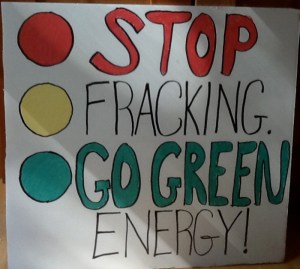
It’s time for everyone to get serious about phasing out fossil fuels as quickly as possible and ramping up renewable energy in conjunction with energy efficiency. If we see this much change with less than one degree Celsius global temperature rise, we will have to brace ourselves for more as we attempt to keep the total rise under two degrees Celsius.

SoCS: The Four Elements

On my newsfeed, I just saw a story about one of the First Nations equating the US House vote to approve Keystone XL as an act of war. So, I am thinking of the four elements in that context, which includes unconventional fossil fuel extraction side effects..

Water is at risk because of methane migration, the permanent removal of water from the water system, toxicity from the chemicals that are mixed into it and that enter it from underground, and pipeline leaks that damage groundwater and surface waters. Unconventional fossil fuels are very water-intensive at a time when many places are facing water shortages.

Air pollution is caused by both the extraction processes of bitumen aka tar sands oil and by the refining/processing and use of this fossil fuel. The carbon-intensity of the extraction process compounds the problems of the burning of the final product to have an outsized climate change impact.

Earth is disturbed to build the pipeline and that land needs to be kept clear of trees, buildings etc. in perpetuity. The larger earth disturbance is the tar sands area itself, which involves felling old growth forests and massive surface disruption.

Fire represents the burning of the fuel but also one of the greatest dangers of dealing with fossil fuels, the threat of explosion.

The First Nations have been leading the fight against tar sands extraction and transport, both in Canada and the US. Their spiritual connection to Mother Earth and the four elements are an example to all of us who are their allies.

This post is part of Linda’s Stream of Consciousness Saturdays. Join us:  http://lindaghill.com/2014/11/14/the-friday-reminder-and-prompt-for-socs-november-1514/

socs-badge
Badge by Doobster @MindfulDigressions

Dear Governor Cuomo

IMG_0083

I sent this letter to New York Governor Cuomo today on the election and shale drilling and equal protection and climate change and science and more.  I know it is overly long – although I could have written much, much more – but I am proud that I managed to get this done before the election, despite the disruption that recent family health issues have caused. I decided to write this today, even though I have 385 email messages to view, so apologies to anyone awaiting a personal email.
JC

Dear Governor Cuomo,

The election is eight days from today, but I do not think I will be able to vote for you because you are not doing enough to protect the health and safety of all New Yorkers equally.

I live in Vestal and I and my Southern Tier neighbors are at risk from the health and environmental impacts of shale gas production, processing, transport, and waste disposal, a risk from which you have not protected us.

Some of the impacts that have already occurred are road damage in Vestal from the overweight trucks transporting drilling supplies to sites in Pennsylvania, inability to get mortgages on leased land, crime associated with gas industry workers staying on the NY side of the border, leaking pipelines, increased truck traffic, light and noise pollution, airborne silica sand along rail lines and during trucking transfers, and an explosion at a Windsor compressor station.

Other impacts are probable but not being tested, such as degradation in air quality.  Some impacts are obscured by the lack of tracking of the fossil fuel industry.  For example, waste products are shipped by truck without the exact composition being known, so that if they are disposed of at a landfill the effects on the leachate are unknowable.  Given that some of this leachate is treated in Endicott, this is a local concern as well as a regional one.  Meanwhile, it is still legal to spread drilling wastewater on roadways in New York, despite the fact that we know that Marcellus wastewater is often high in radium, which is a radioactive, toxic element known to bio-accumulate and cause serious health problems, including cancer.

Other impacts are, of course, global in scope.  The latest readings of atmospheric carbon dioxide are at record highs and we know that humans burning fossil fuels have been the driving force in that.  Also, the atmospheric methane level is at a record high.  Methane is a much more potent greenhouse gas than carbon dioxide, 86 times more potent in a twenty year timeframe. After a long period of stability, atmospheric methane levels began rising in 2007, coinciding with “shale boom.”  Several new scientific studies say that replacing coal or diesel fuel with fossil methane will not help our climate situation.  Shale development will not cut the risk of the next record flood here in Vestal or the next superstorm roaring up the Atlantic coast.

I have been trying to follow the DEC’s SGEIS and regulatory process for years now.  I say “trying” because the process itself is obscure.  Besides the obvious problem of the Minerals division trying to promote fossil fuel production while also trying to regulate it, there is the larger problem that the DEC’s work has been hidden from the public for years now. Because there has been a large number of independent, peer-reviewed scientific research studies published in the last two years, the last publicly available draft of the SGEIS is totally outdated, but we have no idea whether or not the DEC has been continuing to update the SGEIS as these new scientific studies and data from other states who are drilling have become available.

The obscurity of the process has been compounded by the DOH “review” of the the health findings of the DEC’s work.  Although this has been referred to as a study, it is not.  A real health study would follow the national/international guidelines of a health impact assessment (HIA) and would be conducted as a clearly defined, public process. It would consider health impacts on different groups of people, such as children, the elderly, and pregnant women/infants. It would look at the interplay of exposures to many different substances and the interactions among them. It would look at impacts for those in close proximity to wells and related infrastructure and those further away, including air quality, possible food and water exposures, and climate impacts.  It would also consider socioeconomic changes, such as rates of crime and homelessness, property value, cost of living, stresses on community services, and gains and losses in different job categories.

The economic section of the draft SGEIS is particularly outdated and unrealistic, having been built on what we now know are totally impossible expectations, that the industry could get economically viable amounts of gas anywhere in the Marcellus and Utica.  The price of methane is so low that it is unlikely anywhere in New York can presently produce shale gas economically, with the danger that small companies would take that risk using borrowed money and leave behind wells that cause pollution that the state would need to clean up when the company goes bankrupt.  New York already has thousands of leaking, abandoned wells awaiting proper plugging; we should not compound the problem with even limited amounts of shale drilling.

Governor, you say over and over that the science must decide, but that you are not a scientist. You say that scientists disagree.  The actuality is that industry-funded science is presented and used in a way that makes it seem that shale drilling is safe, while independent science presents data and possible explanations for that data which show that there are environmental and health impacts occuring. A recent example of this is the media coverage of a recent federal Department of Energy study of a single PA deep shale well for eighteen months, which showed that fracking chemicals had not reached an aquifer 3,000 feet distant, which is being touted as “proof” that “fracking” doesn’t pollute water.  Meanwhile, a PNAS study of the official DEP records of PA wells drilled from 2000-12 which covers tens of thousands of wells and their failure rates (Abstract here: http://psehealthyenergy.org/site/view/1217 with link to full report) shows that leakage rates for new shale wells in Northeastern PA are significantly higher than those for conventional wells and for shale wells drilled in the rest of the state. Leaking wells equals methane migration into groundwater, soils, and/or through faults, wellbores, or cracks equals pollution of the water, land, air, and atmosphere. The fact that NE PA is particularly vulnerable to leaking shale wells is disturbing for those of us in the border area of New York as the Marcellus geology here is similar. Yet this much larger study is not getting the press attention of the DOE study which is much less helpful in assessing the situation in New York.

The situation is sadly reminiscent of the doctors and scientists in the employ of the tobacco industry who swore to Congress that smoking did not cause cancer, while independent doctors and scientists were raising public health alarms not only about smokers’ health but also about those exposed to second-hand smoke or in utero tobacco exposure.

For you or any governor to authorize shale gas drilling in the Southern Tier would be like deciding to lift the smoking ban here while continuing to protect other parts of the state.  Our health and well-being here in Vestal is every bit as important as your health in Albany or the health of my sister in NYC or my daughter at ESF in Syracuse.  With the current scientific literature, there is no way that the DEC and DOH can say that unconventional shale gas drilling and its attendant processes are safe. We in the Southern Tier are due protection from its risks equal to those in other regions.

Your television ads tout “Next-Gen energy” here in Broome County and we are justifiably proud of that. Do not compromise that pride by also saddling us with the outmoded 19th and 20th century fossil fuel dependence that is worsening global warming. It’s time to back up your rhetoric after Sandy about combating climate change with action.  NO to new fossil fuel development and infrastructure!  YES to renewable energy, clean energy storage, and energy efficiency initiatives!  YES to equal health and environmental protection for everyone!

Sincerely,
Joanne Corey

SoCS: two degrees

Two degrees Celsius is the threshold between what is considered impactful but manageable global warming and catastrophic global warming. Climate scientists will tell you it isn’t that clearcut. We are already seeing major impacts at only one degree-ish. At two degrees, we may get major feedback loops happening, like the melting of permafrost and the release of methane hydrates from northern seas and oceans which would accelerate warming further.

Two degrees C. has been translated into 350 ppm carbon dioxide. We have now topped 400 at times in the atmospheric readings on the Big Island of Hawai’i – I think it is Mauna Kea, but it could be Mauna Loa – and the levels keep rising.

What is disturbing me even more is that global atmospheric methane, after a long period of stability, began rising in 2007. Methane is more short-lived in the atmosphere than carbon dioxide, but is a much more powerful greenhouse gas – 86 times more powerful in a twenty year context and 106 times more powerful in a decade. Given that our timeframe to get global warming under control is now very short, methane in the atmosphere is particularly troubling as it has such a strong effect in the immediate future.

So, why do I hear the word degrees and immediately go into my global warming spiel?  I write about this a lot, as an offshoot of my commentary on the dangers of shale oil/gas aka unconventional fossil fuels aka fracking.  I have spent countless hours writing and researching and commenting on these topics.  It started as a personal thing as my state, New York, is currently under a moratorium, while our neighbor state Pennsylvania is drilling extensively. And I live in a border town.

I could literally write about this for hours, but I will spare you. I apologize if I was unclear at all in this post. It’s the whole stream of consciousness thing – no fact-checking or editing allowed…

This is part of Linda’s Stream of Consciousness Saturdays.  This week’s prompt was “degree/degrees.”  Join us! Read how here:  http://lindaghill.com/2014/10/24/the-friday-reminder-and-prompt-for-socs-october-2514/


Badge by Doobster @Mindful Digressions

One-Liner Wednesday: Hildegard of Bingen

“The earth which sustains humanity must not be injured, it must not be destroyed.”
~~~ Hildegard of Bingen

I chose this quote for today because this is the feast day of Saint Hildegard of Bingen and because of the upcoming People’s Climate March in New York City on Sunday.

Join in with Linda’s One Liner Wednesday:  http://lindaghill.wordpress.com/2014/09/17/one-liner-wednesday-sleeping-in/


Three years later…

Three years ago, our home was still without power after the flooding caused by the ten inches of rain from tropical storm Lee, falling on ground already saturated by hurricane Irene a few days before.  Standing water from the flooding was two blocks away.  Flooded basements were a block away. If we had not had a generator to keep our sump pump going, we would have wound up with at least several inches of water in our basement. It was a record flood of the Susquehanna in our town and the tributary creek behind our house nearly overtopped the flood wall that is designed to direct the water to the undeveloped flood plain on the other bank.

There are segments on the local news about the anniversary and saying that the area is almost recovered, glossing over the fact that property buyouts only became available to people in local towns after hurricane Sandy devastated the coast. Demolitions only began in earnest this spring and are still continuing.

There will be no recovery for those who left the area permanently after longtime homes were destroyed. Some businesses closed permanently in the aftermath.  Only some of the infrastructure repairs hae been completed.

One of the more disturbing elements of the situation is that there has been little to no preparation for the next severe flooding event which is sure to come with the increased threat of heavy rain that goes along with global warming.  We should be restoring wetlands along the river and its tributaries and re-designing our storm drainage and sewage systems which caused so much trouble in the last two record floods that have occurred in the last ten years. Work also needs to be done with our water system and electrical system to make them more robust in emergencies.

Yes, it is expensive to do these things, but more expensive not to do them and to be cleaning up and rebuilding – again – after the next flood.

~~~~~~~~~~~~~

Personal note:  I haven’t been posting much lately because I managed to get pretty sick. I’m finally bouncing back and hope to have a few more posts out over the next week. Fingers crossed.


What I meant to say was…

“You keep using that word. I do not think it means what you think it means.” – Inigo Montoya in The Princess Bride

I try to be clear when I write prose – poetry is not as straightforward by design – but I am running into a problem. I tend to use words assuming readers will apply standard dictionary definitions, but I am finding myself increasingly having to explain at length what I mean by a certain term, so as not to be misinterpreted, as I did in my recent post My (Feminist) Story.

I do understand the difference between connotation and denotation, but it is a pity that many words that usefully describe philosophical or political views have become so skewed from their dictionary definition as to be unusable in practical terms. For example, the words “liberal” and “progressive” are heard more often as epithets than as accurate descriptors of actual policies. Past conservative presidents like Richard Nixon would now be considered liberal, given the positions of those who now describe themselves as conservative.

The word whose misuse most disturbs me is “science.” Science is about data, evidence, observation, reason, leading to conclusions consistent with facts and repeatable by other scientists. In order for papers to be published in scientific journals, they first must be reviewed by peers with knowledge of the field to ensure that the study’s procedures and conclusions meet research standards. Yes, there are studies that later need to be withdrawn when errors are found after publication, but that is rare.

I frequently write comments on news articles about unconventional fossil fuel extraction including “fracking,” renewable energy, and climate change. In my home state of New York, we are in a continuing battle over whether or not high volume hydraulic fracturing will be permitted. The governor has said that science will be the determining factor. The problem is that both sides say they have the science on their side.

The pro-fracking side has industry studies, which are almost never subject to peer review, bold pronouncements from the industry and their allies that fracking is safe, exemptions from key environmental provisions that apply to other industries, gag orders on court settlements of damage claims, and regulatory agencies that are a revolving door to the industry and that use subcontractors that also work with the industry to draft environmental review documents and regulations.

What we on the anti-fracking side have is – well – science. There was a trickle of studies at first, because scientific study takes time with additional time needed for peer review, but there have been more and more studies, especially in the last eighteen months, documenting environmental impacts on air, water, biosphere, climate, and public health. There is a new compendium of research on fracking here. (I can’t resist posting the link to the compendium at every available opportunity.)

Anyone who knows the definition of science should be able to tell which side is using science in their argument. I can understand that some people who are hoping to profit from fracking might delude themselves into believing the industry over the scientists. I don’t understand the press giving equivalency to the remarks of a peer-reviewed independent scientist and an industry spokesperson/propagandist.

The press should be clear with the definition of science. I know it has become common for politicians at all levels of government to say “I am not a scientist” as an excuse not to understand issues such as climate change. Frankly, people do not need to understand all the intricacies of scientific inquiry to believe a strong scientific consensus. They do need to understand the definition of science and to discern what meets the standards of science and what does not.

Obama’s “All of the Above” Energy Plan

I just finished reading this article about how over 20 billion dollars of US government subsidies are directing at the fossil fuel industry and how the “all of the above” energy strategy is a failure from a global warming perspective.

It reminded me of the letter I wrote to President Obama after he visited Binghamton University in August 2013.

Today has been a heavy commenting day on fracktivist issues. You can all breathe a sigh of relief that I haven’t blogged them all, too. (If anyone is truly interested, I did cross-post a couple of my comments to Facebook, so I have access to links which I will share in comments, if desired.)

Hawai’i and Climate Change

Hawai’i is the inhabited place that is most distant from any other inhabited place in the world. Because of its isolation, Hawai’i is home to more endemic species than anywhere else on earth. Endemic means that a species is found just in that one area and nowhere else on earth. In such a remote location in the middle of the Pacific, one is tempted to think that climate change won’t affect the islands, but that is a mistake. There is a reason that climate change often appears with the adjective “global” in front of it.

The ecosystems and microclimates of Hawai’i are already complicated, due to topography. There are dry leeward sides and wet windward sides. The height of some of the volcanoes creates an alpine ecosystem. The peak of Kaua’i is the wettest place on earth, averaging over 450 inches of rain a year, yet other areas are deserts. There are tropical, temperate, and dryland forests.

Yet, even here, the climate is changing noticeably. The trade winds are what keeps Hawai’i from being as hot and humid as one would expect at this latitude, yet more and more often the trade winds stop blowing. This creates longer periods of hot, humid weather, even when it isn’t summer. Most of our time in Honolulu, there was a heat wave, despite it being early May. The trades dying down exacerbates vog, which is smog caused by volcanic ash. Given that Kilauea has been erupting continuously, the airborne ash can travel to other islands and create air quality problems for them. When the trade winds die down, the ash levels build up and people with breathing difficulties suffer.

The native Hawaiians named only two seasons, the rainy season and the hot season. In our current terms, the rainy season was late fall through early spring, but, as we see in other parts of the world, weather tends to be more extreme, so the wet season tends to be wetter and longer, with more possibilities of thunderstorms, which had been very rare. Meanwhile, the hot season is hotter and can get much more humid when the trade winds die down, which is happening much more frequently than in the past.

The increased dryness of the dry ecosystems makes them more vulnerable to drought. When we were on the leeward side of the Big Island, there were many signs warning of extreme fire danger. Wildfire is especially dangerous in Hawai’i because the plants evolved there without that threat, so they are not adapted to survive or re-populate after it. The problem is made worse by invasive species, such as fountain grass which grows on relatively fresh lava flows, making them useless as natural fire breaks. When we visited Ka’upulehu , Wilds was telling us about some of the problems that climate change is causing for them in their mission to restore a native dryland forest, one of which was the need to maintain fire breaks around the perimeter to protect the native plants.

The people of Hawai’i are working to reduce their carbon footprint to help fight climate change. There are many more electric and plug-in hybrid vehicles here, along with public charging stations. Rooftop solar photovoltaics and hot water are common. There is a light rail system being built in Honolulu to alleviate wasted time and fuel on the highway. There is some utilization of geothermal power, as well.

I have already been trying to do my part to combat climate change and this trip makes those efforts seem that much more important. I hope you will join me in work toward energy efficiency and renewable energy for the sake of extraordinarily beautiful Hawai’i and the rest of the world.


If we really want to help Ukraine…

I have heard several things today through various media, including this blog post:  http://www.nofrackingway.us/2014/04/22/kerrys-shale-gas-bluff/  about the situation with Ukraine in regards to the dangers of losing access to Russian methane.

If the US really wants to help Ukraine and other European countries get out from under the thumb of Russian fossil fuel threats, it should help them quickly implement alternate energy sources, especially renewable ones. Help fund a transition to geothermal heat pumps for heating and cooling. Find appropriate sites for solar and wind electrical production. Local, distributed energy systems will increase economic well-being and alleviate the fear of Russia cutting off Ukraine and, by extension, much of the rest of Europe from methane for heating during the winter.

Earth Day bonus:  It would be a huge help to the climate as we urgently need to stop burning fossil fuels as soon as possible.