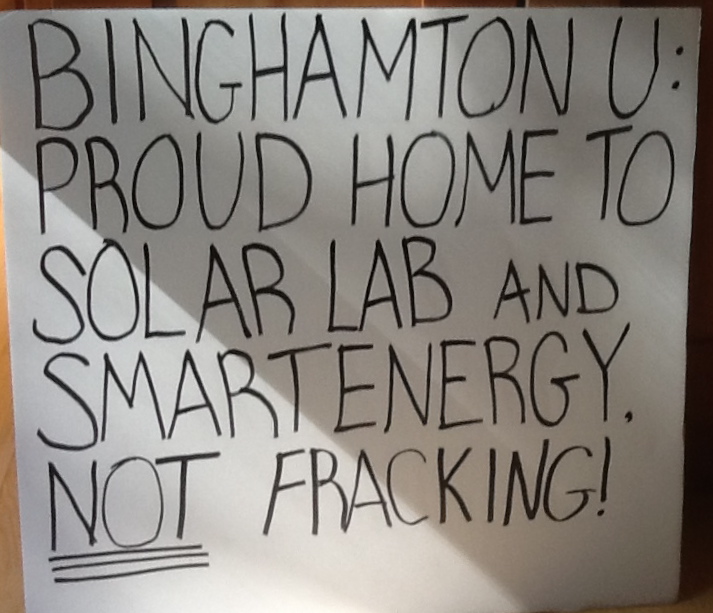
new twitter follower

I just got notification that I have a new twitter follower, Gas Industry Today, which just seems weird, given that I have spent years doing public commentary against fracking and continued reliance on fossil fuels.

I thought from the title that this was a pro-industry site, but when I checked it out, it is actually a news aggregator. Given that I post a lot of links, it makes sense that they would follow me, at least for a while.

I don’t usually promote following me on twitter here on Top of JC’s Mind, because my twitter is a mishmash of blog posts, links to things about global warming, fracking, and such, links on Catholic topics and women’s ordination, and the occasional personal comment. It’s even more eclectic than this blog!

But, if anyone wants to follow, on twitter I am @btmum.  I think that link will work. I am not so adept at twitter-verse protocol.

LOL – Probably not a surprise!

Honolulu vs home

Being here in Honolulu for a few weeks has highlighted some differences from being at home in upstate New York, other than driving:
*  Today, there was the monthly test of the tsunami warning system. E’s neighborhood is higher in elevation, so she lives above the evacuation zone. When we were staying in the hotel in Waikiki, the first several floors of the hotels were mostly dedicated to parking. This allows them to keep people safely on the upper floors in case of tsunami.
*  A heat wave here is not as hot as in most of the rest of the US.  We have been having a heat wave with some records tied or broken, but it is only 88-91 degrees F. (31-33 degrees C.)
*  There are microclimates everywhere, but they are much more noticeable here. For instance, in E’s neighborhood, you can be walking in what seems to be a rain shower – while there are no clouds overhead and the sun is shining.  The rain is falling in the  Palolo valley and being blown into Kaimuki.
*   At home, I’ve never had a tiny chameleon show up in the bathroom, matching its color to the bathmat.
*  There is much more coverage in the news on climate change and renewable energy.  Despite Hawai’i being the most remote islands in the world, the effects and the threat of more effects are real.
*  Because the angle of the sun is higher here, solar panels can often be placed on more than just the south-facing slope of a roof.
*  Unlike home, there is almost never a basement here. It ‘s strange to me to see water heaters just sitting outside under the eaves.
*  There is a lot more discussion and coverage of homelessness and affordable housing.  Rents and real estate prices here are very high and there are many people who can’t afford them, even when they are employed. While there are single people who are homeless, there are also many homeless families.
*  The tension between the indigenous Hawaiians and the state is obvious. There are demonstrations almost daily against development of certain areas. While these problems are also present in New York, they are much more hidden.

Interspirituality conference

I’ve spent the last two days immersed in this interspirituality conference.  Kurt Johnson was our main speaker with many members of our local community participating as panelists/presenters.  It is impossible for me to condense two intensive days into a reasonable summary, so I will instead give a series of impressions, connections, and experiences.

I learned a lot from an academic/historical perspective about interspirituality. While it uses a different vocabulary, the concepts were familiar to me from studying spiritual teachers such as Joan Chittister and Richard Rohr who transcend the borders between spiritual traditions and emphasize the universal, indwelling presence of the Divine.

One of the unsettling aspects for me that was articulated by some of the women in attendance was that even at the advanced levels of spirituality and consciousness that were being discussed, the lens was still predominantly and historically male.  When there was discussion of the power of small groups and the advantages of people relating as non-hierarchal circles, I and at least several of the other women in the room were thinking, “Well, of course. This is how we have related, created, innovated, passed on wisdom, supported one another, moved forward together for centuries.”  It was a bit disconcerting to realize that the primacy of love, connection, relation, co-creativity, and the holiness of all creation that are felt so deeply in the hearts, minds, and wombs of women are only now again being re-discovered and brought out into the wider academic world and dialogue on how the world is organized.

That I was at the conference at all was due to connections through women and their circles.  My friend Yvonne Lucia, whose amazing artwork you can see here, was a panelist and passed on invitations to me and other members of sacred circles in which we have participated. I, in turn, was blessed to be able to invite and meet in person Jamie of Sophia’s Children, with whom I had recently connected in the blogosphere.  I so appreciated the enriching conversations that we had during breaks and lunches and a lovely walk along the river that Jamie and I shared after the conference ended a bit earlier than anticipated this afternoon.

The conference followed what was termed as a “loosey-goosey” model, which was fine as it led into unexpected areas and revelations. I was, however, disappointed that we did not do much discussion of ecospirituality, which is becoming increasingly important to me at this point in time.  In all my years of writing commentary on fracking, renewable energy, climate change, and environmental topics, I had to make arguments based on science and economics. Because the anti-fracking movement was being characterized as coming only from a place of emotion and NIMBY-ism, I was careful to work from a fact- basis and to not respond to personal attack. What only those close to me knew was that the energy behind all those comments came from my grounding in the values of Catholic social justice doctrine, which includes care of all creation and an extra measure of protection and care for the most vulnerable, whether an endangered ecosystem or a community left vulnerable to pollution, sea level rise, inadequate food and shelter, or other threat. Now, with the impending release of Pope Francis’s encyclical on the environment and my involvement in the newly reconstituted Catholic Peace Community of the Southern Tier, I feel that I can integrate my environmental advocacy with my spiritual values in a more public way, hoping to spread the message in our communities about steps we can take to help our damaged climate before the climate talks convene in Paris in December.

One of the gifts of the conference for me was increased clarity of my own spiritual journey as I continue through my 50s. While I am still grounded in the “big C” Catholic church, although as a progressive feminist within it, what I learned there – the elements of social justice, the sacramentality of life and relationship, the indwelling of God in each person and all of creation, God as Love, Peace, Ground of Being – makes me also and increasingly a “small c” catholic, which mean universal. That is how I am thinking about interspirituality at this point, that universal connection in which all people of good will share, whether they arrive there via a faith/spiritual tradition or through humanism, science, or some other path.

One of the other blessings was the presence and sharing of some from the Millennial age cohort. While some think of their tendency to connect with one another electronically to be a detriment, I think it is one of their strengths. While those of us in older generations were brought up largely in localized boxes, the Millennials have grown up being connected instantly to a wide circle of people. From my two 20-something daughters and their friends, I have learned so much about celebrating diversity. It is a great source of hope and comfort to me that they already know and live some of these things that have taken me much longer to discover. To know that we have their generation’s commitment, broad sense of community, energy, and love already engaged is a great source of hope and comfort to me.

I am an introvert and gatherings of people are daunting to me. In the two days of the conference, I didn’t ever rise to ask a question or speak. I also tend to need a lot of processing time – and then go on to write overly long blog posts! But I will close with one more observation that I am mulling.  There were a handful of people at the conference that I knew personally, mostly people that I met through Yvonne. There were others who recognized me as a poet, a part of my life that has been public for such a short time that it still seems like a surprise when someone identifies me that way. There were also people who knew me by sight from my fracktivist activities or by name because of my public commentary. And most of the people in the room who do not know me at all.

There was, however, a special personal connection that I had within the church in which we met.  When I was in my twenties, it was my privilege to study organ with Searle Wright. First Congregational was his home church and my lessons often took place there. I took a moment after lunch today to go visit the Aeolian Skinner organ, to sit on the bench for a moment, to remember the wonders of Searle playing it, and to recall the time when I was still able to play myself.

I managed not to cry, although I don’t know if I will tomorrow morning when I attend the Sunday service which will be the official closing of the conference.

Update:  I’m happy to share the link to Jamie’s initial blog post on the conference:  http://sophias-children.com/2015/04/28/interspiritual-its-here-its-happening-its-on-its-way/.  It gives you a much better sense of what interspirituality means and you can follow her blog for more of her insights as they come our way.

Earth Day

I just posted this quote for Linda’s One-Liner Wednesday:
“Compassion, in which all ethics must take root, can only attain its full breadth and depth if it embraces all living creatures and does not limit itself to mankind.”
– Albert Schweitzer

Because it is Earth Day, I want to expand a bit on Dr. Schweitzer’s quote. Yes, we must embrace all living creatures and all of humanity, especially the most vulnerable, but we must also embrace the plants and earth itself. It is essential that the nations of the world come together in Paris in December to adopt limits on greenhouse gas emissions to avert catastrophic climate change. We can’t undo the damage we have already done and additional climate impacts will develop in the coming years, but we can still keep the earth livable if we act boldly and quickly to phase out fossil fuels and ramp up renewable energy. We have the technology needed to do this, with advancements occurring every year which will make the transition easier. There is no other option. It’s our only world.

SoCS: peace through justice

I’ve recently joined a new organization, the Catholic Peace Community of the Southern Tier. There are people from several different parishes and we are hoping to build peace through working on different social justice areas.

Our first activities are dealing with the environment and climate change. One of the main tenets of Catholic social justice teaching is care of creation. Also involved are other tenets, such as the protection of the most vulnerable. Those who are living in poverty are much more likely to be subjected to pollutants and also more likely to be impacted by severe weather and sea level rise, as they live in vulnerable areas without strong shelter and do not have the means to relocate out of harm’s way.

We are looking forward to Pope Francis’s upcoming encyclical on the environment and will study the document when it is released in the late spring or early summer. Then we hope to get the word out about the encyclical not only to Catholic parishes but also to the general public in advance of the Paris climate summit in December.

Our first public event is on the 25th of this month when we will have a table at EarthFest.  Pope Paul VI said, “If you want peace, work for justice.” We hope to build peace by working on various justice issues, but I am glad that we are starting with this timely work for ecojustice.
*****

Linda’s prompt for Stream of Consciousness this Saturday is: “piece/peace.” To join in the fun, visit here:  http://lindaghill.com/2015/04/17/the-friday-reminder-and-prompt-for-socs-april-1815/

socs-badge

Drought, farms, and climate change

On the morning news, I heard the staggering statistics that California, which is in extreme drought, uses 80% of its water for agriculture, growing a third of the US supply of fruits and vegetables. It has already taken some farmland out of production or substituted crops that use less water. Meanwhile, it is in its fourth year of drought with snowpack under 5% of normal. As in over 95% of normally expected runoff water will not be there this year.

This should be setting off all kinds of alarm bells across the country. We need to shift our food production to more local areas and sustainable practices. Now, not in some distant future. We need to change our expectation of what foods we eat in which season of the year. When I was growing up, we ate fresh sweet corn in mid- to late-summer, when nearby farms were harvesting. We would prepare extra corn, cut it off the cob, and freeze it to eat at other times of year. We need to get back to this sense of eating fresh foods locally and preserving the extra produce to eat later rather than expecting California to send us strawberries in February. Certainly some crops, like citrus fruits, will not grow throughout the country, but others, like salad greens, can be grown close to where they are consumed, even in northern urban centers in winter where they can be grown indoors.

During the long slog fighting against shale gas development in New York State, I used many arguments against various aspects of this industrialization of our state. One of them was that, in this time of shifting climate, we needed to preserve our New York farms and forests for food production. Much of the farmland in the US is projected to have major droughts and heat waves as atmospheric carbon increases, including California and the Great Plains/Midwest farm belt. The Northeast, while expected to warm, is not expected to have severe issues with water supply. New York must assiduously protect its soils, water, and air from pollution in order to feed itself and other states as climate stressors increase.

Out like a llama?

In the Northeast US where I live, people often say that March comes in like a lion and goes out like a lamb. This year, March certainly did begin with cold weather.  Later in the month, we did get enough time above freezing that we had thawing so that we could see grass in sunny patches where the snow was not shoveled/plowed/piled up.

Today is March 31st and it is snowing and sticking to the grassy areas and accumulating, so March is not going out like a lamb. I am proposing that it is going out like a llama – still soft to the touch, but with a bit of spit and kick to it.

“Healing the World”

I have spent countless hours over the last several years working on the issues of shale oil/gas fracking, climate change, and renewable energy, primarily through online commentary.  Although I make my case using science, real-world experience, sociology, and economics, much of my personal energy for this work comes from my grounding in the principles of Catholic social doctrine and my calling to live them to the best of my abilities.

Earlier this month, I was very grateful to attend a workshop/retreat entitled “Healing the World:  One Step at a Time” led by the Rev. Dr. Bruce Epperly.  It was designed as a time to reflect on challenges to our natural and human environment as we in the Christian churches prepare for the Lenten season. The timing was perfect for me because just as we in New York received the fantastic, unexpected news of a planned ban on high volume hydrofracking (HVHF), I developed a case of shingles, which kept me from participating in the spontaneous celebrations that happened in the following days.  It was a blessing to have the opportunity to see some of the other people who had worked so hard on this cause and to meet others who were also working on caring for creation, including humanity, and to renew our hope as we continue our work.

There were so many important reminders:
To remember to take time away from activity to reflect, pray, and renew.
To not let opponents become dehumanized in our own minds, which I manage quite well with my environmental advocacy, even in the face of derogatory comments directed at me, but less well when it comes to confronting those who commit atrocities such as the terror attacks in France or the horrible massacres and kidnappings by Boko Haram in Nigeria.
To not get caught in the either/or of dualism.
To realize that one small action or prayer can have an effect in the world that we can neither predict not know, a principle that played out for us in the battle against HVHF in New York, where hundreds of thousands of individual actions added up to what had seemed to be an improbable, or even impossible, victory.
To challenge what is in need of reform while offering an alternative path that is good, sustainable, life-giving, and cognizant of the interdependence of creation, which, while I understand that to be within the concept of God-who-is-Love, exists both within and apart from spiritual traditions.

One of the great gifts of the workshop was a special video message to us from Bill McKibben, co-founder of 350.org and one of the world’s leading voices on climate change issues.  I had expected a somewhat generic welcome and acknowledgment but was stunned at how personally Bill spoke to us. It was obvious that he knew our area of the country, calling Interstate 88 “Warren Anderson’s driveway”, which is an inside, local joke, and talking about our beautiful rolling hills and our history of technological innovation. He recognized the immense work of the Broome County fractivists, which was very meaningful to me because, however hard we worked to get our message out there, it seemed that the public perception of our county was that our pro-fracking politicians were speaking for their constituents rather than for themselves, the JLCNY, and the fossil fuel and other business interests who gave them campaign contributions. While I will always be grateful to our allies in Ithaca and the Catskills and NYC and around New York State and our beleaguered friends from PA who fought so hard for our cause, it was heartening to know that Bill McKibben recognized our efforts here as vital to the victory.

Bill went on speaking to us from both an environmental and a faith perspective, challenging us to build new sustainable systems. I appreciated him mentioning building up local agriculture, in which initiatives are already underway with more to come, and alternative energy, another area in which we have already made advances and hope to build upon rapidly now that we no longer have the threat of HVHF’s industrialization and pollution making our homes unpleasant or unlivable.  I think everyone in the room loved when Bill spoke of taking “energy from above, rather than below.”  Such a potent metaphor.  No to fossil fuels. No to negativity. Yes to wind, water, and sun. Yes to responsible use of biomass/biofuels.  Yes to heat pumps (Even though the geothermal ones probably fit in the “below” category, I’m claiming them for the surface.) Yes to the energy of people taking action to protect the environment and to protect people, especially those most vulnerable to the ravages of poverty and climate change. Yes to the power of Divine Love, which we envision as coming to us from above, but which also surrounds us in creation and imbues us with energy to protect and cherish every being and every thing.

Bill McKibben said, “People of faith bring their own reasons.”  I thank him, Dr. Epperly, all the workshop participants, the Peace with Justice Committee of the Broome County Council of Churches and all the other sponsors for reminding me of my reasons and renewing my energy to continue to serve God in love through cooperating with others to care for creation – the environment, creatures, and humanity.

This post is part of Linda’s Just Jot It January:  http://lindaghill.com/2015/01/01/just-jot-it-january-pingback-post-and-rules/

Giving thanks for no fracking

Dear Governor Cuomo,

Happy Thanksgiving! This year, I am thankful that there has been no shale gas drilling using high-volume hydrofracking in New York State, especially in Vestal, my hometown.

I’m also thankful that this has been the year that many independent scientists have published peer-reviewed work elucidating the damage that shale gas and oil extraction, processing, transport, use, and waste disposal are doing to human, environmental, and planetary health.

The work of climate scientists makes the high stakes abundantly clear. Humans must stop burning fossil fuels as soon as possible, especially unconventional fossil fuels which have a higher greenhouse gas emission burden than conventional fossil fuels.

Therefore, I call on you as governor to enact a permanent ban on unconventional fossil fuel extraction in New York State and to end the expansion of fossil fuel infrastructure and importation of waste products from shale drilling.

Instead, New York State must go all in for renewable energy and efficiency. Wind, especially off-shore wind, solar, electric grid upgrades, biomass, non-food-crop biofuels, heat pumps, geothermal, advanced battery storage, and other emerging energy technologies are what New York, the United States and the world need for our future, not an ever more desperate and expensive scramble for dangerous fossil fuels.

Sincerely,
Joanne Corey

lake effect snow update

Yesterday, I posted about the lake effect snow storms afflicting several areas in the US, including western New York State just south of Buffalo. Sadly, there have been twelve deaths attributed to the storm so far. Because so many feet of snow are very heavy, there have been some roof collapses with more feared to come.

Some areas are still receiving additional snowfall. The forecast predicts a warm front with some rain arriving over the weekend. This has only heightened worries of more roof collapses as the rain adds weight to the feet of accumulated snow. People are trying to clean snow off roofs as quickly as possible, but the area is quite densely populated and many roads are still inaccessible for help and equipment to arrive.

The other very real threat is flooding. With temperatures predicted to climb to 60 degrees F. (15 degrees C.), the snow will melt rapidly and street and small stream flooding is most likely unavoidable.

All brought to you by global warming. Remember, even though this is a cold weather event, it was started by a tropical typhoon.