Blog – Top of JC’s Mind

Why Write?

Rowena has written a great post about “Why write?” and has asked for comments and debate. I appreciated the opportunity to read about her relationship with writing and reflect on my own reasons.

My comment: Thank you for the post. I write for several different reasons. I write commentary on environmental issues to help educate and to do my part for the climate and earth. I write personal correspondence to share thoughts and closeness with people who I don’t get to see and talk to in person often enough. I write poetry because there are certain feelings and observations that only seem to be expressed by metaphor. I write my blog to clarify my own thoughts and share them with whomever they attract. For me, there is an element of sharing and service in writing which others prefer to fulfill through speaking or action. Perhaps writing is better for me because of my natural introversion and because I often need time to work out my thoughts, which is easier to do in writing than in speaking.

Hop over to Rowena’s blog and join in the discussion!

Rowena's avatarBeyond the Flow

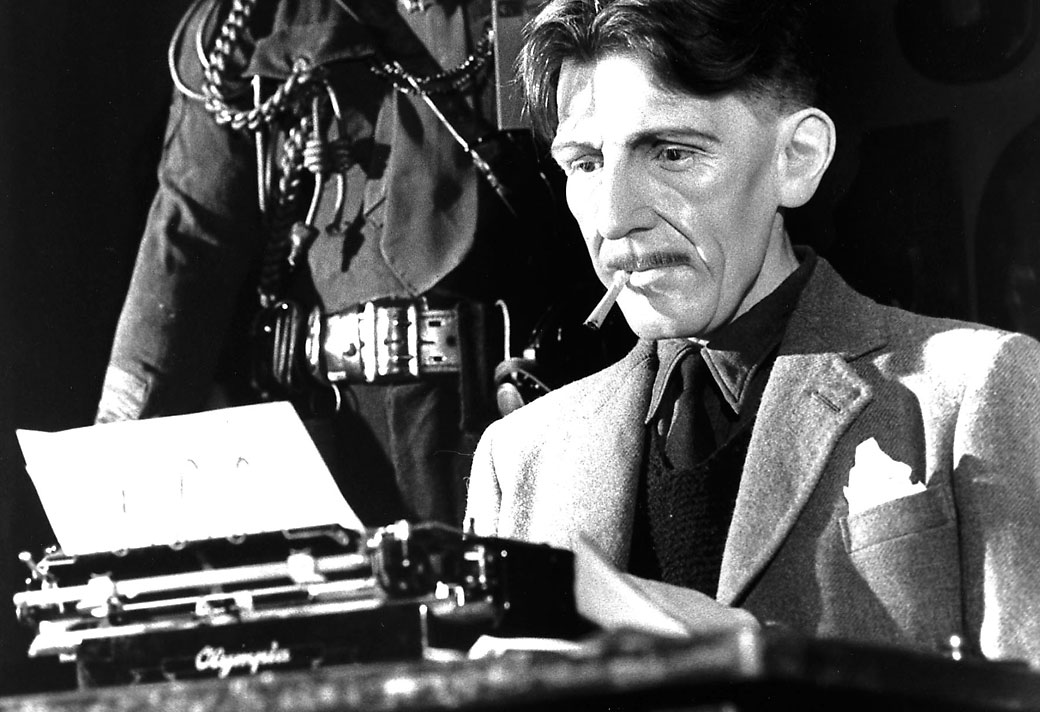
“All writers are vain, selfish, and lazy, and at the very bottom of their motives there lies a mystery. Writing a book is a horrible, exhausting struggle, like a long bout of some painful illness. One would never undertake such a thing if one were not driven on by some demon whom one can neither resist nor understand. For all one knows that demon is simply the same instinct that makes a baby squall for attention. And yet it is also true that one can write nothing readable unless one constantly struggles to efface one’s own personality. Good prose is like a windowpane. I cannot say with certainty which of my motives are the strongest, but I know which of them deserve to be followed. And looking back through my work, I see that it is invariably where I lacked a POLITICAL purpose that I wrote lifeless books and was…

View original post 739 more words

Interspirituality on Sunday

Following up on my prior post about the Interspirituality Conference, I wanted to add what happened on Sunday morning.

I attend 7:30 Mass at Our Lady of Good Counsel where we were observing the Fourth Sunday of Easter, which is Good Shepherd Sunday.  Because of the conference, I was especially attuned to the references to Jesus saying that there were other sheep “not of this fold” who also follow the shepherd’s voice, which correlates so well with interspirituality and the core beliefs of religious, philosophical, and humanist traditions toward love, peace, connection, and unity. There were so many other moments during our sung and spoken prayer that spoke of “all” in the universal sense, rather than as all the assembly or all Catholics or all Christians. I am thankful to be here at this time, instead of in the pre-Vatican II days when Catholics regularly condemned those who were not (strongly observant) Catholics. I am also thankful that Pope Francis regularly holds meetings with those of many different spiritual beliefs, as well as those who are atheists, humanists, agnostics, etc., giving public witness to the dignity of each person.

I arrived early at First Congregational for the 10:00 service which was the official conclusion of the Interspirituality conference and was pleased when Jamie came to sit with me. With my daughters no longer at home and my mom dealing with a string of health issues, I most often attend without a companion, so it was nice to have a friend next to me.

The congregation, under the leadership of Rev. Dr. Art Suggs, is very progressive, open, and inclusive. I had not seen such an enthusiastic – and mobile – greeting of one another during the opening of the service since the Ecumenical Christian Church at Smith College when I was a student in the late 1970s-early 1980s.  The hymns and prayers were expansive and filled with light and love. The Scripture passage from chapter 10 of John’s gospel was a continuation of the small section that had been proclaimed at mass and referred back to the good shepherd, which was a beautiful connection for me.  In the passage, Jesus quotes Psalm 82 which says “You are gods.” This passage had come up during the weekend sessions as a millennia-old reference to the indwelling of the Divine in human beings, so it was a natural transition to Kurt Johnson’s sermon, “The Coming Interspiritual Age,” which synopsized the insights shared during the conference and gave hope that many around the world are moving beyond the rigid boundaries separating people from one another and into an emerging Second Tier Consciousness which unifies across religions, philosophies, nationalities, and all else that separates us. I again regret my inability to convey this adequately and hope that people who want to learn more will look for resources such as this website.

I wrote in my prior post about anticipating hearing the organ at First Congregational again. One of the lovely things about the structure of the service is that it incorporated the prelude and postlude within the service itself, so that one can actually listen, avoiding the “accompanied pep rally” experience that especially postludes can become. I appreciated that the postlude registration included some of the reed stops, because I so appreciate the Skinner-style reeds that are full and rich rather than thin and piercing. I managed to only tear up a little as I remembered being at the organ with Searle Wright. Had the repertoire included Franck or Dupré or one of Searle’s compositions I’m sure I would have been sobbing.

In a final Spirit-led moment, at the coffee hour after the service, I joined a conversation that Jamie was having with Heidi, one of the women of the church who had been such a great help to us during the conference. The conversation turned to the organ and I had a chance to share with her some of my experiences with Searle and the instrument. I must have had my poet hat perched invisibly on my head as I was going on about how organs breathe, but, fortunately, Jamie and Heidi were receptive listeners. As it turns out, Heidi’s husband had just been speaking about the need to invest in the upkeep of the organ, so it was particularly meaningful to her to hear me speak about Searle, the instrument, and their place in the history of the church and its ongoing legacy.  I am not sure what work needs to be done, but I am hopeful that the organ will be restored and preserved, not altered, or worse, abandoned. I believe that the Spirit moves and speaks through the organ’s pipes as surely as it does through our human voices and through all of creation.

Interspirituality conference

I’ve spent the last two days immersed in this interspirituality conference.  Kurt Johnson was our main speaker with many members of our local community participating as panelists/presenters.  It is impossible for me to condense two intensive days into a reasonable summary, so I will instead give a series of impressions, connections, and experiences.

I learned a lot from an academic/historical perspective about interspirituality. While it uses a different vocabulary, the concepts were familiar to me from studying spiritual teachers such as Joan Chittister and Richard Rohr who transcend the borders between spiritual traditions and emphasize the universal, indwelling presence of the Divine.

One of the unsettling aspects for me that was articulated by some of the women in attendance was that even at the advanced levels of spirituality and consciousness that were being discussed, the lens was still predominantly and historically male.  When there was discussion of the power of small groups and the advantages of people relating as non-hierarchal circles, I and at least several of the other women in the room were thinking, “Well, of course. This is how we have related, created, innovated, passed on wisdom, supported one another, moved forward together for centuries.”  It was a bit disconcerting to realize that the primacy of love, connection, relation, co-creativity, and the holiness of all creation that are felt so deeply in the hearts, minds, and wombs of women are only now again being re-discovered and brought out into the wider academic world and dialogue on how the world is organized.

That I was at the conference at all was due to connections through women and their circles.  My friend Yvonne Lucia, whose amazing artwork you can see here, was a panelist and passed on invitations to me and other members of sacred circles in which we have participated. I, in turn, was blessed to be able to invite and meet in person Jamie of Sophia’s Children, with whom I had recently connected in the blogosphere.  I so appreciated the enriching conversations that we had during breaks and lunches and a lovely walk along the river that Jamie and I shared after the conference ended a bit earlier than anticipated this afternoon.

The conference followed what was termed as a “loosey-goosey” model, which was fine as it led into unexpected areas and revelations. I was, however, disappointed that we did not do much discussion of ecospirituality, which is becoming increasingly important to me at this point in time.  In all my years of writing commentary on fracking, renewable energy, climate change, and environmental topics, I had to make arguments based on science and economics. Because the anti-fracking movement was being characterized as coming only from a place of emotion and NIMBY-ism, I was careful to work from a fact- basis and to not respond to personal attack. What only those close to me knew was that the energy behind all those comments came from my grounding in the values of Catholic social justice doctrine, which includes care of all creation and an extra measure of protection and care for the most vulnerable, whether an endangered ecosystem or a community left vulnerable to pollution, sea level rise, inadequate food and shelter, or other threat. Now, with the impending release of Pope Francis’s encyclical on the environment and my involvement in the newly reconstituted Catholic Peace Community of the Southern Tier, I feel that I can integrate my environmental advocacy with my spiritual values in a more public way, hoping to spread the message in our communities about steps we can take to help our damaged climate before the climate talks convene in Paris in December.

One of the gifts of the conference for me was increased clarity of my own spiritual journey as I continue through my 50s. While I am still grounded in the “big C” Catholic church, although as a progressive feminist within it, what I learned there – the elements of social justice, the sacramentality of life and relationship, the indwelling of God in each person and all of creation, God as Love, Peace, Ground of Being – makes me also and increasingly a “small c” catholic, which mean universal. That is how I am thinking about interspirituality at this point, that universal connection in which all people of good will share, whether they arrive there via a faith/spiritual tradition or through humanism, science, or some other path.

One of the other blessings was the presence and sharing of some from the Millennial age cohort. While some think of their tendency to connect with one another electronically to be a detriment, I think it is one of their strengths. While those of us in older generations were brought up largely in localized boxes, the Millennials have grown up being connected instantly to a wide circle of people. From my two 20-something daughters and their friends, I have learned so much about celebrating diversity. It is a great source of hope and comfort to me that they already know and live some of these things that have taken me much longer to discover. To know that we have their generation’s commitment, broad sense of community, energy, and love already engaged is a great source of hope and comfort to me.

I am an introvert and gatherings of people are daunting to me. In the two days of the conference, I didn’t ever rise to ask a question or speak. I also tend to need a lot of processing time – and then go on to write overly long blog posts! But I will close with one more observation that I am mulling.  There were a handful of people at the conference that I knew personally, mostly people that I met through Yvonne. There were others who recognized me as a poet, a part of my life that has been public for such a short time that it still seems like a surprise when someone identifies me that way. There were also people who knew me by sight from my fracktivist activities or by name because of my public commentary. And most of the people in the room who do not know me at all.

There was, however, a special personal connection that I had within the church in which we met.  When I was in my twenties, it was my privilege to study organ with Searle Wright. First Congregational was his home church and my lessons often took place there. I took a moment after lunch today to go visit the Aeolian Skinner organ, to sit on the bench for a moment, to remember the wonders of Searle playing it, and to recall the time when I was still able to play myself.

I managed not to cry, although I don’t know if I will tomorrow morning when I attend the Sunday service which will be the official closing of the conference.

Update:  I’m happy to share the link to Jamie’s initial blog post on the conference:  http://sophias-children.com/2015/04/28/interspiritual-its-here-its-happening-its-on-its-way/.  It gives you a much better sense of what interspirituality means and you can follow her blog for more of her insights as they come our way.

SoCS: very, very, very

I am very, very, very tired so this is likely to be very short.

I am also very, very, very behind on posting – and most everything else. My mom was in the hospital for blood transfusions this week; there is a backstory there, which I’ll get to tell at some point. And also a story about my poetry appearing in print. And about half a dozen other things I’ve been meaning to write.

Part of my brain fatigue is that I attended the first two sessions of this conference today. (Sorry – writing on Friday evening and scheduling for Saturday again.) It is fascinating but takes concentration, which is very tiring and came on top of not a lot of sleep this week. Two more sessions on Saturday and maybe a church service on Sunday, which would be in addition to early Mass. If I’m not too tired….  And I’ll try to write about the conference at some point, too. If I can wrap my head around everything enough to be cogent…
***
Linda’s prompt for Stream of Consciousness Saturday is vary/very. Join us! Find out how here:  http://lindaghill.com/2015/04/24/the-friday-reminder-and-prompt-for-socs-april-2515/ .

socs-badge

Earth Day

I just posted this quote for Linda’s One-Liner Wednesday:
“Compassion, in which all ethics must take root, can only attain its full breadth and depth if it embraces all living creatures and does not limit itself to mankind.”
– Albert Schweitzer

Because it is Earth Day, I want to expand a bit on Dr. Schweitzer’s quote. Yes, we must embrace all living creatures and all of humanity, especially the most vulnerable, but we must also embrace the plants and earth itself. It is essential that the nations of the world come together in Paris in December to adopt limits on greenhouse gas emissions to avert catastrophic climate change. We can’t undo the damage we have already done and additional climate impacts will develop in the coming years, but we can still keep the earth livable if we act boldly and quickly to phase out fossil fuels and ramp up renewable energy. We have the technology needed to do this, with advancements occurring every year which will make the transition easier. There is no other option. It’s our only world.

One-Liner Wednesday – compassion

“Compassion, in which all ethics must take root, can only attain its full breadth and depth if it embraces all living creatures and does not limit itself to mankind.”
– Albert Schweitzer

Join us for Linda’s One-Liner Wednesday:  http://lindaghill.com/2015/04/22/one-liner-wednesday-like-a-rolling-stone/

13 Ways to Get More Blog Comments Without Swearing

I am slowly growing my readership and commenting base. I appreciate these tips which involve not swearing or being confrontational, neither of which fit who I am. I found this post through a re-blog by Rowena at https://beyondtheflow.wordpress.com/ and am happy to pass it along to my readers. I’m also thrilled to find this blog to follow, too! And thanks so much to all my readers and commenters! As this post reminds us all, gratitude is important!

Sue Slaght's avatarTravel Tales of Life

Reading an article recently on how to get comments on a blog my eyes bulged out of my head. To my horror such suggestions as ‘curse often’, ‘attack somebody’ and ‘buy comments’ were included as the ‘best ever’ ways to ensure blog comments were acquired.

Is this what blogging is about? This is the best advice available to millions who have a blog?

Call me old fashioned, naive and definitely call me disheartened. In particular to every young blogger who may have done the same internet search I did, this old girl can tell you you don’t need to be a nasty person or pay to have readers give you feedback.

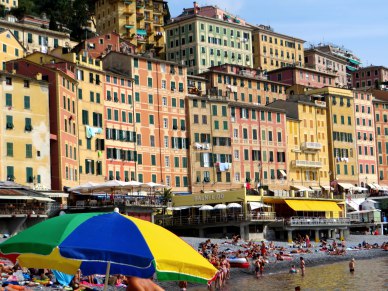
Camogli Italy colored buildings

Below are my top, and might I say gentle, 13 tips for getting more comments on your blog while being a decent human being. The suggestions are based on reading other blogs with pages of comments and on my…

View original post 984 more words

SoCS: peace through justice

I’ve recently joined a new organization, the Catholic Peace Community of the Southern Tier. There are people from several different parishes and we are hoping to build peace through working on different social justice areas.

Our first activities are dealing with the environment and climate change. One of the main tenets of Catholic social justice teaching is care of creation. Also involved are other tenets, such as the protection of the most vulnerable. Those who are living in poverty are much more likely to be subjected to pollutants and also more likely to be impacted by severe weather and sea level rise, as they live in vulnerable areas without strong shelter and do not have the means to relocate out of harm’s way.

We are looking forward to Pope Francis’s upcoming encyclical on the environment and will study the document when it is released in the late spring or early summer. Then we hope to get the word out about the encyclical not only to Catholic parishes but also to the general public in advance of the Paris climate summit in December.

Our first public event is on the 25th of this month when we will have a table at EarthFest.  Pope Paul VI said, “If you want peace, work for justice.” We hope to build peace by working on various justice issues, but I am glad that we are starting with this timely work for ecojustice.
*****

Linda’s prompt for Stream of Consciousness this Saturday is: “piece/peace.” To join in the fun, visit here:  http://lindaghill.com/2015/04/17/the-friday-reminder-and-prompt-for-socs-april-1815/

socs-badge

record likes on 4/17

Thanks in large part to lots of “likes” from new follower Dominique and the fact that I put out two posts yesterday, I have set a new record for likes in one day – 48!  This far surpasses my old record of 30. Thanks, Dominique and all my visitors yesterday!

Binghamton Poetry Project – Spring 2015

Tonight is the public reading and anthology distribution for the spring 2015 workshops of the Binghamton Poetry Project (BPP).  This is the fourth time that I have participated in this community endeavor which brings together child, teen, and adult poets for five weekly sessions learning about and writing poetry, facilitated by graduate students from Binghamton University.

The three poems below are my contribution to the anthology. (I read the first two.)

From a prompt about writing about interactions with a parent, I wrote this poem which became a gift to my dad for his 90th birthday:

Hydro Superintendent
– by Joanne Corey

Each weekday, Dad went to his office
on the top floor of the hydroelectric station,
wearing a clip-on tie –
a precaution due to machinery –
with a Reddy Kilowatt pin.

When he was on weekend call,
my sisters and I sat on the wheel wells
in the back of the company jeep –
wearing our hard hats –
jouncing along unpaved roads
to inspect dams, pipelines, reservoirs,
unmanned Deerfield hydro stations.

His work became ours,
generating power.

*****
From a prompt about a place that we had visited, I wrote this poem about singing in Siracusa, Sicily with the Smith College Alumnae Chorus:

Divinity Listens in Siracusa
– by Joanne Corey

Clad in black,
I stand with the sopranos
behind the orchestra,
Requiem score in hand.
As Mozart echoes,
I know this sacred space –
erected as temple to Athena,
over centuries becoming
temple to Roman Minerva,
Christian church,
mosque,
returning to its current identity
as a Catholic cathedral –
is the most ancient place
in which I will ever sing.

*****
The last is my first ever attempt at prose poetry, heavily edited and expanded with advice from our instructor Cammy and my poetry critique group:

First poems
 – by Joanne Corey

I wrote my first poems in a black-and-white marble-covered composition notebook in the fifth through eighth grade room in my elementary school. I wrote about the brook which flowed through the four seasons – the autumn hillside through our upstairs classroom windows as a pirate hat spilling gold doubloons – Bobby Orr and Phil Esposito skating to the Stanley Cup for the Bruins – a song to forgotten children who lacked family and home – the death of my grandfather and playing the organ for his Month’s Mind Mass at Saint Joachim’s – my first free verse poems, after Miss Andersen taught us that poems didn’t have to rhyme like Mother Goose and “The Midnight Ride of Paul Revere” (which we knew by heart for Patriots’ Day recitation) – and on the very first page, in Palmer Method cursive, my hometown tribute to Monroe Bridge, with the closing lines, “There’s only one in the whole USA. That place knows me.”

I wish I still had that notebook to bridge the poemless decades that followed, to rediscover the girl who sluiced inky torrents between faint blue lines on crisp white pages, to remember when a town was a world, to again feel fully known, to recover the voice that went silent when severed from that place.
******
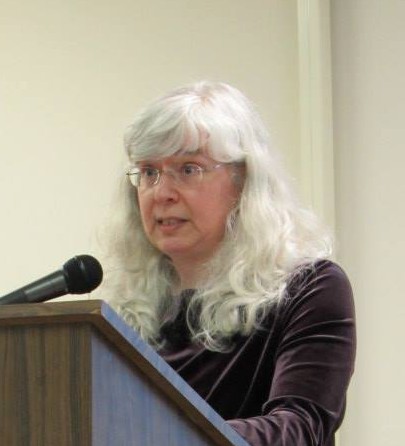
Reading for the Binghamton Poetry Project
Reading at the Binghamton Poetry Project

My poems that have appeared in the two prior anthologies can be found here and here. Our summer sessions are more low-key and don’t publish, so while this is my fourth set of session with BPP, it is only the third anthology.  Another fun BPP-related post is my first and so far only attempt at slam poetry.  I leave it to the readers to decide if my poetic skills are improving with time, experience, BPP, and the example and generous assistance of my fellow poets.