It’s Sun Day!

Today, September 21, 2025, is being celebrated as Sun Day in multiple locations in the United States, with a few locations in other countries joining in.

The brainchild of Bill McKibben, long-time climate evangelist, Sun Day is taking place around the time of the equinox and celebrates solar power, which is now the cheapest source of power on earth. And, yes, you can power your town with solar even at night, thanks to batteries and other energy storage mechanisms. Also, giving a shout-out to wind power, which is sun -related because it’s the sun’s differential warming of the earth’s surface that gives rise to wind. Wind energy is another way to provide power when the sun isn’t shining.

There are events organized by many partners in hundreds of locations, including concerts, e-bike and EV rallies, marches, speakers, technology tours and information booths, and art exhibits. I want to give a special shout-out to the event in my state capital, Albany, organized by my beloved Third Act Upstate New York working group. I wish that I could be joining them in person, but distance and my health situation are keeping me close to home.

My observance of Sun Day is confined to this post, but my celebration of solar power is ongoing! After a several years’ transition, our home and most of our transportation is powered by the sun. We weatherized our 70-ish-year-old house and adopted energy-efficient lighting and appliances. We installed a hybrid heat pump hot water heater and a geothermal heating and cooling system, enabling our disconnecting from the methane system, which had been delivering fracked gas that has caused so much pollution and sickness for our Pennsylvania neighbors. We drive a 2017 fully electric Chevy Bolt and a plug-in hybrid Chrysler Pacifica minivan, so we only use gasoline when we need to take the van on a long trip.

Because we have large shade trees on the south side of our home, we weren’t candidates for rooftop solar, so we own panels at a solar farm. Over the course of the year, we generate enough kilowatt-hours to cover our needs. Currently, we pay about $20/month to the power company for distribution and about $28/month to the company that rents the land for the solar farm and maintains our panels. It’s really great to have such low energy costs and it’s thanks to the sun!

I was happy to see solar power expanding, thanks, in part, to the energy provisions of the Inflation Reduction Act passed under President Joe Biden and New York’s Climate Leadership & Community Protection Act. The implementation of programs under these laws were helping to expand access to solar energy, especially for lower-income folks. Unfortunately, President Trump has curtailed many of those programs and Governor Hochul and her administration are way behind schedule in implementing the CLCPA.

Even without subsidies, solar energy is still cheaper to install than fossil fuel energy, even though fossil fuels are still heavily subsidized, so the hope is that economic factors will prevail and solar will continue to expand. In some countries, like Germany, it’s become common to have solar panels that can be hung from a balcony railing and plugged into the electrical system of the home. Utah recently became the first state in the US to allow this. If more states adopt this approach, solar will be able to spread more quickly because it would available to renters and homeowners who don’t have an appropriate rooftop. Granted, you can’t power your home with a small panel like these, but you can reduce your bills and help reduce strain on the grid.

The expansion of cheap solar power is also a boon in places that don’t have a reliable electric grid available. For example, Pakistan has seen a huge uptick in solar power. In the United States, solar is an opportunity to provide power to remote locations, such as some reservations, that currently don’t have any electricity available. As we saw during the pandemic, these locations also did not typically have a source of clean, safe drinking water. Solar power can be used to power pumps for water wells, leading to much better health and quality of life for residents.

So, hurrah for Sun Day and for the sun powering our lives! I’m grateful that every day is Sun Day at our home and want to thank all that are working to make solar power available to ever more people around the world.

just because


B took this in our backyard last month, just as the fog was lifting. I wanted to share some rays of sunshine with all of you.

eclipse thoughts

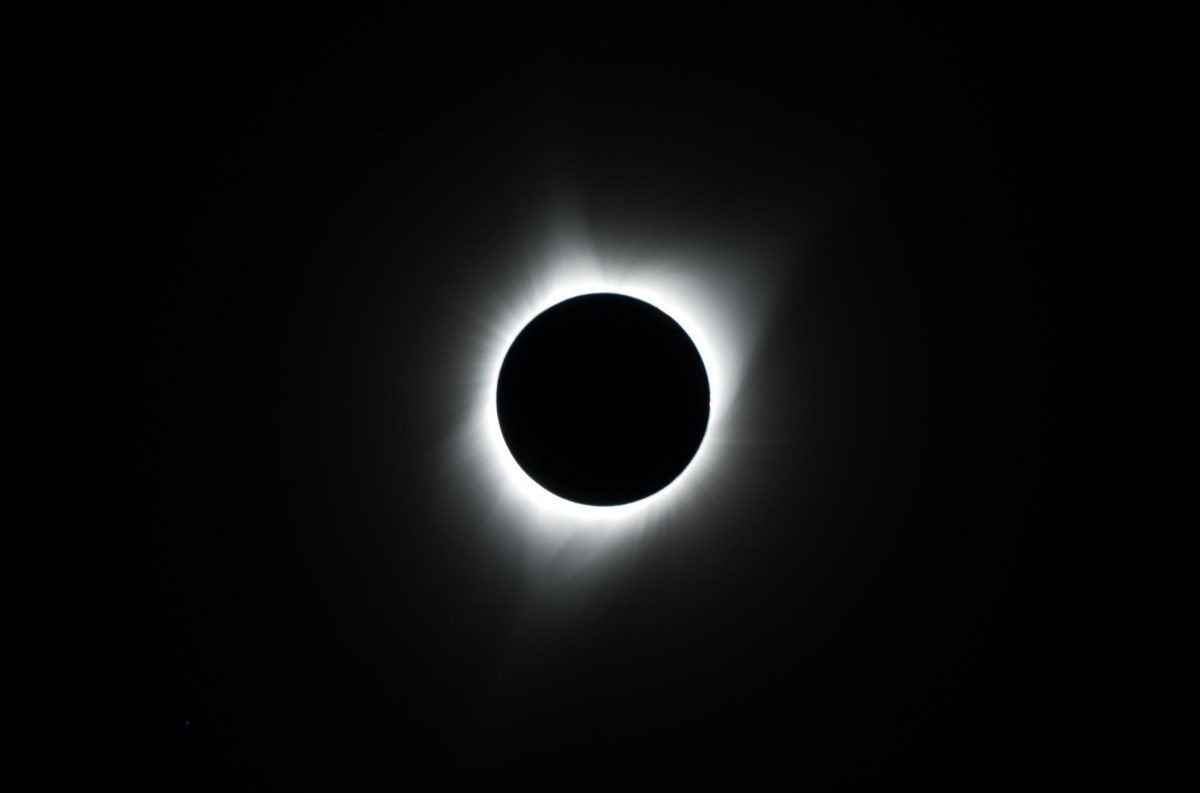
(2017 Photo by Scott Szarapka on Unsplash)

One Monday, April 8th, there was a solar eclipse over a wide swath of North America. At my home in central New York, we were close to the path of totality with 97% of the sun obscured.

We dutifully bought eclipse glasses but the afternoon was very cloudy. During the time of maximum coverage of the sun, we did notice that it became darker, darker than you expect from cloud cover, even from a thunderstorm. A few minutes after it lightened again, it began to rain.

Meanwhile, many people were expressing their awe and wonder at viewing the eclipse. Some had travelled many miles, even internationally, to see it. All were subject to the vagaries of weather, but most were lucky to have good conditions for viewing. Even people who weren’t able to see the eclipse expressed gratitude at being part of an excited crowd putting aside divisions to look up together.

As I’ve been reflecting on the eclipse experience, I find myself wondering if I would have felt the same mystical sense of awe that others have been describing. Perhaps it is my practical New England upbringing or my study of science or my overall sense of respect for creation but I have trouble separating the eclipse from other natural phenomena. Should I feel more wonder at an eclipse than I do for a broken, blue shell that recently sheltered a baby robin or a riot of forsythia blossoms or the ancient rocks worn smooth by the brook or the full moon?

While I do appreciate the effect that the eclipse had to bring people together, I had no desire to be part of a crowd. Granted, I am the type of introvert who is always uncomfortable in a crowd, however noble or friendly its purpose.

Did you experience this eclipse or one in a different time and place? Please share your thoughts in the comments section.

“Moonrise” by Kyle Laws

My friend, fellow Boiler House Poet, and Pushcart Prize nominee for 2019, Kyle Laws, has a new poem up on Amethyst Review. For some reason, I couldn’t get the reblog to work, but you can find the poem here:  https://amethystmagazine.org/2019/12/21/moonrise-a-poem-by-kyle-laws/
This is the photograph by Barbara Jabaily on which the poem is based.
photograph by Barbara Jabaily

Enjoy!

Solar!

I am pleased to announce that in late December, our household went solar!

Thanks to a change in the New York State laws, community solar projects were finally allowed in 2016 and we jumped in as soon as practicable.

We had had our rooftop evaluated for solar panels previously, but the south side of our house is too shaded. The shade trees help to cut down on air conditioning costs in the summer, so it would have been counterproductive to cut them down in order to put up solar panels. Also, some of the shade is supplied by trees in our neighbors’ yard, so we wouldn’t have been able to cut those down.

We had hoped to be able to join a community solar farm in our county, but Tompkins County was able to get permits and leases in place sooner, so we decided to go with Renovus in Ithaca, which is the home of T’s alma mater, Cornell University. Here is a short video of the final installation process a few weeks before it went online:  

(There is a lot of mud in the video, but it will be seeded in the spring.)

We own twenty panels in the array, which is in Trumansburg. Being a part of a solar farm does have some advantages. The panels are commercial grade, so their production is higher than residential panels. They can be optimally oriented and angled for catching the most sunlight. Also, if we move to a new home in our area, we can continue to use the credits from our panels. Alternatively, we can sell them, either to new owners of our home or to anyone else in our area.

It was nice to have the panels go online before the end of the year, as we will be able to apply for tax credits when we file our taxes.  It’s not optimal for solar production, though, with daylight hours so short. Still, we will get some reduction in our electric bill for the winter and spring. By summer, we will be able to start building up credits in our account to cover for the lower wintertime production next year. Our array is sized to cover our annual household usage, so it will all average out once we get through this initial low-production period.

Until we get an electric car…

Stay tuned.
*****
Join us for the last few days of Linda’s Just Jot It January! Find out how here:  https://lindaghill.com/2017/01/27/jusjojan-daily-prompt-jan-27th17/ 

jjj-2017