Ellen is the granddaughter of the main instigator of the Massacres and has been sharing her experiences as she has researched her family’s involvement and grappled with the continuing legacy of racism.
Now, Ellen has a powerful essay entitled “Granddaughter of The Instigator” in the Juneteenth special edition of Salvation South, which delves further into her witness to the legacy of the Vicksburg Massacres on a community and personal level. This essay is an excerpt from her memoir-in-progress, Loving My Hateful Ancestors. You can read a post about the publication of the essay in Ellen’s Very Southern Voice blog and, while you’re there, subscribe to her newsletter and/or follow her blog.
I just realized that I keep referring to Ellen Morris Prewitt by her first name, as though we were acquainted in real life, but we only met each other through blogging. Her writing is so vivid and heartfelt, though, that I feel as if we know each other through our posts and our comments on each other’s blogs with a side of occasional personal emails.
Today, December 7, 2024, marks the sesquicentennial of the beginning of the Vicksburg, Mississippi Massacres during the Reconstruction period following the United States Civil War.
I grant you that I would not know this were it not for Ellen Morris Prewitt, an author and fellow blogger, who has been researching this in relation to her own family history.
You can read about it all in this guest opinion piece in the Mississippi Free Press. You can also find the link through Ellen’s blog post on its publication. In looking back through her blog archive, you can find posts on Ellen’s journey of discovering her ancestors’ history and dealing with its impact on her own life.
There is a commemoration occuring this weekend in Vicksburg, recovering a history that had been largely forgotten. Thank you, Ellen, for your role in bringing this history back into our consciousness.
Update: Some photos from the commemoration are available on Ellen’s blog here.
We went on a classic week-off-from-school outing with our granddaughters as part of our visit to their home in London. We navigated a series of bus and Tube routes to tour the Cutty Sark, a clipper ship built in 1869 to carry tea from China to London as quickly as possible.
While it was built to carry tea, it also carried lots of other cargo, exports from Britain and imports, including wool from Australia. (A reminder that jumpers are called sweaters in the US.)
The Cutty Sark is not afloat these days, but still takes lots of maintenance. It’s hard to see, but there is a person near the top of this mast.
This lifeboat was getting a fresh coat of paint.
February is LGBT+ History Month in the UK and the Cutty Sark was participating by flying the Pride flag.
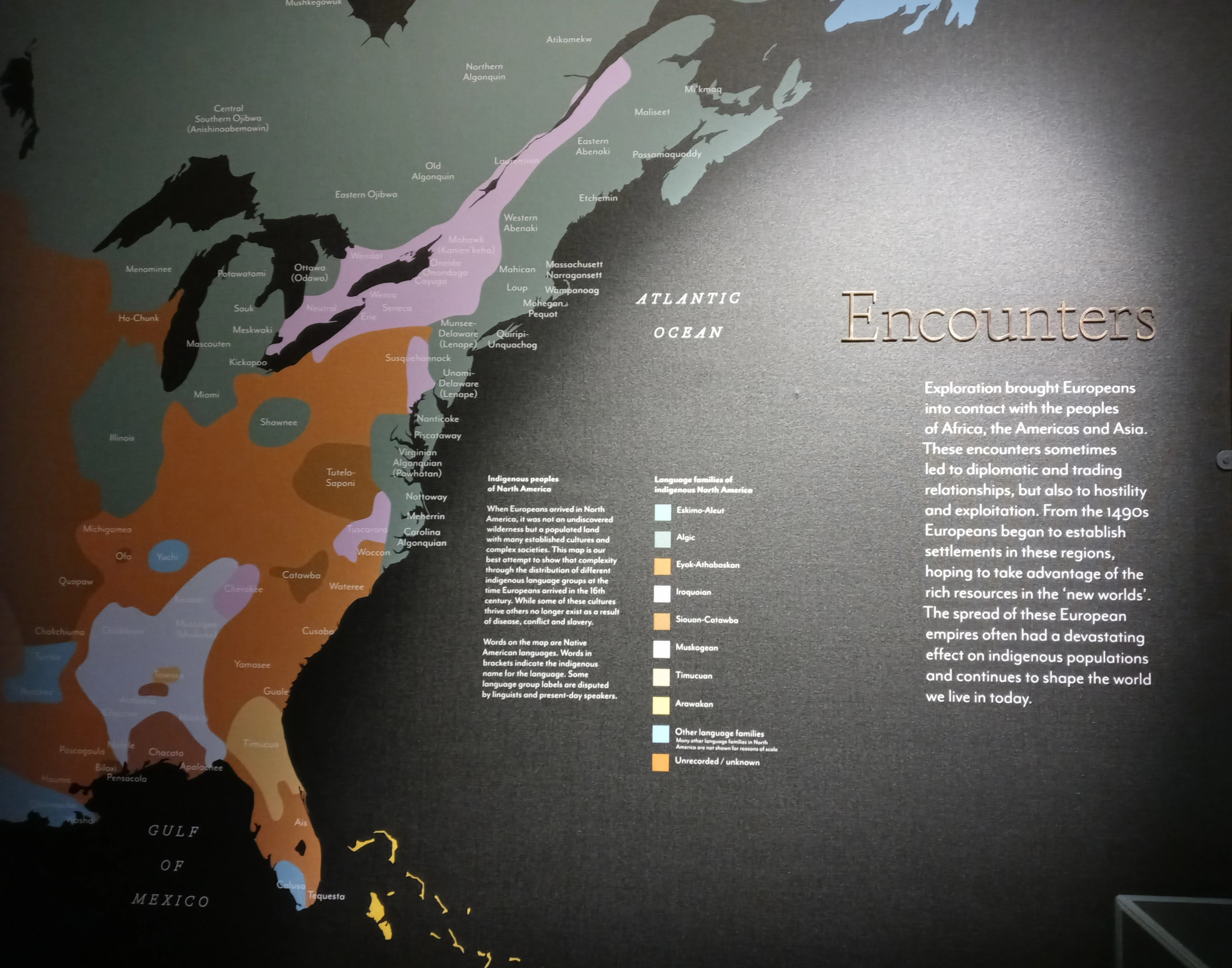
After lunch in a nearby pub, we went to the National Maritime Museum. I was interested to see how some of the exhibits were bringing in indigenous perspectives, such as this map showing language groups from the colonial period in the current US and Canada.
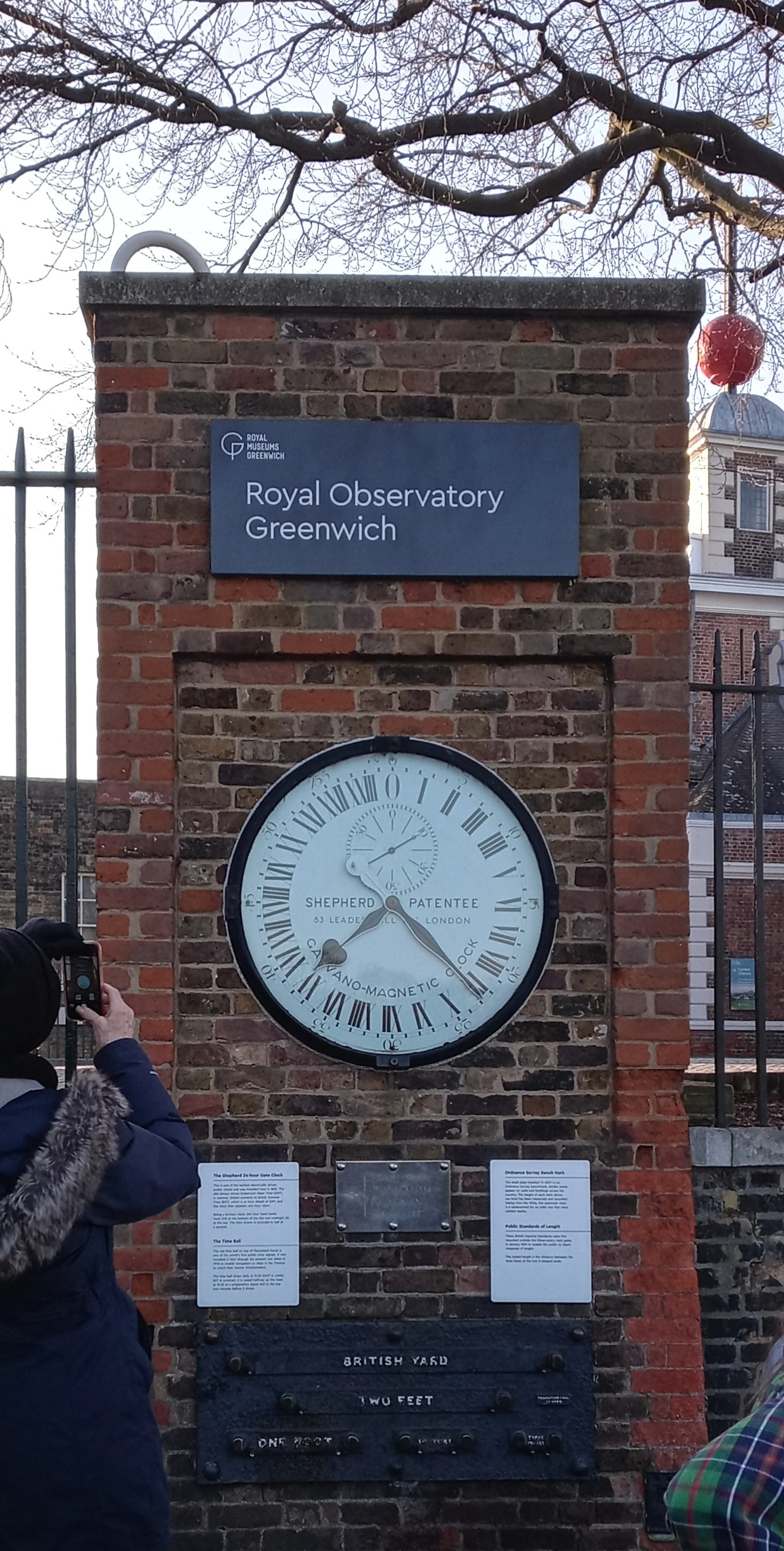
We finished our Greenwich tour by walking up to the Royal Observatory, through which the Prime Meridian runs. It’s the reason we have Greenwich Mean Time.
Before we started our trek back downhill and onto the bus, we enjoyed the view of London from the heights!
Earlier this week, I was listening to a discussion around Richard Haass’ new book, The Bill of Obligations: The Ten Habits of Good Citizens.
The discussion centered around the dearth of knowledge among many in the United States on the basics of civics and history. The root of this lies seems to lie in our educational system.
Unlike most countries, the United States does not have a national educational system. Schools are controlled by local school boards with a greater or lesser role played by state education boards, depending on the state. This leads to a wide range of what students learn in school and the depth of that learning.
I went to public schools in western Massachusetts in the mid-1960s through the 1970s. Civics and history were an important part of our schooling. I remember in the later grades of grammar school reading the US Constitution and summaries of landmark Supreme Court cases. We were expected to apply what we had learned from history to current events, such as deciding for whom we would vote for president in a mock election. This being small-town New England, we would attend town meeting day with our families, showing democracy in action.
Having already learned the basics of US and world history in our younger years, in high school, our coursework was designed to delve more deeply into particular areas of social studies. One of the best courses I took was one on minorities in America. I learned about such important historical events as the Chinese Exclusion Act and the internment of Japanese-Americans during the Second World War. We studied the Black experience in the US, from enslavement and Jim Crow through the civil rights movement, which was, of course, ongoing. I learned for the first time about the discrimination that had affected my own Italian grandparents and Irish great-grandparents. By the time I turned 18 and could register to vote, I had a good understanding of the complexities of our past and of how to evaluate issues of the present and future.
My daughters went to school in New York, where the State Board of Regents is the main driver of curriculum. The Regents set the required courses and use statewide exams in high school to ensure that the students are fulfilling the goals of the curriculum. While the State is fond of survey courses, they do expect students to do much more than memorize historical facts. A major component of history exams is a document-based essay, where the student is given primary source material, such as political cartoons, government documents, and newspaper articles, and asked to use them to write an essay expressing support or opposition to a given proposition. It demonstrates the kind of decision-making that voters need to do to evaluate candidates or stances on current issues. High school students, usually in their final year, also take a semester course on participation in government, which is considered the capstone of their civics education. This New York State framework, which my daughters used in the 1990s-early 2000s, remains in place today.
Some other states and localities do a poor job of educating their students in history and civics. Some even boast about the limitations they place on what is taught in their schools. A current egregious example of this is the state of Florida, which passed a law last year severely limiting teaching about race and identity. This led Florida to reject a pilot of the new Advanced Placement African American Studies course because it includes materials about current topics such as intersectionality, the reparations movement, and Black feminist literary critique. They also objected to students reading works by such well-known Black scholars and writers as bell hooks, Angela Davis, and Kimberlé Crenshaw. Florida officials claimed the course was more indoctrination than education, failing to realize that one needs to learn deeply through the full spectrum of a field of study to be truly educated and able to make judgments. Perhaps, their own education was too limited for them to appreciate the complexities we all now face.
At this point, we have a lot of catching up to do, with adults needing more education in civics, as well as many younger students. Part of this effort must be to emphasize our responsibilities to each other as citizens, or, as Richard Haass calls them, our “obligations.” (I haven’t had the opportunity to read his book, which was just released this week, so the following thoughts are mine and not from his work.)
For example, the First Amendment states that the federal government cannot establish a religion or prevent anyone from practicing their religion. I have the right to practice a religion or not, as I choose. However, I have a responsibility to not impose my religious tenets on anyone else. The First Amendment also says that laws can’t be made to abridge freedom of speech, but I am responsible for what I say and should take care that it is truthful and appropriate.
There is some tendency in the US for people to be hyper-individualistic, crowing about their individual rights, viewpoints, possessions, etc. while ignoring that we all exist in community and relationships, with people who are similar to us and those who are different in some way. Part of the reason that education in civics is so important is to increase the realization that we are responsible to each other as members of the community and the nation.
We are responsible for finding out the facts on an issue, forming a reasoned opinion, and taking action. We need to be respectful of others and set a good example. We need to keep listening and keep learning, as new information and discoveries come to light every day.
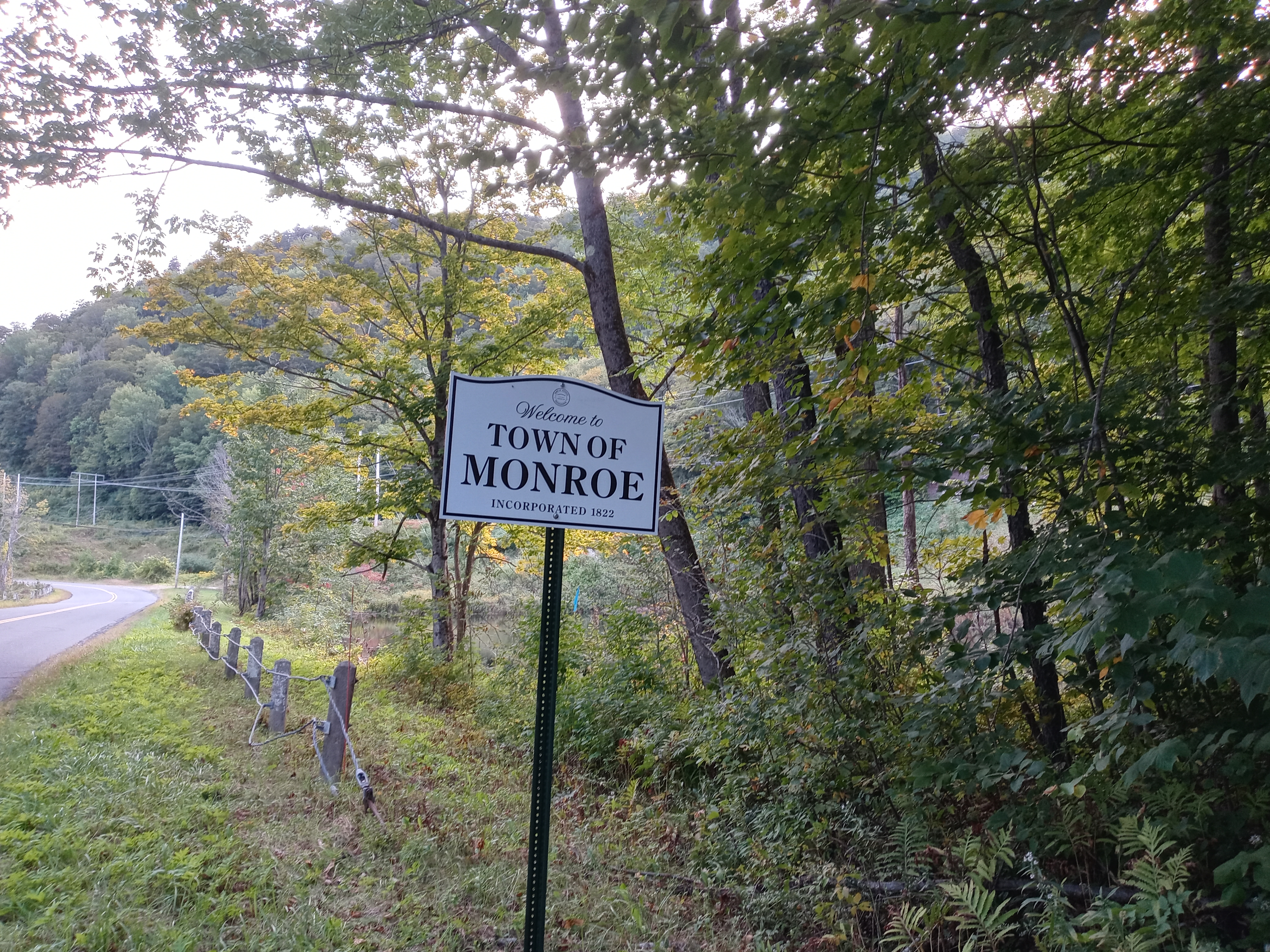
On Saturday, September 17, 2022, I went back to my hometown, Monroe, Massachusetts, for their bicentennial celebration. There will eventually be a proper post about the fun and meaningful day I had there but I wanted to give a little shout-out today.
These welcome signs are new. This is the one at the Massachusetts/Vermont state line about half a mile from where our house was back in the day.
“You should know be now that I cannot introduce any topic without also introducing the history of the entire world.” ~~~ Dr. Melody Ross in this twitter thread, although I feel that, while I don’t know Dr. Ross, I do know other people who could say the same thing. ***** Join us for Linda’s One-Liner Wednesdays! Find out more here: https://lindaghill.com/2022/02/09/one-liner-wednesday-the-stuff-you-make/
“Anyone who closes his eyes to the past is blind to the present. Whoever refuses to remember the inhumanity is prone to new risk of infection.”
~~~ Richard von Weizsäcker, President of West Germany, in 1985 marking the 40th anniversary of the end of World War II (copied from an article in the Washington Post)
A few weeks ago, a poet-and-church friend who is a faithful reader of Top of JC’s Mind asked if I would like to get in touch with a friend of hers who is involved with a local historical society. Their historical society is joining with others in New York State to assemble an archive related to the pandemic. My friend thought that my posts about being in the vaccine trial might be appropriate for the archive.
It turned out that the archiving project was interested in my vaccine trials posts and any others that dealt with living in the time of COVID. I had sent the vaccine posts first. Then, I worked my way through my blog archive, copying the links to other pandemic related posts.
I knew that I wrote about the impact of COVID-19 quite a lot, but I was surprised at how long the list of posts was – fifty-six posts, from late February through September 11, in addition to the handful of vaccine ones. I joked with the archivist about it being either “an embarrassment of riches or just an embarrassment!” Since then, any time I write about our pandemic experiences I send her the link.
I had asked her how they were preserving the archive. She said that, while they do keep links on their computer, they are printing the materials for posterity. Archival technologies tend to come and go but paper lasts for a very long time.
It’s humbling to think that, decades from now, some future historian might stumble across some of my posts and be able to glean some insights about what it has been like dealing with these fraught times in our communities in upstate New York. First person contemporaneous accounts are highly sought sources for historians and documentarians and I would be honored if my posts are able to assist someone with their research some-year in the future.








 Joanne Corey