
Our Smith College Alumnae Chorus tour of Slovenia was only a few weeks after the death of my mother, known here at Top of JC’s Mind as Nana. One of the things that was comforting to me was saying prayers for my mom at the various churches we visited. Sometimes, I was even able to light a candle in her memory.
In prior tour posts, I have shared some photos from some of the churches we visited, but I wanted to share a few more. The ceiling from the chapel of Ljubljana Castle:

Most of the churches we saw on our trip had kneelers that were built into the wooden seats. I loved the curves of these pews from the Ljubljana castle chapel:

A cross silhouetted against Lake Bled in the entrance to the Mary of the Assumption:

The beautifully painted Stations of the Cross there:

In Trieste, the organ and a bit of the rose window, which was a later addition to Saint Just, when technology had progressed enough to have that large an opening in the wall:

Catholic altars contain relics, but one seldom sees them in such a conspicuous way: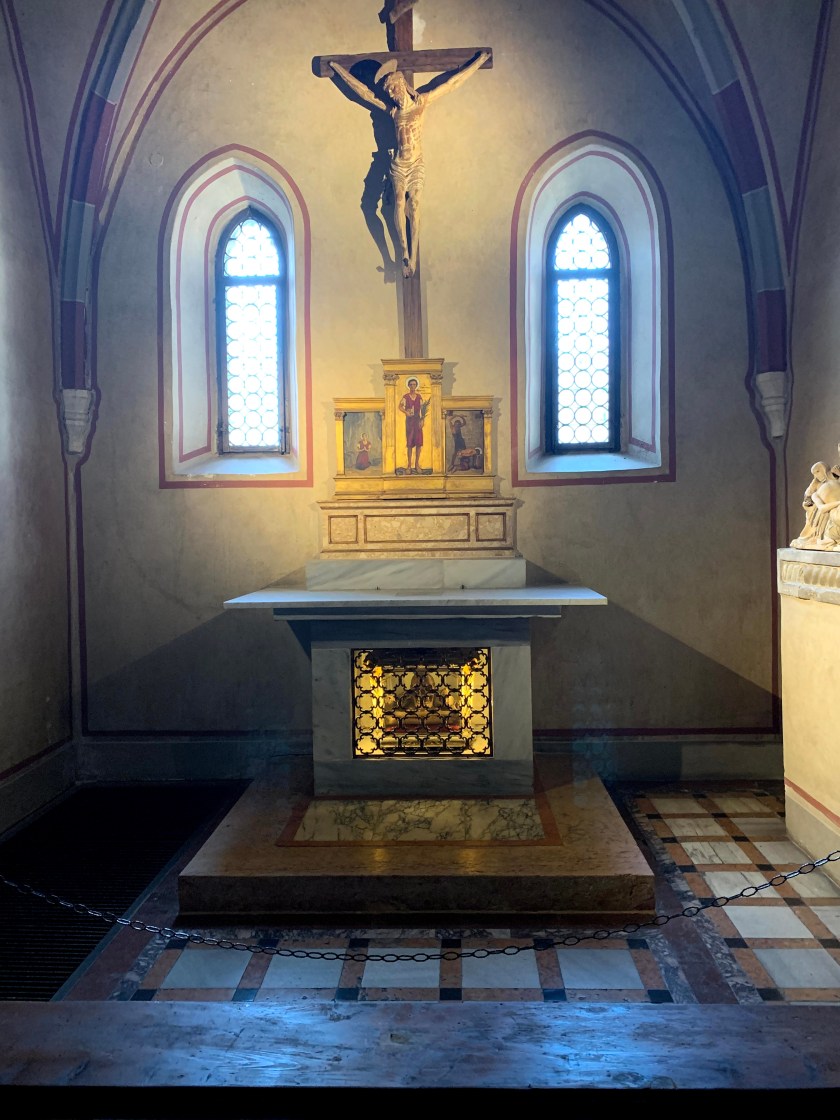
A crucifix at St. George in Piran that had been restored from one of the older iterations of the church. I was struck by how contemporary designers have recalled this centuries-old style in their own work:

The main altar:
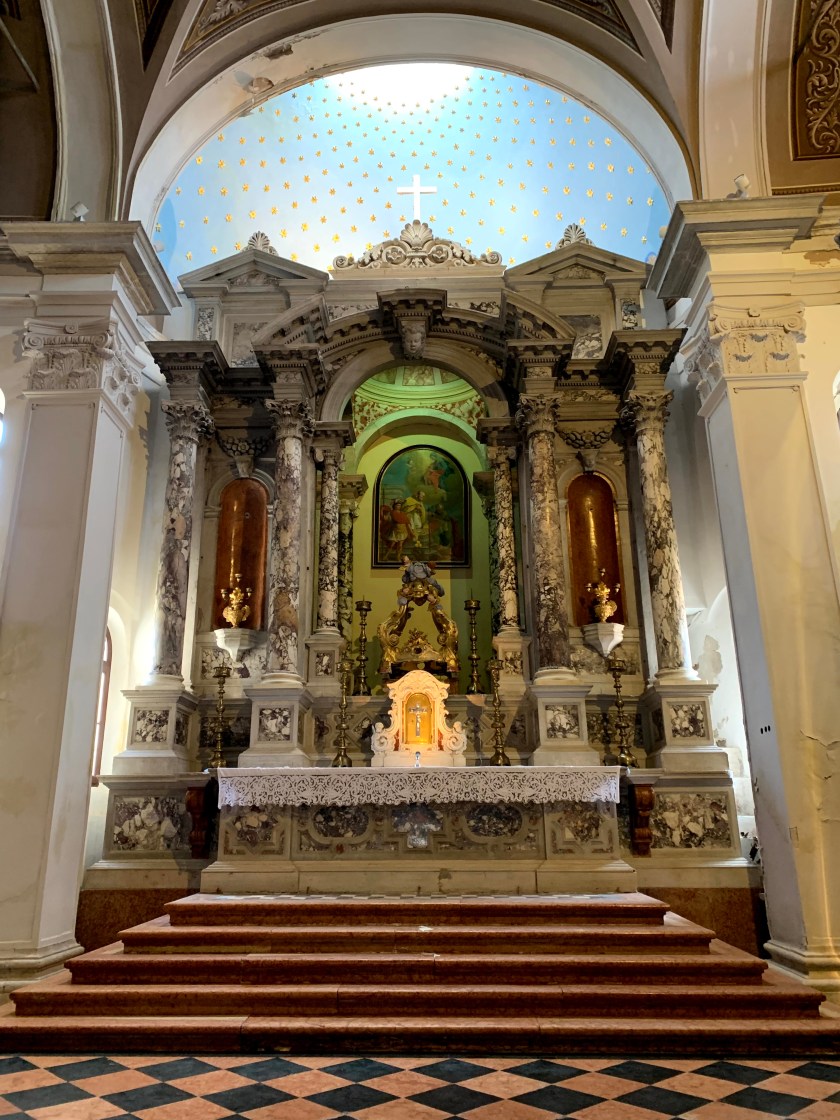
And the ceiling above the chancel:

There were two churches that I visited that were not part of the official tour. Because I was there as a pray-er rather than a tourist, I don’t have photos inside the churches, but they remain close to my heart. One was in Trieste, near the amphitheater ruins. Nana’s ethnic heritage was northern Italian, so it was special to be able to spend some quiet time in the church there. The other was when I went to Mass on our last morning in Ljubljana. It was comforting to be there as part of the congregation, even though they were speaking a language I didn’t know. All the same, I felt that the prayers in my heart were understood.
Besides my private prayer pilgrimage, I also silently dedicated my performances of the Duruflé Requiem to my mother. This requiem is based on chants from the early church and is sung in Latin, as it would have been before the Second Vatican Council. Much of it is spare and meditative, beautiful but difficult to perform because the individual vocal lines are often exposed.
The most moving of these text for me is the “In Paradisum”, which is the final commendation of the deceased to God at the end of the funeral rite. The text translates:
May the Angels lead you into paradise:
may the martyrs receive you at your coming,
and lead you into the holy city, Jerusalem.May the choir of Angels receive you,
and with Lazarus, who once was poor,
may you have everlasting rest.
At my mother’s funeral, this was the point at which I was most emotional, so I worried that I might have difficulty singing through it, especially as Duruflé sets the first stanza for sopranos only. I found, though, that it was comforting for me to bring my mother to mind at that moment, making the traditional prayer even more meaningful. In the powerful silence after we very quietly finished the piece, I could find peace.



 Joanne Corey