One-Liner Wednesday: booster

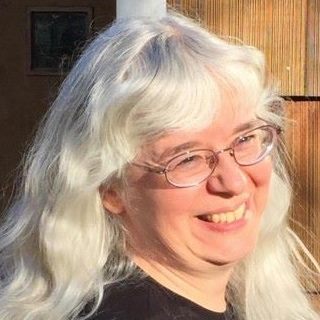
Today, I’m getting my sixth dose of Pfizer/BioNTech COVID-19 vaccine, this one targeting Omicron variant XBB.1.5 and shown to be effective against other currently circulating Omicron sub-variants. Please consider joining me if your health professional or public health agency recommends it for you.
*****
This public health message is brought to you as part of Linda’s One-Liner Wednesdays. Join us! Find out more here: https://lindaghill.com/2023/09/20/one-liner-wednesday-the-ultimate-404-error/

COVID update – late summer 2023

There are many people here in the United States who are no longer taking COVID-19 seriously and a disturbing number who never did.

I am not one of them.

I’ve written dozens of posts over the past three and a half years about it, including about my family’s participation in the Pfizer/BioNTech Phase III clinical trial. I’ve tried to encourage people to take precautions to reduce their chances of infection and serious illness. In that vein, I offer this update.

There was a summer wave in the US with the most prevalent strain being Omicron XBB.1.5. On September 12, the Centers for Disease Control and Prevention Advisory Committee on Immunization Practices will meet to develop a recommendation for a newly formulated booster based on the XBB.1.5 variant. It’s anticipated that the recommendation will be that most people get this new booster, which is expected to be available by the end of September. I will get the booster as soon as I am able. To my knowledge, I’ve still not contracted COVID and would love to keep it that way. Even if the vaccine does not keep me from getting infected, it, along with taking an anti-viral such as Paxlovid, will likely keep me from being hospitalized.

Of course, SARS-CoV-2 continues to mutate. Even now, the variant mix has shifted in the US. EG.5 has become the highest in prevalence with FL.1.5.1 next in an array of variants currently circulating. (You can find current data in the US at the CDC site here.) It is expected that the new booster, though based on XBB.1.5, will still be effective against these other Omicron strains.

The unfortunate wild card at this point is another Omicron variant BA.2.86. The link is to a 8/22 post from epidemiologist Dr. Katelyn Jetelina, explaining why this variant may be more problematic than others, perhaps even warranting the World Health Organization to name it a variant of concern with the name “Pi.” BA.2.86 has over 30 mutations of the spike protein, which is part of the virus that our bodies learn to recognize via vaccines, infection, or both. The fear is that we could see another world-wide wave develop because BA.2.86 might be able to evade our defenses. Researchers are studying it to see if our current tests, vaccines, and treatments will work against it and how it might affect individuals and populations exposed to it. The current number of cases world-wide are thought to be small, but that has been the beginning status of any variant that has become dominant.

Part of the problem is that we don’t have as much data to work with. Most COVID cases aren’t reported to public health authorities anymore. Surveillance and genomic sequencing are lower. This results in less public awareness and information. Theoretically, we should be able to ramp up our system more quickly if a new wave occurs but I wish we had kept up our system in the first place in a proactive stance.

I’m concerned about the attitude that equates COVID infection with other viruses. A study in the journal Nature Medicine shows increased risks for an array of medical conditions, including diabetes, pulmonary and cardiovascular problems, two years after COVID infection, even if the initial case was mild.

“A lot of people think, ‘I got covid, I got over it and I’m fine,’ and it’s a nothingburger for them. But that’s not everything,” said the study’s senior author, Ziyad Al-Aly, a clinical epidemiologist at Washington University School of Medicine in St. Louis. After a couple of years, “maybe you’ve forgotten about the SARS-CoV-2 infection … but covid did not forget about you. It’s still wreaking havoc in your body,” said Al-Aly, chief of research at the Veterans Affairs St. Louis Health Care System.

source: https://www.washingtonpost.com/health/2023/08/21/long-covid-lingering-effects-two-years-later/

The risk of long COVID is real. The article cited above, which is free to access, explains more about the attempts to do research and get care for people with long COVID. People need to realize that they might be someone who gets COVID and has a mild case without long-term repercussions or they might become seriously ill or they might have symptoms for months and years to come. They could also infect someone else who would face the same uncertainties.

I’m once again imploring people to take COVID seriously. Vaccinate, if it is recommended for you. (Being in the US, I’m most familiar with recommendations here but people should look to their own local health authorities and medical practitioners for guidance in their area.) Test and treat an infection. Stay home if you are sick and avoid infecting others. Avoid crowds indoors; wear a high-quality mask if you can’t. If infection rates are significant in your area, mask indoors when you are away from home. Increase ventilation and air filtration. Wash your hands. Get adequate rest and nutrition. Remember that everyone deserves respect, so never question someone else’s decision to mask; they could be immunocompromised, caring for a vulnerable person, etc. and need that protection.

Eventually, we may get to a place where COVID is endemic, like the flu, but we aren’t there yet. Be careful and be kind as we continue to face this still-formidable challenge.

COVID bivalent boosters

As you may recall, spouse B, daughter T, and I were all participants in the Phase III clinical trial for the COVID-19 vaccine from Pfizer/BioNTech. We then all participated in a follow-on third dose trial. B and I left the trial this spring because we were eligible to receive a fourth dose and wanted the extra protection before travelling. T stayed in the trial until its end earlier this summer.

Here in the United States, a new booster was recently approved which combines the original formulation with a new one designed to better combat the Omicron BA.4 and BA.5 variants. BA.5 is the dominant variant currently in the US, accounting for about 88% of cases. About 11% are caused by BA.4. The new booster is expected to strengthen protection against serious illness/death and, one hopes, cut down on symptomatic infection somewhat, as well.

Given that I am still trying to remain COVID-free and that I have several trips coming this fall, I decided to receive one of the new boosters at my local pharmacy. I chose to receive the Pfizer formulation because all my others have been theirs, although there is a Moderna version which is also a fine choice. This was my first time receiving the vaccine in a pharmacy setting. My prior doses had all been in a medical office or a state vaccination site. I made an appointment online and everything was very fast and efficient.

Dr. Ashish Jha, who is the White House COVID-19 response coordinator, and Dr. Anthony Fauci, the long-time director of the National Institute of Allergy and Infectious Diseases, have said that it is possible that we may have reached a point where an annual booster will be enough to protect the vast majority of Americans from serious illness/death from COVID, similar to annual flu shots. Some people who are especially vulnerable due to age or medical condition might need more frequent boosters. The wild card, though, would be the emergence of a new strain that could evade our antibodies and current vaccines.

So, my message is to receive one of these new boosters as soon as they become available wherever you are. The US has been first to authorize them, but it seems they will become more widely available globally soon. Remember, though, that these are booster doses given to people who have already completed an initial vaccine series. If you haven’t completed an initial vaccine series, start NOW!

Meanwhile, here in Broome County, our community risk level is still medium. While I wait for the new booster to take full effect, I will still mask for indoor gatherings and shopping. I’ll be evaluating what to do after that, although these boosters are so new that data may be hard to come by.

I hope to stay well and hope that you do, too.

Pfizer study exit

As you many recall, spouse B, daughter T, and I have all been participants in the Pfizer/BioNTech COVID-19 vaccine Phase III clinical trial since summer of 2020. B and T received the vaccine while I was in the placebo group, although I received the vaccine through the trial after the emergency use authorization came through. All three of us continued in the study of third doses.

I had hoped that Pfizer would extend our study to include fourth doses but they have decided not to do so. After researching and discussion with family and medical practitioners, I have chosen to end my participation in the trial early in order to receive a fourth shot, which I did on Saturday.

In the US at this point, government and public health officials are not making COVID policy as much as providing information for individual decision-making. I admit that this is frustrating as community behavior is so important with pandemics in general and the increasingly contagious omicron variants in particular. Emphasis has also shifted away from individual infection rates and toward making sure there aren’t enough serious infections to cause the health system to collapse.

My priority is still to try to avert infection. I don’t want to be sick if I can help it. While rates of hospitalization and death are low among those vaxxed and boosted, serious cases are still possible. While some are lucky to have no or mild symptoms, many still feel like they are suffering the worst flu/virus ever, being out of commission for at last a week. I am also concerned about the risk of long COVID, estimated to affect as much as thirty percent to over forty percent of total cases. Vaccination is estimated to halve the risk. (Please note that definitions of long COVID and the risk factors are currently in flux. As more data are collected and analyzed, these estimates will likely change.) Due to some factors in my family history, I may be at increased risk for developing long COVID. I also know that COVID infection can cause severe flares in people with interstitial cystitis, which I have.

I am very concerned about the possibility of inadvertently infecting others, including my family. I also have several immunocompromised friends who I want to protect.

Infection rates are high in my county now. I am continuing to mask in public and am back to avoiding crowds, including church services, concerts, and plays. Even with the high case counts here, most people are not taking precautions so I am being extra careful.

The boost to resistance to infection is likely to be short-lived, only a few weeks, but this is a critical time for me to have that extra protection. In mid-May, I am travelling to Northampton, Massachusetts to attend my 40th reunion at Smith College. The protocols there are strict, including mandatory vaccination and boosters, indoor masking, and many outdoor activities, so I feel relatively safe attending.

Ten days after my return, B, T, and I will travel to London, UK to visit daughter E and her family. Again, we will be very cautious with our behavior to avoid infection. We also want to protect our family, especially granddaughters ABC and JG who are too young to be vaccinated. JG is even too young to mask.

I’m happy to report that my side effects from my fourth shot have been mild, mostly a sore arm and a bit of tiredness.

I am grateful to Meridian Clinical Research who handled the trial locally and to Pfizer and BioNTech for developing the vaccine and getting it out to so many people so quickly. I am happy to have been of service by participating in the trial and stand ready to participate in additional clinical trials as they become available.

I will close with my accustomed plea for people to do all they can to end the pandemic with whatever means are available to them – vaccines, distancing, masking, avoiding crowds, increasing ventilation, etc. The pandemic is not over and our lack of attention only increases the possibility of new variants and extends the length of time before SARS-CoV-2 becomes endemic.

travel in Omicron time

In October, we made plans to visit daughter E, son-in-law L, granddaughters ABC and JG, and L’s parents with whom they live in London, UK for the holidays. I hadn’t shared much about our plans here for fear that we would have to cancel, as we did with a planned visit in November 2020. At the time we made our plans, vaccination rates and COVID rates looked amenable for travel for three people who had had three doses of Pfizer vaccine, due to our participation in the clinical trials.

And then, in November, the Omicron variant appeared.

Travel and testing policies changed. Everyone wanted to know how virulent it is, if vaccines are protective, how severe it is, where it is spreading – and they wanted to know right away. Unfortunately, science doesn’t work that way. It takes time to gather and analyze data.

It actually was to our advantage that there were several weeks before our trip for some preliminary conclusions to be discerned. Yes, Omicron is more transmissible than the very contagious Delta but tends to cause less severe disease and to run a shorter course. Vaccines were less effective than against other variants but having a booster greatly increased protection.

And Omicron was rapidly spreading almost everywhere.

My home state of New York in the US was experiencing a spike in Omicron on top of a spike in Delta. In London, Omicron was taking over with over 90% of new COVID cases caused by it.

Still, travel was open for vaccinated people to enter the UK, we had our required testing scheduled both in the US and the UK, and the UK had not imposed restrictions on gatherings in private homes, so we were good to go, scheduled to fly out of Newark on Monday night, Dec. 20.

On Thursday, Dec. 16, L tested positive for COVID. He had been testing at home every day before going to work in the schools and didn’t have symptoms. He immediately had a follow-up test with a medical facility to confirm, then went into isolation in a bedroom. He developed symptoms which were like having a bad cold, which seems more typical with Omicron. In accord with UK protocol, the adults in the house tested themselves every morning. If they were negative, they could go out for the day. The children would only need to be tested if they had symptoms.

Obviously, this was scary news a few days before our trip, but, being used to uncertainty by now, we decided to go ahead with our plans.

On Saturday morning, we did COVID tests at the local pharmacy. The results were supposed to be available by noon on Monday and our flights wasn’t until 10 PM, so no problem, right?

Except that they didn’t come. We headed to Newark airport, which is about three hours away, hoping to get a rapid test there, but the testing center closed early, so we waited for our results to come in. As it turned out, only mine came through in time, so I flew to Heathrow by myself. This was the first time I had ever flown internationally without being part of a group, but I managed, admittedly with a lot of helpful staff and fellow travellers who could probably tell that this silver-haired woman wasn’t quite up to snuff, especially after a sleepless night on a plane. E met me at the train station and helped me get settled – and do my COVID test that the UK required. I needed to stay in isolation until I got a negative result.

Meanwhile, B and T re-booked their flight for the next evening, stayed at a hotel overnight, and went to the airport bright and early to go to the rapid test center. They had finally gotten their negative results from the Saturday tests but, because they were now flying on Tuesday, that test was too old to meet the requirements. Fortunately, I was already checked in to the hotel so they could start their UK isolation/testing bit, too. I’m happy to say that the UK results came much more quickly, so we were out of isolation by the time we moved to our Airbnb in E’s neighborhood on Thursday.

When you are browsing through Airbnb’s site, you can’t see the exact address. We knew we were in the neighborhood, but were pleased to find out we are only about three blocks from their house. Given that we are trying to limit our exposure to crowds, it’s nice to just have a short walk between the two places. It’s also nice to have our own kitchen. We even have an enclosed back garden, although it’s been too rainy to use it.

We benefited from a change in UK policy. Instead of having to isolate for ten days, people are allowed to leave isolation sooner if they have two negative test 24 hours apart. This meant that L was able to get out of isolation in time to have Christmas Day together. (You can read about the menu here.)

In deference to the wild spread of Omicron, we are not going to church or other kinds of crowded venues, like museums, during this visit. We are pretty much going back and forth between the two houses. While B, T, and I and L’s parents were all boosted, E and L were scheduled to get their boosters on Sunday, three days after Larry tested positive. E’s COVID exposure delayed her getting a booster until Dec. 24; L can get his in several weeks. For the record, E and L were not negligent in scheduling their boosters. Rather, they were following the UK protocols, which are different than the US ones.

All of us are trying to be protective of ABC and JG, who are too young to be vaccinated. Realistically, B, T, and I also need to stay COVID-free to be able to travel back to the US in January. Fingers crossed that the travel and visiting policies stay stable so that there are no more glitches, delays, or restrictions.

But, hey, we’ve already shown we are flexible, if need be.

Pfizer booster

As part of my ongoing participation in the Pfizer/BioNTech COVID-19 vaccine phase III trial, yesterday I received a third vaccine injection, seven and a half months after my second. There was a blood draw to test levels of antibodies, T cells, etc. and the blood work will be repeated in a year. I will continue a weekly symptom check through a phone app and have a couple of phone appointments over the next year, too. The data collected will be used to inform on-going decisions about how often boosters may be needed in the future.

I’m fortunate that my side effects have been milder than they were with the second injection. I have a very sore arm, which is obviously from the shot. I’m tired and have a bit of a headache, which could be side effect and could be just life in general these days. Today is the one-month anniversary of Paco’s death, so how I am feeling could be attributable to that rather than to vaccine side effects. When spouse B and daughter T, who are also study participants, received their third doses, they both lost a day to fever, body aches, and fatigue; because I had had a similar reaction to my second dose, I was expecting a similar experience, but apparently have lucked out.

In the United States, a third dose of the Pfizer vaccine is approved for those aged 65 and up, people who have medical risk, and those in certain professions that have close contact with vulnerable populations. It’s possible that the third dose will be recommended more generally in the future as more data become available. It’s also likely that emergency use authorization for children aged 5-11 will come soon, with shots in arms starting in early November.

Recommendations on booster doses for Moderna and Johnson & Johnson are expected soon, as well as the possibility of mixing manufacturers, for example, someone who had the J&J vaccine having a booster from Pfizer. All the companies are continuing to study the vaccines for long-term efficacy and side effects, as well as safety, efficacy, and dosage for children six months through seventeen years. Currently, in the United States, only Pfizer is approved for ages 12-17.

Another helpful development is that Merck has applied for emergency use authorization of molnupiravir, an oral anti-viral to combat COVID. It would be given to patients in the early stages in hopes of keeping their illness from becoming severe. While it is already possible to give treatments by injection or infusion, such as monoclonal antibodies, this medication would be easy to prescribe and administer for home use. A decision by the FDA is expected within weeks.

Meanwhile, over the summer, COVID cases were devastating parts of the US, especially states with low vaccination rates. Total fatalities are over 700,000 with over 44 million cases recorded. In some areas, hospitals were so overwhelmed that they had to send patients out of state to receive care. This applied to COVID patients and also to patients suffering from other serious conditions. Two states, Idaho and Alaska, had to implement crisis standards of care, which means that whether or not an individual receives treatment beyond comfort care is determined by the likelihood of survival as there is not enough capacity to treat everyone that needs help. This resulted in non-COVID deaths from heart attack, stroke, etc. – patients who ordinarily would have been treated successfully but who died because there were not personnel, equipment, and space available to treat them due to intensive care units being filled with COVID patients.

The delta variant was the power behind the summer surge, but, at least, the fear of it encouraged more people to seek vaccination. The increase in vaccination rates is helping the case numbers to fall at this point. Still, the current rate of fully vaccinated people is only 57% with 66% receiving at least one dose. I am hopeful that the Pfizer vaccine being approved for elementary age children in the coming weeks will add significantly to our vaccination totals, at least in states where the vaccination rate among adults is higher.

There are still terrifying amounts of misinformation floating around about the vaccines that are keeping some people from taking them. Unfortunately, this is keeping the pandemic alive, resulting in illness, death, lack of access to medical care, and the possibility of even more dangerous new variants developing.

We are all in this together. Please, everyone, get vaccinated if you are eligible and follow reputable public health guidelines on masking, avoiding crowds, handwashing, etc. Your choices affect your family, friends, neighbors and community directly and your nation and the world, as well. We can’t truly end this pandemic until there’s no population anywhere still vulnerable to COVID-19.

If you won’t do it for yourself, do it for someone you love.